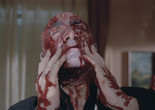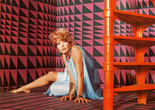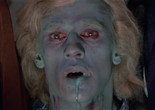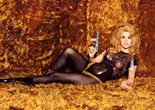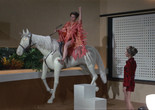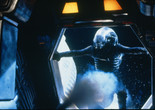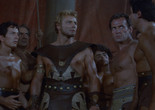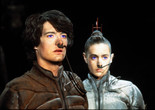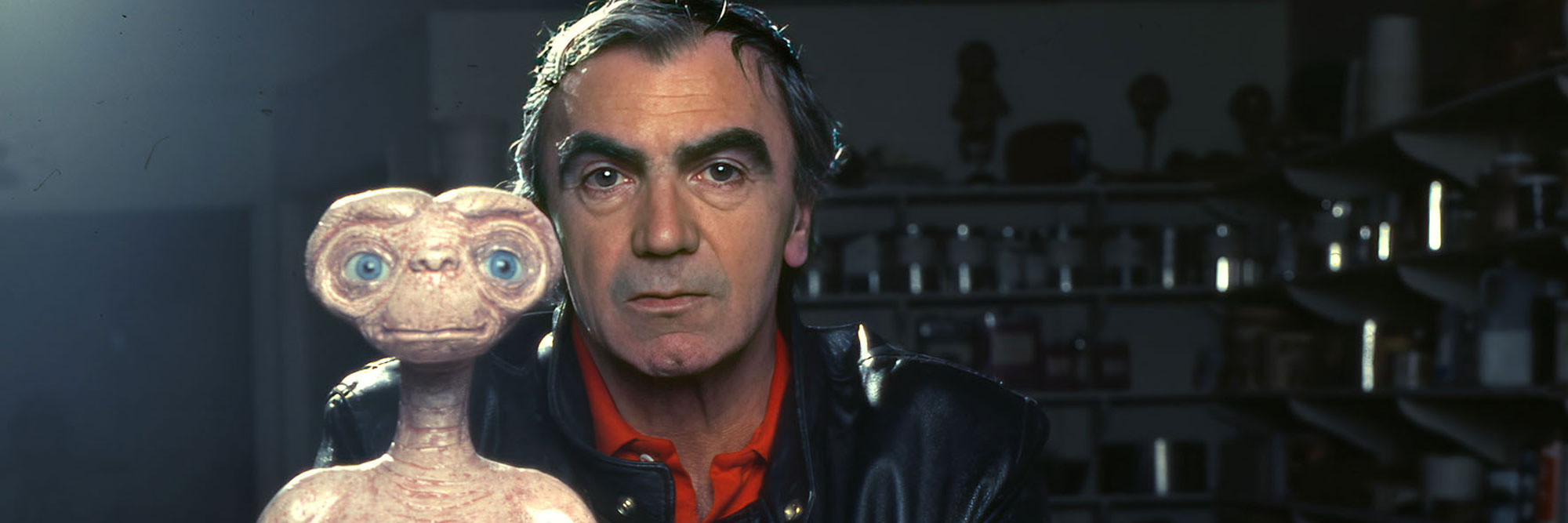
Driven by a natural interest in drawing and creating puppets and statuettes from a very early age, likely sparked by watching his father in his workshop, nine-year-old Carlo Rambaldi was forever changed when he saw King Kong (1933) in the theater and found himself mesmerized by animator Willis H. O’Brien’s famous beast. Forty-two years later, Rambaldi moved to Hollywood to work on the 1976 remake, for which he was tasked with creating a 40-foot, six-and-a-half-ton mechanical version of the giant ape whose hands still had to be soft enough to hold a human love interest. By then Rambaldi was already a household name as a special-effects artist in Italy, where he shifted effortlessly between arthouse, giallo, and blunt exploitation movies, stunning audiences by bringing the unseen—monsters, spirits, and aliens—to vivid life. His influence had already gone global by the time millions of people saw E.T.’s heart beat and instantly fell in love with a clumsy, wide-eyed, three-foot-tall animatronic alien, prompting Steven Spielberg to describe Rambaldi as “E.T.’s Geppetto.”
In collaboration with Cinecittà, Rome, MoMA celebrates the extraordinary career of Carlo Rambaldi (1925–2012) with a centennial tribute to the special effects artist’s exceptional creativity, featuring several titles presented in digital restorations by Cinecittà.
Organized by Rajendra Roy, The Celeste Bartos Chief Curator of Film, and Francisco Valente, Curatorial Assistant, Department of Film, MoMA; and Camilla Cormanni, Paola Ruggiero, and Marco Cicala, Cinecittà.
Film at MoMA is made possible by CHANEL.
Additional support is provided by the Annual Film Fund. Leadership support for the Annual Film Fund is provided by The Contemporary Arts Council of The Museum of Modern Art, Agnes Gund through The International Council of The Museum of Modern Art, the Association of Independent Commercial Producers (AICP), and The Young Patrons Council of The Museum of Modern Art.