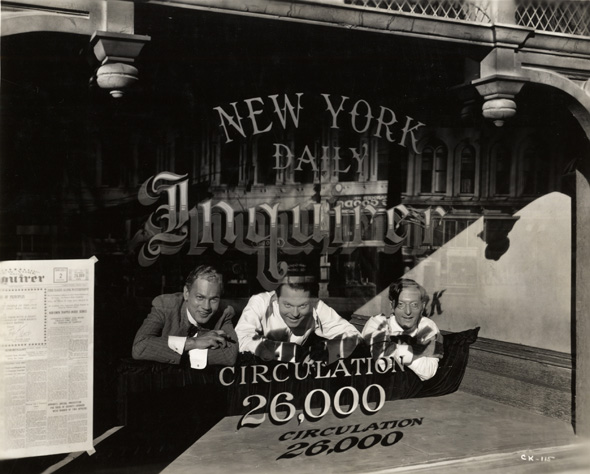

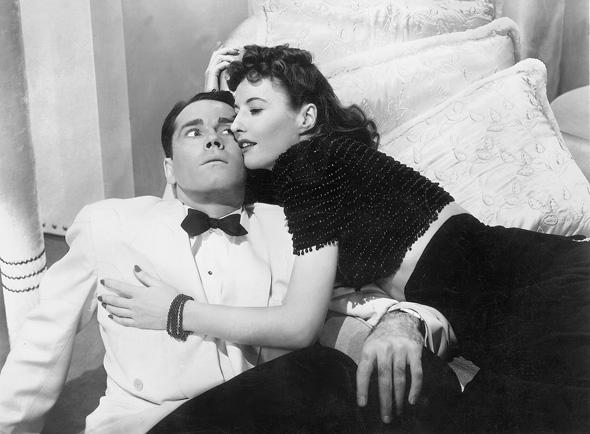
These notes accompany the screenings of Preston Sturges’s </i>The Lady Eve</a> on May 25, 26, and 27 in Theater 3.</p>
Preston Sturges (1898–1959) was in that fraternity of Hollywood scriptwriters (along with Billy wilder, John Huston, Joseph L. Mankiewicz, Blake Edwards, and Elaine May, to name just a few) who ultimately weren’t content to let someone else direct their scripts. Sturges’s own transition took a long time; he wrote part or all of 17 films between 1930 and his directorial debut a decade later.
Posts tagged ‘film’
Preston Sturges’s The Lady Eve
Gabriel Byrne on The Quiet Man and Ireland on Film
Renowned Irish actor Gabriel Byrne joined us to discuss Revisiting The Quiet Man: Ireland on Film</a>, an exhibition he curated with the Irish Film Institute and MoMA. Using John Ford’s iconic 1952 film The Quiet Man as a point of departure, the exhibition examines cinematic depictions of the Irish—in both American and Irish films—from 1910 to the present day.
John Huston’s The Maltese Falcon
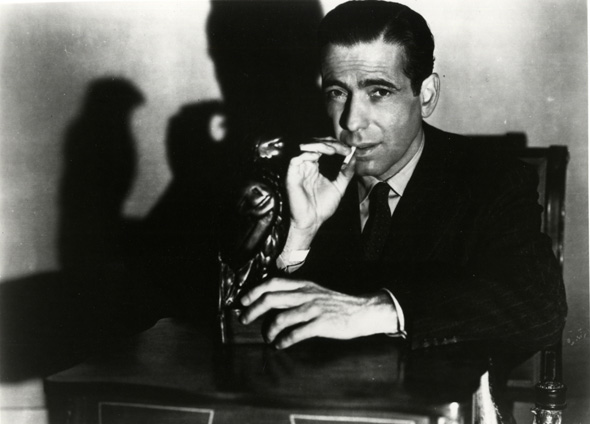
These notes accompany the screenings of John Huston’s </i>The Maltese Falcon</a> on May 18 (in Theater 2), 19 (Theater 3), and 20 (Theater 2).</p>
John Huston (1906–1987) has always been something of an enigma to me. The director of The Maltese Falcon, The Treasure of the Sierra Madre, Key Largo, The Asphalt Jungle, The Red Badge of Courage, The African Queen, and late-career gems like The Man Who Would Be King, Prizzi’s Honor, and The Dead</a> is too formidable to be dismissed out of hand. Yet there are too many instances where Huston seems to fail to be engaged or, over his two-decade-long middle period, seems blatantly frivolous.
John Ford’s How Green Was My Valley
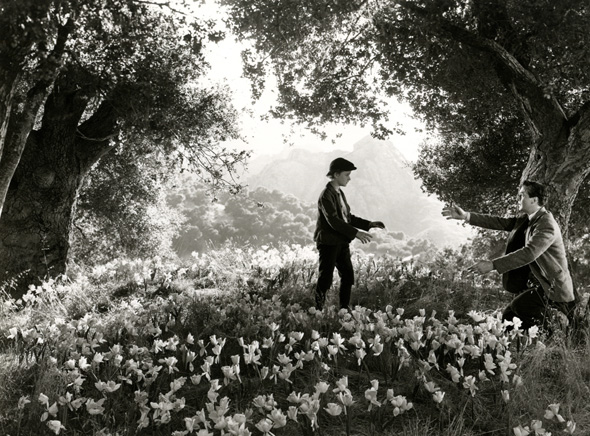
These notes accompany the screenings of John Ford’s </i>How Green Was My Valley</a> on May 11, 12, and 13 in Theater 3.</p>
By 1941, John Ford (1894–1973) had attained the peak of the Hollywood studio system. Aside from a few of his later Westerns, How Green Was My Valley remains unchallenged as his best film. It beat out Citizen Kane</a> for the Oscar (partially due to industry antipathy toward Orson Welles), but it also stands head-and-shoulders above any other film that Hollywood, in its collective wisdom, ever managed to choose for its top award.
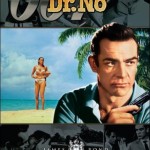
007 at MoMA
James Bond took up residence at MoMA 25 years ago this June. You might have thought a posh London apartment or a secluded villa on the Caribbean island of Mustique might better suit the suave international man of intrigue, but in fact Bond—well, the 35mm films at least—resides in Hamlin, Pennsylvania, zip code 18427.
Orson Welles’s Citizen Kane
These notes accompany the screenings of Orson Welles’s </i>Citizen Kane</a> on May 4, 5, and 6 in Theater 3.</p>
Orson Welles (1915–1985) would have been 96 this Friday. Like the other three greatest American-born directors (D. W. Griffith from La Grange, Kentucky; John Ford from Portland, Maine; and Howard Hawks from Goshen, Indiana), Welles (from Kenosha, Wisconsin) was a product of that essentially rural America which began to disappear with the coming of the Industrial Age.
John Ford’s The Grapes of Wrath
These notes accompany the screenings of John Ford’s </i>The Grapes of Wrath</a> on April 27, 28, and 29 in Theater 2.</p>
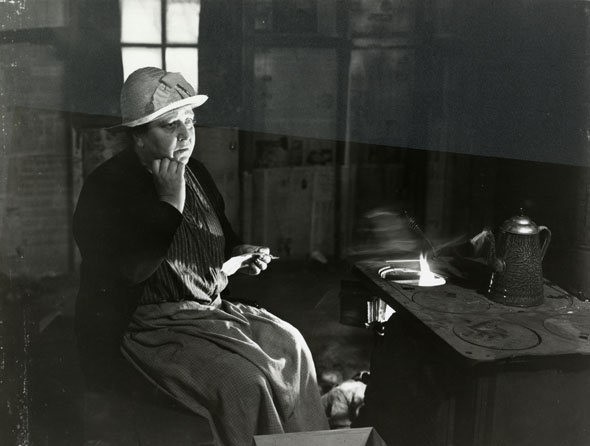
Orson Welles once told Peter Bogdanovich, “John Ford knows what the earth is made of.” Although Welles probably did not intend this to be a cryptic observation, it does lend itself to several interpretations. It could have certain geologic connotations, referring perhaps to the Paleocene epoch, when complex life began to form. It could also refer to the even more complex development that came after—those troublesome bipeds that became us. If all this sounds a bit pompous for a director who spent much of his early career making mostly mindless two-reel westerns, so be it.
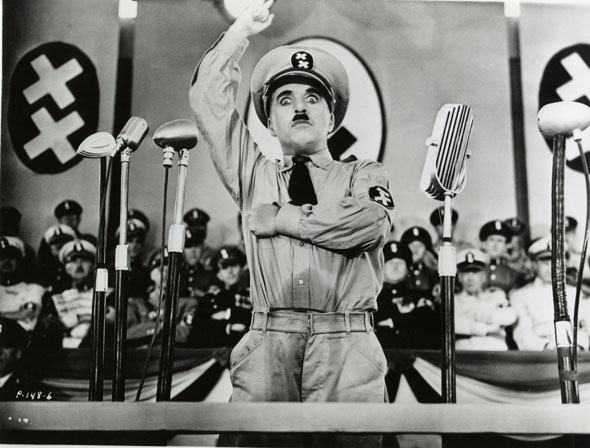
Charles Chaplin’s The Great Dictator
These notes accompany the screenings of Charles Chaplin’s </i>The Great Dictator</a> on April 13, 14, and 15 in Theater 3.</p>
The Great Dictator presents unique problems for the historian trying to reconcile Bosley Crowther’s judgment in 1940 that Charles Chaplin’s movie was “perhaps the most significant film ever produced” with the film’s occasionally flawed execution of Chaplin’s grand and noble conception. Because Chaplin (1889–1977) was a universally recognized and beloved personality—whose famous moustache had been stolen by an equally well-known, but far less beloved, comedian-cum-tyrant—his film about Hitler became an event of worldwide consequence.
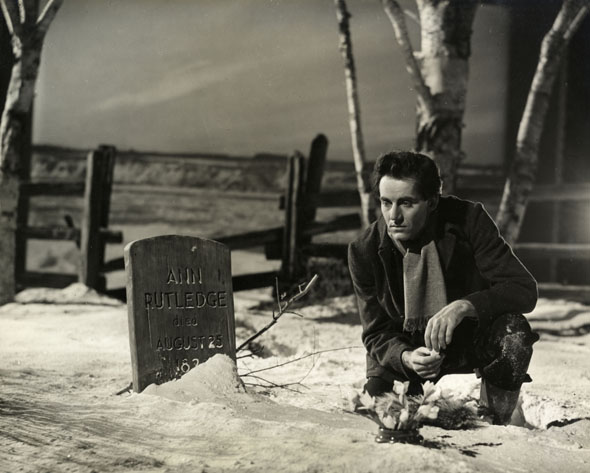
John Ford’s Young Mr. Lincoln
These notes accompany the screenings of Jean Renoir’s </i>The Rules of the Game</a> on April 6, 7, and 8 in Theater 2.</p>
John Ford (1894–1973) is the greatest film director America has ever had (or ever will), and is quite possibly the country’s greatest artist. His usual reaction to such views was that of a snarlingly sarcastic sonofabitch. He was also a man who could be quite cruel, evenly violently so, to people who loved him. Ford, like his predecessor Walt Whitman, was a poet of genius and contradictions.
If you are interested in reproducing images from The Museum of Modern Art web site, please visit the Image Permissions page (www.moma.org/permissions). For additional information about using content from MoMA.org, please visit About this Site (www.moma.org/site).
© Copyright 2016 The Museum of Modern Art