
MoMA
Posts tagged ‘film’
March 29, 2011  |  An Auteurist History of Film
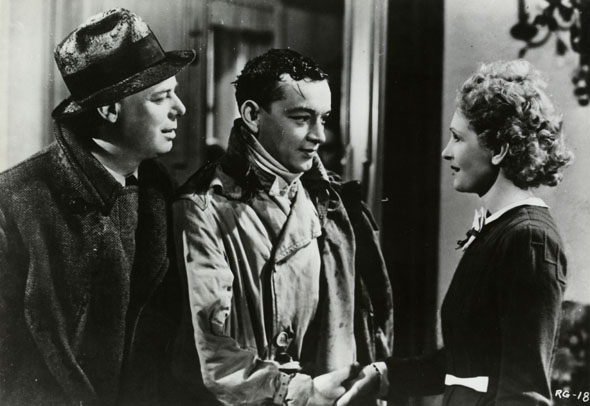
Jean Renoir’s The Rules of the Game

The Rules of the Game. 1939. France. Directed by Jean Renoir

The Rules of the Game. 1939. France. Directed by Jean Renoir

These notes accompany the screenings of Jean Renoir’s </i>The Rules of the Game</a> on March 30, 31, and April 1 in Theater 2.</p>

Saying something new and interesting about La Regle du ju (The Rules of the Game) by Jean Renoir (1894–1979) is more than a challenge. Perhaps no film (with the possible exception of Citizen Kane) has been so universally acclaimed by critics of all stripes and persuasions.
March 22, 2011  |  An Auteurist History of Film
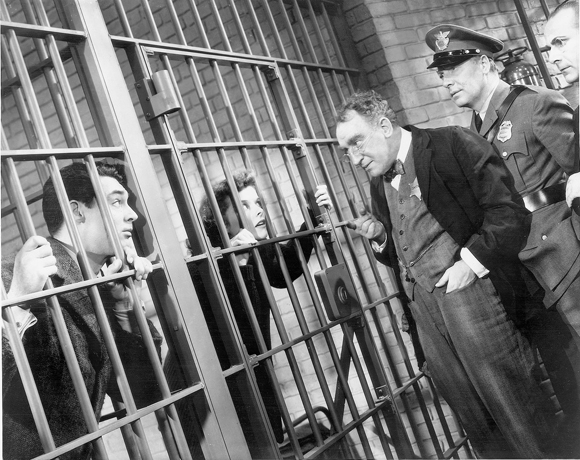
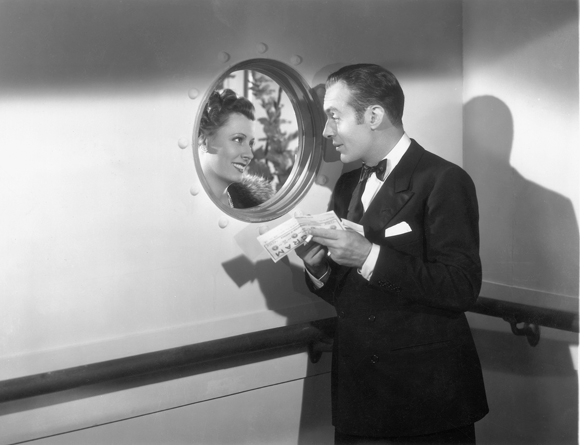
Leo McCarey’s Love Affair

Love Affair. 1939. USA. Directed by Leo McCarey

Love Affair. 1939. USA. Directed by Leo McCarey

These notes accompany the screenings of Leo McCarey’s </i>Love Affair</a> on March 23, 24, and 25 in Theater 2.</p>

Leo McCarey (1898–1969) was a key figure in 1930s Hollywood. We have previously shown two of his Laurel and Hardy shorts; Duck Soup (1933), with the Marx Brothers; and his melancholy meditation on old age, Make Way for Tomorrow (1937). Although we did not include it, The Awful Truth, from the same year, is one of the best screwball comedies, and he made several other noteworthy films during his best decade.

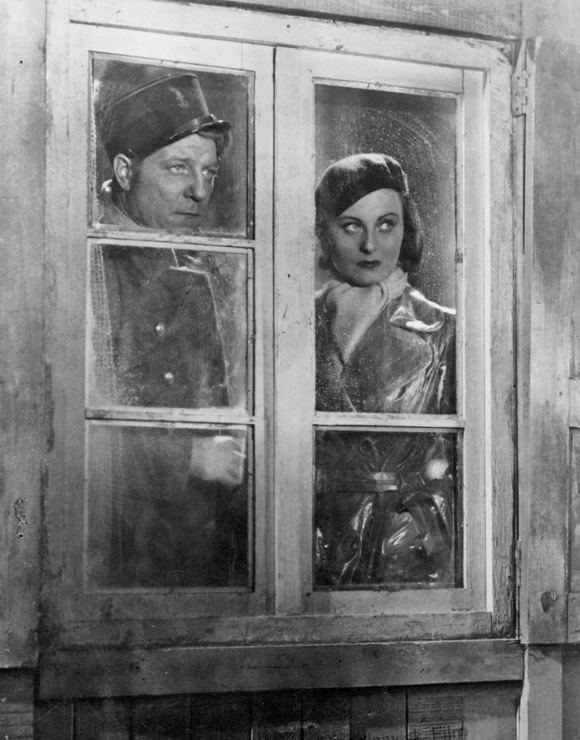
March 15, 2011  |  An Auteurist History of Film
Marcel Carné’s Port of Shadows
March 15, 2011  |  Conservation, Film
Turner Classic Movies Presents 24 Hours of Films Preserved by MoMA

On Wednesday, March 16, Turner Classic Movies (TCM) will celebrate the film preservation work of The Museum of Modern Art with 24-hour program of 14 films drawn from MoMA’s collection. Chief curator of film Rajendra Roy and I flew to Los Angeles in late February to tape cohosting spots with the well-known TCM host Robert Osborne. We were eager to be a part of TCM’s ongoing commitment to spotlighting efforts to protect the world’s cinema heritage. And we also got to sit in the red leather chairs during the interview with Mr. Osborne!

March 14, 2011  |  Film
Celebrating 40 Years of New Directors/New Films


All of us have had the experience of being green (in the “inexperienced” sense, not the “Kermit” sense); that nervousness, insecurity, and exhilaration that propels us through uncharted territory. There are moments like this that are universal: first day of school, new job, first date. For artists, the moment when they present themselves for the first time to critics and discerning audiences can be extremely unsettling. Over the past 40 years the organizers of New Directors/New Films at MoMA and the Film Society of Lincoln Center have embraced the challenge of creating moments of nervous exhilaration for artists and audiences at every screening.

March 8, 2011  |  An Auteurist History of Film
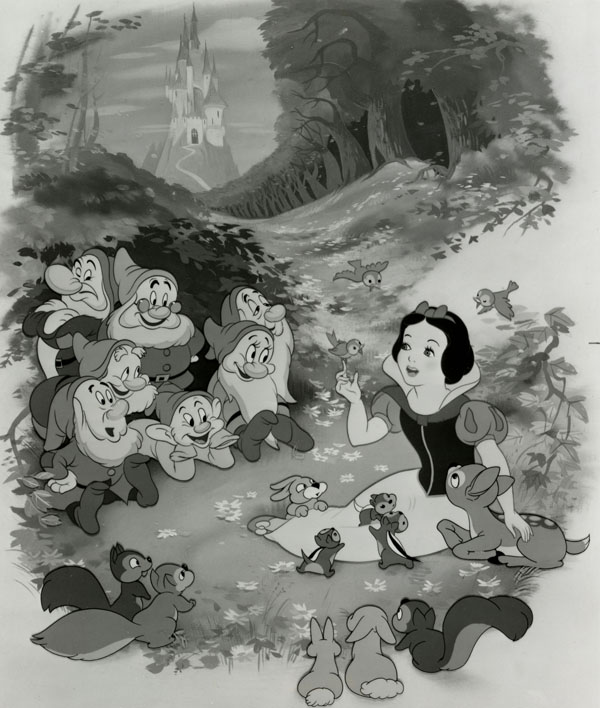
Walt Disney’s Snow White and the Seven Dwarfs

Snow White and the Seven Dwarfs. 1937. USA. Directed by David Hand

Snow White and the Seven Dwarfs. 1937. USA. Directed by David Hand

These notes accompany the screenings of Walt Disney’s </i>Snow White and the Seven Dwarfs</a> on March 9, 10, and 11 in Theater 3.</p>

After excoriating contemporary Hollywood these past two weeks for its evident surrender to the forces of digitization, it may seem a little incongruous to be extolling the virtues of a film that, in its day, represented a kind of technological revolution of its own. No comparable challenge to the existing order in American narrative cinema would come along again until the advent of Star Wars some 40 years later. (I consider Stanley Kubrick’s 2001: A Space Odyssey [1968] to be more experimental than narrative.) The concept of a feature-length movie without human representation—and in Technicolor to boot—must have riled many traditionalists who had endured the innovation of sound only a decade earlier. Snow White and the Seven Dwarfs, which premiered during Christmas week in 1937, was the inevitable culmination of Walt Disney’s financial and artistic success.

March 1, 2011  |  An Auteurist History of Film
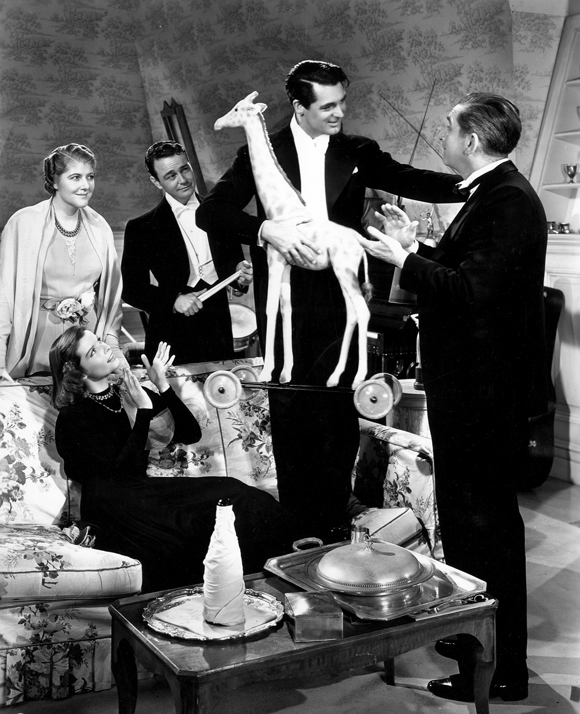
Howard Hawks’s Bringing Up Baby

Bringing Up Baby. 1938. USA. Directed by Howard Hawks

Bringing Up Baby. 1938. USA. Directed by Howard Hawks

These notes accompany the screenings of Howard Hawks’s </i>Bringing Up Baby</a> on March 2, 3, and 4 in Theater 3.</p>

Today’s posting is on Howard Hawks’s Bringing Up Baby, but more on that in a moment. Last week, in praising George Cukor’s Holiday as a product of the Hollywood studio system, I got off onto a bit of a rant about how bad American commercial films have become since the demise of that system. I was completely unaware that Mark Harris covered a lot of the same ground in the February issue of Esquire, in a piece called “The Day the Movies Died.” Harris had much more space, and he knows a great deal more about contemporary Hollywood than I would ever want to know. Although he holds Inception in much higher esteem than I do, the points he makes about the replacement of storytelling skills and character development by technological gimmickry are essentially the same. I promise you I did not know of Harris’s article before I wrote mine. Honest Injun! Cross my heart!

February 22, 2011  |  An Auteurist History of Film
George Cukor’s Holiday
February 15, 2011  |  An Auteurist History of Film
Sergei Eistenstein’s Bezhin Meadow and Alexander Nevsky

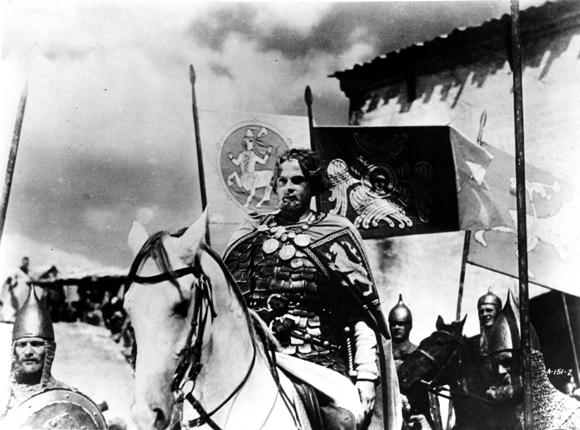
Alexander Nevsky. 1938. USSR. Written and directed by Sergei Eisenstein

Alexander Nevsky. 1938. USSR. Written and directed by Sergei Eisenstein

These notes accompany the screenings of Sergei Eisenstein’s </i>Bezhin Meadow and Alexander Nevsky</a> on February 16, 17, and 18 in Theater 3.</p>

Sergei Eisenstein was born in 1898 and died, at the age of 50, 63 years ago last week. By the age of 30 he was world-renowned for his theory of montage, as applied to his youthful masterpieces Strike, Battleship Potemkin, and October (Ten Days That Shook the World). These films found heroics in collectives (among workers, sailors, or, in the case of his 1929 Old and New, farmers) and in stick-figure commemoration of the Bolshevik Revolutionaries. In 1930, he was invited to come to Hollywood by Paramount Pictures, and during his time there he pursued several aborted projects, including a film version of Theodore Dreiser’s An American Tragedy (which was finally made in 1931 by Josef von Sternberg, vacationing from Marlene Dietrich). To delay returning to Russia, Eisenstein persuaded Upton Sinclair and his wife to finance the intended epic Que Viva Mexico!

February 10, 2011  |  Collection & Exhibitions, Film
Leonardo: Da Vinci at MoMA

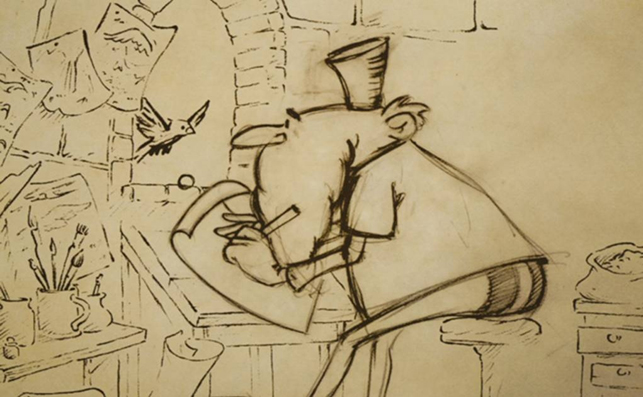
Still image from Leonardo. Directed by Jim Capobianco. 2010

People often ask me, “How do you discover new films for acquisition for the MoMA collection?” This is a good question that mines the basics of curatorial work, but one that is also impossible to answer in a concise manner. Our collection is growing all the time, and each work has its own unique origin story. Here’s one of them.