When I was in graduate school studying art history, we used to joke about the “this looks like this” problem that we perceived as running rampant in the field. Stated simply, the problem is that it’s very easy to find visual similarities between objects that really have nothing historically, contextually, or subjectively to do with each other.
MoMA’s celebration of the landmark year 1913 continues with the ninth in a series of videos highlighting important works from 1913 in the Museum’s collection.
Posted by
Samantha Friedman, Assistant Curator, Department of Drawings and Prints
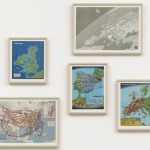
A Trip from Here to There, a recently opened collection exhibition in the Paul J. Sachs Drawings Galleries organized by Jodi Hauptman, Curator, Department of Drawings, and Luis Pérez-Oramas, the Estrellita Brodsky Curator of Latin American Art, explores how peripatetic artists represent the routes of their wanderings. Though the paths they trace are personal, many of these artists adopt printed maps as their starting points;
Posted by
Masha Chlenova, Curatorial Assistant, Department of Painting and Sculpture
Throughout the run of Inventing Abstraction, 1910–1925(December 23, 2012–April 15, 2013) we invited contemporary artists to pick a work and say briefly what they find most compelling about it.
Posted by
Hanna Exel, Louise Bourgeois 12-Month Intern, Department of Drawings and Prints
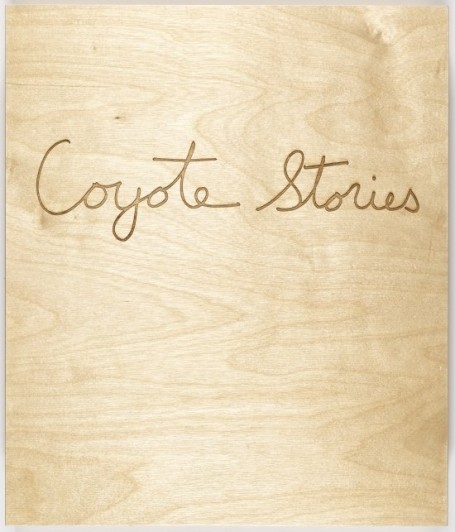
It might surprise you to hear that one of the facets of contemporary printmaking that I find most exciting is projects by artists who work predominately in other mediums. These artists often approach traditional printmaking techniques with a fresh perspective, from which they can frequently discover new ways of using the medium to serve their unique artistic goals. Chris Burden’s 2005 print portfolio Coyote Stories is an excellent example of this exploratory spirit.
Posted by
Hannah Kim, Marketing and Book Development Coordinator, Department of Publications
Tauni Malmgren, Freelance Social Media Coordinator
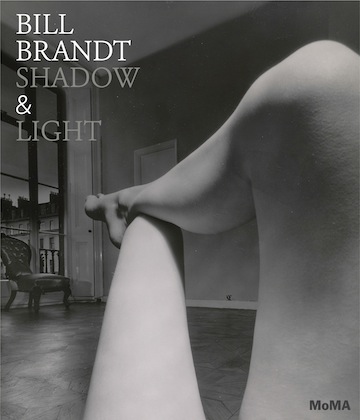
Cover of the exhibition catalogue Bill Brandt: Shadow & Light, published by The Museum of Modern Art
MoMA’s new book Bill Brandt: Shadow and Light by Sarah Hermanson Meister, curator in the Department of Photography at MoMA, is a fresh look at the work of an iconic British photographer. The exhibition currently on view isn’t the first time MoMA has presented Bill Brandt’s work to the public—the last Brandt retrospective was in 1969. Since then, the Museum’s perspective of Brandt’s work has evolved into a more complete consideration of the nuances and variations in Brandt’s own photo-historical approach.
Brandt’s photography is traditionally presented in thematic groupings at the artist’s own request, but this view alone simplifies a body of work that is multifaceted and far-reaching in style, influence, and subject matter. Bill Brandt: Shadow and Light is the most comprehensive overview of Brandt’s work to date, and it attempts to create a coherent trajectory across five decades of his career.
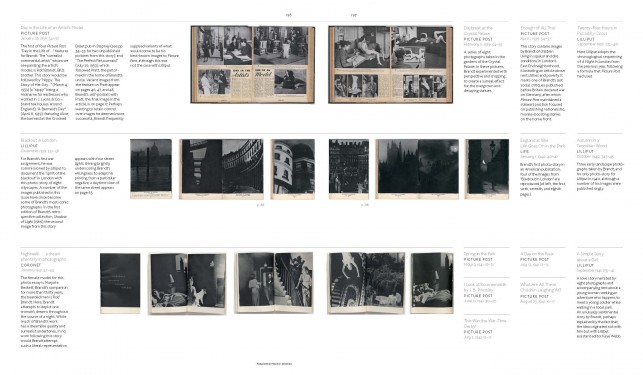
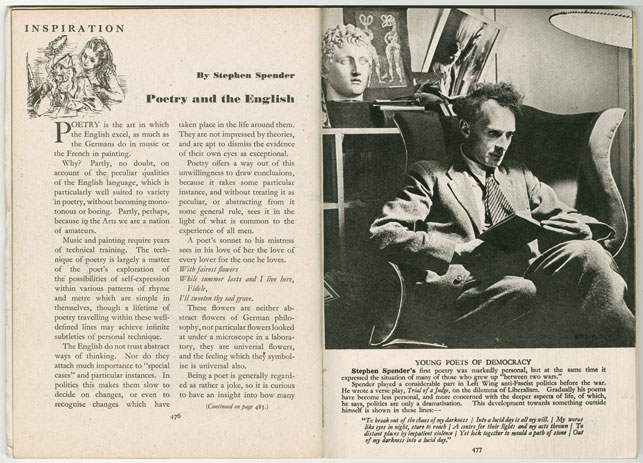
Beyond the 160 tri-tone reproductions of his photographs, the book features a rich appendix that illuminates different aspects of Brandt’s oeuvre. A section on Brandt’s photo-stories from 1939 to 1945 reproduces spreads from the publications in which they originally appeared, and a detailed survey of his methods for retouching his photos is especially fascinating in today’s world of digital cameras, smart phones, and instant photo filters. Brandt often spoke about how important the retouching process was in his work, and by looking at the various tools and techniques he used to edit and perfect his final images, photo conservator Lee Ann Daffner’s illustrated glossary dives deep into Brandt’s working process. As discussed in a prior INSIDE/OUT post, Dating Brandt, the same negative can look completely different depending on when Brandt retouched it.
Sample of Bill Brandt’s published photo-stories in the exhibition catalogue, Bill Brandt: Shadow & Light. The photo-stories are organized chronologically to suggest the breadth of Brandt’s artwork
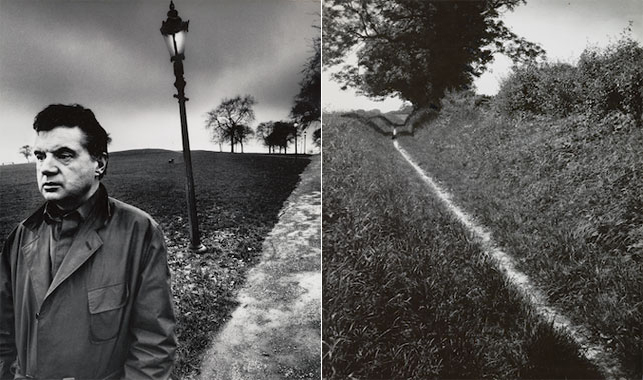
Though his influences, subject matter, and technical approach shifted over his long career, Brandt never lost what Meister describes as “his obvious delight in the uncanny aspects of the everyday.” Her introductory essay opens with a quote from Brandt on the role of a photographer:
I believe this power of seeing the world as fresh and strange lies hidden in every human being. In most of us it is dormant. Yet it is there, even if it is no more than a vague desire, an unsatisfied appetite that cannot discover its own nourishment….This should be the photographer’s aim, for this is the purpose that pictures fulfill in the world as it is to-day. To meet a need that people cannot or will not meet for themselves. We are most of us too busy, too worried, too intent on proving ourselves right, too obsessed with ideas, to stand and stare.
Bill Brandt took the time to “stand and stare” in many different ways. Whether through juxtapositions of class structure, wondrous nudes, inventive portraiture, or unearthly landscapes, Brandt’s far-reaching inspirations and approaches generated arresting imagery that still holds magic and wonder today.
Posted by
Hannah Kim, Marketing and Book Development Coordinator, Department of Publications
Tauni Malmgren, Freelance Social Media Coordinator
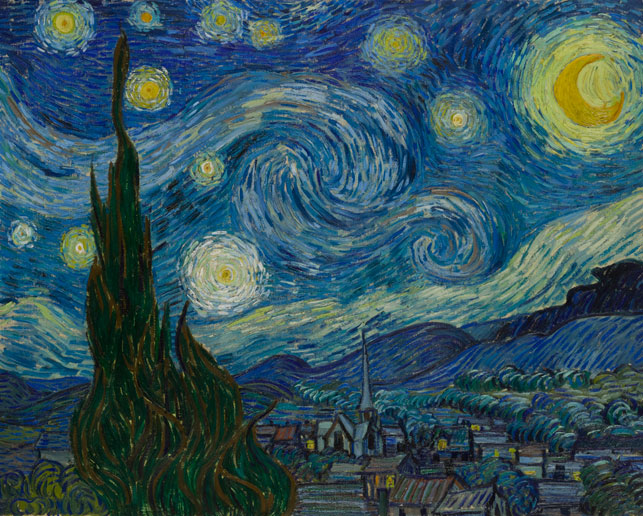
Vincent van Gogh. The Starry Night. 1889. Oil on canvas, 29 x 36 1/4″ (73.7 x 92.1 cm). The Museum of Modern Art, New York. Acquired through the Lillie P. Bliss Bequest
There is hardly an introduction that does Vincent van Gogh’s The Starry Night (1889) justice. It is one of the most recognizable and beloved artworks in the world, and for many MoMA visitors, it is the artwork to see—a celebrity perhaps signifying modern art itself. Yet despite its fame, few viewers are likely familiar with the story behind this unlikely masterpiece, one of the many nighttime paintings Van Gogh produced during his stay at a mental hospital in Saint-Rémy, in the south of France.
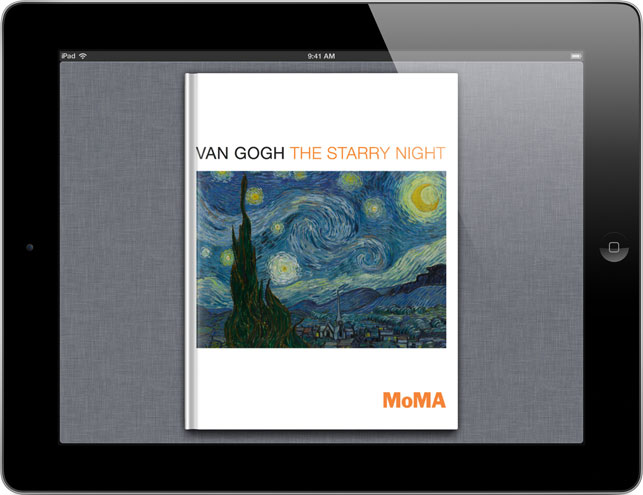
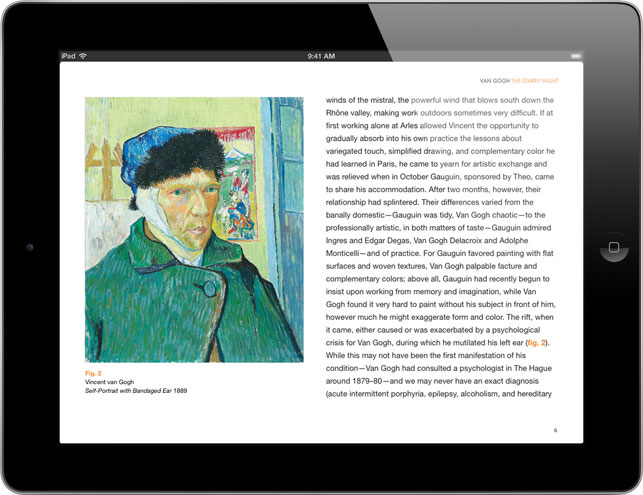
Now available for the iPad, MoMA’s One on One series offers a sustained meditation on The Starry Night by art historian Richard Thomson that sheds light on the painting and transports readers to the environment in which it was created. In Thomson’s engaging essay filled with vivid visual references and snippets of Van Gogh’s personal correspondences, readers can catch a glimpse of the artist’s complex inner workings and the thought processes that went into creating the nighttime scene.
Screenshots from Van Gogh: The Starry Night
What’s more, Thomson examines the physical circumstances behind The Starry Night, taking readers to the actual place where Van Gogh focused his attentions to the night sky, and highlighting the artist’s technique and style. Thomson also considers other artwork that Van Gogh may have seen at the time, placing The Starry Night in a broader historical context.
For more on The Starry Night, visit the iBookstore to download a free sample, and check out the other One on One series book available for the iPad, Rousseau: The Dream, in which MoMA curator Ann Temkin illuminates Henri Rousseau’s last major painting.
Posted by
Brian Bergeron, Assistant Director of Creative, the MoMA Stores
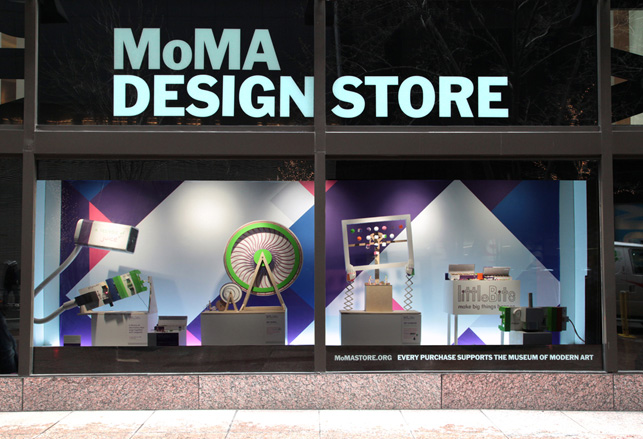
Completed window at the MoMA Design Store midtown Manhattan location
The MoMA Stores have devoted our New York retail windows to feature a very special little product, a product “big enough” to be included in the Museum’s own design collection. The windows include larger than life-size objects that flicker, move, and spin through the technology of littleBits, tiny circuit boards with specific functions engineered to snap together with magnets.
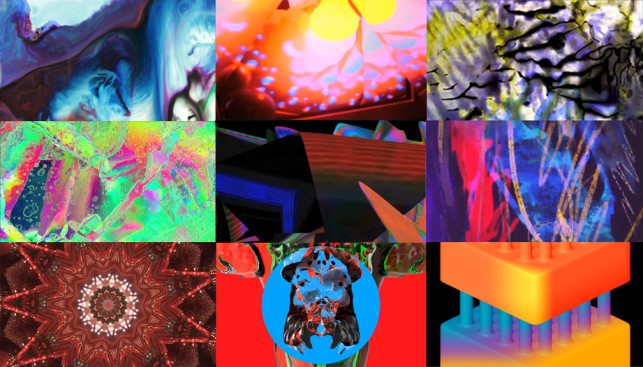
Left to right, top row: Nate Longcope, ashcan orchestra, Heath Iverson; middle row: STALKR, Toban Nichols, Maxwell Sørensen; bottom row: Yuge Zhou, Lawrence Lek, Alphachannel
Just one month ago, the PopRally Committee sent out a call for one-minute abstract videos, and we were astounded to receive over 800 submissions from participants all over the world! All the submissions will be screened this Sunday at the special Poprally event Abstract Currents, which is held in conjunction with the exhibitions Inventing Abstraction, 1910–1925 and Abstract Generation: Now in Print currently on view at MoMA.
As soon as the Le Corbusier’sUnité d’Habitation kitchen arrived in MoMA’s sculpture conservation lab, we began assembling the various components to assess and document their condition.
If you are interested in reproducing images from The Museum of Modern Art web site, please visit the Image Permissions page (www.moma.org/permissions). For additional information about using content from MoMA.org, please visit About this Site (www.moma.org/site).
Welcome to MoMA.org. To take full advantage of all the site’s features, including the option to save works in the collection, please upgrade your browser to Firefox,
Google Chrome, Safari, or Internet Explorer 9.
See our help page for more information.