
MoMA
Posts in ‘Collection & Exhibitions’
June 12, 2013  |  Artists, Collection & Exhibitions
Ell Shapes for Ellsworth Kelly
Image loading...

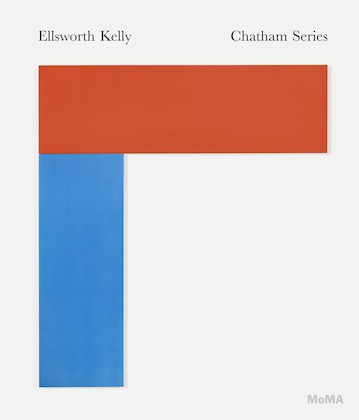
Cover of the exhibition catalogue Ellsworth Kelly: Chatham Series, published by The Museum of Modern Art

The iconic American artist Ellsworth Kelly celebrated his 90 birthday on May 31, and in his honor, MoMA has reunited the 14 ell-shaped paintings of his seminal Chatham Series for the first time since they were originally exhibited in 1972.

Though it is whimsical to think that the ell-shaped canvases were chosen as an ode to ELLsworth kELLy’s big day, the paintings are considered to be among Kelly’s greatest contributions to abstract art. Chief Curator of Painting and Sculpture Ann Temkin details the fascinating story behind the series in MoMA’s new book, Ellsworth Kelly: Chatham Series.

In 1970, Kelly decided to leave New York City, where he had been living and working since the 1950s, for a more rural environment. After a period of exploratory road trips, he settled in Spencertown, two hours north of Manhattan, and established a studio in the nearby town of Chatham. This newfound location proved to be an important influence in Kelly’s artistic development, serving as an inspiration for his work.

Kelly’s studio in Chatham was in a 19th-century brick building featuring nearly 12-foot-tall windows along its upper floor. After spying the striking windows from the sidewalk while exploring the town, Kelly entered the barber shop on the ground floor of the building to inquire about the space and learned that, after stints as an opera house, banquet hall, roller rink, and more, it was functioning as a storage space, holding the town’s Christmas lights. The barber and a neighboring shopkeeper co-owned the space, and they agreed to rent it out to Kelly for $50 a month. The space was far more spacious than any studio Kelly has previous occupied, and the isolated location allowed him to explore his ideas without external influence.

Ellsworth Kelly outside his studio, 13 Main Street, Chatham, 1970

Ellsworth Kelly outside his studio, 13 Main Street, Chatham, 1970

After a year of transforming and customizing the space for his needs, Kelly began work on the first series he would produce there in 1971. Each of the 14 large-scale paintings in the Chatham series are made of two monochromatic canvases that are joined together at a right angle, yet no two are the same, allowing the artist to experiment with color and proportion. Temkins’s essay provides an in-depth exploration of the various aspects of this iconic series, including scale, process, and the reception the Chatham Series received when it was first exhibited to the public at the Albright-Knox Art Gallery in Buffalo, in 1972.
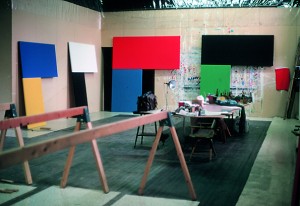
Ellsworth Kelly’s studio, Chatham, New York, 1972

Ellsworth Kelly’s studio, Chatham, New York, 1972

The paintings now belong to 14 different collections, but Ellsworth Kelly: Chatham Series brings them back together for the first time since their debut so museumgoers and readers alike can explore one of Kelly’s most significant achievements in its entirety. For more on the series, download a free PDF sample of the exhibition catalogue for an excerpt from the essay. The book also features as essay by the director of the Albright-Knox Art Gallery that accompanied the first exhibition of the series, vibrant reproductions of each of the 14 paintings, additional illustrations including vintage photographs of Kelly’s studio, and much more.


MoMA Celebrates 1913: Léon Bakst’s Costume design for the ballet The Firebird

MoMA’s celebration of the landmark year 1913 continues with the 11th in a series of videos highlighting important works from 1913 in the Museum’s collection.

Gilbert and Lila Silverman Fluxus Collection Archives Open for Research!
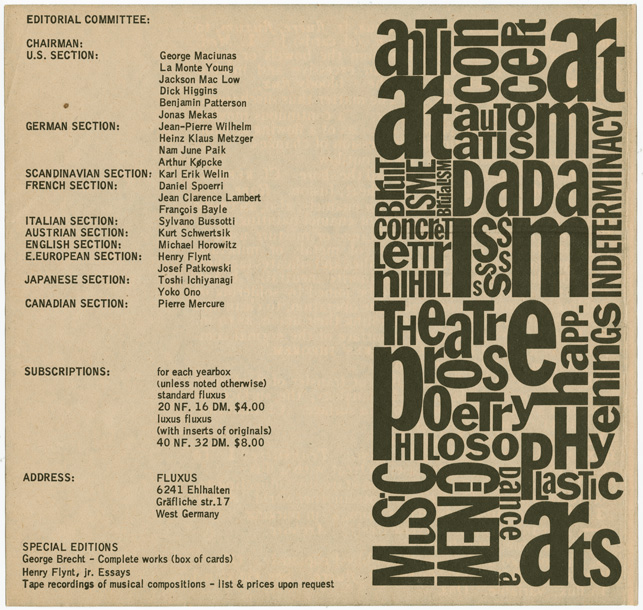
Fluxus was founded as an international publishing company. Games, printed materials, and other multiples by various artists were united by George Maciunas’s unique design sensibility and brilliant typography. These qualities are visible here in this page from Maciunas’s ambitious 1962 prospectus, which lays out his grand plans for Fluxus. Silverman Fluxus Archives, V.F.B.

George Maciunas. Page from 1962 prospectus laying out his grand plans for Fluxus and exemplifying Fluxus’s unique design sensibility and brilliant typography. Silverman Fluxus Archives, V.F.B.

Are you intrigued by artists’ multiples? Engaged by innovative typography? Do you want to learn more about the roots of Conceptual and performative art today, and how artists’ innovation influences curatorial practice?

If so, then I am pleased to inform you that after several years, and more than a few surprises, the Gilbert and Lila Silverman Fluxus Collection Archives are open for research. Scholars will use the archives to study the history of Fluxus and its related artists. But while you might never use the archives, my work as an archivist still has an impact on your experience of Fluxus art at the Museum. The decisions made by myself and the other members of the Fluxus team affect what goes into the galleries, and how those objects are presented to the public.

When Fluxus collectors Gilbert and Lila Silverman donated their vast collection to MoMA in 2008, we didn’t know what we were getting ourselves into. Before it expanded into performance, Fluxus was founded as an international publishing company by George Maciunas. Games, printed materials, and other multiples by various artists were united by Maciunas’s unique design sensibility and brilliant typography. This amazing collection—the world’s largest—had been carefully built for decades by Fluxus scholar Jon Hendricks, who aimed to present a complete history of Fluxus: not just artworks, but documentation and books as well. MoMA decided to split the Silverman Collection into three parts: works of art to the Department of Prints and Illustrated Books, for their facility at handling editions; documentation to the Museum Archives; and publications to the Library.

For the past two years, I’ve been the archivist responsible for processing the collection’s many wonderful manuscripts, notes, letters, and countless other documents into an organized research collection. That day has finally arrived—but getting here has been a long, strange journey.

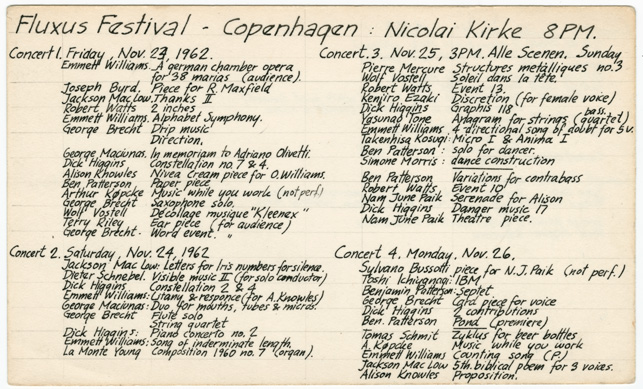
Fluxus founder George Maciunas kept index cards which listed the works that were performed at concerts and festivals organized by him and his fellow artists. Along with photographs and recordings, written accounts such as these are the only records we have of such historical performances. Silverman Fluxus Archives, V.D.1.8.

George Maciunas kept index cards which listed the works that were performed at concerts and festivals organized by him and his fellow artists. Along with photographs and recordings, written accounts such as these are the only records we have of such historical performances. Silverman Fluxus Archives, V.D.1.8.

Fluxus thwarts all attempts at categorization. How can one distinguish “artwork” from “document,” when Fluxus artists actively strove to break down the border between art and life? How can we exhibit a work of performance art, when all that remains of it is a few photographs and written accounts? These are the sorts of documentary objects that researchers expect to find in archives, but as curators seek to display ephemeral and other dematerialized artworks, they are increasingly included in art exhibitions.

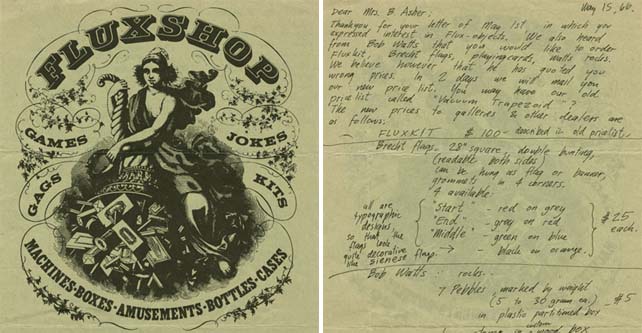
The image on the left is a lovely example of George Maciunas’s graphic design work, which is certainly a work of art. But as he used it as stationery – the letter to the right was written on its back in 1966 – it’s also an important archival document. Detail of Fluxshop stationery, with letter from George Maciunas to Betty Asher on verso, Silverman Fluxus Archives, V.A.1.1.

The image on the left is a lovely example of George Maciunas’s graphic design work, which is certainly a work of art, but as he used it as stationery—the letter to the right was written on its back in 1966—it’s also an important archival document. Detail of Fluxshop stationery, with letter from George Maciunas to Betty Asher on verso, Silverman Fluxus Archives, V.A.1.1.

Such quandaries are essential to understanding Fluxus. But they are particularly troublesome for an institution like MoMA, which is accustomed to maintaining separate departments for different types of objects. It’s no secret that MoMA didn’t collect many Fluxus works in the 1960s and 1970s, at the time of their creation, which means that the Silverman Collection fills a very significant gap. But in processing the archives, I came to understand our forebears’ reluctance: Fluxus is too fluid, too rebellious, too anti-institutional to enter an institution without a fight. It’s too many things at once.

That’s why myself and the other members of the Fluxus team quickly realized that we’d have to take a cue from Fluxus itself, and learn to be a little more fluid ourselves. We understood that sometimes artifacts need to be considered artworks, and other times works of art function like documents. It means that serious Fluxus researchers may need appointments with all three departments. But it also means that researching Fluxus will be as much of an adventure as processing it was.

To learn more about Fluxus, the Silverman Collection, or its processing, check out the finding aid online.

The Silverman Fluxus Archives can be consulted by appointment at the MoMA Archives reading room at MoMA QNS; open Mondays, 11:00 a.m. to 5:00 p.m. Appointments can be made through the Archives contact form.

May 24, 2013  |  Artists, Collection & Exhibitions
Dramaturgy and Gut: Inside Claes Oldenburg’s Mouse Museum
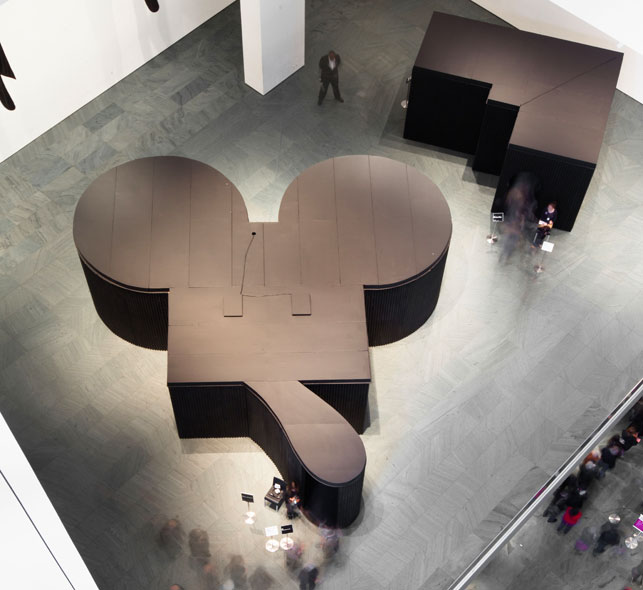
Installation view of Claes Oldenburg: Mouse Museum/Ray Gun Wing at The Museum of Modern Art, New York (April 14–August 5, 2013). Photo by Jason Mandella. © 2013 The Museum of Modern Art

Installation view of Claes Oldenburg: Mouse Museum/Ray Gun Wing at The Museum of Modern Art, New York (April 14–August 5, 2013). Photo by Jason Mandella. © 2013 The Museum of Modern Art

There are people sighing in the Mouse Museum. They are moaning, clucking, and cooing, too.(1) There’s no telling which objects elicit which murmured reaction, since part of Mouse Museum’s potency derives from affinities between things

Oldenburg’s Burgers: Delicious at All Ages
Cover of What is Contemporary Art? A Guide for Kids by Jacky Klien and Suzy Klein, published by The Museum of Modern Art

Cover of What is Contemporary Art? A Guide for Kids by Jacky Klein and Suzy Klein, published by The Museum of Modern Art

MoMA’s current exhibition, Claes Oldenburg: The Street and The Store, celebrates the early years of artist Claes Oldenburg’s extraordinary career, when he experimented with painting and sculpture by reworking the stuff of every day into larger than life objects made with unexpected materials.

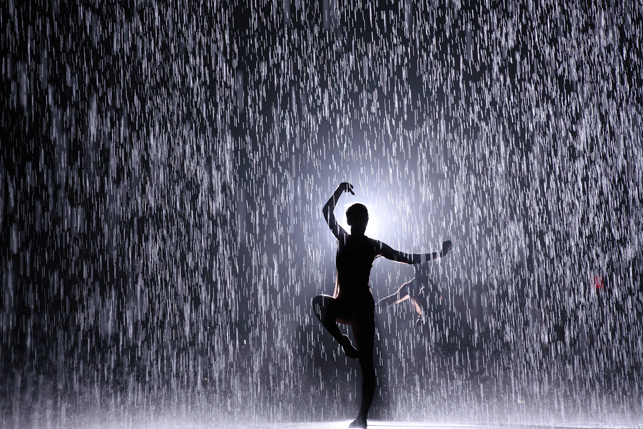
Making the Rain

Rain Room‘s conception was swift. We were coming up with ideas for dropping an image from above, so each individual pixel would fall into place, using water on water-reactive ground.

Henri Labrouste’s “Precision and Liberty”
Image loading...

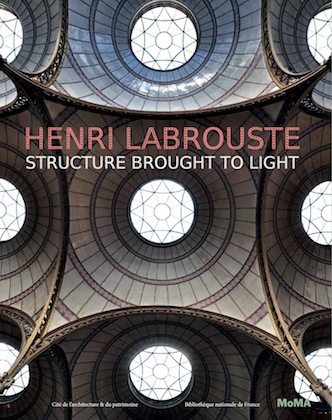
Cover of the exhibition catalogue Henri Labrouste: Structure Brought to Light, published by The Museum of Modern Art

French architect Henri Labrouste (1801–1875) may not be an instantly recognizable name, yet he is one of the most influential precursors of modern architecture. Most well known for two luminous library reading rooms built in Paris in the 1800s, the Bibliothèque nationale de France (1838–50) and the Bibliothèque Sainte-Geneviève (1859–75), Labrouste has been long admired by both modernists and postmodernists for his innovative embrace of then-new technologies, like cast iron and gas lighting.

May 6, 2013  |  Collection & Exhibitions
Artist’s Choice: Trisha Donnelly Gets an Extension and a New Visitor

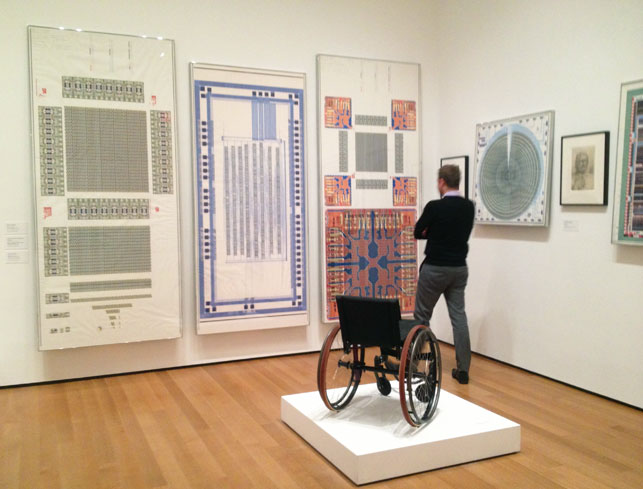
Taking in computer-chip diagrams in Artist's Choice: Trisha Donnelly

Taking in computer-chip diagrams in Artist’s Choice: Trisha Donnelly

I’ve got some fantastic news to share: we recently extended the exhibition Artist’s Choice: Trisha Donnelly</a>—it will now be on view in our fourth- and fifth-floor collection galleries until July 28.

May 2, 2013  |  Collection & Exhibitions
Watching the Sweeper’s Clock

According to Albert Einstein, “The only reason for time is so that everything doesn’t happen at once.”

Sweeper'sClock

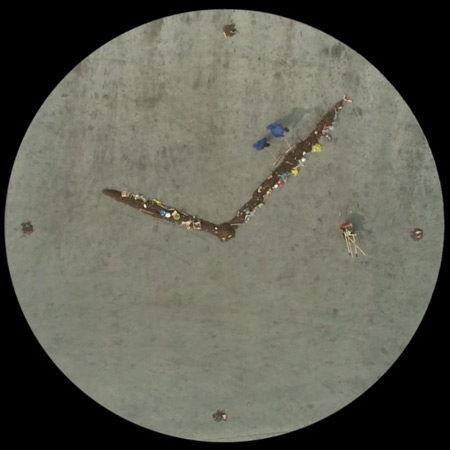
Maarten Baas. Sweeper’s Clock. 2009. Video, 720 min. The Museum of Modern Art, New York. Gift of the designer

As much as I like that idea, and really I do, it seems to me that all too often time stops doing its job, and instead everything starts happening at once, or at least not happening in a timely fashion.

MoMA’s Pollock Conservation Project: Video Update on One: Number 31, 1950


Over the past nine months, Inside/Out readers have been following MoMA’s Jackson Pollock Conservation Project, the study and restoration of three iconic Pollock paintings in the Museum’s collection.