MoMA’s celebration of the landmark year 1913 continues with the eighth in a series of videos highlighting important works from 1913 in the Museum’s collection.


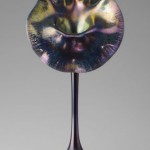
MoMA’s celebration of the landmark year 1913 continues with the eighth in a series of videos highlighting important works from 1913 in the Museum’s collection.
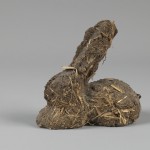
Without question, one of the most popular works in the Dieter Roth exhibition Wait, Later This Will Be Nothing, is the seasonally appropriate Bunny-dropping-bunny (Karnickelköttelkarnickel). With Easter just around the corner, jelly bean eggs and chocolate bunnies seem to be everywhere, including here in the galleries at MoMA.
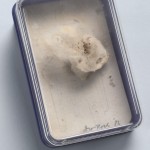
The title of the exhibition Wait Later This Will Be Nothing: Editions by Dieter Roth befits a number of the works on display that are slowly decomposing in front of spectators’ eyes. This post is dedicated to one particular pocket-sized perishable—Roth’s Pocket Room (Taschenzimmer) from MoMA’s Gilbert and Lila Silverman Fluxus Collection. In 1968, Dieter Roth—who challenged the boundaries of printmaking and publishing by integrating cheese, fruit, sausage, chocolate, and other organic materials into the process—released an unlimited edition comprising a banana slice on stamped paper tucked inside of a plastic container small enough to fit into the owner’s pocket.
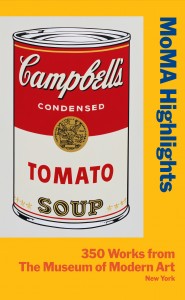
Cover of MoMA Highlights: 350 Works from The Museum of Modern Art, published by The Museum of Modern Art
Although the word “modern” will always spark some debate over its definition, The Museum of Modern Art has been committed since its founding in 1929 to collecting and sharing with the public the most compelling art of our time.

MoMA’s celebration of the landmark year 1913 continues with the seventh in a series of videos highlighting important works from 1913 in the Museum’s collection.


Cover of the exhibition catalogue Wait, Later This Will Be Nothing: Editions by Dieter Roth, published by The Museum of Modern Art

It’s always exciting to try new things as part of MoMA’s graphic design team. In the case of Applied Design, the new Department of Architecture and Design exhibition curated by Paola Antonelli and Kate Carmody, we got to challenge ourselves by using technology featured in the show to program a moving, dynamic title wall.
Exhibition research often takes curators to archives, museums, private collections, and galleries. These are usually pristine spaces, where voices are hushed, light levels are low, and temperature and humidity are carefully controlled. But I experienced something very different as I investigated the work of Dieter Roth (Swiss, born Germany. 1930–1998), featured in the current exhibition Wait, Later This Will Be Nothing: Editions by Dieter Roth.

MoMA’s celebration of the landmark year 1913 continues with the sixth in a series of videos highlighting important works from 1913 in the Museum’s collection.

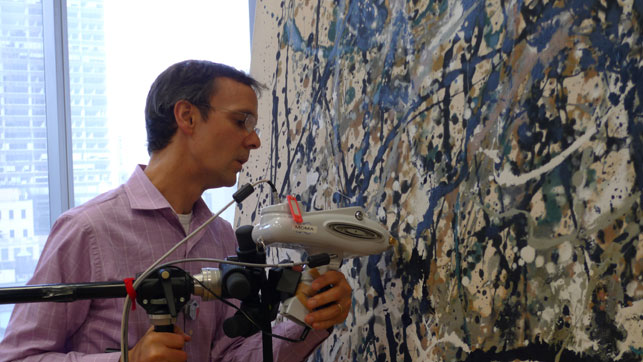
Conservation scientist Chris McGlinchey conducts elemental analysis using a handheld X-ray Fluorescence (XRF) analyzer
Empirical examination and scientific analysis are fundamental to conservation research and treatment; conservators frequently collaborate with scientists in order to clarify specific questions: to identify materials, elucidate degradation mechanisms, or test the efficacy of conservation methods.
If you are interested in reproducing images from The Museum of Modern Art web site, please visit the Image Permissions page (www.moma.org/permissions). For additional information about using content from MoMA.org, please visit About this Site (www.moma.org/site).
© Copyright 2016 The Museum of Modern Art