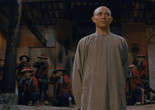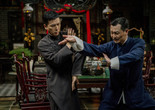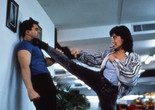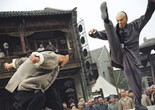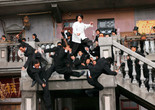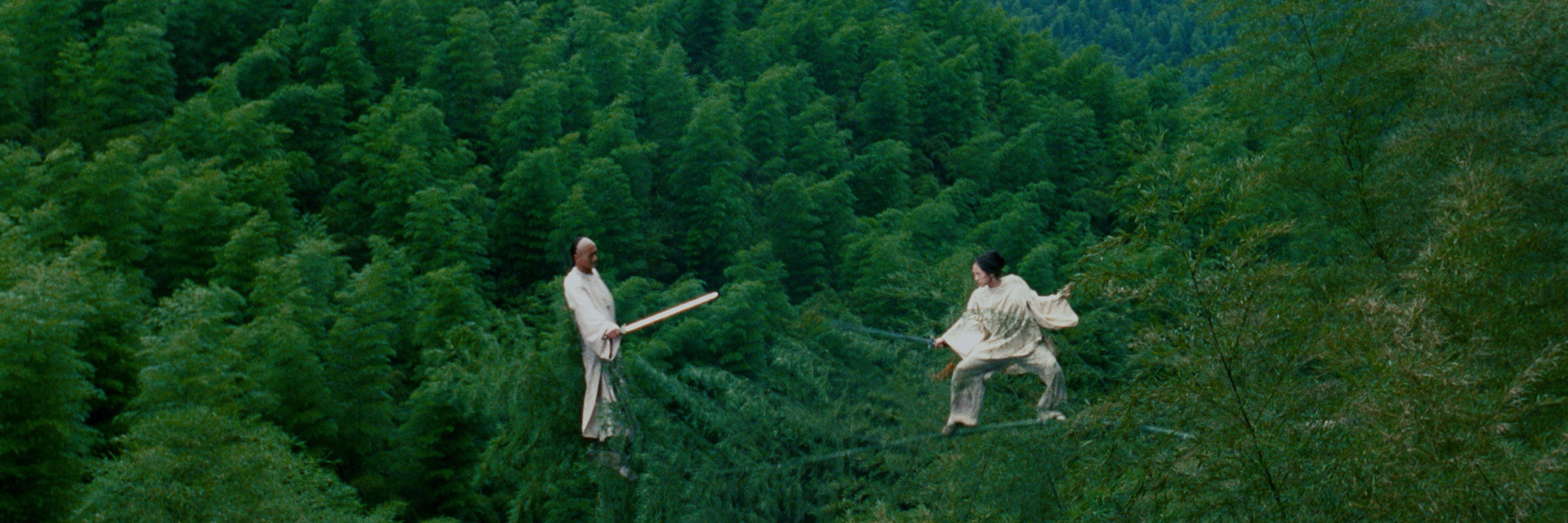
In a Hong Kong film industry overflowing with martial arts talent, Yuen Woo-ping stands apart. His legendary influence, in a career spanning more than five decades, has earned him the widely celebrated, industry-bestowed moniker “天下第一武指,” which translates as “The Number One Martial Arts Director Under the Sky.” As both film director and action choreographer, Yuen helped elevate martial arts cinema into a sophisticated art form, blending technical precision with character, poetry, and astonishing physical invention. His choreography prioritizes movement legibility, spatial clarity, and expressive geometry over brute force, reshaping the visual grammar of global action filmmaking.
Born into a family of Peking Opera performers, Yuen grew up in a tradition where drama, martial arts, acrobatics, and dance were inseparable—a heritage linking him to contemporaries like Jackie Chan and Sammo Hung, who emerged from the same rigorous training. Yuen’s father, Yuen Siu-tien, an accomplished opera performer, actor, and martial arts director, introduced his children to the film set. The Yuen siblings began as stunt performers and rose through the ranks. Together they formed the Yuen Clan, becoming some of Hong Kong cinema’s most respected stunt performers and action directors.
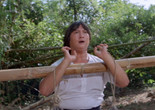
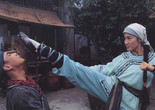
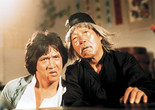
Yuen’s first two films as a director, Snake in the Eagle’s Shadow and Drunken Master (both 1978), launched Chan’s stardom. By shifting martial arts cinema away from solemn violence to wit, personality, and comedic invention, the films established a template for Chan’s career. Yuen went on to collaborate with icons like Hung, Jet Li, Michelle Yeoh, and Donnie Yen, while consistently demonstrating an unparalleled ability to train performers of all backgrounds—including Hollywood stars like Keanu Reeves and Uma Thurman—in his intensive “fight camps.”
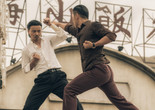
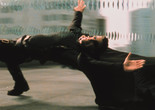
Yuen’s work on The Matrix (1999), which seamlessly integrates Hong Kong wirework—human-controlled harnesses and cables that propel and suspend performers—with science fiction, fundamentally altered how Hollywood approaches action. With Crouching Tiger, Hidden Dragon (2000) he showed that martial arts could deepen a film’s emotional and intellectual resonance as much as its spectacle. Yuen’s extraordinary adaptability made him the definitive collaborator for visually distinct auteurs as diverse as Stephen Chow, Ang Lee, Quentin Tarantino, Tsui Hark, the Wachowskis, and Wong Kar Wai. Decades after his debut, Yuen’s latest epic, Blades of the Guardians (2026), proves his vision still dictates the rhythm of modern action cinema.
Organized by La Frances Hui, Curator, with Olivia Priedite, Film Program Coordinator, Department of Film.
Film at MoMA is made possible by CHANEL.
Additional support is provided by the Annual Film Fund. Leadership support for the Annual Film Fund is provided by The Contemporary Arts Council of The Museum of Modern Art, Agnes Gund through The International Council of The Museum of Modern Art, the Association of Independent Commercial Producers (AICP), and The Young Patrons Council of The Museum of Modern Art.
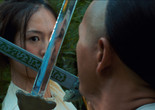



![The Grandmaster (一代宗師). [Hong Kong cut]. 2013. Hong Kong/China. Directed by Wong Kar Wai. Courtesy Block 2 Distribution LTD](/d/assets/W1siZiIsIjIwMjYvMDgvMjEvODd5aHh3dXdwaF9HTV9TdGlsbF8xMS5qcGciXSxbInAiLCJjb252ZXJ0IiwiLXF1YWxpdHkgOTAgLXJlc2l6ZSAxNTV4MTEwXiAtZ3Jhdml0eSBDZW50ZXIgLWNyb3AgMTU1eDExMCswKzAiXV0/GM_Still%2311.jpg?sha=71bfb343fdd32982)