

MoMA
Posts in ‘Learning and Engagement’
July 8, 2013  |  Learning and Engagement
To MOOC or Not to MOOC? MoMA Says YES

Massively Open Online Courses (MOOCs) have been loudly heralded in the news as being either the savior or the destroyer of education’s future. MOOCs are being created by the hundreds every year and attended by thousands per course. Why? Apparently everyone is eager to engage in high quality educational programs taught by world experts for free. I have enrolled in some terrific MOOCs and some terrible ones, seen great student interaction in the discussion boards and some unfortunate exchanges of misinformation. MOOC student interaction often gets tricky and frequently overwhelming, but it’s always amazing to be in a class with thousands of students from all over the world, all communicating with each other on a single topic of interest. It is exhilarating to experience global, intellectual connectivity.
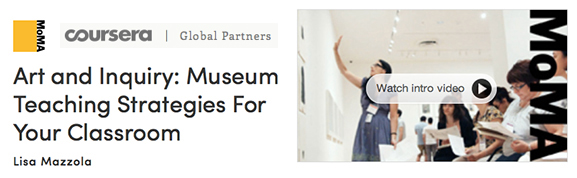
Coursera website

Screenshot of MoMA’s “Art and Inquiry” course page on the Coursera website

As you may remember from my previous blog post, MoMA already offers a robust program of online courses that are NOT MOOCs because: 1. The “instructor-led” course attendance is limited to under 45 students (35 students is the cap for studio courses)—definitely NOT “massive”—and 2. Students pay a fee for the MoMA online course service, so they are not “open” in the same way as a free MOOC. However, earlier this year one of the largest MOOC providers Coursera, asked us to contribute to a new venture: creating MOOCs for primary and secondary school teachers looking for professional development opportunities. After a quick check-in with Lisa Mazzola, MoMA’s assistant director in charge of School and Teacher Programs, we agreed to join Coursera in this important work.

Why? Teachers are such an important audience for MoMA, and not just art teachers. Teachers of all kinds use our new MoMA Learning website that is chock full of in-depth and ready-to-use information, including slide sets, videos, and images. But teachers also need modeling and mentoring on how to use museum materials and teaching methods effectively. We offer some on-the-ground teacher workshops on this subject, but we never have enough space or time to accommodate the large number of teachers who request help. We want to experiment with MOOCs as a platform to build teachers’ skills in inquiry-based learning techniques while also engaging them in peer-to-peer learning strategies. We think teachers will love collaborating on the coursework and exchanging ideas about their practice with peers from all over the world. And we know they will appreciate the price of admission: free!

Our first MOOC, “Art and Inquiry,” begins July 29 and as of this post, there are over 8,000 enrolled. You can learn more about the course on Coursera’s website, and keep an eye out for Lisa Mazzola’s forthcoming blog post about creating MoMA’s first MOOC.
June 24, 2013  |  Learning and Engagement
Quick Fire! A Crash Course in Design Thinking
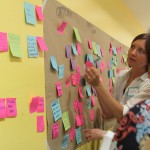
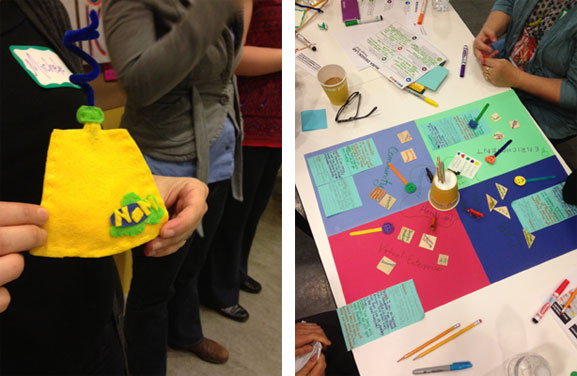
Prototypes of design solutions for education

Prototypes of design solutions for education

On June 6, in collaboration with staff from the Education Department at MoMA, we hosted 25 teachers representing the New York City Tri-State area, Pennsylvania, and Toronto—public, private, and charter schools

May 28, 2013  |  Learning and Engagement
MoMA Online Courses: Creating Color
Johannes Itten. Color Sphere in 7 Light Values and 12 Tones (Farbenkugel in 7 Lichtstufen und 12 Tönen). 1921. Lithograph

Johannes Itten. Color Sphere in 7 Light Values and 12 Tones (Farbenkugel in 7 Lichtstufen und 12 Tönen). 1921. Lithograph, composition (irreg): 17 3/16 x 11 7/16″ (43.7 x 29 cm); sheet: 18 5/8 x 12 9/16″ (47.3 x 31.9 cm). Committee on Prints and Illustrated Books Fund. © 2013 Johannes Itten/Artists Rights Society (ARS), New York/PROLITTERIS, Switzerland

“Color deceives continuously.” – Josef Albers

Take a deep breath…

Eugène Delacroix, Neo-Classicism, Romanticism, Claude Monet, Auguste Renoir, Camille Pissarro, Post-Impressionists

Welcome to MoMA Studio: Exchange Café

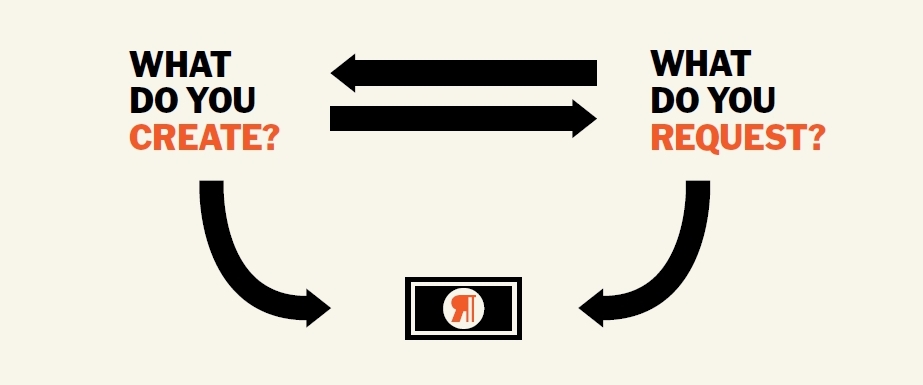
Exchange Flow Graphic

MoMA Studio: Exchange Café honors the power of reciprocity. From everyday barter practices to artistic exchange systems, I aim to make legible a relationship between works in MoMA’s collection and contemporary movements to reclaim the commons.

May 13, 2013  |  Learning and Engagement
Practice and Progress: The MoMA Alzheimer’s Project Exchange

I used to take dance classes as a kid, and I remember the first time I walked into MoMA I was struck by the gallery floors—perfect for dancing.

May 13, 2013  |  Learning and Engagement
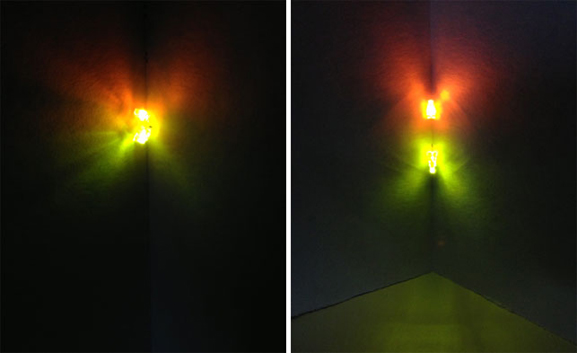
The Ghosts of Gallery 20: Discovering Dan Flavin
Installation shots of students’ Dan Flavin–inspired post-visit project

Installation shots of students’ Dan Flavin–inspired post-visit project

After seven years of working at MoMA as a school programs educator, I still treated Gallery 20 as a glorified hallway. As we scurried through on the way to the more crowd-pleasing Pop art in Gallery 19, I virtually shielded my eyes

Make It Work: In the Studio with the Quest to Learn School

Put a group of student artists in a room with five hours to complete three days’ worth of work—and then tell them they have to exhibit their work to the public at MoMA the following day.

April 15, 2013  |  Learning and Engagement, Tech
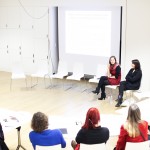
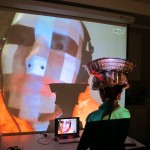
Tuning in and Hanging Out: Kicking Off the Art Hangs with MoMA Learning Series

On April 4, I teamed up with fellow educators Lisa Mazzola and Jessica Baldenhofer to kick off Art Hangs with MoMA Learning, an experimental series of Hangout on Air gatherings hosted by educators at MoMA.

March 18, 2013  |  Learning and Engagement
“Hoi!” from Holland: The MoMA Alzheimer’s Project Goes Global

The Museum of Modern Art’s Department of Education serves thousands of diverse visitors each year through its programs, from the local Girl Scout troop, to older adults in long-term care residences, to English-language learners who’ve only recently arrived in New York.

MoMA In the Making: A “Visit” from Reactor

Kerry Downey and Douglas Paulson, two artists who use collaboration as the basis of much of their own work, are the creative forces behind this season’s In the Making course for teens titled Clubs, Gangs, and Secret Societies: The Art of Working Collaboratively. For the past six weeks, they’ve been leading their collective of NYC youths through a variety of projects and activities exploring the history and philosophy surrounding artists working together in order to create collaborative art.