
MoMA
Posts in ‘Collection & Exhibitions’
Introducing Young Frank, Architect
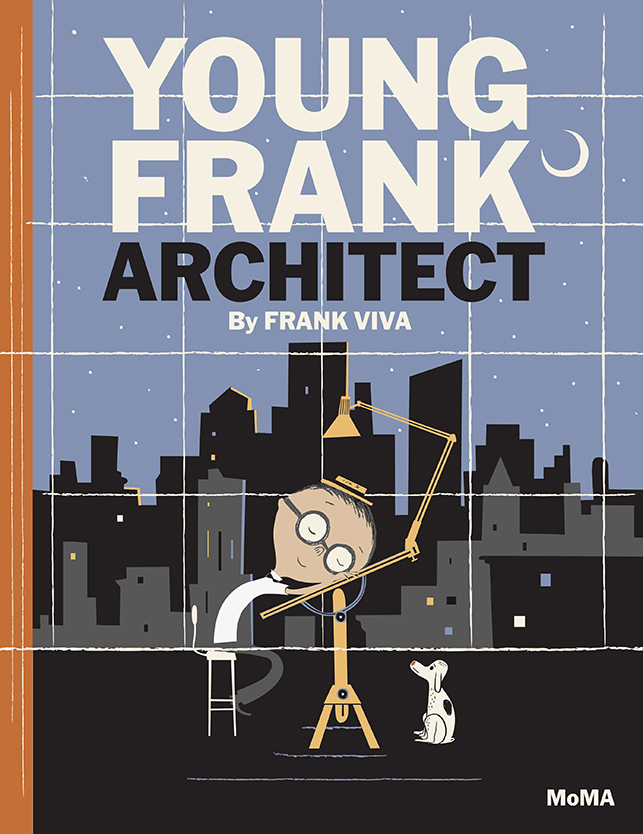
Cover of <i>Young Frank, Architect</i>

Cover of Young Frank, Architect, published by The Museum of Modern Art

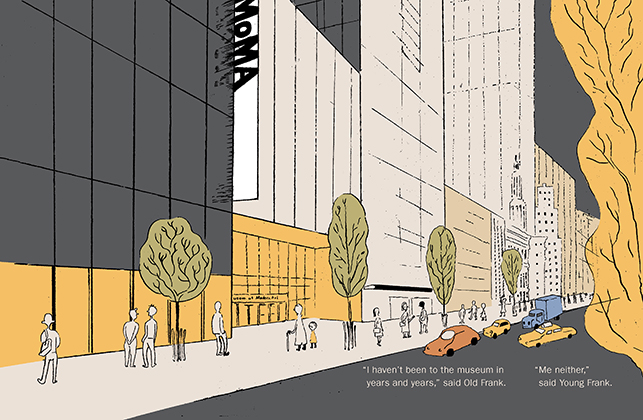
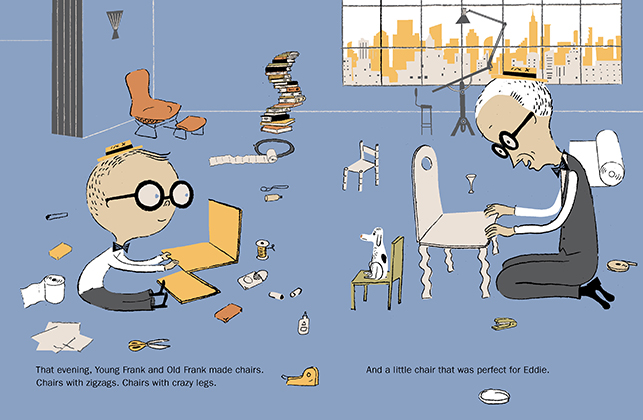
Young Frank, Architect, MoMA’s first storybook for kids ages three to eight, follows the adventures of Young Frank, a resourceful young architect who lives in New York City with his grandfather, Old Frank, who is also an architect. Young Frank sees creative possibilities everywhere, and likes to use anything he can get his hands on—macaroni, old boxes, spoons, and sometimes even his dog, Eddie—to creates things like chairs out of toilet paper rolls and twisting skyscrapers made up of his grandfather’s books. But Old Frank is skeptical; he doesn’t think that’s how REAL architects make things.

One day, donning matching bow ties, straw boater hats, and Le Corbusier-inspired glasses, they visit The Museum of Modern Art, where they see the work of renowned architects like Frank Gehry and Frank Lloyd Wright. And they learn that real architects do in fact create wiggly chairs, twisty towers, and even entire cities. Inspired by what they see, Young Frank and Old Frank return home to build structures of every shape and size: “tall ones, fat ones, round ones, and one made from chocolate chip cookies.”

Spread from <i>Young Frank, Architect</i>

Spread from Young Frank, Architect

Spread from <i>Young Frank, Architect</i>

Spread from Young Frank, Architect

Spread from <i>Young Frank, Architect</i>

Spread from Young Frank, Architect

Written by award-winning children’s author and illustrator Frank Viva, a frequent cover artist for The New Yorker whose previous books include Along A Long Road and A Long Way Away, Young Frank, Architect is an inspiration for budding architects as well as a lesson for those who think they’ve seen everything. With its rich color palette of grays, olives, ambers, and cream (it’s printed using nine colors instead of the usual four), it’s a great introduction to MoMA’s diverse architecture and design collection, which includes surprising objects like Arthur Young’s helicopter in addition to furniture and architectural models.

Young Frank, Architect is a MoMA Exclusive for the month of August, meaning it’s available only at the MoMA Stores now through its wide release in September. Snag a copy and spend the dog-days of August exploring architecture. What will it inspire you to build?

To see more of Young Frank’s adventure, check out our video book trailer below.

August 1, 2013  |  Collection & Exhibitions
Two Views of Walker Evans’s American Photographs
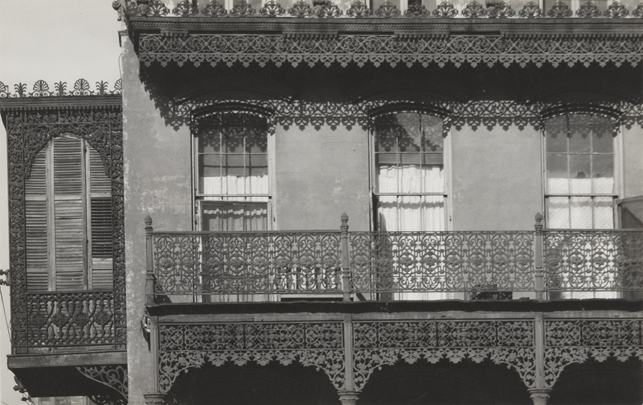
Walker Evans. House in New Orleans. 1935. Gelatin silver print. 3 5/16 x 5 5/16" (8.5 x 13.5 cm). Anonymous Fund

Walker Evans. House in New Orleans. 1935. Gelatin silver print, 3 5/16 x 5 5/16″ (8.5 x 13.5 cm). Anonymous Fund. Evans gave this print to MoMA in the spring of 1938, and the cropping matches the one in the original exhibition.

In 1938, 75 years ago this fall, MoMA installed its first one-person photography show, comprising 100 prints by Walker Evans, with the self-consciously ambiguous title American Photographs. (After all, what exactly makes a photograph American?)

July 10, 2013  |  Collection & Exhibitions
The Sublime Imaginings of Architectural Drawing
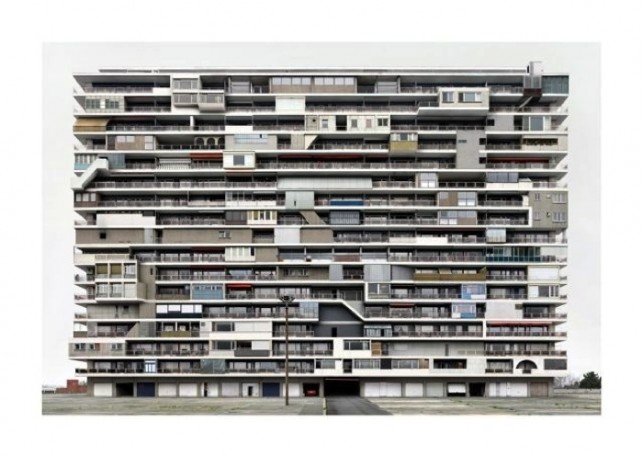
Filip Dujardin, Untitled from the series Fictions. 2009.  Pigmented inkjet print, 43 5/16 x 61" (110 x 154.9 cm). Gift of Andre Singer. © 2013 Filip Dujardin/Highlight Gallery

Filip Dujardin, Untitled from the series Fictions. 2009. Pigmented inkjet print, 43 5/16 x 61″ (110 x 154.9 cm). Gift of Andre Singer. © 2013 Filip Dujardin/Highlight Gallery

I find there is something wonderfully sublime about architectural drawings, and lucky for me, as the preparator for the Department of Architecture and Design, I get to see a lot of them, particularly when the curators prepare a new exhibition of works from the collection like the current installation Cut ‘n’ Paste: From Architectural Assemblage to Collage City.

July 4, 2013  |  Artists, Collection & Exhibitions
Happy Independence Day from MoMA
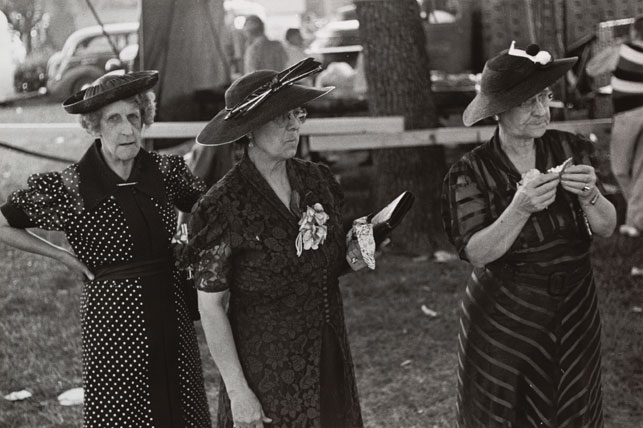
Ben Shahn. Women at Fourth of July Carnival and Fish Fry, Ashville, Ohio. 1938. Gelatin silver print

Ben Shahn. Women at Fourth of July Carnival and Fish Fry, Ashville, Ohio. 1938. Gelatin silver print. 6 1/2 x 9 1/2″ (16.5 x 24.1 cm). Gift of the Farm Security Administration

From all of us here at MoMA, have a wonderful Fourth of July!

MoMA Celebrates 1913: Constantin Brancusi’s Mlle Pogany

MoMA’s celebration of the landmark year 1913 continues with the 12th in a series of videos highlighting important works from 1913 in the Museum’s collection.

June 28, 2013  |  Collection & Exhibitions, Design
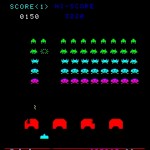
Video Games: Seven More Building Blocks in MoMA’s Collection
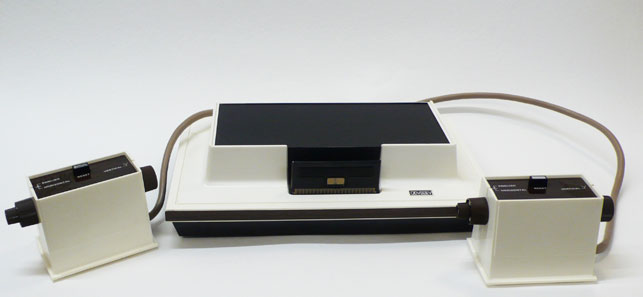
Ralph Baer. Magnavox Odyssey. 1972. Manufactured by Magnavox

Ralph Baer. Magnavox Odyssey. 1972. Various materials. Purchase

Quite a lot has happened since we announced the first 14 video games to enter the MoMA collection, seven months ago.

June 26, 2013  |  Artists, Collection & Exhibitions
Revisiting The Store by Claes Oldenburg
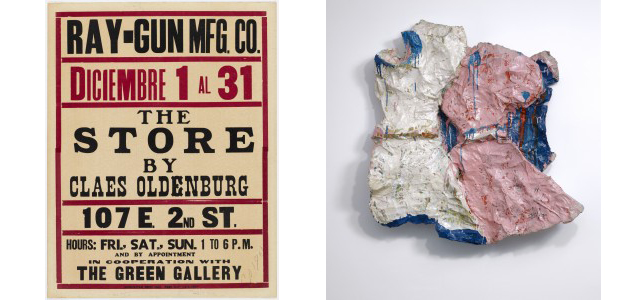
Left: Claes Oldenburg. The Store. 1961. Letterpress, composition: 26 9/16 x 20 5/16″ (67.4 x 51.6 cm); sheet: 28 1/4 x 22 1/16″ (71.8 x 56 cm). Mary Ellen Meehan Fund. © 2013 Claes Oldenburg; Right: Claes Oldenburg. Two Girls’ Dresses. 1961. Muslin soaked in plaster over wire frame, painted with enamel, 44 1/2 x 40 3/4 x 6” (113 x 103.5 x 15.2 cm). Private collection. © 1961 Claes Oldenburg. Photo: Gunter Lepkowski

Left: Claes Oldenburg. The Store. 1961. Letterpress, composition: 26 9/16 x 20 5/16″ (67.4 x 51.6 cm); sheet: 28 1/4 x 22 1/16″ (71.8 x 56 cm). Mary Ellen Meehan Fund. © 2013 Claes Oldenburg; Right: Claes Oldenburg. Two Girls’ Dresses. 1961. Muslin soaked in plaster over wire frame, painted with enamel, 44 1/2 x 40 3/4 x 6” (113 x 103.5 x 15.2 cm). Private collection. © 1961 Claes Oldenburg. Photo: Gunter Lepkowski

In 1961 Claes Oldenburg opened a store in the Lower East Side of Manhattan, five years after his official arrival in New York. For two months, Oldenburg hawked commonplace objects out of his storefront: ice cream, oranges, cigarettes, hats, shoes, all things that could be found in surrounding stores, but here, they were specially crafted and singular, specific to the artist and his studio-cum-store. In Claes Oldenburg: Writing on the Side 1956–1969, Oldenburg describes his project neatly:

“The Store, or My Store, or the Ray Gun Mfg. Co., located at 107 East 2nd St., NYC, is eighty feet long and is about ten feet wide. In the front half, it is my intention to create the environment of a store by painting and placing (hanging, projecting, lying) objects after the spirit and in the form of popular objects of merchandise, such as may be seen in store windows of the city, especially in the area where The Store is (Clinton St., for example, Delancey St., 14th St.).

This store will be constantly supplied with new objects, which I will create out of plaster and other materials in the rear half of the place. The objects will be for sale in The Store.
—Claes Oldenburg (1961)

OldenburgWritings_cover

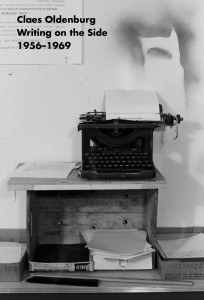
Cover of Claes Oldenburg: Writing on the Side 1956–1969, published by The Museum of Modern Art

The excerpt included above is just one of a variety of collected written works in Writing on the Side, the first compilation dedicated to Oldenburg’s writings. Organized chronologically, the book contains diary entries, poems, notes, statements, and sketches, grouped by chapter with titles like: “Fear of New York 1956–1958,” and “Object Consciousness 1965–1967.” The book serves as a written history of Oldenburg’s artistic presence in the 1960s, much of it composed on a typewriter kept in his studio.

Diary entries and notes preceding the opening of The Store evidence Oldenburg’s investment in the seemingly unexceptional: Oldenburg documents every sandwich, coffee, and beer consumed, the names of cafés and restaurants frequented (many of which no longer seem to exist, upon cursory Google searches) with as much care taken to describe creative ideation and art events. In this way, the writings are an important companion to Oldenburg’s body of work, giving insight into this formative period in his career as well as a unique view into a New York that no longer seems to exist (check out what Oldenburg’s store looks like now).

Oldenburg will perform a reading from Writing on the Side at MoMA at 6:00 p.m. on June 28, followed by a reception and book signing. More information about the event can be found here.

Claes Oldenburg: The Street and The Store is on view through August 5 on the sixth floor in the International Council of The Museum of Modern Art Exhibition Gallery.

Letter from Perth: Van Gogh, Dalí, and Beyond: The World Reimagined at AGWA

I’ve just returned from the other side of the world—Perth is our antipodes, at exactly 12 hours ahead of New York—where I was installing the exhibition Van Gogh, Dalí, and Beyond: The World Reimagined at the Art Gallery of Western Australia, along with AGWA curators Gary Dufour and Glenn Iseger-Pilkington. The third installment in a six-show partnership between the two institutions, this exhibition looks at how modern artists have reinvented the traditional genres of landscape, still life, and portrait. A selection of 134 works from MoMA’s collection—paintings, sculptures, drawings, prints, photographs, and a media work—made the long journey to be enjoyed by a new audience from June until December.

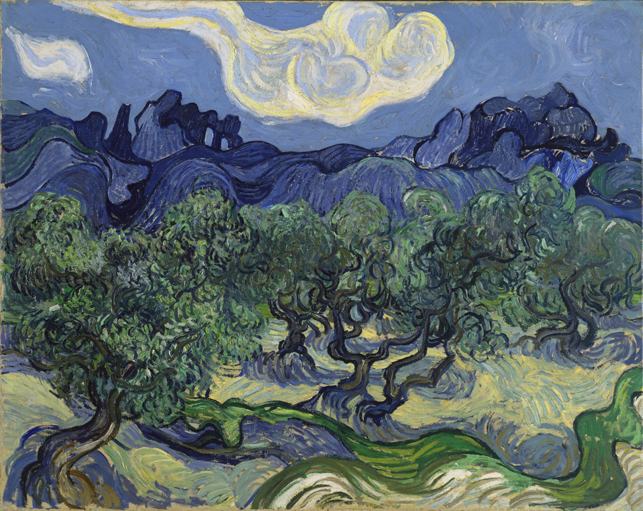
Visitors to AGWA will see how the definition of landscape has evolved from 1889, when Vincent van Gogh painted his iconic The Olive Trees, to 2006, the year of Tacita Dean’s neo-Romantic photogravure installation T&I.

Vincent van Gogh. The Olive Trees. June-July 1889. Oil on canvas28 5/8 x 36" (72.6 x 91.4 cm). Mrs. John Hay Whitney Bequest

Vincent van Gogh. The Olive Trees. 1889. Oil on canvas. The Museum of Modern Art, New York. Mrs. John Hay Whitney Bequest

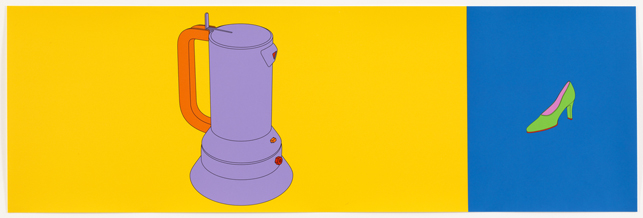
They’ll observe how the meaning of a still life has expanded from Paul Cézanne’s Still Life with Ginger Jar, Sugar Bowl, and Oranges (1902–06), to Michael Craig-Martin’s Folio (2004), a portfolio of 12 brightly-hued screenprints depicting ordinary objects like a sneaker and a cell phone.

Michael Craig-Martin. Untitled from Folio. 2004. Portfolio of twelve screenprints. Composition and sheet (each approx.): 12 7/8 x 39 3/8" (32.7 x 100 cm). Alan Cristea Gallery, London. Advanced Graphics, London, 40. © 2013 U. Streifeneder, Munich / Artists Rights Society (ARS), New York / VG Bild-Kunst, Germany

Michael Craig-Martin. Untitled from Folio. 2004. Portfolio of 12 screenprints. Alan Cristea Gallery, London. Advanced Graphics, London, 40. © 2013 U. Streifeneder, Munich/Artists Rights Society (ARS), New York / VG Bild-Kunst, Germany

And they’ll perceive how the possibilities and priorities of portraiture have shifted from Henri de Toulouse-Lautrec’s La Goulue at the Moulin Rouge (1891–92), to the 2011 installment of Nicholas Nixon’s annual portraits of his wife and her three sisters, The Brown Sisters, Truro, Massachusetts.

Nicholas Nixon. The Brown Sisters, Truro, Massachusetts. 2011. Gelatin silver print. Gift of the artist. © 2013 Nicholas Nixon

Nicholas Nixon. The Brown Sisters, Truro, Massachusetts. 2011. Gelatin silver print. The Museum of Modern Art, New York. Gift of the artist. © 2013 Nicholas Nixon

Used to the 90-degree angles of MoMA’s galleries, it was first a challenge—and ultimately a great pleasure—to install in AGWA’s galleries, which are shaped like hexagons, and whose walls follow the angles of a ceiling composed with triangles. These angles create long views that encourage visual connections across galleries, many of which were unplanned but fortuitous. Standing in front of Matisse’s The Blue Window in the exhibition’s still life section, for example, you can look back into the landscape gallery and see Milton Avery’s Sea Grasses and Blue Sea, another painting that tests the border between representation and a blue monochrome.

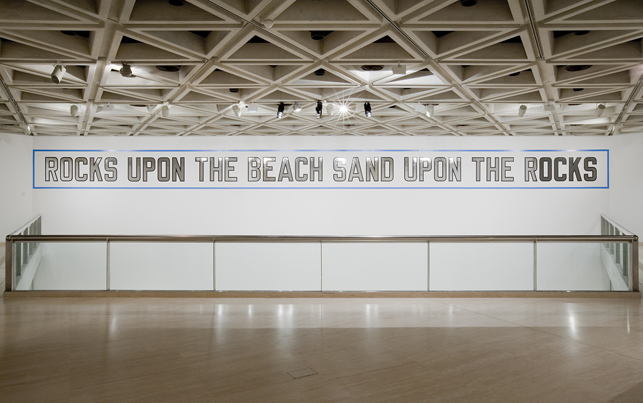
While hardworking registrars carefully planned the transport of these masterpieces, two works didn’t have to be sent at all. Rocks Upon the Beach Sand Upon the Rocks, a 1988 installation by the artist Lawrence Weiner, describes a landscape only in words, and is remade each time it is installed to fit the exact dimensions of the venue. Below is the version designed in collaboration with the artist’s studio for AGWA.

Lawrence Weiner (American, born 1942).  Rocks Upon the Beach Sand Upon the Rocks, 1988. Language + the materials referred to, dimensions variable.  Acquisition from the Werner Dannheisser Testamentary Trust.  © 2013 Lawrence Weiner / Artists Rights Society (ARS), New York.  Installation view, the Art Gallery of Western Australia, 2013

Lawrence Weiner. Rocks Upon the Beach Sand Upon the Rocks. 1988. Language and the materials referred to, dimensions variable. The Museum of Modern Art, New York. Acquisition from the Werner Dannheisser Testamentary Trust. © 2013 Lawrence Weiner/Artists Rights Society (ARS), New York. Installation view, the Art Gallery of Western Australia, 2013

And Urs Fischer’s Untitled sculpture from 2000 consists of half an apple and half a pear, screwed together and suspended from nylon filament. The work was not only constructed anew for this venue, but will be remade regularly throughout the course of the exhibition. A kind of postmodern still life, it takes Cézanne’s desire to express the tangible “thingness” of a piece of fruit to a whole new level.

June 19, 2013  |  Collection & Exhibitions, Publications
“Corbusian Atlas” Takes Readers in a New Direction
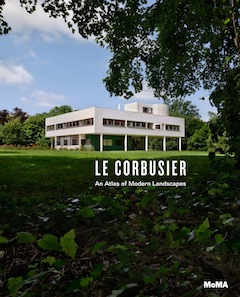
Cover of Le Corbusier: An Atlas of Modern Landscapes published by The Museum of Modern Art

Cover of Le Corbusier: An Atlas of Modern Landscapes published by The Museum of Modern Art

As the leader of the International Style, the Swiss-born, Paris-based architect Le Corbusier had the rare opportunity to build on three continents at a time when airplanes were still a new method of transportation.

June 13, 2013  |  Collection & Exhibitions, Design
The Hungarian Avant-Garde, 1921–25

On any given day, The Abby Aldrich Rockefeller Print Room may be full of studio art students viewing contemporary screenprints, art history students researching works for their term papers, or curators from other institutions planning exhibitions.