
MoMA
Posts in ‘Events & Programs’
June 21, 2010  |  Events & Programs
Mining Modern Museum Education: Kelly McKinley on Arthur Lismer

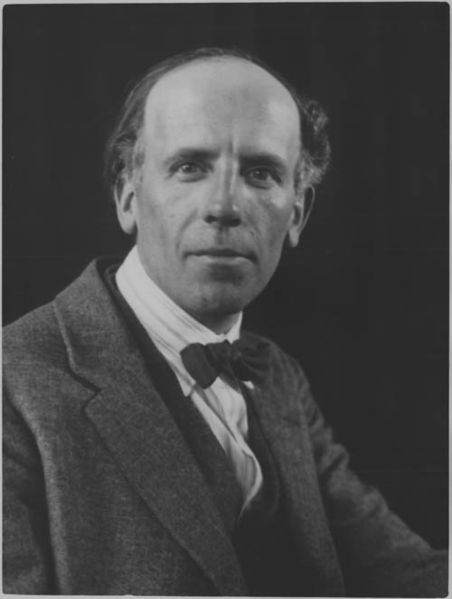
Arthur Lismer, A.R.C.A.

It’s a commonly held notion that a Canadian can be easily identified by the end-of-sentence “eh?” However, true connoisseurs of all things Canadian know that what separates citizens of the north from the south, the true identifier, is that when naming someone notable, the name is followed by a knowing nod and the enthusiastic comment “Canadian!”—as in, Peter Jennings (Canadian!), Brendan Frazier (Canadian!), or Eugene Levy (Canadian!). The impulse to not only include Canadian cultural contributions in the broader American context, but to distinguish them, is deeply ingrained.

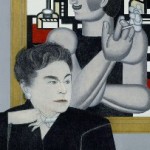
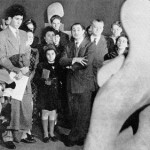
For this reason I thought it important, when planning Mining Modern Museum Education, an upcoming panel discussion on four seminal figures in early- to mid-twentieth-century museum education, to consider the significant contributions of my fellow Canadian Arthur Lismer. An iconic Canadian artist of the modern era (Group of Seven), Lismer was also an influential museum educator whose work in this field merits investigation.
June 16, 2010  |  Events & Programs
Mining Modern Museum Education: Robert Eskridge on Katharine Kuh

On June 25, MoMA will host Mining Modern Museum Education, a panel discussion on four seminal figures in early- to mid-twentieth-century museum education: Victor D’Amico, Hilla Rebay, Arthur Lismer, and Katharine Kuh. The next few blog posts will provide short synopses of what each panelist will discuss, as well as key thoughts by the prominent museum and education scholar George Hein of Lesley University (Cambridge, MA) on the major influences on modern museum education, including the seminal work of education reformer John Dewey.

Below, panelist Robert Eskridge, executive director of education at the Art Institute of Chicago, addresses the influential interpretative work of pioneering art historian, curator, and educator Katharine Kuh.

June 10, 2010  |  Events & Programs
Mining Modern Museum Education

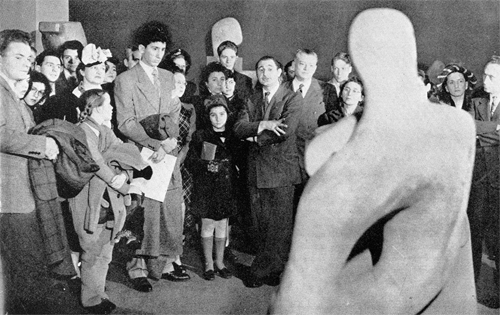
Photo by Nancy Bulkeley. Cover of "The Questioning Public," a bulletin produced by The Museum of Modern Art. Fall 1947, Issue 1, Vol. XV

In Spring 2006, when I was preparing for my first interview for my current position as deputy director for education at MoMA, I spent some quality time with a fascinating book: Art in Our Time: A Chronicle of the Museum of Modern Art.

May 20, 2010  |  Events & Programs, Film
Getting Attention: A Young Filmmaker’s Beginnings at MoMA

For the past ten years, high school students have been attending free Friday night film screenings at MoMA, spending some time after each film talking with curators, educators, and filmmakers. Recently we’ve experimented with different types of events for teens, such as artists’ talks, gallery activities, and art-making workshops, which means there’s something happening for young artists almost every Friday from October through May. Greeting visitors as they arrive for these events is an impeccably dressed young filmmaker named Michael Brawley, who has been an essential part of the program—first as an attendee, then as a volunteer—for years. We asked Michael his opinion about film, the Oscars, MoMA’s Teen Programs, and more.

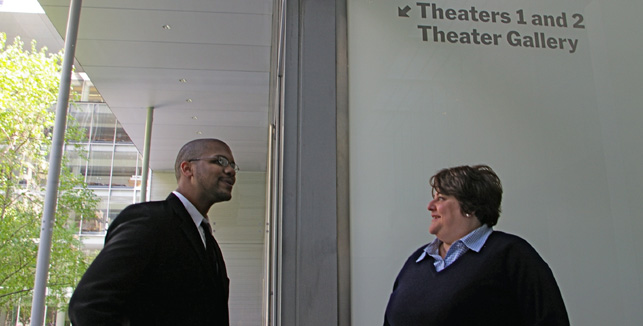
Michael Brawley and Anne Morra at MoMA

May 10, 2010  |  Events & Programs, Tech
PopArt Wins a People’s Voice Webby Award!

Congratulations to the teens from the MoMA Teen Voices Project for their hard work on the website PopArt, which recently won a People’s Voice Webby in the Art category. The Teen Voices Project (formerly the Youth Advisory Council), a group of sixteen students from New York City high schools, collaborated with MoMA Staff to design the interactive site.

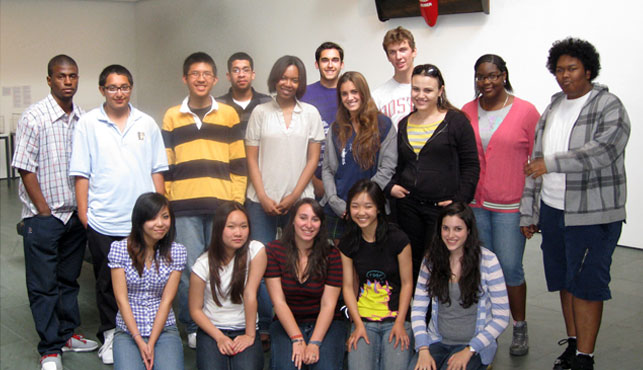
Participants from the 2009-10 Youth Advisory Council

Faced with the challenge of creating an educational resource that other teens could use to engage with MoMA, the team started by learning about and analyzing existing interactive educational activities, websites, and technology-based communication projects. After countless debates on the purpose of education, the coolest parts of MoMA, and strategies to make MoMA more accessible to teens, the team identified a vision for their project: to create an online tool for people of all ages to interact with and respond to modern art, to reveal unexpected connections between works of art, and to trust in their own “gut” feelings about art.

April 26, 2010  |  Design, Events & Programs
Magnetic MoMA: A Graphic Look at Shape Lab

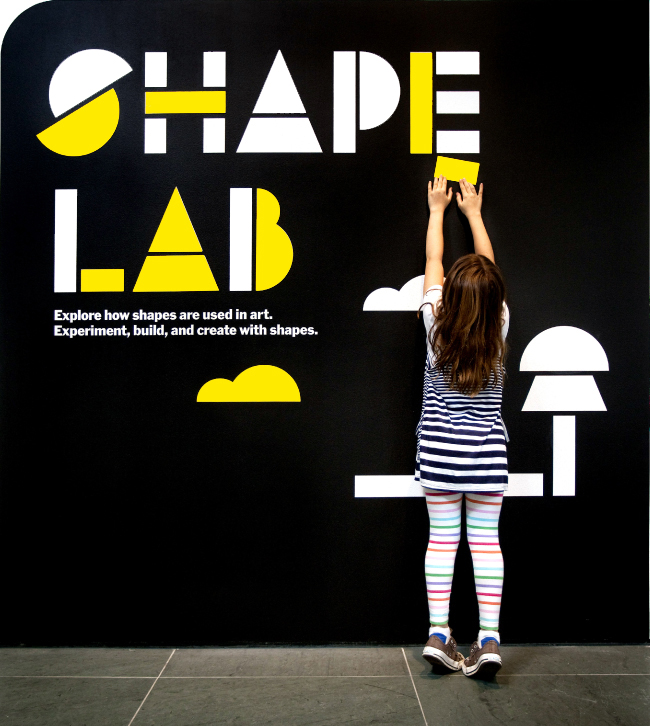
The yellow shapes are movable magnets, which can be repositioned to fit into the small forest scene at bottom right. Photo by Michael Nagle

When we first met with the educators from MoMA’s Education Department to discuss the Shape Lab installation, we knew instantly that this project had to be FUN for us, the designers—and that FUN needed to be part of the design for the visitors.

Shape Lab is an interactive educational space for families. The educators’ intention for this space is to encourage visitors to interact with the space and explore the different ways artists use shapes in painting and sculpture. The space was filled with interactive tools and furniture, educational toys, art books, and shape learning activities. The original project request was to design an identity for its title wall. Instead, we designed a multifunctional activity wall, which both communicates its message and functions as a fun learning game.

April 22, 2010  |  Events & Programs
More Eavesdropping: Art, Poetry, and Everyday Encounters

Did you know that museum visitors spend an average of three seconds looking at a work of art? What can a viewer possibly glean from that brief encounter? When I invited poets Matthew Rohrer and Joshua Beckman to do a reading at MoMA, I knew that they would be able to change that statistic for a lucky few. They know how to encourage diverse audiences to join them in the process not only of composing poems, but of looking at and contemplating art and creating a fresh experience with it. So I challenged them to use MoMA’s public as a resource to write poems about works of art in the collection or about the museum experience in general. In their preliminary field work, they spied on museum goers, listened to their conversations, recorded people’s activities, and trained a group of teens from MoMA’s Teen Voices Project to do the same. Our goal was to bring an assortment of people, art, and poetry together, and to spawn unexpected social interactions.

April 12, 2010  |  Events & Programs
The Shape of Things

A seven- or eight-year-old boy sits at a table and carefully sifts through a pile of brightly-colored laminated shapes. I have posed a challenge: can you show a person running? At first, he is stumped. He picks up some pieces but then declares, “I can’t.” So I pose for him. I bend my arms and legs and ask him to look at the shapes they are making, and then ask him to see if he can find or even combine some shapes to show that movement. I leave him for a few minutes and then return. He proclaims, “I did it!” and indeed he did. Using shapes such as simple rectangles and squares, and the more complex “L” and rectangular “U”s, he has created an abstracted figure of a man running. Later I ask if he can document his creation with a drawing, which he does.

Such is a typical experience as a facilitator for Shape Lab, our latest interactive space at MoMA.

March 24, 2010  |  Events & Programs, Intern Chronicles
Intern Chronicles: Boldly Looking Forward in Berlin

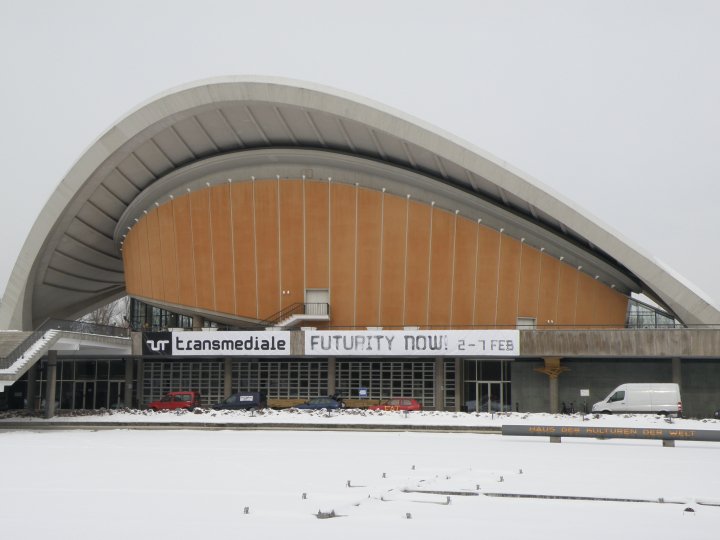
Haus der Kulturen der Welt, Berlin. Home of Transmediale Festival. Photo by Julia Kaganskiy.

Berlin has been calling to me for quite a while—for years I’ve been hearing breathless accounts of the thriving arts scene there—and I’ve been searching for an opportunity to go. So when a friend of mine from San Francisco told me about Transmediale, a festival and conference dedicated to new media, digital art, and futurity, taking place in Berlin the first week of February, my mind was made up. I had to go. Even if it did mean Berlin in February.

March 17, 2010  |  Events & Programs
Create Ability: An Exhibition of Their Own

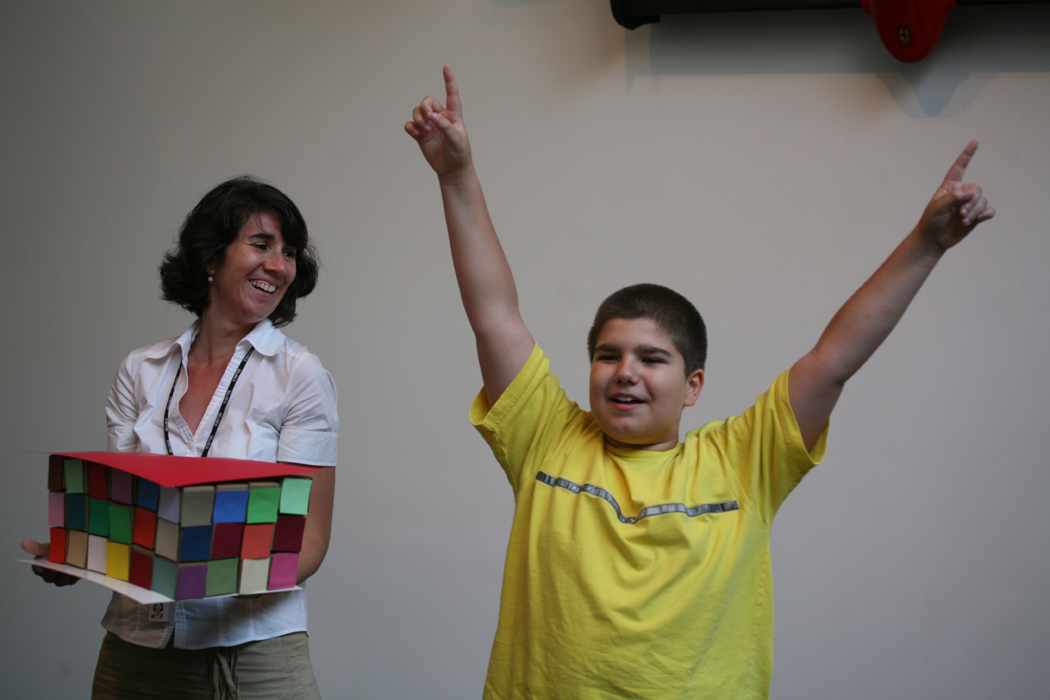
Photograph by Michael Nagle

In September, one of the participants of Create Ability, MoMA’s monthly program for individuals with learning or developmental disabilities and their families, asked me, “Why don’t we have our own exhibition?” We were returning to the classroom to create our own art after a gallery tour wherein we’d discussed The Moroccans by Henri Matisse, Harlequin by Pablo Picasso, and the neon-colored sculptures by Franz West outside in the Sculpture Garden. I immediately began gathering artwork created each subsequent month, and on Thursday, March 4, the opening reception for the first exhibition of work produced by Create Ability participants was held.