Oil on canvas, with painted wood frame
The rough seas and rugged shoreline of the northern French coast had long attracted artists, including Georges-Pierre Seurat, who spent the summer of 1886 in this region in a resort town called Honfleur. He went to clear his vision, or, as he put it, to “wash the light of the studio” from his eyes. There he painted Evening, Honfleur, calming the turbulent shoreline in his peaceful sunset scene.
Seurat immersed himself in the science and study of optics, and contemporary writing on color theory, which helped him to develop the new approach to painting reflected in Evening, Honfleur. Systematic and measured, his technique involved the application of separate, distinct touches of unmixed color to form an image. In the viewer’s eye, these small points of color can both coalesce into coherent scenes and remain separate particles that seem to generate a shimmer over the composition. In reference to these dots of color, this technique became known as Pointillism.
Seurat meticulously applied at least 25 colors to Evening, Honfleur in thousands of individual dots. Long bands of clouds echo the horizon and the breakwaters on the beach. Sky and sea fill most of the composition, giving it a sense of vastness. Seurat added the wooden frame to his painting later, hand-painting it with the same Pointillist technique to suggest the extension of the image past the boundaries of the canvas. In the frame’s upper-right corner, the dots grow lighter, extending the glow of the setting sun.
Publication excerpt from MoMA Highlights: 375 Works from The Museum of Modern Art, New York (New York: The Museum of Modern Art, 2019)
Seurat spent the summer of 1886 in the resort town of Honfleur, on the northern French coast, a region of turbulent seas and rugged shorelines to which artists had long been attracted. But Seurat’s evening scene is hushed and still. Vast sky and tranquil sea bring a sense of spacious light to the picture yet also have a peculiar visual density. Long lines of cloud echo the breakwaters on the beach—signs of human life and order.
Seurat had used his readings of optical theory to develop a systematic technique, known as pointillism, that involves the creation of form out of small spots of pure color. In the viewer’s eye, these spots can both coalesce into shapes and remain separate particles, generating a magical shimmer. A contemporary critic described the light in Evening, Honfleur and related works as a “gray dust,” as if the transparency of the sky were filled with, or even constituted by, barely visible matter—a sensitive response to the paint’s movement between illusion and material substance.
Seurat painted a frame around the scene, buffering the transition between the world of the painting and reality. At the upper right, the spots on the frame grow lighter, lengthening the rays of the setting sun.
MoMA Highlights: 375 Works from The Museum of Modern Art, New York (New York: The Museum of Modern Art, 2019)
Kids label from 2025
Little Dots, Big World
Georges-Pierre Seurat made this painting using lots of dots of colored paint. The colors blend together into an image of the seaside. Look for the sailboats and clouds. What other things do you notice in the scene?
2025
Explore more
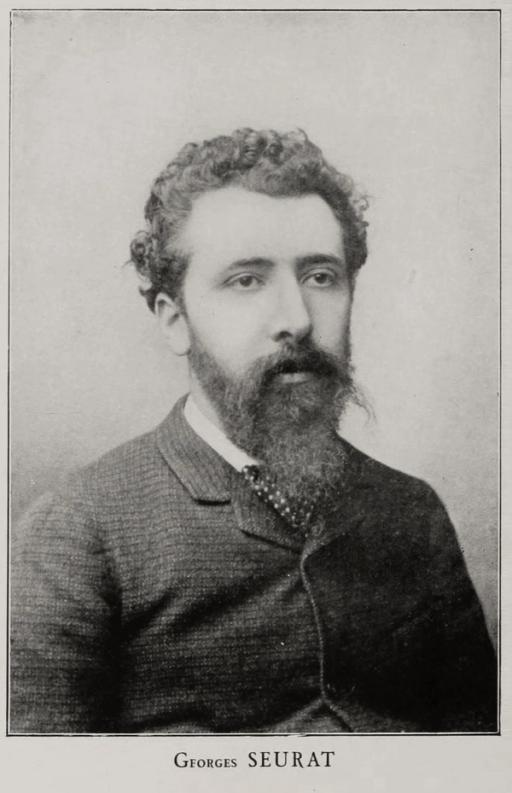
Georges-Pierre Seurat
French, 1859–1891 9 works onlineIn a career that lasted only a decade, Georges-Pierre Seurat developed a new painting technique, which became known as pointillism .
Learn more →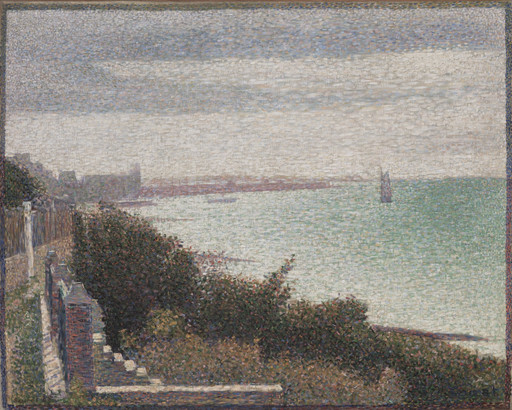
Landscape
The natural landforms of a region; also, an image that has natural scenery as its primary focus.
Learn more →
Neo-Impressionism
A term coined by French art critic Fénéon in 1886, applied to an avant-garde art movement that flourished principally in France from 1886 to 1906.
Learn more →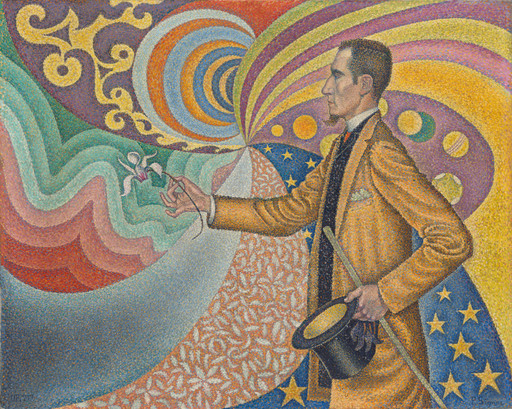
Pointillism
A painting technique developed by French artists Georges-Pierre Seurat and Paul Signac in which small, distinct points of unmixed color are applied in patterns to form an image.
Learn more →

Post-Impressionism
A term coined in 1910 by the English art critic and painter Roger Fry and applied to the reaction against the naturalistic depiction of light and color in Impressionism.
Learn more →
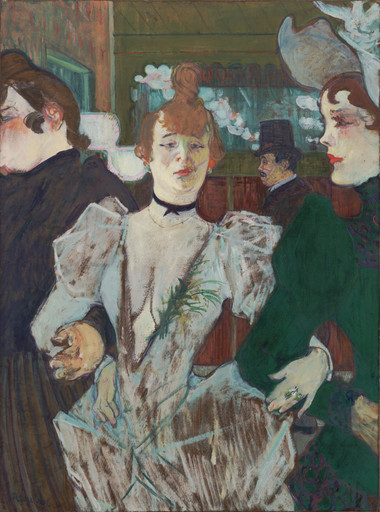
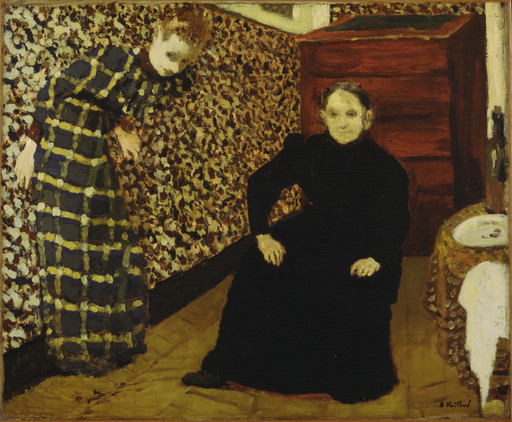
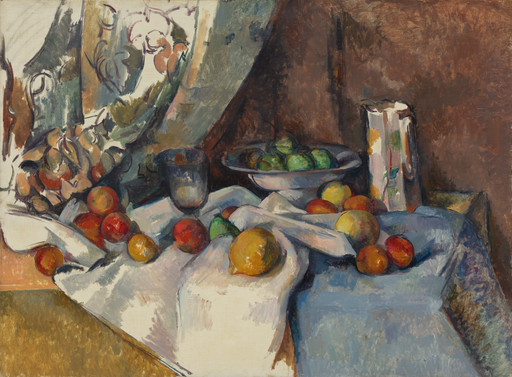
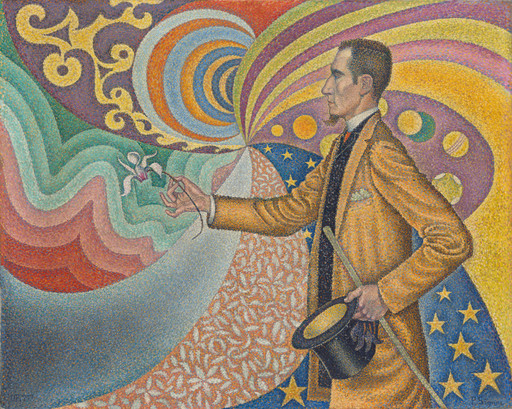
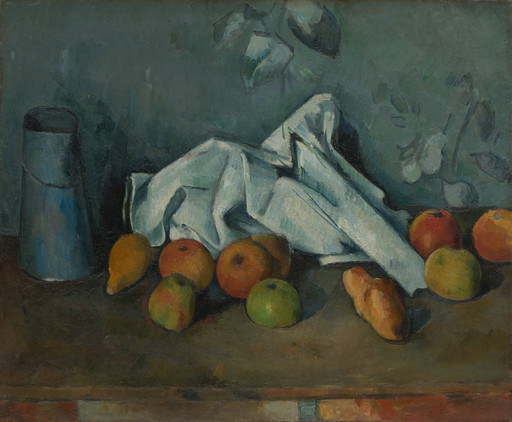
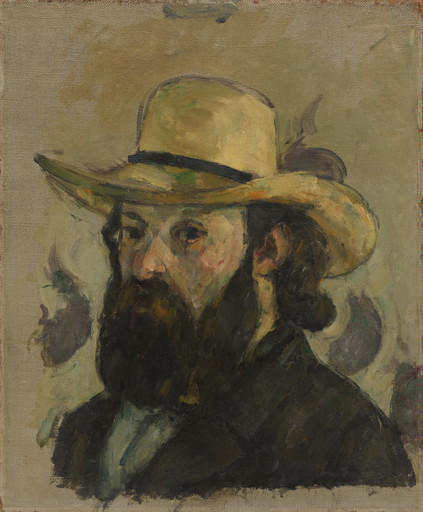
French Landscapes and Interiors
Gallery 501The late 19th century in France was an era of rapid change: the emergence of mass media, new and faster forms of transportation, urban expansion of cities like Paris, and developments in industry.
Learn more →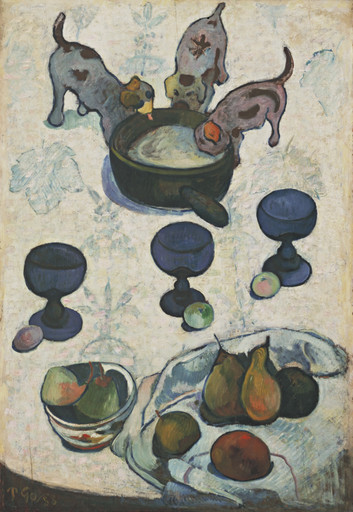
Audio
Audio from the playlist Collection 1880s–1940s
Audio from the playlist Kids
Audio from the playlist Verbal Descriptions
From MoMA Design Store


Installation views
We have identified this work in the following photos from our exhibition history.
Provenance Research Project
This work is included in the Provenance Research Project, which investigates the ownership history of works in MoMA's collection.
Estate of the artist (Madeleine Knobloch), Paris, 1891 [1]; acquired by Gustave Kahn (1859-1936), Paris, 1892 [2]. Victor Claessens, Waereghem, near Brussels, before 1923 [3]; by inheritance to his son Armand Claessens, Waereghem, near Brussels, 1929 [4]; sold to Wildenstein Galleries, New York, 1937 [5]; sold to Adele R. and David M. Levy, November 1938 [6]; The Museum of Modern Art, New York, 1957 (Gift of Mrs. David M. Levy).
[1] C. M. de Hauke, Seurat et son oeuvre, Paris: Gründ, 1961, no. 167.
[2] Ibid. Henri Dorra and John Rewald, eds. Seurat, Paris: Les Beaux Arts, 1959, no. 171: "Gustave Kahn, Bruxelles (à partir de 1892)." Included in the exhibition Les XX, Brussels, 1892 (no. 8): "Embouchure de la Seine (Honfleur), Soir, appartient à M. G. Kahn."
[3] C. M. de Hauke, Seurat et son oeuvre, Paris: Gründ, 1961, no. 167. See letter Michel Callewaert, V.A. Claessens, Waereghem to C. de Hauke, Paris, January 17, 1958, Jacques Seligmann & Co. records, General correspondence: Michel Callewaert (Box 20, Folder 8), Archives of American Art, Washington, DC. Date of acquisition not known.
[4] Ibid. See Dorra and Rewald, 1959, no. 171. Included in the exhibition L'Impressionisme, Palais des Beaux-Arts, Brussels, June 15-September 29, 1935 (no. 75).
[5] See letter Michel Callewaert, V.A. Claessens, Waereghem to Wildenstein & Co., New York, December 20, 1957, Jacques Seligmann & Co. records, General correspondence: Michel Callewaert (Box 20, Folder 8), Archives of American Art, Washington, DC.
[6] Collection files, Department of Painting and Sculpture, The Museum of Modern Art, New York.
Provenance research is a work in progress, and is frequently updated with new information. If you have any questions or information to provide about the listed works, please email [email protected] or write to:
Provenance Research Project
The Museum of Modern Art
11 West 53 Street
New York, NY 10019
Licensing
Artwork or archival images
If you would like to reproduce an image of a work of art in MoMA's collection, or an image of a MoMA publication or archival material (including installation views, checklists, and press releases), please contact Art Resource (publication in North America) or Scala Archives (publication in all other geographic locations).
Audio and film clips
MoMA licenses archival audio and select out of copyright film clips from our film collection. At this time, MoMA produced video cannot be licensed by MoMA/Scala. All requests to license archival audio or out of copyright film clips should be addressed to Scala Archives at [email protected]. Motion picture film stills cannot be licensed by MoMA/Scala. For access to motion picture film stills for research purposes, please contact the Film Study Center at [email protected]. For more information about film loans and our Circulating Film and Video Library, please visit Circulating Film and Video Library.
Text from a publication or the archives
If you would like to reproduce text from a MoMA publication, please email [email protected]. If you would like to publish text from MoMA's archival materials, please fill out this permission form and send to [email protected].
Feedback
This record is a work in progress. If you have additional information or spotted an error, please fill out this feedback form.