MoMA
Posts in ‘Collection & Exhibitions’
June 18, 2014  |  Collection & Exhibitions
Hito Steyerl’s HOW NOT TO BE SEEN: A F**king Didactic Educational .MOV File
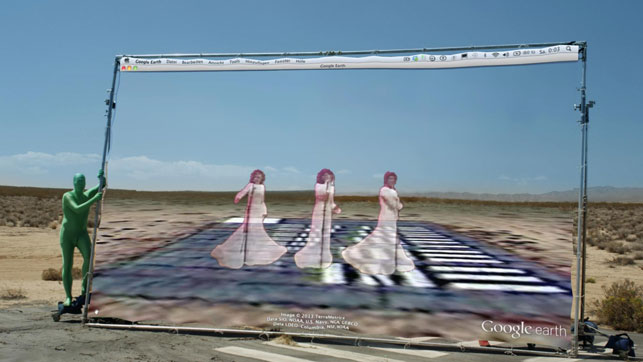
Hito Steyerl. HOW NOT TO BE SEEN: A Fucking Didactic Educational .Mov File. 2013. Still image, single screen 1080p .mov file, 14min. © Hito Steyerl. Courtesy Wilfried Lentz Rotterdam

Hito Steyerl. HOW NOT TO BE SEEN: A Fucking Didactic Educational .Mov File. 2013. Still image, single screen 1080p .mov file, 14min. © Hito Steyerl. Courtesy Wilfried Lentz Rotterdam

I go to bed with my phone. It’s often the last thing I look at before falling asleep, and the first thing I touch in the morning. There’s no shortage of people thinking about this type of thing—technology-as-prosthesis or part-object—and its array of consequences, but few get to the heart of the matter quite like Hito Steyerl does.

June 12, 2014  |  Artists, Collection & Exhibitions
Tapping the Subconscious: The Hypnotic Art of Matt Mullican
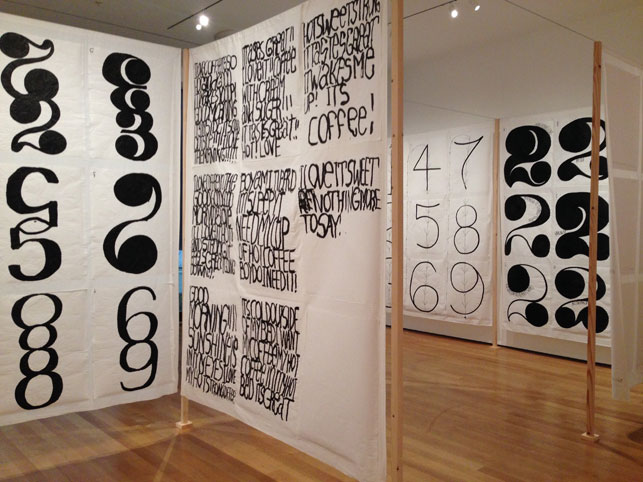
Matt Mullican. Untitled (Learning from That Person's Work: Room 1). 2005. Installation of ink on paper collage mounted on 12 cotton sheets, wood, cable, and video component (color, sound; 14:04 min.), 12 units, each 109 x 88.5", installation dimensions variable. Acquired through the generosity of the Contemporary Arts Council of The Museum of Modern Art and the Friends of Contemporary Drawing. © 2014 Matt Mullican

Matt Mullican. Untitled (Learning from That Person’s Work: Room 1). 2005. Installation of ink on paper collage mounted on 12 cotton sheets, wood, cable, and video component (color, sound; 14:04 min.), 12 units, each 109 x 88.5″, installation dimensions variable. Acquired through the generosity of the Contemporary Arts Council of The Museum of Modern Art and the Friends of Contemporary Drawing. © 2014 Matt Mullican

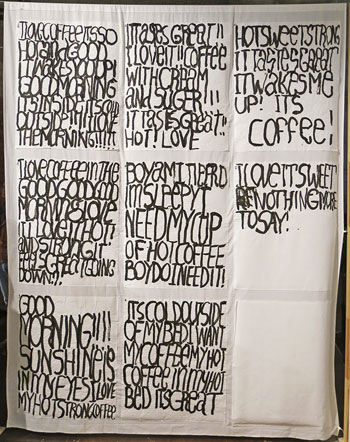
Matt Mullican. Untitled (Learning from That Person’s Work) (detail). 2005. Courtesy of la Biennale di Venezia. © 2014 Matt Mullican

Matt Mullican. Untitled (Learning from That Person’s Work) (detail). 2005. Courtesy of la Biennale di Venezia. © 2014 Matt Mullican

When I think of art created from an altered state of mind or from the subconscious, I immediately go to the automatic drawing practices of the Surrealists, or of art brut and “outsider art.” Art brut, literally “raw art,” is a term coined by artist Jean Dubuffet in the mid-1940s to describe work made outside of the established art world. Over the years it has been used to categorize art created by the mentally ill, the incarcerated, and the formally untrained.

June 11, 2014  |  Collection & Exhibitions, Design
Biophilia, the First App in MoMA’s Collection
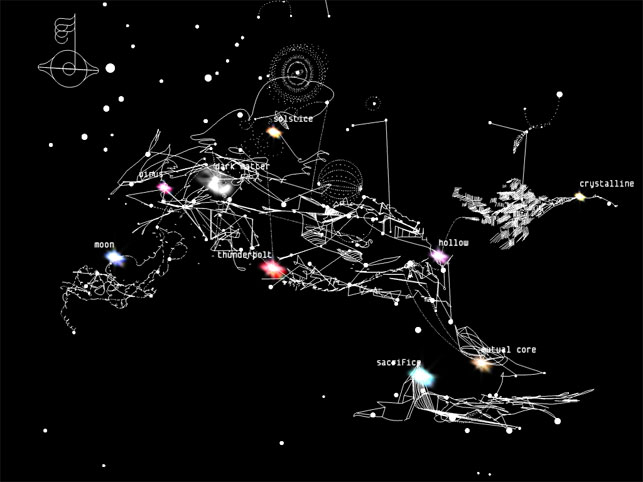
Björk Gudmunsdóttir, Scott Snibbe, and Mathias Augustyniak and Michael Amzalag of M/M Paris; with Max Weisel of Relative Wave; Kodama Studios; Sarah Stocker; Mark Danks; John F. Simon, Jr.; and Touch Press. Biophilia. 2011. Interactive digital application for tablet devices. Gift of Björk and One Little Indian

Björk Gudmunsdóttir, with Mathias Augustyniak and Michael Amzalag of M/M Paris, Sjón, Scott Snibbe, Sarah Stocker and Mark Danks of Kodama Studios, Touch Press, Max Weisel of Relative Wave, Nikki Deben, Stephen Malinowski, and John F. Simon, Jr. Biophilia. 2011. Interactive digital application for tablet devices. Gift of Björk and One Little Indian

I cannot forget the first time I heard and saw Björk. It was 1987, she was part of the Sugarcubes, and she was singing the most arresting song, “Birthday.” The video was shot in Rejkyavik—otherworldly light, curious characters, peculiar architecture. She looked like an alien Tinkerbell and her voice was simultaneously haunting, corrosive, and incredibly moving. In the decades since, Björk has never ceased to experiment and surprise.

June 5, 2014  |  Artists, Collection & Exhibitions
Sigmar Polke’s Printed Dots
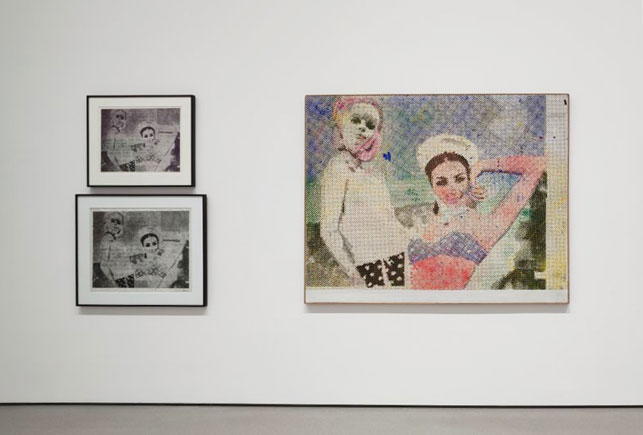
Installation view of Alibis: Sigmar Polke 1963–2010, The Museum of Modern Art, New York, April 19–August 3, 2014. © 2014 The Estate of Sigmar Polke/Artists Rights Society (ARS), New York/VG Bild-Kunst, Bonn, Germany

Installation view of Alibis: Sigmar Polke 1963–2010, The Museum of Modern Art, New York, April 19–August 3, 2014. © 2014 The Estate of Sigmar Polke/Artists Rights Society (ARS), New York/VG Bild-Kunst, Bonn, Germany

Within the arsenal of unusual and experimental techniques on clamorous display in Alibis: Sigmar Polke 1963–2010, the artist’s prints are notable for their sly celebration of the halftone dot pattern, the tonal register that has enabled images to be reproduced in newspaper photographs, magazine ads, consumer packaging, etc. since the late 19th century.

Sigmar Polke Der Illusionist
Cover of Alibis: Sigmar Polke 1963-2010, published by the Museum of Modern Art, New York

Cover of Alibis: Sigmar Polke 1963-2010, published by the Museum of Modern Art, New York

Alibis: Sigmar Polke 1963–2010 is the first comprehensive Sigmar Polke retrospective to cover the broad range of mediums he worked in from 1963 until his death in 2010. The accompanying catalogue is as comprehensive and diverse as the show,

May 28, 2014  |  Collection & Exhibitions, Film
From the Collection: John Cassavetes’s A Pair of Boots (1962)

New York–born actor/director John Cassavetes (1929–1989) began working in early episodic television while directing his first feature film, Shadows, which officially opened in March 1961 in New York City. Concurrent with the production of Shadows, Cassavetes starred in and directed 27 episodes of the early television crime drama Johnny Staccato (which was filmed in Los Angeles but set in a Greenwich Village jazz club), in which he played the title role, a jazz pianist/private detective.

May 23, 2014  |  Artists, Collection & Exhibitions
John Cage and the Northwest School
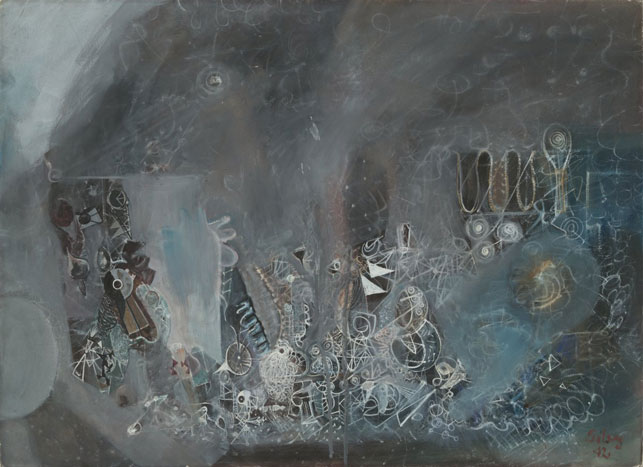
Mark Tobey. The Void Devouring the Gadget Era. 1942. Tempera on board, 21 7/8 x 30" (55.3 x 76.0 cm). The Museum of Modern Art, New York. Gift of the artist, 1964. © 2014 Estate of Mark Tobey/Artists Rights Society (ARS), New York

Mark Tobey. The Void Devouring the Gadget Era. 1942. Tempera on board, 21 7/8 x 30″ (55.3 x 76.0 cm). The Museum of Modern Art, New York. Gift of the artist, 1964. © 2014 Estate of Mark Tobey/Artists Rights Society (ARS), New York

The first gallery of the exhibition There Will Never Be Silence: Scoring John Cage’s 4’33” contains works by John Cage’s contemporaries and influences, including such well-known names as Marcel Duchamp, Joseph Albers, Jasper Johns, Barnett Newman, and Robert Rauschenberg. Works by two lesser-known West Coast artists, Mark Tobey and Morris Graves, also occupy this space, pointing to Cage’s brief but seminal years living in Seattle.

May 8, 2014  |  Artists, Collection & Exhibitions
Speaking with Joan Snyder about Sweet Cathy’s Song (1978)

Installation view, caption TK

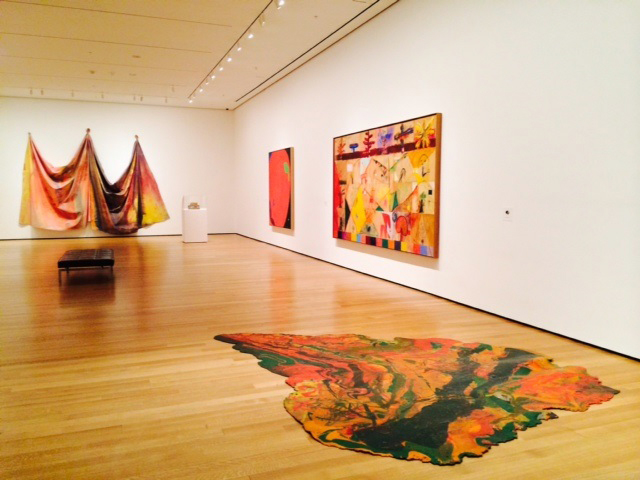
Installation view of the fourth-floor Alfred H. Barr Painting and Sculpture Galleries, The Museum of Modern Art, spring 2014. Pictured are works by (from left to right) Sam Gilliam, Dennis Oppenheim (in case), Elizabeth Murray, Joan Snyder, and (on floor) Lynda Benglis

A new installation in the galleries brings together a diverse group of works from the late 1960s and 1970s, a moment when many artists radically reexamined the medium of painting.

May 2, 2014  |  Collection & Exhibitions
Ferrari F1: Synonomous with Speed
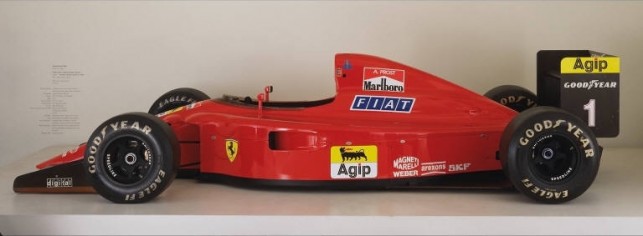
John Barnard, Ferrari S.p.A. Maranello, Italy Formula 1 Racing Car (641/2). 1990. Honeycomb composite with carbon fibers, Kevlar and other materials, 40 1/2" x 7' x 14' 6 1/2" (102.9 x 213.4 x 448.3  cm). Donor: Ferrari North America.

John Barnard, Ferrari S.p.A. Formula 1 Racing Car (641/2). 1990. Honeycomb composite with carbon fibers, Kevlar and other materials, 40 1/2″ x 7′ x 14′ 6 1/2″ (102.9 x 213.4 x 448.3 cm). Donor: Ferrari North America

There’s nothing in the world like a really fast car, and the MoMA design collection has one of the world’s fastest: the 1990 Scuderia Ferrari Formula 1 High Performance Racing Car (641/2), by British auto designer John Barnard.

Though not a recent acquisition, I thought it fitting to feature the Ferrari now in honor of Fernando Alonso and Ferrari’s first podium of the 2014 Formula 1 season at the recent Chinese Grand Prix.

As designer John Barnard explains in an audio guide segment from the 2002 exhibition AUTObodies: speed, sport, transport, the 641, or F1-90, as it’s become known, was built for speed. And it delivered. Plus it’s red. Fiery red. Ferrari red, in fact. Red means danger, look out, hot stuff coming through; it’s the color of anger, passion, and seduction, and as everyone knows, red cars go faster.
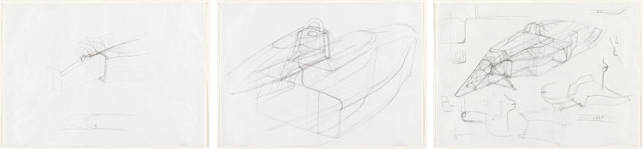
John Barnard. John Barnard.  Sketch for Engine Intake of Formula 1 Car, #639. 1987. Pencil on paper, 11 3/4 x 16 5/8" (29.8 x 42.3 cm). Gift of John Barnard. From left: Sketch for Engine Intake of Formula 1 Car, #639; Sketch for body joints of Formula 1 car, Model #639; Sketch for Radiator Inset, Joint of Formula 1 Car, Model No. 639. All by John Barnard. 1987. Pencil on paper, 11 3/4 x 16 5/8" (29.8 x 42.3 cm). Gift of John Barnard. All photos: John Wronn

From left: Sketch for Engine Intake of Formula 1 Car, #639; Sketch for body joints of Formula 1 car, Model #639; Sketch for Radiator Inset, Joint of Formula 1 Car, Model No. 639. All by John Barnard. 1987. Pencil on paper, 11 3/4 x 16 5/8″ (29.8 x 42.3 cm). Gift of John Barnard.All photos: John Wronn

Scuderia Ferrari has been part of Formula 1 since the beginning, so it’s no wonder that the racing team holds so many F1 records, including the most constructor and driver championships and most overall wins. Each Formula 1 team races two cars; in 1990  two world championship drivers, Alain Prost and Nigel Mansell, drove the 641 for Ferrari, combining for three pole positions, five fastest laps,  and six wins. As reigning champion, Prost’s was the number one car; and he came close to repeating—only to lose out to another world champion, his arch rival Aryton Senna.

The formula, or the overall guiding regulations of Formula 1, has changed over the years with countless modifications and improvements. And big changes came this year with the hybrid 1.6-litre V-6 turbo engine with ERS (Energy Recovery Systems), a major shift from the 2013 2.4-litre V-8. Overall design changes accompanied the new, greener 2014 engines, but likely the most notable and most talked about change is the new engine sound—or lack of it. Drivers have said they can hear the wind over the engine noise; used to be all you could hear was the engine.

The sound of the 1990 641 Ferrari 3.5-litre V-12 engine is familiar to race fans the world over. Like none other, it screams exhilaration, excitement, and pure power.

The world of Grand Prix motor racing is one of precision, with its rigorous formula, and exacting calculations; it’s a culture unto itself with a complicated set of rules and statistical systems of points and penalties spoken in a language of strange numbers and acronyms. But it’s the visceral experience of raw power, crazy kinetic energy, and speed of the cars that ignites our imagination—the remarkable talents and mad skills of drivers the draws us in.
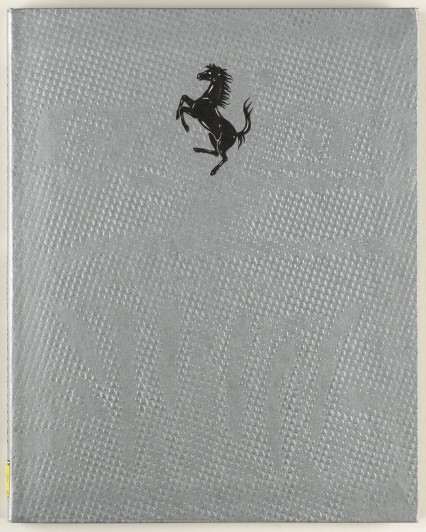
Irma Boom. Ferrari S.p.A.  Tutti i Motori Ferrari. 2002. Photo offset lithography, 9 11/16 x 7 3/4 x 3/8" (24.6 x 19.7 x 1 cm). Gift of Irma Boom. Photo: Jonathan Musikar.

Irma Boom. Ferrari S.p.A. Tutti i Motori Ferrari. 2002. Photo offset lithography, 9 11/16 x 7 3/4 x 3/8″ (24.6 x 19.7 x 1 cm). Gift of Irma Boom. Photo: Jonathan Musikar

“Tutti i Motori Ferrari,” a catalogue of Ferrari engines designed by the Dutch graphic artist Irma Boom is also in MoMA’s design collection. Its soft, outer cover displays the Ferrari prancing horse logo on a silver-colored background that looks to be made of a fluid version of same the aluminum alloy used for F1 engine blocks; the interior plates showcase the evolution of the engines throughout Ferrari’s history. (A flip through of the pages of “Tutti I Motori Ferrari” begins at the one minute mark in the video “20 books by Irma Boom.”)

Before AUTObodies MoMA’s Ferrari 641-2 was first on view in the 1993 exhibition Designed for Speed: Three Automobiles by Ferrari. It can presently be found hanging on the wall in MoMA’s Lewis B. and Dorothy Cullman Education and Research Building lobby, like a perfect portrait of a high-performance machine.


April 30, 2014  |  Artists, Collection & Exhibitions
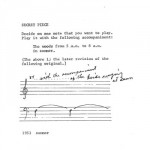
Yoko Ono’s Secret Piece
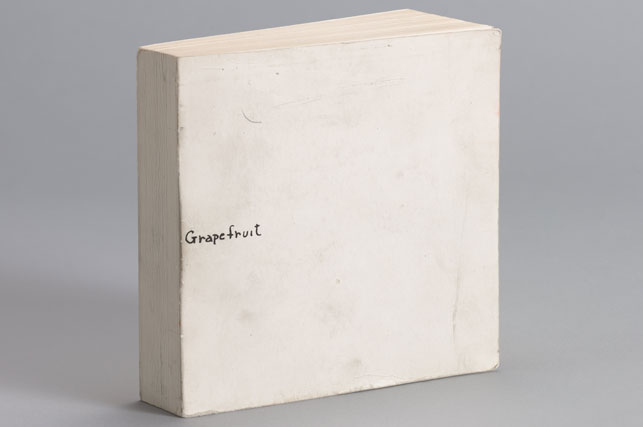
Yoko Ono Grapefruit

Yoko Ono. Grapefruit. 1964. Artist’s book (Tokyo: Wunternaum Press). Offset on paper, 5 1/2 x 5 1/16″ (13.9 x 13.8 x 3.1 cm) (overall, closed)

Many of the works featured in the exhibition There Will Never Be Silence: Scoring John Cage’s 4’33” were created around 1960, as a generation of artists and students of John Cage reacted to the radical possibilities opened up by his 4’33”. The score had finally been published eight years after its first performance at Woodstock in 1952.