
MoMA
Posts in ‘Behind the Scenes’
March 26, 2010  |  Behind the Scenes, Film, Viewpoints
Ask the Curator: Raj Roy Responds

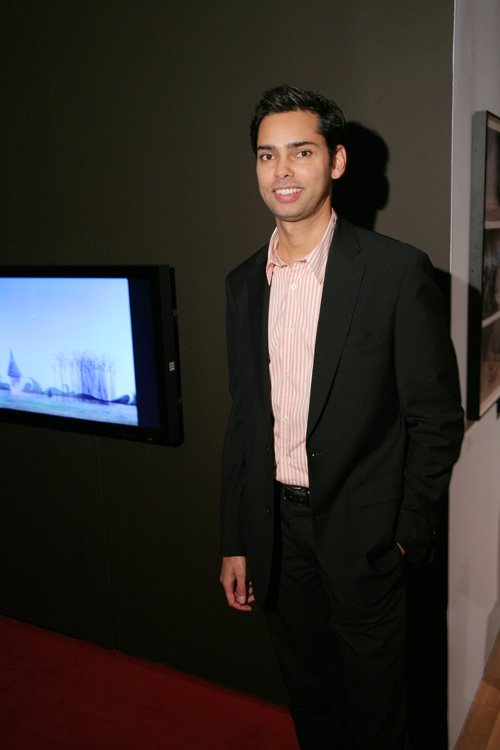
Chief Curator of Film Rajendra Roy

Last week we asked you to submit your burning questions about the New Directors/New Films Festival or about MoMA’s film program in general. In addition to quite a few inquiries about how to get your film into MoMA’s collection (don’t worry I answered one of those), your curiosity covered quite a range of subjects, so I’ve done my best to answer five of your questions—as well as one irresistible bonus question—as selected by the MoMA blog editors. Thank you all for your interest!

1. What criteria do you employ in choosing films for the festival? Political, artistic, plot, cultural, etc.? [from Jules Margalit]

The essential, and perhaps only, unifying criterion for a film in New Directors/New Films is that it be innovative. This of course can manifest in many ways; often it is structurally, but my no means universally so. Our opening film, Bill Cunningham New York, is a traditional portrait doc. It is the subject himself that is sui generis. Director Richard Press has the presence of mind to allow his film to exist as an open road for Cunningham to navigate (on his Schwinn). Alexei Popogrebsky’s How I Ended This Summer, for example, is formally as well as narratively innovative, immersing us in a landscape that is brand new.

March 24, 2010  |  Behind the Scenes, Design
@ in Context: Criteria for an Acquisition


Screenshot of “@ at MoMA” post

Our recent acquisition of the @ symbol has challenged what most people think of as a typical object that a Museum acquires.  We thought it best to let you in on our process—how we think about shaping our collection here at MoMA.  As you know, museums are defined by their collections. Each collection has a unique point of view that is carefully shaped by its curators, who are always mindful of historical precedents as they look ahead to future developments. When it comes to contemporary design, MoMA’s collection seeks to remain on the cusp of innovation and to support the emerging talents, ideas, and concepts that will become tomorrow’s designed environment.

Documentation Diaries: Content vs. Technology

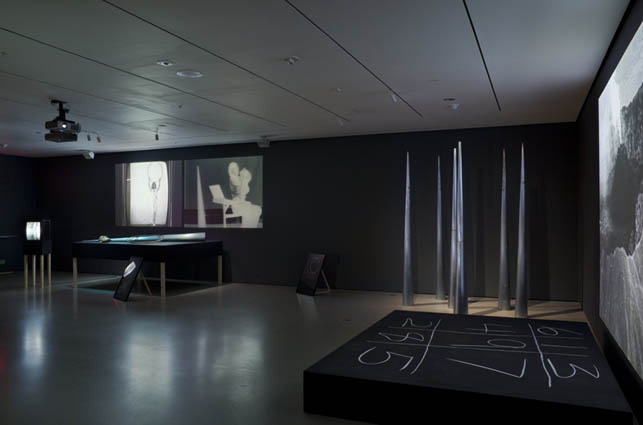
Joan Jonas. Mirage (installation details). 1976/1994/2003. The Museum of Modern Art. Gift of Richard Massey, Clarissa Alcock Bronfman, Agnes Gund, and Committee on Media Funds

Migrating media to accommodate rapidly evolving playback technology is a common occurrence. Our daily tendency to preserve images and sounds as we progress technologically means that we often discard old recording forms and playback equipment for digital replicas. Yet this drive to preserve content unexpectedly distorts the importance of technology as more than mere platform for content. When we disconnect media from its method of presentation we must consider the loss of contextualization for an object. Technology may seem disposable, but is it?

March 19, 2010  |  Behind the Scenes, Film, Viewpoints
Ask the Curator: Raj Roy and New Directors/New Films

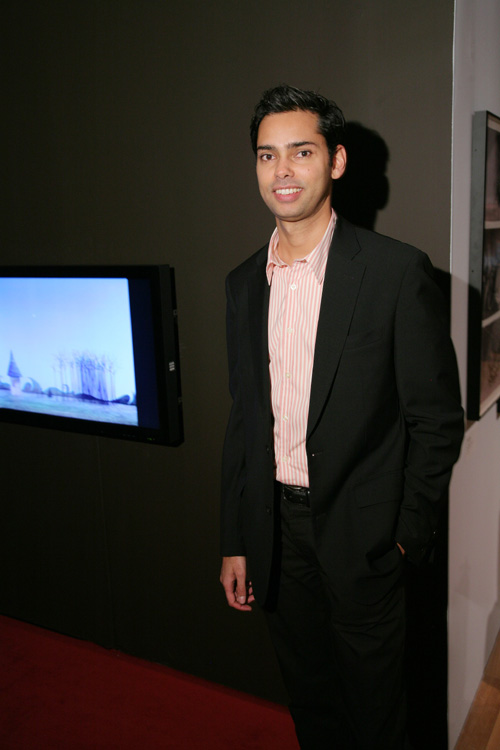
Rajendra Roy. Photo: Scott Rudd

With preparations underway for New Directors/New Films—now less than a week away, the festival has been generating buzz since the lineup was announced earlier this month—and a nice write-up in yesterday’s New York Times piece about young curators making waves in New York City, Rajendra Roy, MoMA’s Chief Curator of Film, is having quite a week. That’s why we’re thrilled he’s agreed to answer some of our readers’ questions in what we hope will be an ongoing feature of our blog. Our curators are a varied and fascinating bunch, and from the looks of our comments, Facebook page, and Twitter feed, so are our online fans. Why not bring the two together and spark a conversation?

So, think about what you’ve always wanted to know about the New Directors/New Films festival or about MoMA’s film program, and submit your questions via comments to this blog post. We’ll select the five most intriguing questions, and Raj will answer them here next Friday, so stay tuned!

Baroque Bones and Challenging Loans: How to Ship an Abramović Installation

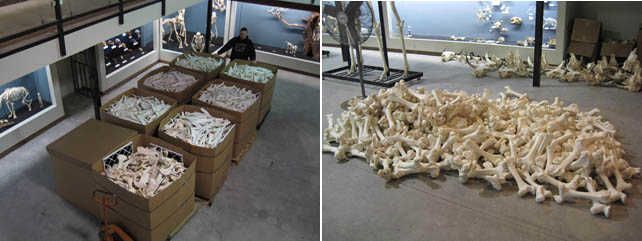
Six thousand pounds of cow bones after cleaning at Skulls Unlimited.

In late 2008, six thousand pounds of cow bones sat boxed in a Dutch warehouse. Marina Abramović, whose retrospective is on view at MoMA, had requested that we ship the bones, a major component of her installation Balkan Baroque, far in advance of the exhibition. We could not have anticipated that the next fifteen months would involve our learning about bovine spongiform encephalopathy (BSE), incineration plants in New Jersey, the dearth of slaughterhouses in the western United States, or that a place called Skulls Unlimited existed.

Small Steps Lead to Bigger Changes: MoMA’s Shifting Wall Colors

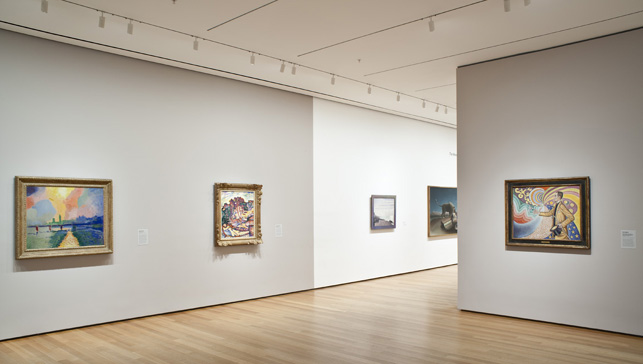
On one of my recent early-morning checks of the fifth-floor collection galleries—a daily duty of the curatorial staff, to spot any oddities—an elusive, visceral feeling gave me pause. It took me a moment to recognize that it was prompted by the wall color, which, as I moved from the European Expressionist gallery to the adjacent Matisse room, had changed from a light grey to what appeared to be a bright white. This color change is subtle enough to likely go unnoticed by many visitors, but deserves a brief moment of attention.

View of Cézanne to Picasso: Paintings from the David and Peggy Rockefeller Collection, July 17, 2009–August 31, 2009. The Museum of Modern Art, New York. Photo: John Wronn

March 3, 2010  |  Behind the Scenes
MoMA Offsite: Across the River, Across the Pond

Institutions that engage in munificent and far-reaching lending forge important collegial relationships with one another, and in the process help to create a network of public spaces with dynamic, diverse programming. Rarely, however, are these relationships sanctioned in any official capacity, which is what makes the affiliation between MoMA and P.S.1 so special. The two joined forces in 2000, with the goal to “promote the enjoyment, appreciation, study, and understanding of contemporary art to a wide and growing audience.” In the last ten years the institutions have worked together in many ways, but 1969, an exhibition on view at P.S.1 through April 5, is the first time that a group exhibition at the Long Island City center has been drawn entirely from MoMA’s collection.

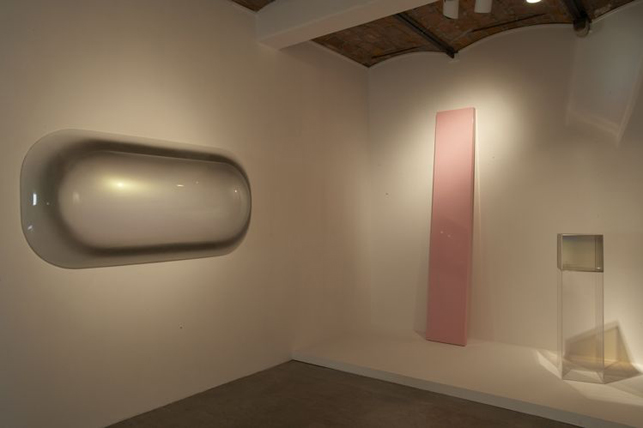
Occupying an entire floor at P.S.1, the exhibition features some eighty objects representing all seven of MoMA’s departmental collections plus the Museum Archives. I was delighted to discover dozens of works for the first time, as well as to embrace long cherished images that I had never before seen in person. Just as gratifying was seeing several works—works that MoMA visitors are surely familiar with—in a new context.

Installation view of 1969 with John McCracken

February 17, 2010  |  Behind the Scenes
MoMA Offsite: The Tricks of Today are the Truths of Tomorrow

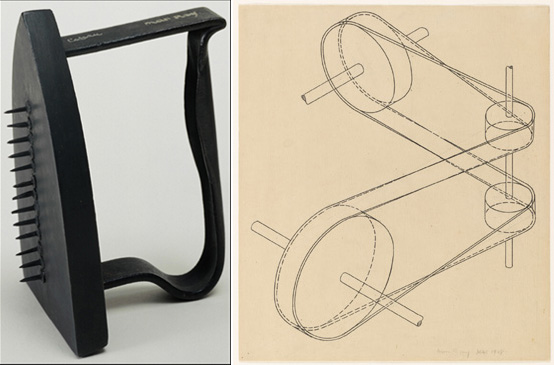
From left: Man Ray. Gift. c. 1958 (replica of 1921 original). Painted flatiron with row of thirteen tacks, heads glued to bottom. The Museum of Modern Art. James Thrall Soby Fund. Man Ray. Untitled. 1908. Ink and pencil on paper. The Museum of Modern Art. Gift of Silvia Pizitz. Both works © 2010 Man Ray Trust/Artists Rights Society (ARS), New York/ ADAGP, Paris

In my last MoMA Offsite (which, as it happens, was also the first-ever MoMA Offsite), I set the agenda for this column, which is to reveal and discuss MoMA collection works on loan to other institutions. I chose to explore both works that are infrequently on view here at Fifty-third Street as well as those that are regular residents in our galleries, assuming that each entry would take me to different artists from different time periods, featured in different shows in different parts of the world. But in the infancy of this mission I am already going to break the pattern by speaking exclusively this week about one artist and one show, just up the road: Alias Man Ray: The Art of Reinvention, on view at The Jewish Museum through March 14.

February 12, 2010  |  Behind the Scenes, Design
Rediscovering The New Typography

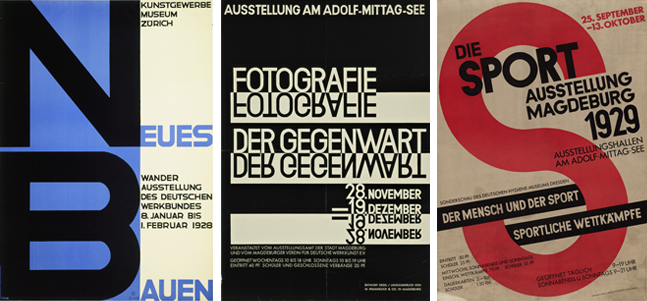
When I got off the elevator at the Architecture and Design department for a quick meeting with Juliet Kinchin about a new exhibition she was curating called The New Typography, I was surprised to see some original posters from the 1920s lined up along a wall, and many tiny pieces of stationery systems, brochures, flyers, and ads carefully spread out on a table. We don’t usually get to see the real artwork until just before the show, when installation is underway, and until then, we use exhibition catalogs or digital images for reference.

I felt like an anthropologist in the presence of an early human ancestor. As a graphic designer, I could relate to these pieces more than any other art I had worked with at MoMA. These ninety-year-old posters communicated loud and clear, and still looked amazingly cool. But when I took a close look, their difference from contemporary graphics was apparent: these works had a hand-crafted feel—a beautiful contrast to the clean geometry of the layout.

From left: Theo H. Ballmer. Neues Bauen (New building). 1928. Poster for traveling exhibition of the Deutscher Werkbund. Offset lithograph. Gift of The Lauder Foundation, Leonard and Evelyn Lauder Fund. Walter Dexel. Fotografie der Gegenwart (Contemporary photography). 1929. Poster for an exhibition in Magdeburg, Germany. Linocut. Gift of the designer. Walter Dexel. Die Sport Ausstellung Magdeburg (Sport exhibition Magdeburg). 1929. Offset lithograph. Special Purchase Fund

February 3, 2010  |  Behind the Scenes
MoMA Offsite: Uncommon Common Objects

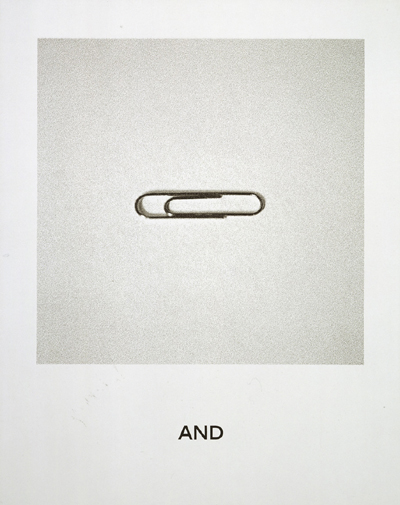
John Baldessari. Goya Series: And. 1997

My coworker Paulina Pobocha’s recent post discussing a new painting acquisition made casual mention of a staggering fact: at any given moment, MoMA is only able to display some 10 to 15 percent of its collection. This is due to limitations of space, plain and simple. Our acquisitions practices are necessarily limited by these same constraints, and though we continue to carefully maintain and build upon our collection, we cannot acquire nearly as many works as we may wish. Despite our frequent gallery rotations, there are inevitably pieces that spend too much time in crates in Queens.

The Museum counteracts this by being a generous lending institution. At present, more than 170 works from the Department of Painting and Sculpture alone are off-site. This number includes both works that are infrequently exhibited and those that visitors may be accustomed to seeing on a more regular basis.

One of the many works currently housed elsewhere is Goya Series: And (1997), an inkjet and synthetic polymer painting on canvas by the artist John Baldessari.