This past August, I visited Marina Abramović at her home in upstate New York, where she was running a workshop with the re-performers of the exhibition Marina Abramović: The Artist Is Present. In a series of five videos that show excerpts of my conversation with the artist, she talks about her work, her exhibition at MoMA, and performance art. As an artist who uses her body as a medium, it is fascinating to hear Abramović’s feelings on fear and limitations. In this video, the artist offers her thoughts on the meaning and definition of performance art.


Posts in ‘Artists’

April 6, 2010
|
Artists,
Collection & Exhibitions,
Publications
Listening to Marina Abramović: Art Must Be Beautiful, Artist Must Be Beautiful
In this clip from the CD (as discussed in a previous post) that accompanies the catalogue of Marina Abramović’s current retrospective, The Artist Is Present, Marina discusses her performance Art Must Be Beautiful, Artist Must Be Beautiful (1975) and shares with the reader her thoughts about the work and its creation. This is complemented by a discussion of the performance in one of the essays featured in the catalogue, “The Art of Marina Abramović: Leaving the Balkans, Entering the Other Side,” by art historian and critic Jovana Stokić.
March 31, 2010
|
Artists,
Behind the Scenes
MoMA Offsite: From Matisse to Matisse
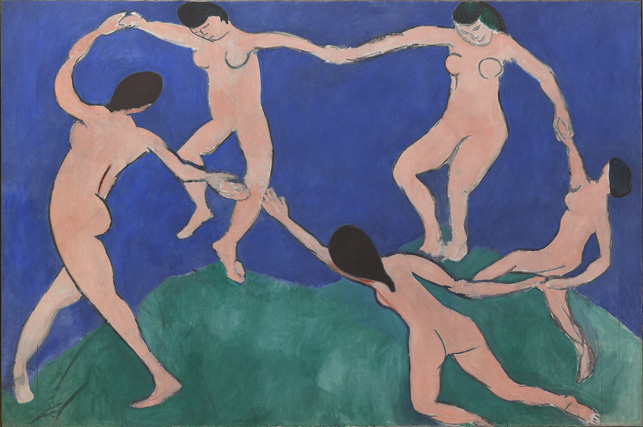
Henri Matisse. Dance (I). 1909. Oil on canvas, 8' 6 1/2" x 12' 9 1/2" (259.7 x 390.1 cm). Gift of Nelson A. Rockefeller in honor of Alfred H. Barr, Jr. The Museum of Modern Art, New York
I distinctly remember my first visit to the new MoMA building. I was nineteen and had just celebrated my first New York City anniversary (so I am of the generation that cannot clearly recall MoMA in its pre-2004 guise). Of the many snapshots in my mind from that day, none is as vivid as the vision of Henri Matisse’s 1909 painting Dance (I). As some may remember, it was hanging in an interior stairwell that joined the fourth- and fifth-floor galleries. In addition to being viewable from those stairs, it could also be glimpsed through a window that opened up to the Marron Atrium below, and that is how I first saw it. As I rounded a corner and entered the space, cosmic in size, I raised my head and the familiar piece of history slowly unfurled above me, and I let a smile unfurl with it.
March 29, 2010
|
Artists,
Collection & Exhibitions,
Viewpoints,
Visitor Viewpoint
Visitor Viewpoint: Marina Abramović

Installation view of Marina Abramović’s performance The Artist Is Present at The Museum of Modern Art, 2010. Photo by Scott Rudd. For her longest solo piece to date, Abramović sits in silence at a table in the Museum’s Donald B. and Catherine C. Marron Atrium during public hours, passively inviting visitors to take the seat across from her for as long as they choose within the timeframe of the Museum’s hours of operation. Although she will not respond, participation by Museum visitors completes the piece and allows them to have a personal experience with the artist and the artwork. © 2010 Marina Abramović. Courtesy the artist and Sean Kelly Gallery/Artists Rights Society (ARS), New York
We asked a number of visitors to Marina Abramović’s performance retrospective, The Artist Is Present, to share their impressions with us. Visitor participation is central to this exhibition—Abramović’s own performance for the show asks visitors to come sit with her and essentially become a part of the performance piece, while the “reperformances” in the sixth-floor galleries turn viewers into spectators and confront them in a way art objects never could. We wanted to hear from visitors about their experiences with these works.
March 25, 2010
|
Artists,
Collection & Exhibitions
Dieter Roth’s Hat
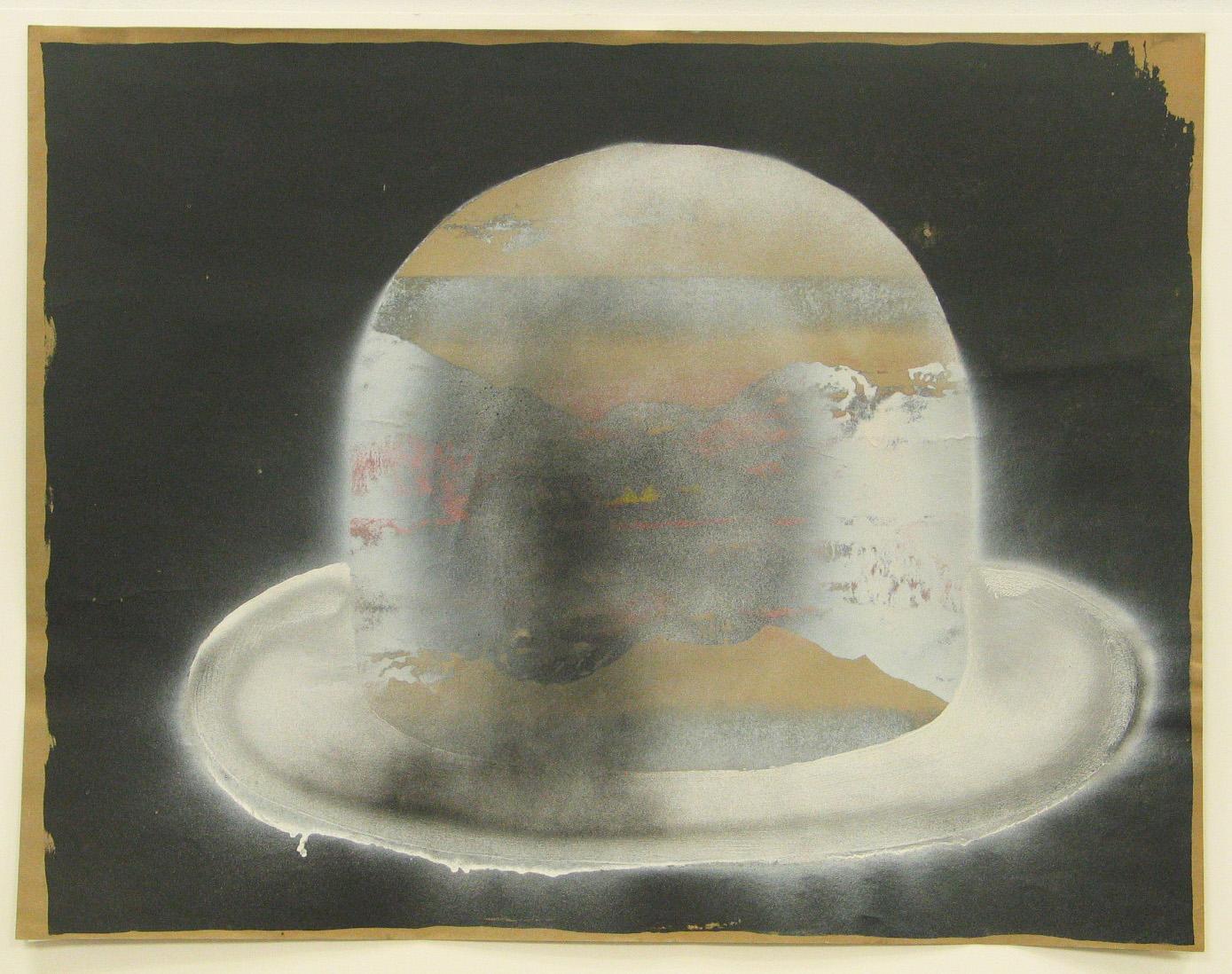
Dieter Roth. Hat. 1965. Screenprint over offset. Publisher and printer: the artist, New Haven. Edition: approx. 20 unique variants. The Museum of Modern Art. The Print Associates Fund, 2009. © 2010 Estate of Dieter Roth
Dieter Roth was a singularly important figure in postwar European art—an iconoclast, really—whose wide-ranging practice, including artist’s books, prints, drawings, sculpture, assemblages, sound recordings, film, music, and poetry, reverberated for decades to come. He was associated with kinetic art, Fluxus, Conceptual art, and concrete poetry, often blurring the boundaries between mediums and movements of the 1960s and 1970s.
As a printmaker, he totally pushed the envelope. He sent slices of greasy sausage and cheese through the printing press, stuck strips of licorice onto etchings, glued croissants onto the covers of the books he designed. He also worked with more traditional techniques like screenprint and etching, sometimes combining them to play with different experimental effects.
March 24, 2010
|
Artists,
Collection & Exhibitions,
Publications
Listening to Marina Abramović: Rhythm 10
When artist Marina Abramović and curator Klaus Biesenbach first met with the Publications team to discuss the catalogue that would accompany her exhibition at MoMA, Marina knew she wanted to create a book that offered a different kind of reading experience. Hoping to address the eternal challenge of capturing the complexity of live performance on the printed page, she proposed the addition of an audio component, which she felt would allow for a more personal, intimate, and experiential understanding of the work. What you hear in this video is a track from the resulting CD, which comes with the book.
March 18, 2010
|
Artists,
Collection & Exhibitions
On View: Wangechi Mutu’s “One Hundred Lavish Months of Bushwhack”

Wangechi Mutu. One Hundred Lavish Months of Bushwhack. 2004
The Modern Myth: Drawing Mythologies in Modern Times, a new exhibition organized by my colleagues Geaninne Gutiérrez-Guimarães and Luis Pérez-Oramas, opened in the Drawings Galleries last week, bringing together a stunning display of works from MoMA’s collection that draw on the motif of mythology. One eye-catching work in the contemporary section of the exhibition is a large-scale collage by Wangechi Mutu titled One Hundred Lavish Months of Bushwhack. She made this work in 2004 during her artist-in-residency at the Studio Museum in Harlem, and it was acquired by MoMA directly from her soon after our curators saw it on view in the Studio Museum’s exhibition Figuratively.
Though she has also worked in video, sculpture, installation, and, most recently, performance (as part of Performa in 2009), for the past several years Mutu has produced stunning collages of fantastically ornate hybrid women, composed of cut-out images culled from magazines ranging from Vogue to National Geographic, outdated ethnographic surveys, pornography, and botanical illustrations. Mutu is interested in how stereotypes become ingrained into the public conscious, and through her art she investigates gender and racial stereotypes, in particular those pertaining to black women, formulating a distinctly personal position on feminism, postcolonial continental Africa, and globalization.
March 8, 2010
|
Artists,
Conservation
Claes Oldenburg: Conservation of Floor Cake (Week 5)
In our previous posts we discussed the materials and methods used by Claes Oldenburg to create Floor Cake, the artist’s unique and popular piece of painted cake currently undergoing conservation treatment here at MoMA. This week, we investigate the properties of Floor Cake’s surface dirt, to help us prepare an optimal cleaning solution to remove dirt and grime from the sculpture’s painted surface.
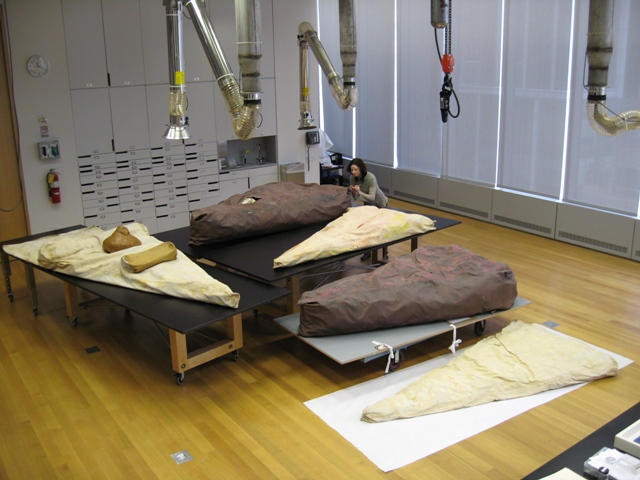
Floor Cake disassembled during treatment
March 4, 2010
|
Artists,
Collection & Exhibitions
Levitt in Color, New at MoMA
There are no installation views of the Projects exhibition in which Helen Levitt first presented her color photographs to MoMA’s public, for one simple reason: all forty pictures were projected onto the wall, fading as quickly as they appeared. The year was 1974, and Levitt was in the midst of a creative outburst—unusual not only because she was at an age when most people contemplate retirement, but also because until 1959 her career had developed entirely in shades of gray. I love these black-and-white images, and put up a whole wall of them in 2006-07, including the first photograph by Levitt ever acquired by MoMA, New York, way back in 1941.
February 25, 2010
|
Artists,
Collection & Exhibitions,
Design
Signs of Life: The Life of the Exit Man

Freddie Yauner. Signs of Life. 2007-09. © Freddie Yauner
Signs of Life, the animated pictographic exit sign by British designer Freddie Yauner, takes the most banal everyday object—something that we see daily but rarely notice—and brings it to life.
If you are interested in reproducing images from The Museum of Modern Art web site, please visit the Image Permissions page (www.moma.org/permissions). For additional information about using content from MoMA.org, please visit About this Site (www.moma.org/site).
© Copyright 2016 The Museum of Modern Art
Welcome to MoMA.org. To take full advantage of all the site’s features, including the option to save works in the collection, please upgrade your browser to Firefox,
Google Chrome, Safari, or Internet Explorer 9.
See our help page for more information.
To take full advantage of all of the features on MoMA.org, please upgrade your browser to Firefox, Google Chrome,
Safari, or Internet Explorer 9.