MoMA
Posts in ‘Artists’
May 27, 2010  |  Artists, Publications
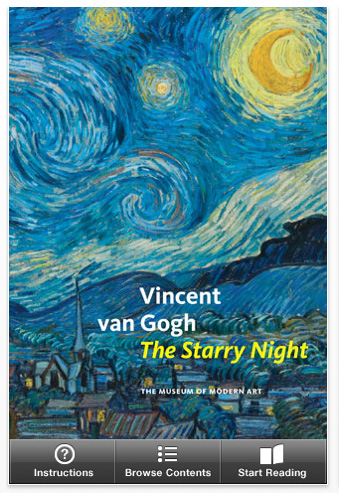
Vincent van Gogh’s The Starry Night, now pocket-sized!

Screenshot of the Starry Night app

Instantly recognizable and an iconic image in our culture, Vincent van Gogh’s The Starry Night is a touchstone of modern art and one of the most beloved works in the Museum’s collection. It draws thousands of visitors every day who want to gaze at it, be instructed about it, and be photographed next to it—yet few viewers are familiar with the story behind this unlikely masterpiece, executed during a tumultuous period in the artist’s life.

May 21, 2010  |  Artists, Conservation
Conservation of Floor Cake (Part 6)

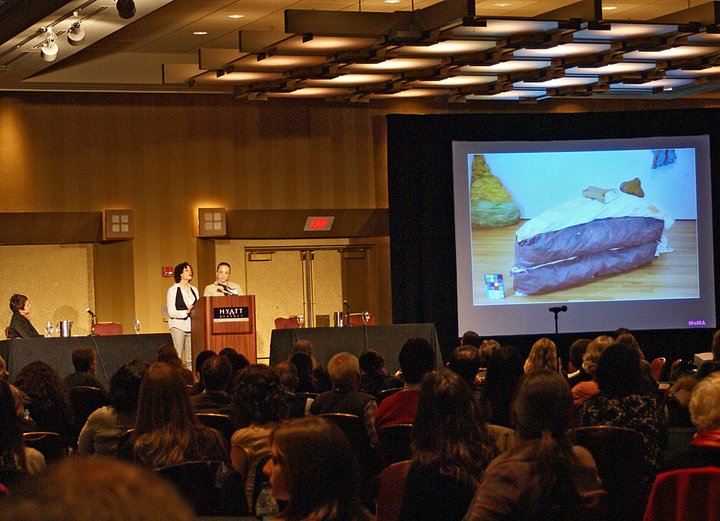
At AIC, Cindy Albertson and Margo Delidow discuss the history and treatment of Floor Cake

We’ve taken a short break from writing about Claes Oldenburg’s iconic Floor Cake sculpture—currently undergoing conservation treatment here at MoMA—to prepare a lecture for last week’s annual meeting of the American Institute for Conservation of Historic and Artistic Works (AIC), in Milwaukee, Wisconsin. Conservators, educators, and scientists gather each year to discuss new types of treatments for works of art and to examine the effects of past treatment. Our presentation focused on the history of Floor Cake and its condition (please see our previous posts), as we have been working to conserve this unique and popular work for the past several months.

May 13, 2010  |  Artists, Collection & Exhibitions, Fluxus
Bottoms Up! Fluxus Wallpaper

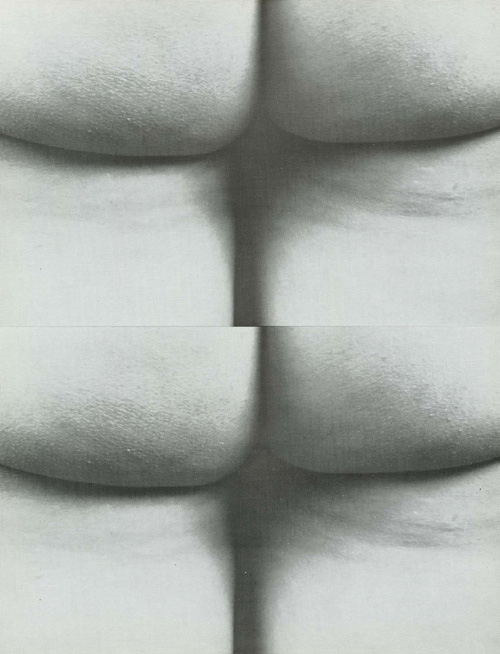
Yoko Ono. George Maciunas. Fluxus Wallpaper. c. 1973. Offset. The Gilbert and Lila Silverman Fluxus Collection Gift

During recent months, Fluxus has begun making waves in MoMA galleries. This past October, Fluxus Preview opened on the fourth floor and continues to provide a sampling of the diverse activities carried out by artists engaged with a rebellious approach in the 1960s and 1970s. Most recently, true to Fluxus’s irreverent sensibility, derrières—hundreds of female asses—have taken over a space on the third floor of the Museum. The work is Yoko Ono and George Maciunas’s Fluxus Wallpaper, which repeats black-and-white close-ups of a human behind from floor to ceiling.

A still from Ono’s Film Number 4 (Bottoms), this wallpapered image is of one of the (allegedly) 365 individuals who walked for the artist’s camera in London during the early 1960s. As Ono once described Film Number 4, it is “like an aimless petition signed by people with their anuses”—a collective mooning in support of the absurd. Maciunas took one of these signature back ends, possibly Ono’s own, and printed it in fashion that enabled the provocation to occupy any receptive surface.

The wallpaper is part of The Gilbert and Lila Silverman Fluxus Collection Gift, acquired in 2008. It is currently on display in conjunction with the exhibition Pictures by Women: A History of Modern Photography.

Lost and Found: An Evening with Bern Porter

On Thursday, April 22, the MoMA Library and Esopus Foundation Ltd. co-hosted an evening celebrating the life and work of physicist-artist Bern Porter (1911–2004). I organized the event to breathe life into the books and other ephemera on display in the exhibition Lost and Found: The Work of Bern Porter from the Collection of The Museum of Modern Art Library and to call more attention to this fascinating and under-recognized artist.

Visitor Viewpoint: MoMA’s Mystery Man
</p>

</strong>

Those of you who have clicked through the visitor portraits in our Marina Abramović: The Artist Is Present Flickr gallery, taken by Marco Anelli, probably noticed some familiar faces. Apart from a few celebrities in the mix (Sharon Stone, Rufus Wainwright, Isabella Rossellini, to name a few), there are a number of less famous faces that repeat day in and day out, almost as often as Marina herself. These Marina devotees have become micro-celebrities in their own right, at least around the Museum; the guards know them by name, and fellow visitors waiting their turn to sit with Marina regard them with an air of what may best be described as reverence.

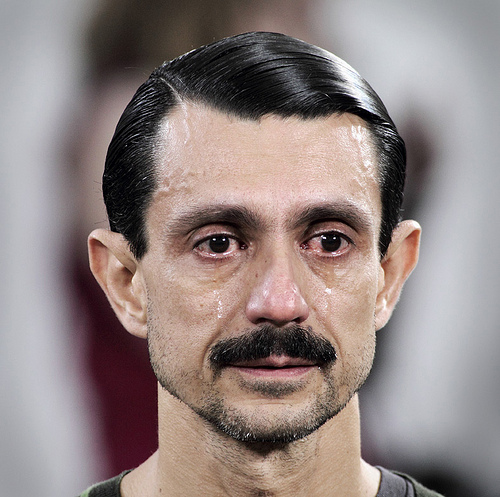
Paco Blancas, a NYC-based make-up artist, is one such visitor. After seeing his portrait a number of times on Flickr, I found myself wondering, “Who is this mystery man? Why does he keep coming back? Why is he crying in so many of these photos?” I wanted to know his story. As luck would have it, last week I spotted him seated in the Marron Atrium, back for his fourteenth sitting with Marina. He shared a few words about his experiences with the piece and what compels him to keep coming back.

May 6, 2010  |  Artists, Collection & Exhibitions
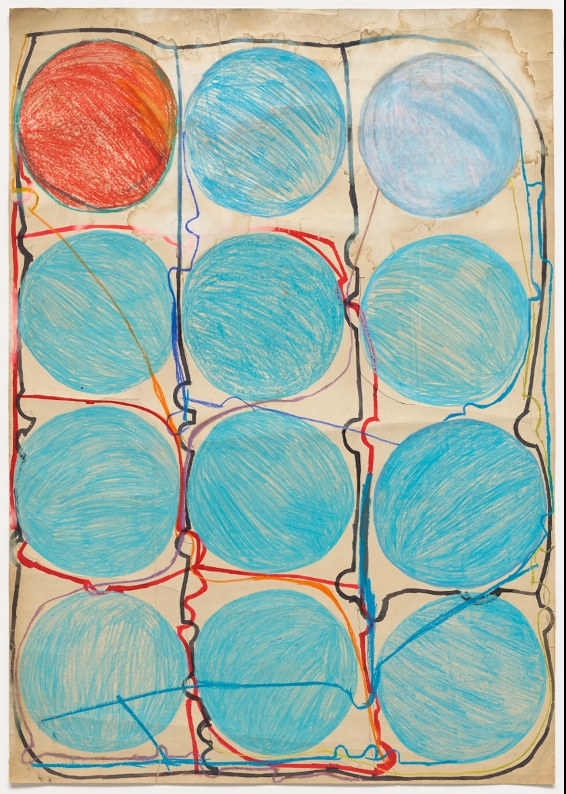
Atsuko Tanaka: Electrifying Drawing
Atsuko Tanaka (Japanese, 1932-2005). Untitled. 1956. Watercolor and felt-tip pen on paper, 42 7/8 x 30 3/8" (108.9 x 77.2 cm). The Museum of Modern Art, New York. Purchased with funds provided by the Edward John Noble Foundation, Frances Keech Fund, and Committee on Drawings Funds. © 2010 Ryoji Ito

Atsuko Tanaka. Untitled. 1956. Watercolor and felt-tip pen on paper, 42 7/8 x 30 3/8" (108.9 x 77.2 cm). The Museum of Modern Art. Purchased with funds provided by the Edward John Noble Foundation, Frances Keech Fund, and Committee on Drawings Funds. © 2010 Ryoji Ito

One could say that Atsuko Tanaka is having a moment here at MoMA. Her untitled painting from 1964 is currently one of the most visible works on view at the Museum (situated above the information desk in the main lobby), and a recently acquired drawing just went on view this week for the first time at MoMA in the exhibition Mind and Matter: Alternative Abstractions, 1940s to Now.

Born in Osaka, Japan, in 1932, Tanaka was a member of the Gutai Art Association, the major experimental postwar Japanese art movement founded by a group of young artists in Ashiya in 1954. She was best known for sculptural installations made from non-art materials, such as Electric Dress (1956), a wearable sculpture made of flickering light bulbs painted red, blue, green, and yellow. When originally worn, the sculpture both made the body the center of artistic activity and masked it in a mass of light and color. This work, along with Work (Bell) (1955)—made of twenty electric bells connected by one hundred feet of electrical cord and a switch that viewers can press to activate a line of ringing sound—are prime illustrations of Tanaka’s interest in the application of intangible materials in art, namely electricity, and Gutai’s overall reaction to a modernizing Japan.

May 4, 2010  |  Artists, Collection & Exhibitions
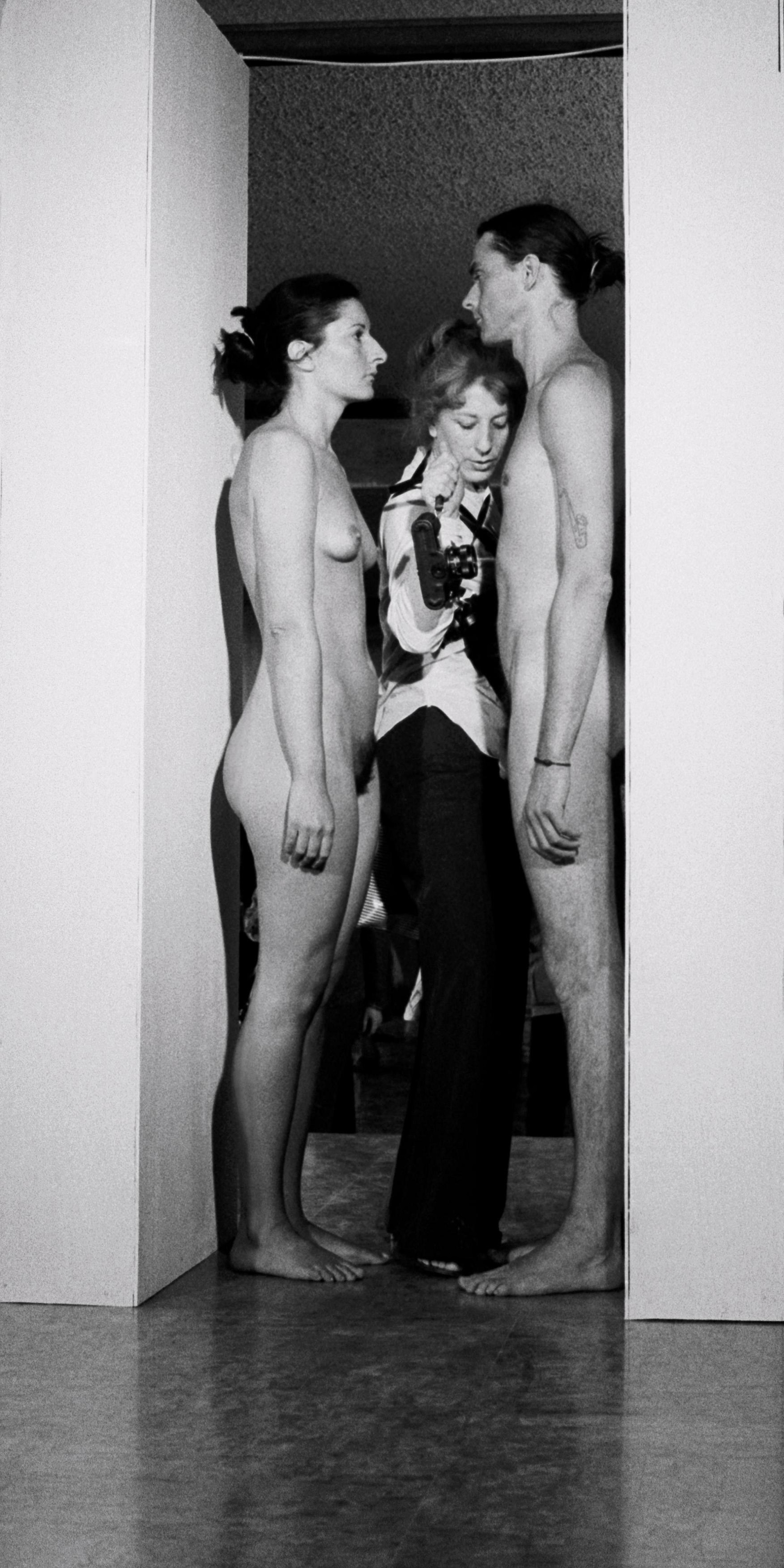
Bodies in the Galleries: Thoughts from an Ex-Dancer on Marina Abramović

Marina Abramović and Ulay in Imponderabilia, 1977. © 2010 Marina Abramović. Courtesy Marina Abramović and Sean Kelly Gallery/Artists Rights Society (ARS), New York

Friends and family keep asking me recently, “What do you think of the Marina Abramović show?” The exhibition has sparked a lot of conversation, especially one aspect of it—yes, the “naked people.”

Some viewers have been shocked by the bodies in our galleries, but I didn’t expect to be one of them. Beyond the occasional cartwheel, there hasn’t been much call at MoMA for my performing skills… but before I was a MoMA wordsmith, I was a modern dancer, performing for several years mostly with the Regina Nejman Dance Company.

Dancers become comfortable with the body to an unusual degree. There’s the co-ed quick costume-changing backstage, the impolite contact of dance partnering, not to mention you spend a lot of your life wearing spandex. And yet I discovered that Abramović’s reperformers—clothed and unclothed—ruffled my composure, too.

Imponderabilia (1977), the Abramović piece in which two nude performers flank a doorway, has gotten a lot of press. Brushing past the genitalia of strangers in a crowded, public place—could anything be more nightmarish for a New Yorker? Recently, playing hooky from my desk, I breathed in, to be thinner, and slipped between the man and woman performing that afternoon. Safely through, I realized my heart was pounding. Other visitors hurried through nonchalantly, pretending they were going that way anyway; the performers, standing with knees slightly bent, never broke their bubble of concentration. (A good trick for the endurance stander, to avoid wobbling or fainting: don’t lock your knees.)


May 3, 2010  |  Artists, Collection & Exhibitions
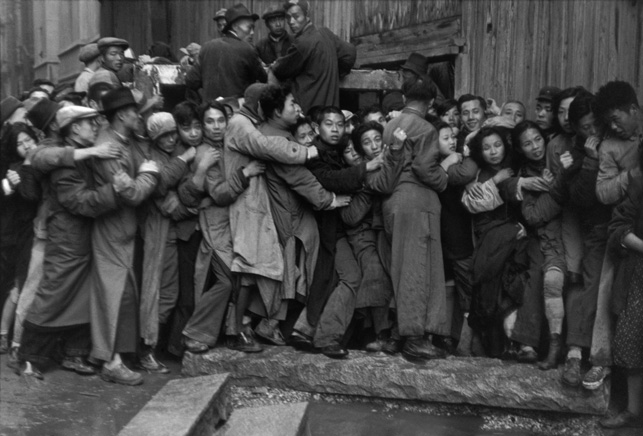
At Home Everywhere: The Travels of Henri Cartier-Bresson

Henri Cartier-Bresson. Shanghai. 1948. Gelatin silver print, printed 1971. The Museum of Modern Art. Acquired through the generosity of Robert B. Menschel. © 2010 Henri Cartier-Bresson/Magnum Photos, courtesy Fondation Henri Cartier-Bresson, Paris

I tracked Henri Cartier-Bresson (1908–2004) from England to India to Indonesia and back. He was in England for the coronation of King George VI; he was in India when Gandhi was assassinated; he was in Indonesia as the nation gained independence from the Dutch. He was seemingly everywhere.

I know because it was my job to compile all of Cartier-Bresson’s photo captions, notes, datebooks, and correspondence from his travels, which covered the better part of the 50 years he was actively working as a photographer. I then had to transform this into a comprehensive yet comprehensible chronology that would appear in the catalogue of the exhibition Henri Cartier-Bresson: The Modern Century.

April 30, 2010  |  Artists, Collection & Exhibitions, Tech
Marina Abramović: A Gallery of Portraits

If you happen to witness—or, for the intrepid, participate in—Marina Abramović‘s new work The Artist Is Present, you may notice a well-equipped photographer quietly documenting each daily performance. The artist has asked photographer Marco Anelli to take portraits of every visitor who participates in the piece. The results, as you can see below and on the exhibition website, are captivating.

Check back frequently, as the images are updated regularly. At this point there are over eight hundred portraits!

</embed>

April 15, 2010  |  Artists, Collection & Exhibitions
New at MoMA: Sanja Iveković’s Double Life

I first made a studio visit with Sanja Iveković about ten years ago, when I was invited to organize a large-scale exhibition at the Museum of Contemporary Art in Zagreb, Croatia. She impressed me instantly. I recall thinking, “This is an inspiring artist with whom I will forge a long-lasting relationship.” A feminist, activist, and video pioneer, Iveković came of age in the early 1970s, when artists broke free from mainstream institutional settings, laying the ground for a form of praxis antipodal to official art. Part of the generation known as the Nova Umjetnička Praksa (New Art Practice), she has produced works of cross-cultural resonance that range from conceptual photomontages to video and performance. Last month I visited Iveković again in Zagreb, this time to discuss her first survey exhibition in the U.S., which is scheduled to open at MoMA at the end of 2011.