MoMA
Posts in ‘Artists’
September 19, 2013  |  Artists, Publications
Rediscovering The Prints of Paul Klee
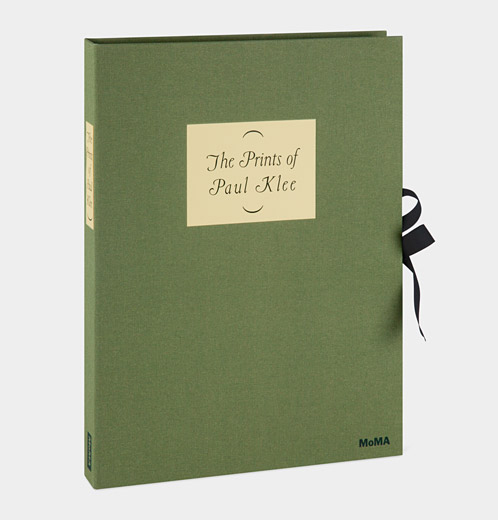
<i>The Prints of Paul Klee</i>

The Prints of Paul Klee

In 1947, The Museum of Modern Art published a deluxe portfolio of The Prints of Paul Klee, a luxurious green ribbon-bound box encasing 40 individual prints of Paul Klee’s etchings and lithographs, and a booklet by James Thrall Soby, then Chairman of the Museum’s Department of Painting and Sculpture.

September 12, 2013  |  Artists, Collection & Exhibitions
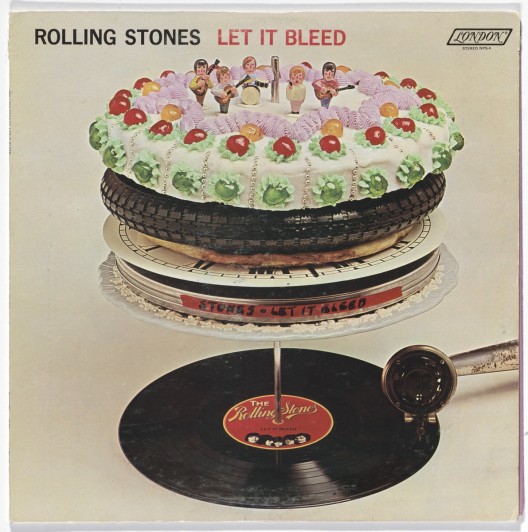
Let Them Eat Delia’s Cake, or Robert Brownjohn’s Let It Bleed
Robert Brownjohn, American, 1926-1970. Let It Bleed.1969. Lithograph. 12 3/8 x 12 3/8″ (31.4 x 31.4 cm)

Robert Brownjohn. Let It Bleed (front cover). 1969. Lithograph, 12 3/8 x 12 3/8″ (31.4 x 31.4 cm)

One of the recent additions to MoMA’s design collection is the record jacket for the Rolling Stones album Let it Bleed, with cover art by Robert Brownjohn. Those of us of a certain age are likely to remember not only our first LP purchase

September 5, 2013  |  Artists, Collection & Exhibitions
Standardizing Sight: New Screenprints by Lucy Raven

One of the most exciting things about working for an institution that collects contemporary art is the opportunity to see what artists are currently creating and contemplating. It’s a very rewarding part of my job to organize visits in which publishers show our curatorial staff the prints and books they have recently published. On one such visit last winter, Forth Estate—a Brooklyn-based publisher that has worked with emerging artists since its founding in 2005

Tracking Bells through New York (and Trying Not to Make a Leap Like Quasimodo)

A Bell For Every Minute is a sound installation, originally commissioned by Creative Time, Friends of the High Line and the New York City Department of Parks and Recreation. It was first installed on the High Line from June 2010 through June 2011. The finished composition consists of 59 bell recordings which ring together at the top of the hour and then individually each minute after that from five speakers. I still regret that I didn’t do more to document the people I met at the sites where I recorded each bell and their stories. When I hear the piece, there are moments of conversation that come back to me—the ladder we were handed in Central Park to climb up to stand next to the monkey statues who ring the bell as the kangaroo, penguin and elephant rotate around; the nun at St. Paul’s Chapel who went out into the rain with me and said very little; the man at the Buddhist temple who suggested that my assistant and I might want to get high and really listen to the vibration of the temple bell sometime.

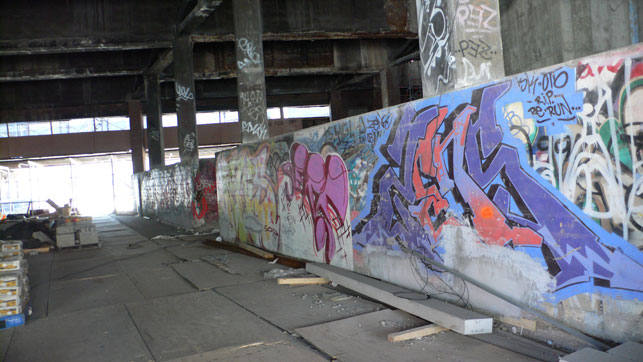
The first time I visited the High Line was with Meredith Johnson from Creative Time, before it was open to the public in early 2009. There was still graffiti everywhere and the feeling of visiting an industrial ghost town.
Stephen Vitiello. A Bell for Every Minute. 2010. 5-channel sound installation with aluminum sound map. Commissioned by Creative Time, Friends of the High Line and the City of New York Department of Parks and Recreation. Photo: Stephen Vitiello
Stephen Vitiello. A Bell for Every Minute. 2010. Location photo for a project originally commissioned by Creative Time, Friends of the High Line and the City of New York Department of Parks and Recreation. Photo: Stephen Vitiello

Stephen Vitiello. A Bell for Every Minute. 2010. 5-channel sound installation with aluminum sound map. Commissioned by Creative Time, Friends of the High Line and the City of New York Department of Parks and Recreation. Photo: Stephen Vitiello

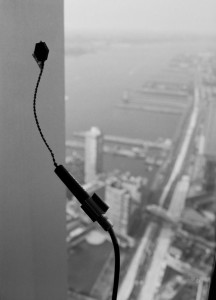
Stephen Vitiello. World Trade Center Recordings. 1999. Photo by Johnna MacArthur

When I was up there, besides being freezing cold, I thought of the sounds that might have once been present, the clanging and ringing … and then was brought back to a memory of the very first sound I heard through my window-mounted microphones when I was in residence in the World Trade Center in 1999—church bells from some unseen spot in the city.

I decided to create a piece for the High Line that would allow me to investigate bells all over New York, from religious cultures to maritime bells, sporting arenas, bars, and whatever else might appear.

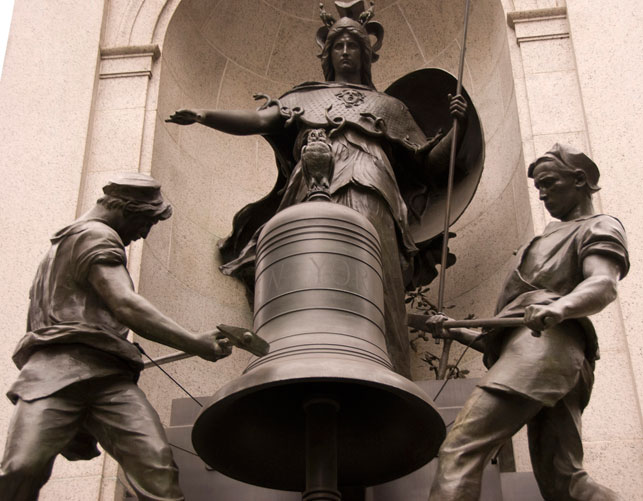
Once I began, I tried to take a photograph of each site. The photo that most often gets used to represent the project is from Herald Square. The structure that includes the bell is called “Minerva and the Bell Ringers.” I almost passed over that site. I kept thinking it would be too noisy to record in midtown and couldn’t imagine what sort of bell would be there. I came to the park on a freezing cold day. Two men were sleeping on benches. The automated bell ringers struck on the hour. At the end of the recording, just as the bell fades, I can hear someone saying, “Hey, who took all my rubber bands?” Random bits of city sound and city people become part of the memory. An accident of oral history.
Stephen Vitiello. A Bell for Every Minute. 2010. 5-channel sound installation with aluminum sound map. Commissioned by Creative Time, Friends of the High Line and the City of New York Department of Parks and Recreation. Photo: Stephen Vitiello

Stephen Vitiello. A Bell for Every Minute. 2010. Location photo for a project originally commissioned by Creative Time, Friends of the High Line and the City of New York Department of Parks and Recreation. Photo: Stephen Vitiello

Soon after I began the process of recording, there was an article in one of the newspapers that a bell from Coney Island’s Dreamland Amusement Park had turned up. Dreamland had burned down in 1911. In recent years, a diver had been looking for remnants of the amusement park off of the piers of Coney Island and he had come up with the original bell that weighed several hundred pounds. The bell was “on view” under the Cyclone. It was presented in the Coney Island History Project’s small shack for two weeks before going into a private collection. I was given the chance to record it. The guys in charge screamed at visitors and those passing by to quiet down so I could record the bell.
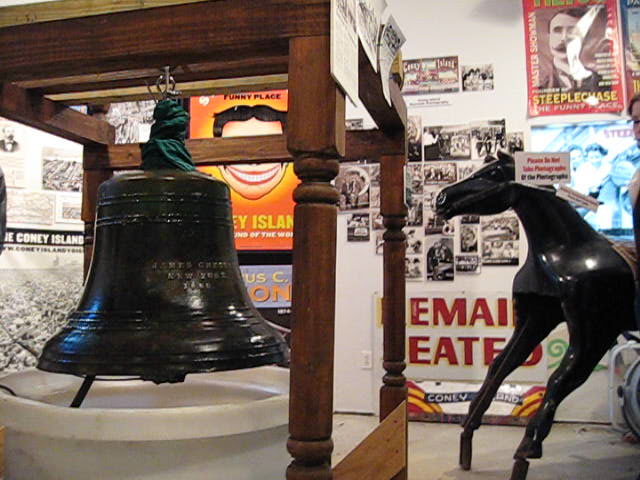
Stephen Vitiello. A Bell for Every Minute. 2010. 5-channel sound installation with aluminum sound map. Commissioned by Creative Time, Friends of the High Line and the City of New York Department of Parks and Recreation. Photo: Stephen Vitiello

Stephen Vitiello. A Bell for Every Minute. 2010. Location photo for a project originally commissioned by Creative Time, Friends of the High Line and the City of New York Department of Parks and Recreation. Photo: Saul Becker

The bell remained in great condition. Only the clapper had rotted. That night, after Coney Island, I visited my friends Saul and Kristen Becker. Kristen was the architect for the project. Saul helped me with some of the site-visits. Their cat, Boots walked by, with his collar jingling and the discovery of my next recording was revealed.
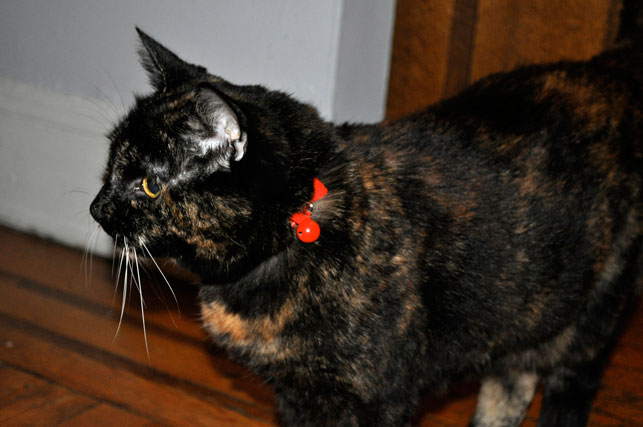
Stephen Vitiello. A Bell for Every Minute. 2010. 5-channel sound installation with aluminum sound map. Commissioned by Creative Time, Friends of the High Line and the City of New York Department of Parks and Recreation. Photo: Stephen Vitiello

Stephen Vitiello. A Bell for Every Minute. 2010. Location photo for a project originally commissioned by Creative Time, Friends of the High Line and the City of New York Department of Parks and Recreation. Photo: Saul Becker

I recorded at more than one temple and honestly can’t remember which one it was that offered the potentially psychedelic experience. This photo below is from the Mahayana Buddhist Temple in Chinatown:
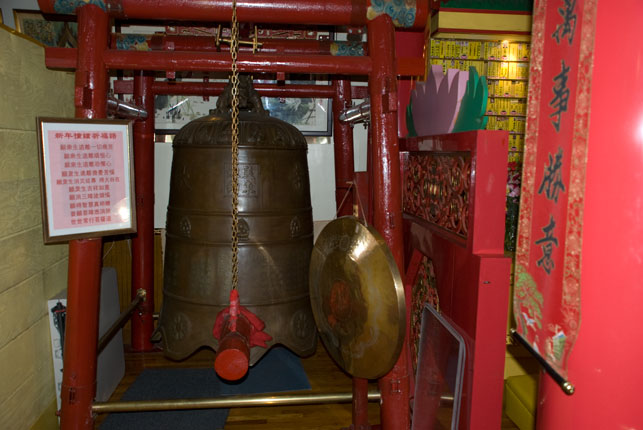
Stephen Vitiello. A Bell for Every Minute. 2010. 5-channel sound installation with aluminum sound map. Commissioned by Creative Time, Friends of the High Line and the City of New York Department of Parks and Recreation. Photo: Stephen Vitiello

Stephen Vitiello. A Bell for Every Minute. 2010. Location photo for a project originally commissioned by Creative Time, Friends of the High Line and the City of New York Department of Parks and Recreation. Photo: Stephen Vitiello

This one was at my sound engineer, Bob Bielecki’s house in upstate NY but never made the cut:
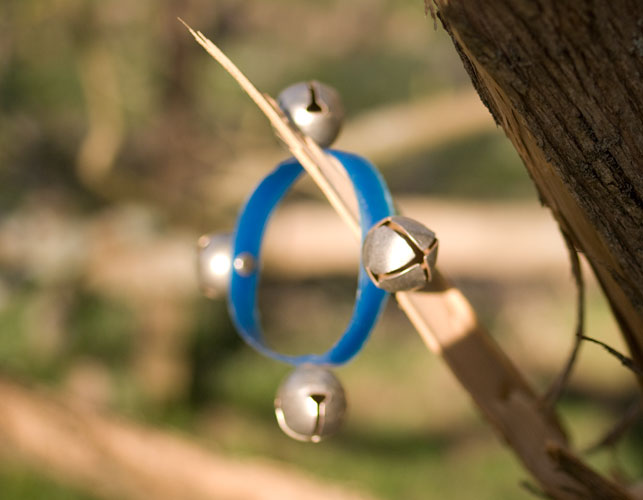
Stephen Vitiello. A Bell for Every Minute. 2010. 5-channel sound installation with aluminum sound map. Commissioned by Creative Time, Friends of the High Line and the City of New York Department of Parks and Recreation. Photo: Stephen Vitiello

Stephen Vitiello. A Bell for Every Minute. 2010. Location photo for a project originally commissioned by Creative Time, Friends of the High Line and the City of New York Department of Parks and Recreation. Photo: Stephen Vitiello

In late September 2009, I was invited to come to St. Paul’s Chapel, to record the Bell of Hope. This bell was a gift to the U.S. by the Lord Mayor of London and the Archbishop of Canterbury. It is wrung every September 11. I came to the Chapel on a rainy Sunday morning, not sure who I was meeting. Eventually, a young nun came up and introduced herself to me as Sister Precious (at least as I remember). She took me out to the courtyard. She hadn’t said anything to begin and I originally imagined it would be a short ring of the bell and a run for shelter. Instead, she rang the bell for nearly three minutes, smiling kindly the whole time. The longer it went on, the more I could hear the bell as it resounded, filling the courtyard and filling the space beyond the gates of the yard and out to the streets which had politely quieted down just for that moment. In my installation, which is now in MoMA’s Sculpture Garden, you hear an edited version. I thought this would be a nice moment to include the original file, just as it was played.

Other locations included the Delacorte Music Clock in Central Park,
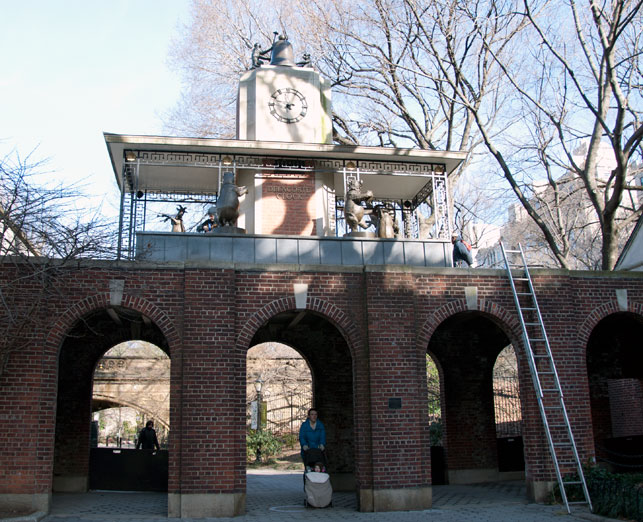
Stephen Vitiello. A Bell for Every Minute. 2010. 5-channel sound installation with aluminum sound map. Commissioned by Creative Time, Friends of the High Line and the City of New York Department of Parks and Recreation. Photo: Stephen Vitiello

Stephen Vitiello. A Bell for Every Minute. 2010. Location photo for a project originally commissioned by Creative Time, Friends of the High Line and the City of New York Department of Parks and Recreation. Photo: Stephen Vitiello

the New York Stock Exchange,
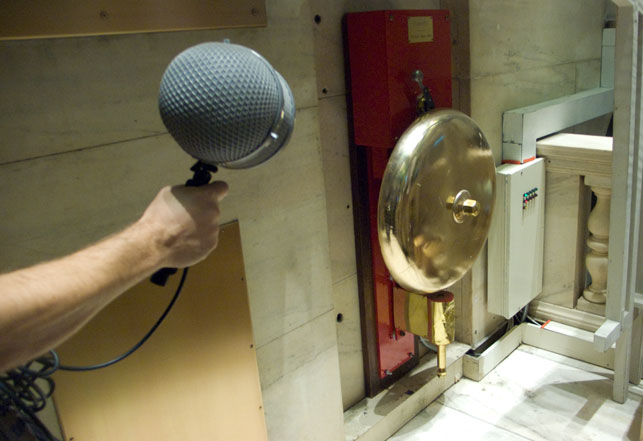
Stephen Vitiello. A Bell for Every Minute. 2010. 5-channel sound installation with aluminum sound map. Commissioned by Creative Time, Friends of the High Line and the City of New York Department of Parks and Recreation. Photo: Stephen Vitiello

Stephen Vitiello. A Bell for Every Minute. 2010.Location photo for a project originally commissioned by Creative Time, Friends of the High Line and the City of New York Department of Parks and Recreation. Photo: Stephen Vitiello

and the Goof Stuff Diner in Union Square.
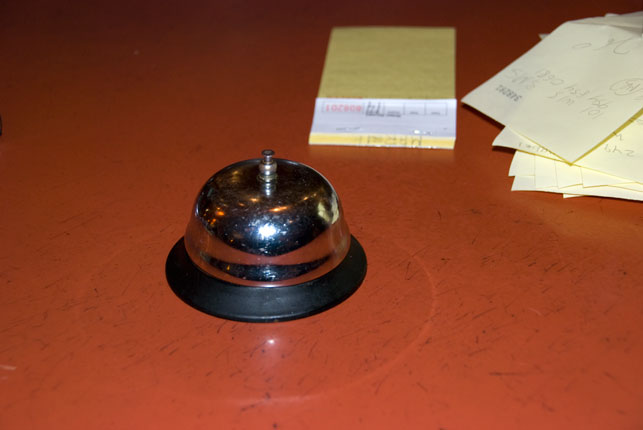
Stephen Vitiello. A Bell for Every Minute. 2010. 5-channel sound installation with aluminum sound map. Commissioned by Creative Time, Friends of the High Line and the City of New York Department of Parks and Recreation. Photo: Stephen Vitiello


Stephen Vitiello. A Bell for Every Minute. 2010. Location photo for a project originally commissioned by Creative Time, Friends of the High Line and the City of New York Department of Parks and Recreation. Photo: Stephen Vitiello
August 20, 2013  |  Artists, MoMA PS1
Doug Aitken’s Station to Station: A Nomadic Happening
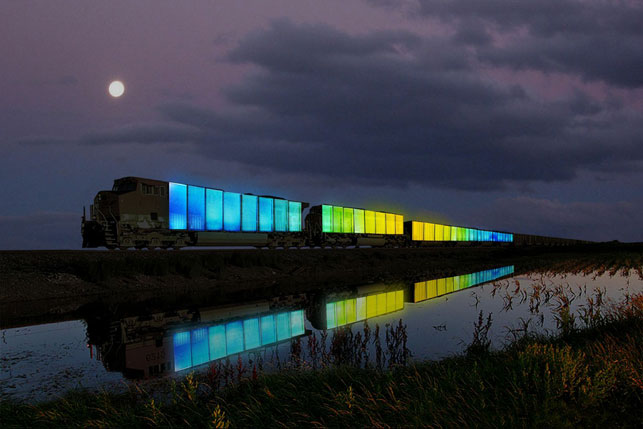
Rendering of the Station to Station train. © Doug Aitken

Rendering of the Station to Station train. © Doug Aitken

Everyone is buzzing about Doug Aitken’s latest project, Station to Station: A Nomadic Happening, a train traveling from the Atlantic to the Pacific, making nine stops along the way to host one-night only, site-specific happenings throughout September.

July 31, 2013  |  Artists, Family & Kids
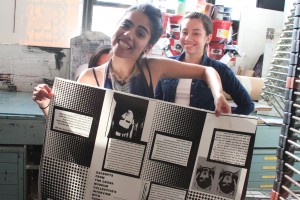
MoMA Teens @ ARTBOOK @ MoMA PS1
Alya and Stephanie posing with an unfolded zine.

MoMA Teens Alya and Stephanie posing with an unfolded zine.

Last year’s Cross-Museum Collective was a whirlwind of incredible, art-related experiences, from behind-the-scenes tours of MoMA’s Security Department (thanks LJ!) to hanging out with the conservation staff (thanks Roger!) to spending week after week exploring the galleries of MoMA PS1 and the spectacular work there—it’s insane just how much we were able to accomplish.

July 24, 2013  |  Artists
Running to Rachmaninoff

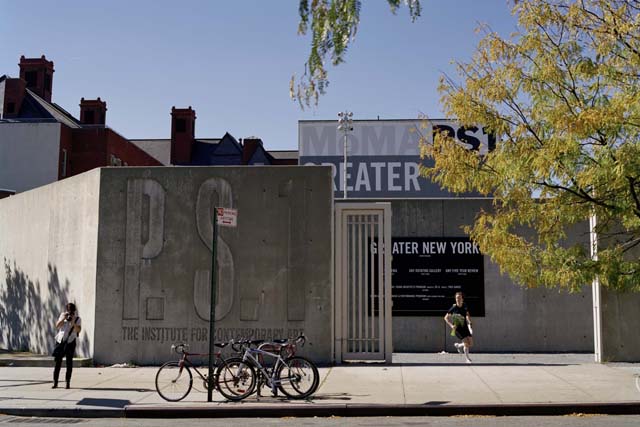
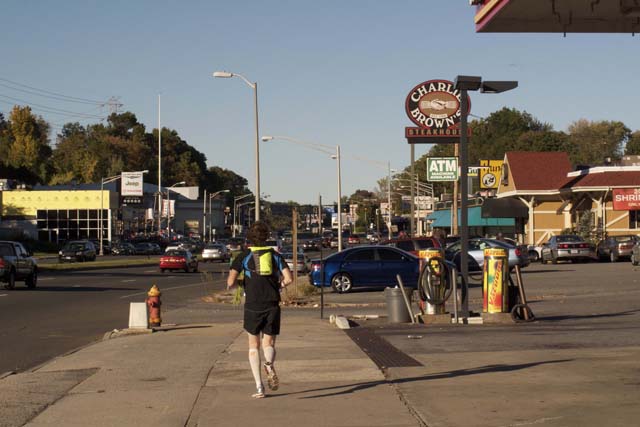
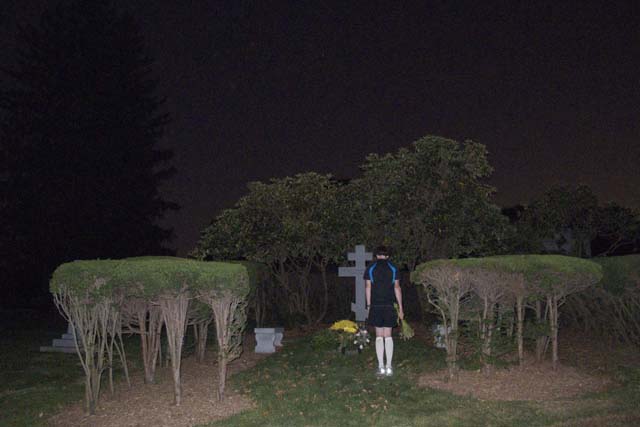
When I talk to friends about Dutch artist Guido van der Werve’s work Nummer dertien, Effugio A: Chamomile, Russia’s National Flower or Running to Rachmaninoff (2010), they are usually surprised to hear that the Russian composer and concert pianist is buried in upstate New York. The whereabouts of the remains of Sergei Rachmaninoff (1873–1943), who has been described as “the last romantic of the 20th century,” are still a little known fact.(1) Yet, van der Werve (b. 1977) has taken it upon himself to spread the word with his annual homage to Rachmaninoff, an endurance performance piece he premiered as part of Greater New York at MoMA PS1 in 2010. On the afternoon of October 9, 2010, the artist embarked on a solitary journey to Rachmaninoff’s grave, traversing a total of 29 miles from Queens, to place a chamomile flower bouquet on the tombstone at Kensico Cemetary, located in Valhalla, New York.

Guido van der Werve. Nummer dertien, Effugio A: Chamomile, Russia's National Flower or Running to Rachmaninoff. 2010. Sixteen 35mm color slides, framed text. Gift of the artist and Luhring Augustine, New York. The Museum of Modern Art, New York. © 2013 Guido van der Werve, Used by permission

Guido van der Werve. Nummer dertien, Effugio A: Chamomile, Russia’s National Flower or Running to Rachmaninoff. 2010. 16 35mm color slides, framed text. Gift of the artist and Luhring Augustine, New York. The Museum of Modern Art, New York. © 2013 Guido van der Werve, Used by permission

Guido van der Werve. Nummer dertien, Effugio A: Chamomile, Russia's National Flower or Running to Rachmaninoff. 2010. Sixteen 35mm color slides, framed text. Gift of the artist and Luhring Augustine, New York. The Museum of Modern Art, New York. © 2013 Guido van der Werve, Used by permission

Guido van der Werve. Nummer dertien, Effugio A: Chamomile, Russia’s National Flower or Running to Rachmaninoff. 2010. 16 35mm color slides, framed text. Gift of the artist and Luhring Augustine, New York. The Museum of Modern Art, New York. © 2013 Guido van der Werve, Used by permission

Guido van der Werve. Nummer dertien, Effugio A: Chamomile, Russia's National Flower or Running to Rachmaninoff. 2010. Sixteen 35mm color slides, framed text. Gift of the artist and Luhring Augustine, New York. The Museum of Modern Art, New York. © 2013 Guido van der Werve, Used by permission

Guido van der Werve. Nummer dertien, Effugio A: Chamomile, Russia’s National Flower or Running to Rachmaninoff. 2010. 16 35mm color slides, framed text. Gift of the artist and Luhring Augustine, New York. The Museum of Modern Art, New York. © 2013 Guido van der Werve, Used by permission

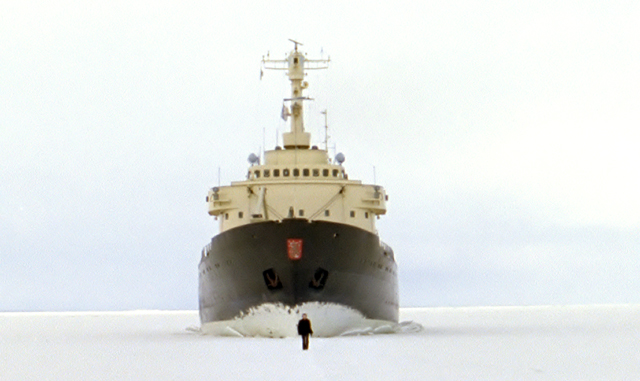
In order to experience the live performance in its entirety, one has to keep up with the artist, who is not only a marathon runner, but a musician as well. Van der Werve is known for challenging the unpredictability of nature in his chronologically numbered video and performance pieces, often exposing himself to danger or undertaking major physical exertions. In 2009, MoMA acquired his sublime, large-scale video projection Nummer acht, everything is going to be alright (2007), currently on view on the Museum’s ground floor. Here, the artist situates himself as the protagonist of the scene and confronts himself with the elements, as he slowly walks ahead of a 3,500-ton icebreaker in the frozen Gulf of Bothnia, off the coast of Finland.

Guido van der Werve. Nummer acht, everything is going to be alright. 2007. 16mm film transferred to video (color, sound). 10:10 min. Fund for the Twenty-First Century. The Museum of Modern Art, New York. © 2013 Guido van der Werve, Courtesy Galerie Juliette Jongma, Amsterdam

Guido van der Werve. Nummer acht, everything is going to be alright. 2007. 16mm film transferred to video (color, sound), 10:10 min. Fund for the Twenty-First Century. The Museum of Modern Art, New York. © 2013 Guido van der Werve, Courtesy Galerie Juliette Jongma, Amsterdam

Nummer dertien, Effugio A is van der Werve’s first slide show piece, documenting this first performance through which he started to incorporate sports in his art.(2) Part of the work is a framed text that provides background information about the piece. Like many works by the artist, the symbolic performance is built on a complex narrative: chamomile, the national flower of Russia, is one of the most important central European remedies, known to reduce symptoms of hysteria, from which Rachmaninoff suffered. He finished his First Piano Concerto at age 18. Its performance in 1897 was a disaster, causing him a creative crisis and a three year depression. Cured through hypnotherapy, Rachmaninoff completed his Second Piano Concerto, which was a big success, in 1901, and dedicated it to his therapist.

The accompanying text states that exercise promotes cell growth in the brain, which could alleviate depression, known to be a form of cell death. Therefore, intense running would affect the mind in a positive way. Rather than an attempt at a posthumous cure, van der Werve’s annual run to Rachmaninoff’s grave is more of an obscure, humorous, and, at the same time, melancholic journey. A moving tribute to a great musician he will never be able to meet in person, van der Werve’s repeated run to Rachmaninoff is a continually evolving 21st-century memento mori.(3)

(1) The composer left his home country in light of the Russian Revolution, moved to the United States in 1917, and died in Beverly Hills, California. Due to the Second World War, his remains couldn’t be returned to Russia.

(2) Effugio A is one of three elements that compose Nummer dertien, Effugio B is a photographic diptych shot by the artist at the summit of Mount Aconcagua in South America, and Effugio C is a 12-hour film of van der Werve running in circles around his home in rural Finland.

(3) Whoever feels fit for the challenge is welcome to join the artist for his upcoming run, which will start at Luhring Augustine’s Chelsea location on November 24, 2013, and coincide with the launch of a publication featuring the first three runs.

July 4, 2013  |  Artists, Collection & Exhibitions
Happy Independence Day from MoMA
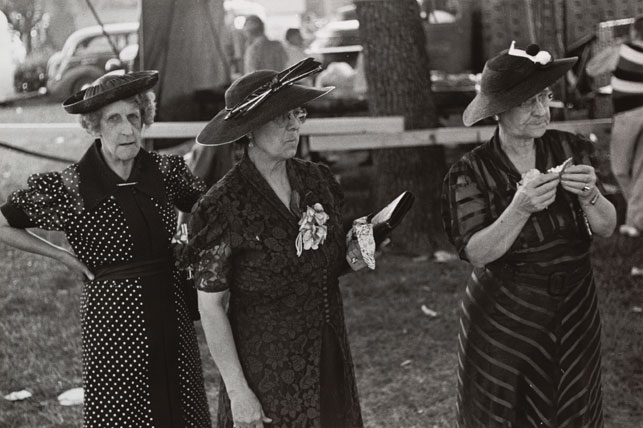
Ben Shahn. Women at Fourth of July Carnival and Fish Fry, Ashville, Ohio. 1938. Gelatin silver print

Ben Shahn. Women at Fourth of July Carnival and Fish Fry, Ashville, Ohio. 1938. Gelatin silver print. 6 1/2 x 9 1/2″ (16.5 x 24.1 cm). Gift of the Farm Security Administration

From all of us here at MoMA, have a wonderful Fourth of July!

July 2, 2013  |  Artists, Events & Programs
Embodying the Archive: Xaviera Simmons on Archive as Impetus (Not on View)
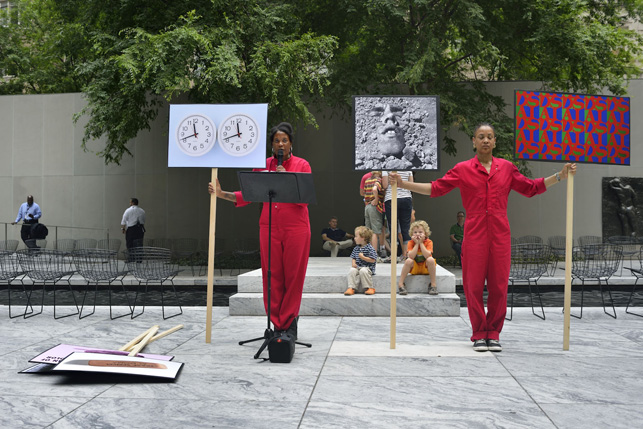
An Archive as Impetus performance in MoMA’s Abby Aldrich Rockefeller Sculpture Garden. Photograph courtesy of Xaviera Simmons)

An Archive as Impetus (Not on View) performance in MoMA’s Abby Aldrich Rockefeller Sculpture Garden. Photograph by Martin Seck

Plenty of people think of museums, libraries, and archives as stagnant and apolitical places; sites where histories are not created, but simply preserved. In her performance Archive as Impetus (Not on View)—presented several times per week during the month of June as part of MoMA’s Artists Experiment initiative—artist Xaviera Simmons asked viewers to reconsider the role of the museum.

June 26, 2013  |  Artists, Collection & Exhibitions
Revisiting The Store by Claes Oldenburg
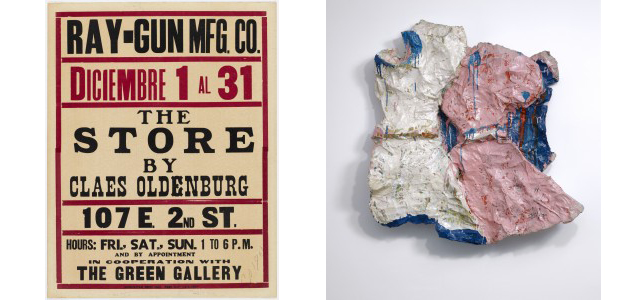
Left: Claes Oldenburg. The Store. 1961. Letterpress, composition: 26 9/16 x 20 5/16″ (67.4 x 51.6 cm); sheet: 28 1/4 x 22 1/16″ (71.8 x 56 cm). Mary Ellen Meehan Fund. © 2013 Claes Oldenburg; Right: Claes Oldenburg. Two Girls’ Dresses. 1961. Muslin soaked in plaster over wire frame, painted with enamel, 44 1/2 x 40 3/4 x 6” (113 x 103.5 x 15.2 cm). Private collection. © 1961 Claes Oldenburg. Photo: Gunter Lepkowski

Left: Claes Oldenburg. The Store. 1961. Letterpress, composition: 26 9/16 x 20 5/16″ (67.4 x 51.6 cm); sheet: 28 1/4 x 22 1/16″ (71.8 x 56 cm). Mary Ellen Meehan Fund. © 2013 Claes Oldenburg; Right: Claes Oldenburg. Two Girls’ Dresses. 1961. Muslin soaked in plaster over wire frame, painted with enamel, 44 1/2 x 40 3/4 x 6” (113 x 103.5 x 15.2 cm). Private collection. © 1961 Claes Oldenburg. Photo: Gunter Lepkowski

In 1961 Claes Oldenburg opened a store in the Lower East Side of Manhattan, five years after his official arrival in New York. For two months, Oldenburg hawked commonplace objects out of his storefront: ice cream, oranges, cigarettes, hats, shoes, all things that could be found in surrounding stores, but here, they were specially crafted and singular, specific to the artist and his studio-cum-store. In Claes Oldenburg: Writing on the Side 1956–1969, Oldenburg describes his project neatly:

“The Store, or My Store, or the Ray Gun Mfg. Co., located at 107 East 2nd St., NYC, is eighty feet long and is about ten feet wide. In the front half, it is my intention to create the environment of a store by painting and placing (hanging, projecting, lying) objects after the spirit and in the form of popular objects of merchandise, such as may be seen in store windows of the city, especially in the area where The Store is (Clinton St., for example, Delancey St., 14th St.).

This store will be constantly supplied with new objects, which I will create out of plaster and other materials in the rear half of the place. The objects will be for sale in The Store.
—Claes Oldenburg (1961)

OldenburgWritings_cover

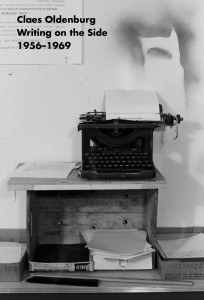
Cover of Claes Oldenburg: Writing on the Side 1956–1969, published by The Museum of Modern Art

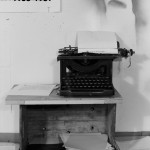
The excerpt included above is just one of a variety of collected written works in Writing on the Side, the first compilation dedicated to Oldenburg’s writings. Organized chronologically, the book contains diary entries, poems, notes, statements, and sketches, grouped by chapter with titles like: “Fear of New York 1956–1958,” and “Object Consciousness 1965–1967.” The book serves as a written history of Oldenburg’s artistic presence in the 1960s, much of it composed on a typewriter kept in his studio.

Diary entries and notes preceding the opening of The Store evidence Oldenburg’s investment in the seemingly unexceptional: Oldenburg documents every sandwich, coffee, and beer consumed, the names of cafés and restaurants frequented (many of which no longer seem to exist, upon cursory Google searches) with as much care taken to describe creative ideation and art events. In this way, the writings are an important companion to Oldenburg’s body of work, giving insight into this formative period in his career as well as a unique view into a New York that no longer seems to exist (check out what Oldenburg’s store looks like now).

Oldenburg will perform a reading from Writing on the Side at MoMA at 6:00 p.m. on June 28, followed by a reception and book signing. More information about the event can be found here.

Claes Oldenburg: The Street and The Store is on view through August 5 on the sixth floor in the International Council of The Museum of Modern Art Exhibition Gallery.