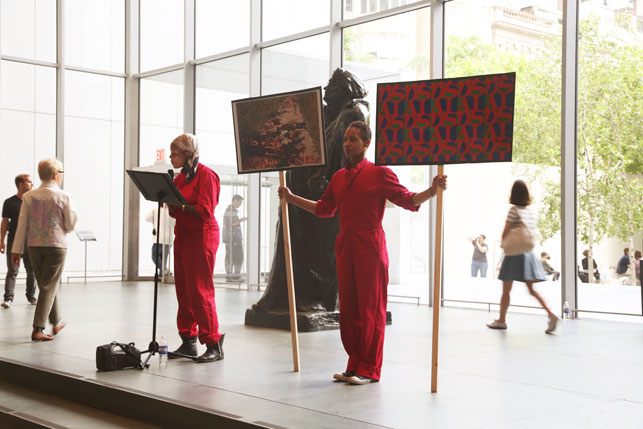
An Archive as Impetus performance in MoMA’s Agnes Gund Garden Lobby. Photograph courtesy of Xaviera Simmons
What do women artists want?
This question is announced through a microphone, repeated—carrying out into MoMA’s Garden Lobby and on to the second-floor Marron Atrium as visitors stop, turn, and listen.
Posted by
Hannah Kim, Marketing and Book Development Coordinator, Department of Publications
Tauni Malmgren, Freelance Social Media Coordinator
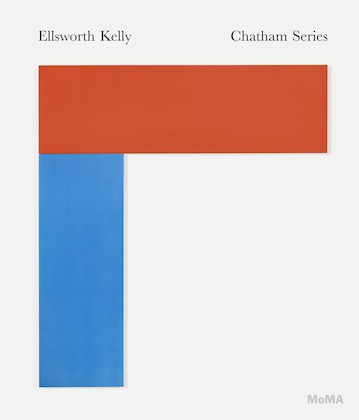
Cover of the exhibition catalogue Ellsworth Kelly: Chatham Series, published by The Museum of Modern Art
The iconic American artist Ellsworth Kelly celebrated his 90 birthday on May 31, and in his honor, MoMA has reunited the 14 ell-shaped paintings of his seminal Chatham Series for the first time since they were originally exhibited in 1972.
Though it is whimsical to think that the ell-shaped canvases were chosen as an ode to ELLsworth kELLy’s big day, the paintings are considered to be among Kelly’s greatest contributions to abstract art. Chief Curator of Painting and Sculpture Ann Temkin details the fascinating story behind the series in MoMA’s new book, Ellsworth Kelly: Chatham Series.
In 1970, Kelly decided to leave New York City, where he had been living and working since the 1950s, for a more rural environment. After a period of exploratory road trips, he settled in Spencertown, two hours north of Manhattan, and established a studio in the nearby town of Chatham. This newfound location proved to be an important influence in Kelly’s artistic development, serving as an inspiration for his work.
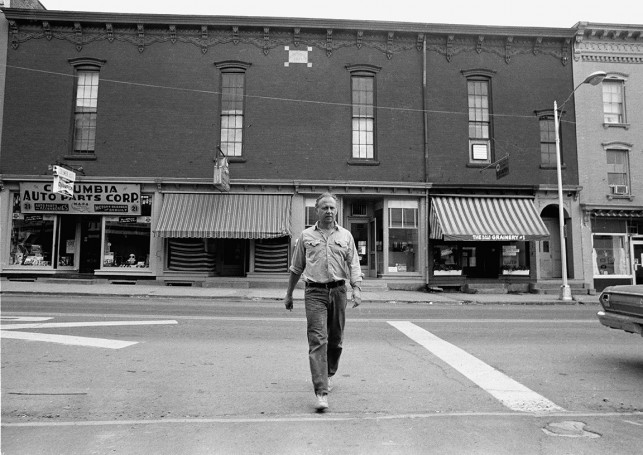
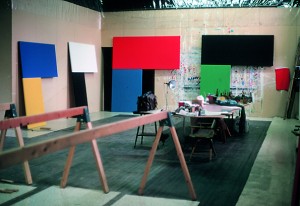
Kelly’s studio in Chatham was in a 19th-century brick building featuring nearly 12-foot-tall windows along its upper floor. After spying the striking windows from the sidewalk while exploring the town, Kelly entered the barber shop on the ground floor of the building to inquire about the space and learned that, after stints as an opera house, banquet hall, roller rink, and more, it was functioning as a storage space, holding the town’s Christmas lights. The barber and a neighboring shopkeeper co-owned the space, and they agreed to rent it out to Kelly for $50 a month. The space was far more spacious than any studio Kelly has previous occupied, and the isolated location allowed him to explore his ideas without external influence.
Ellsworth Kelly outside his studio, 13 Main Street, Chatham, 1970
After a year of transforming and customizing the space for his needs, Kelly began work on the first series he would produce there in 1971. Each of the 14 large-scale paintings in the Chatham series are made of two monochromatic canvases that are joined together at a right angle, yet no two are the same, allowing the artist to experiment with color and proportion. Temkins’s essay provides an in-depth exploration of the various aspects of this iconic series, including scale, process, and the reception the Chatham Series received when it was first exhibited to the public at the Albright-Knox Art Gallery in Buffalo, in 1972.
Ellsworth Kelly’s studio, Chatham, New York, 1972
The paintings now belong to 14 different collections, but Ellsworth Kelly: Chatham Series brings them back together for the first time since their debut so museumgoers and readers alike can explore one of Kelly’s most significant achievements in its entirety. For more on the series, download a free PDF sample of the exhibition catalogue for an excerpt from the essay. The book also features as essay by the director of the Albright-Knox Art Gallery that accompanied the first exhibition of the series, vibrant reproductions of each of the 14 paintings, additional illustrations including vintage photographs of Kelly’s studio, and much more.
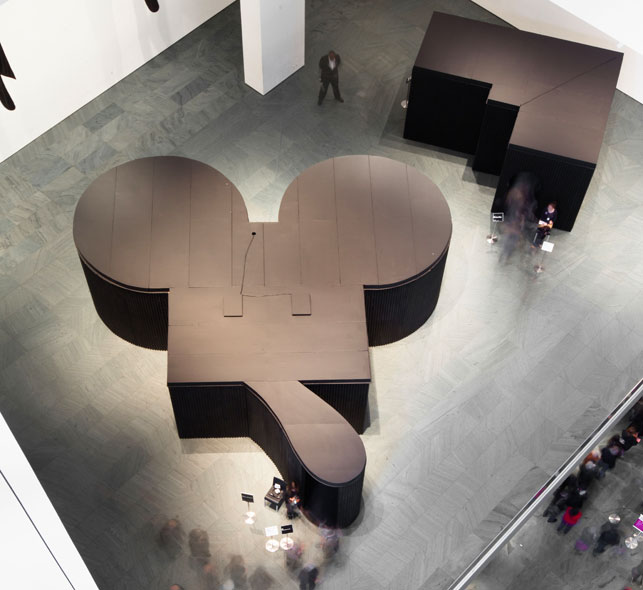
There are people sighing in the Mouse Museum. They are moaning, clucking, and cooing, too.(1) There’s no telling which objects elicit which murmured reaction, since part of Mouse Museum’s potency derives from affinities between things
Posted by
Calder Zwicky, Assistant Director, Teen and Community Partnerships
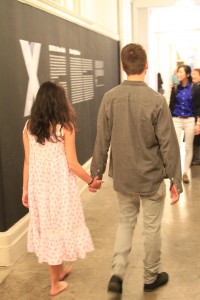
Alya Albert and Ryan McNamara holding hands as part of her performance
Alya Albert, 19, is an alumnus of our In the Making teen arts program and a second-year Cross-Museum Collective member. On Sunday May 19, she and the other CMC teens, under the guidance of artist Ryan McNamara, created a series of in-gallery performances and provocations at MoMA PS1.
Posted by
Hannah Kim, Marketing and Book Development Coordinator, Department of Publications
Tauni Malmgren, Freelance Social Media Coordinator
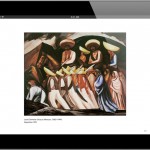
Taking monumental frescos to a multitouch screen, MoMA’s eBook Diego Rivera, David Alfaro Siqueiros, and Josè Clemente Orozco offers a fresh exploration of three great figures in the revival of mural painting that brought modern Mexican art to international attention after the Mexican Revolution of 1910–20.
Posted by
Hanna Exel, Louise Bourgeois 12-Month Intern, Department of Drawings and Prints
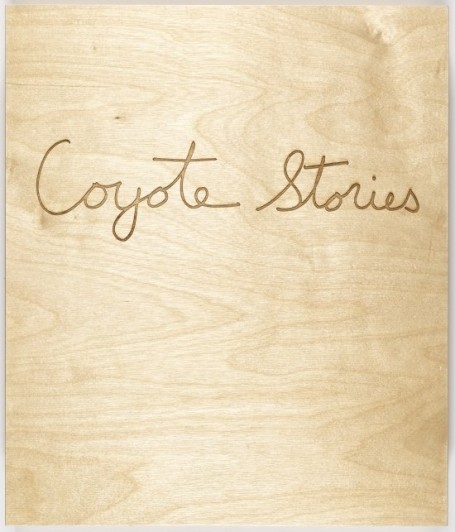
It might surprise you to hear that one of the facets of contemporary printmaking that I find most exciting is projects by artists who work predominately in other mediums. These artists often approach traditional printmaking techniques with a fresh perspective, from which they can frequently discover new ways of using the medium to serve their unique artistic goals. Chris Burden’s 2005 print portfolio Coyote Stories is an excellent example of this exploratory spirit.
Posted by
Hannah Kim, Marketing and Book Development Coordinator, Department of Publications
Tauni Malmgren, Freelance Social Media Coordinator
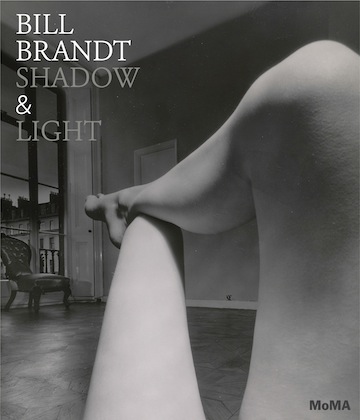
Cover of the exhibition catalogue Bill Brandt: Shadow & Light, published by The Museum of Modern Art
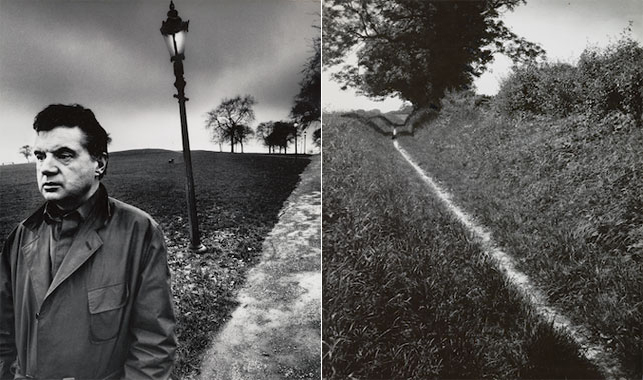
MoMA’s new book Bill Brandt: Shadow and Light by Sarah Hermanson Meister, curator in the Department of Photography at MoMA, is a fresh look at the work of an iconic British photographer. The exhibition currently on view isn’t the first time MoMA has presented Bill Brandt’s work to the public—the last Brandt retrospective was in 1969. Since then, the Museum’s perspective of Brandt’s work has evolved into a more complete consideration of the nuances and variations in Brandt’s own photo-historical approach.
Brandt’s photography is traditionally presented in thematic groupings at the artist’s own request, but this view alone simplifies a body of work that is multifaceted and far-reaching in style, influence, and subject matter. Bill Brandt: Shadow and Light is the most comprehensive overview of Brandt’s work to date, and it attempts to create a coherent trajectory across five decades of his career.
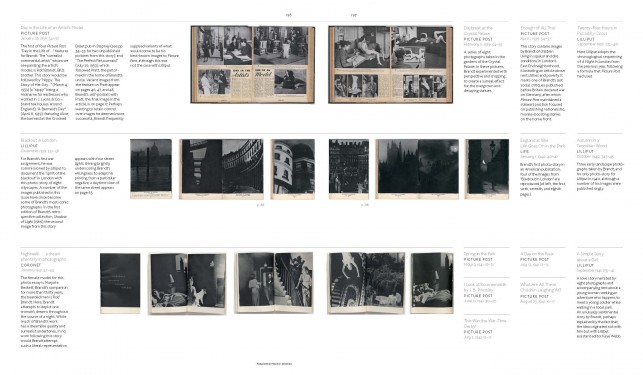
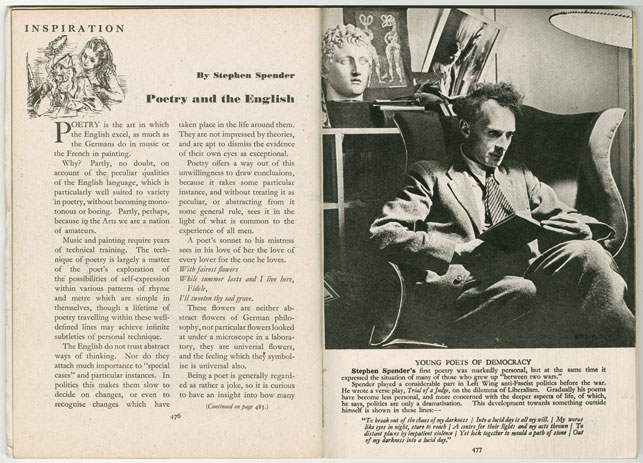
Beyond the 160 tri-tone reproductions of his photographs, the book features a rich appendix that illuminates different aspects of Brandt’s oeuvre. A section on Brandt’s photo-stories from 1939 to 1945 reproduces spreads from the publications in which they originally appeared, and a detailed survey of his methods for retouching his photos is especially fascinating in today’s world of digital cameras, smart phones, and instant photo filters. Brandt often spoke about how important the retouching process was in his work, and by looking at the various tools and techniques he used to edit and perfect his final images, photo conservator Lee Ann Daffner’s illustrated glossary dives deep into Brandt’s working process. As discussed in a prior INSIDE/OUT post, Dating Brandt, the same negative can look completely different depending on when Brandt retouched it.
Sample of Bill Brandt’s published photo-stories in the exhibition catalogue, Bill Brandt: Shadow & Light. The photo-stories are organized chronologically to suggest the breadth of Brandt’s artwork
Though his influences, subject matter, and technical approach shifted over his long career, Brandt never lost what Meister describes as “his obvious delight in the uncanny aspects of the everyday.” Her introductory essay opens with a quote from Brandt on the role of a photographer:
I believe this power of seeing the world as fresh and strange lies hidden in every human being. In most of us it is dormant. Yet it is there, even if it is no more than a vague desire, an unsatisfied appetite that cannot discover its own nourishment….This should be the photographer’s aim, for this is the purpose that pictures fulfill in the world as it is to-day. To meet a need that people cannot or will not meet for themselves. We are most of us too busy, too worried, too intent on proving ourselves right, too obsessed with ideas, to stand and stare.
Bill Brandt took the time to “stand and stare” in many different ways. Whether through juxtapositions of class structure, wondrous nudes, inventive portraiture, or unearthly landscapes, Brandt’s far-reaching inspirations and approaches generated arresting imagery that still holds magic and wonder today.
Posted by
Hannah Kim, Marketing and Book Development Coordinator, Department of Publications
Tauni Malmgren, Freelance Social Media Coordinator
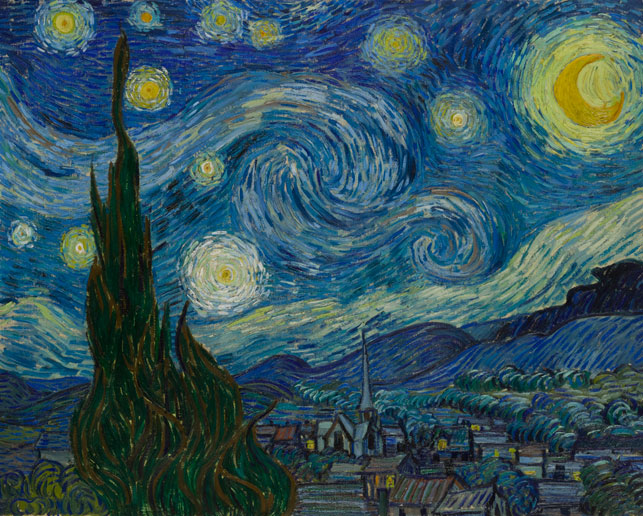
Vincent van Gogh. The Starry Night. 1889. Oil on canvas, 29 x 36 1/4″ (73.7 x 92.1 cm). The Museum of Modern Art, New York. Acquired through the Lillie P. Bliss Bequest
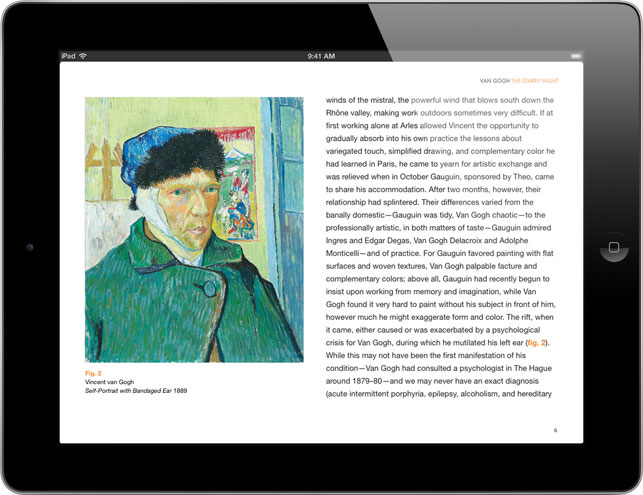
There is hardly an introduction that does Vincent van Gogh’s The Starry Night (1889) justice. It is one of the most recognizable and beloved artworks in the world, and for many MoMA visitors, it is the artwork to see—a celebrity perhaps signifying modern art itself. Yet despite its fame, few viewers are likely familiar with the story behind this unlikely masterpiece, one of the many nighttime paintings Van Gogh produced during his stay at a mental hospital in Saint-Rémy, in the south of France.
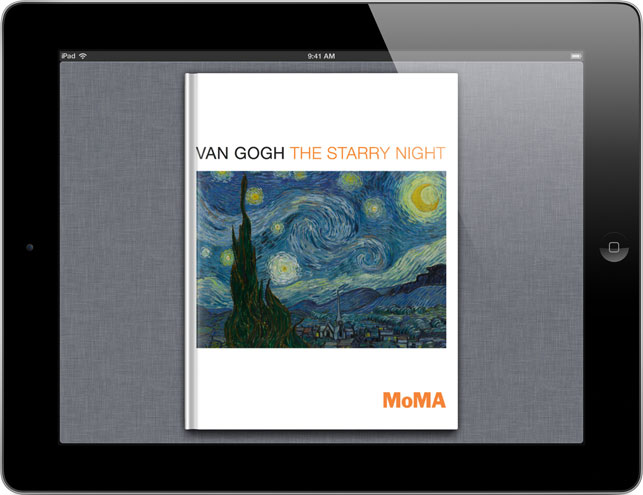
Now available for the iPad, MoMA’s One on One series offers a sustained meditation on The Starry Night by art historian Richard Thomson that sheds light on the painting and transports readers to the environment in which it was created. In Thomson’s engaging essay filled with vivid visual references and snippets of Van Gogh’s personal correspondences, readers can catch a glimpse of the artist’s complex inner workings and the thought processes that went into creating the nighttime scene.
Screenshots from Van Gogh: The Starry Night
What’s more, Thomson examines the physical circumstances behind The Starry Night, taking readers to the actual place where Van Gogh focused his attentions to the night sky, and highlighting the artist’s technique and style. Thomson also considers other artwork that Van Gogh may have seen at the time, placing The Starry Night in a broader historical context.
For more on The Starry Night, visit the iBookstore to download a free sample, and check out the other One on One series book available for the iPad, Rousseau: The Dream, in which MoMA curator Ann Temkin illuminates Henri Rousseau’s last major painting.
Posted by
Sarah Suzuki, Associate Curator, Department of Prints and Illustrated Books
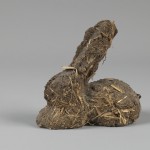
Without question, one of the most popular works in the Dieter Roth exhibition Wait, Later This Will Be Nothing, is the seasonally appropriate Bunny-dropping-bunny (Karnickelköttelkarnickel). With Easter just around the corner, jelly bean eggs and chocolate bunnies seem to be everywhere, including here in the galleries at MoMA.
If you are interested in reproducing images from The Museum of Modern Art web site, please visit the Image Permissions page (www.moma.org/permissions). For additional information about using content from MoMA.org, please visit About this Site (www.moma.org/site).
Welcome to MoMA.org. To take full advantage of all the site’s features, including the option to save works in the collection, please upgrade your browser to Firefox,
Google Chrome, Safari, or Internet Explorer 9.
See our help page for more information.