
MoMA
Posts in ‘Artists’
January 24, 2014  |  Artists, Collection & Exhibitions
Diving into Rauschenberg’s Canyon

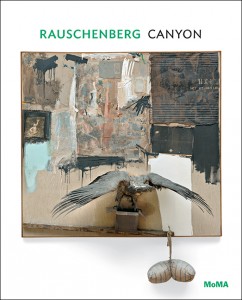
Cover of Raushenberg: Canyon by Leah Dickerman, published by The Museum of Modern Art

Cover of Raushenberg: Canyon by Leah Dickerman, published by The Museum of Modern Art

As recounted in curator Leah Dickerman’s new book, Rauschenberg: Canyon , in 1959 Robert Rauschenberg received a call from a friend, the artist Sari Dienes, who wanted to offer him a taxidermied bald eagle she had fished out from the junk heap of a recently deceased neighbor, one of the last of Teddy Roosevelt’s Rough Riders. Rauschenberg had recently become famous for incorporating all types of found materials into his art, so this kind of offer from friends was not unusual. He didn’t hesitate to turn down objects that weren’t quite right, but in this case, he said yes at once.

Rauschenberg affixed the bald eagle onto a canvas that would eventually become Canyon (1959), one in a series of radically experimental works he called Combines, which mixed paint and other art materials with things found in daily life. In Canyon, a seemingly incongruous variety of objects surround the eagle, including a photograph of Rauschenberg’s son, Christopher; a postcard of the Statue of Liberty; a man’s white shirt, cut and opened up; a crumpled tube of paint; fragments of printed words; and an industrial metal drum.

Rauschenberg: Canyon, the latest volume in the MoMA One on One series, sheds light on the genesis of this startling and enigmatic work by tracing the artist’s education, influences, and travels through Italy, Morocco, and Spain. Rauschenberg first started using found materials while attending Black Mountain College near Asheville, North Carolina, where every student was required to pitch in with community labor. Rauschenberg volunteered for garbage collection, and ended up incorporating the objects he found in his classmates’ trash into his art. The hybrid creations he began producing in the mid-1950 with recognizable, everyday items offered a defiant counterpoint to the quintessential American style of Abstract Expressionism that prevailed at the time. As he wrote in his earliest statement on the Combines, in 1956: “I consider the text of a news­paper, the detail of a photograph, the stitch in a baseball, and the filament in a light bulb as fundamental to the painting as brush stroke or enamel drip of paint. In the end, what one sees as my work is what I choose to make with no guaran­tee of enlightenment, humor, beauty or art.”


Canyon, currently on view at MoMA in Ileana Sonnabend: Ambassador for the New, had been in gallerist Ileana Sonnabend’s personal collection since she purchased it from the artist the year it was made. Sonnabend was one of Rauschenberg’s lifelong champions, and her support played a significant role in his becoming the first American artist to be awarded the grand prize at the Venice Biennale, in 1964. Following her death in 2007, her heirs entered a curious debate with the IRS regarding the work. The Migratory Bird Treaty Act of 1918 and the Bald Eagle Protection Act of 1940 made it illegal to buy, sell, barter, or possess a bald eagle in the U.S. Canyon was allowed to remain in Sonnabend’s collection because Rauschenberg had provided a notarized statement saying the bird had been stuffed by one of Roosevelt’s Rough Riders before the laws’ passage, but because it could not be sold, the family’s appraisers had valued it at zero. The IRS disagreed, ruling that it was worth far more, and assessed an estate tax and penalties on the heirs. The resolution they reached allowed the family to donate the work to a U.S. institution in exchange for dropping the tax claim. Thus, in 2012, Canyon was generously donated to The Museum of Modern Art, where it joins five other Combines, to provide an in-depth representation of this key aspect of Rauschenberg’s career.

To learn more, download a free preview of Rauschenberg: Canyon by Leah Dickerman.
January 22, 2014  |  Artists, Collection & Exhibitions
Off the Record: Mike Kelley’s Extracurricular Activities
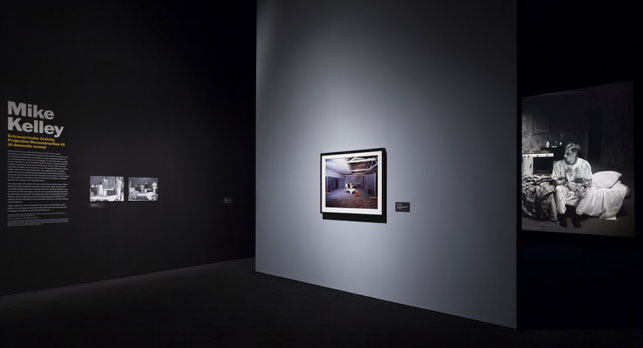
Installation view of Mike Kelley: Extracurricular Activity Projective Reconstruction #1 (A Domestic Scene)

Installation view of Mike Kelley: Extracurricular Activity Projective Reconstruction #1 (A Domestic Scene), The Museum of Modern Art, October 13, 2013–February 2, 2014

In honor of Mike Kelley’s exceptional career and legacy, Extracurricular Activity Projective Reconstruction #1 (A Domestic Scene), a seminal work in his complex videography, is on view both at MoMA PS1—as part of the artist’s posthumous retrospective—and in MoMA’s second-floor Projects Gallery.

MoMA’s Jackson Pollock Conservation Project: Bringing the Project to Conclusion: Restoration of Number 1A, 1948

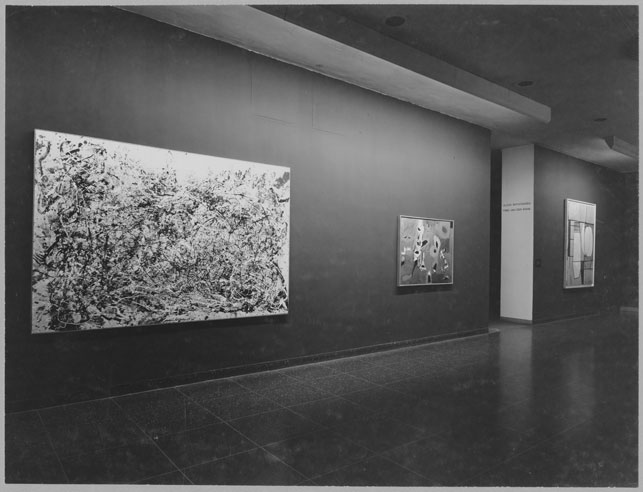
Jackson Pollock. Number 1A, 1948.  1948. Oil and enamel paint on canvas, 68” x 8’8.” On view at MoMA in a recent acquisitions exhibition in 1950

Jackson Pollock. Number 1A, 1948. 1948. Oil and enamel paint on canvas, 68” x 8’8.” On view at MoMA in a recent acquisitions exhibition in 1950


Readers who have been following the blog will recognize a pattern in our approach to conservation treatment of Number 1A, 1948, the final of three Jackson Pollock paintings that have been the focus of our 18-month project.

January 9, 2014  |  Artists, Collection & Exhibitions
Drawing Homage to León Ferrari (1920–2013)
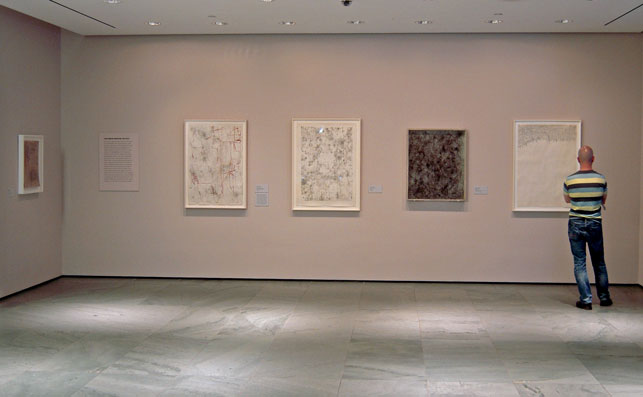
Installation view, León Ferrari homage, The Museum of Modern Art, 2013

Installation view, León Ferrari homage, The Museum of Modern Art, 2013

One of the most relevant figures in 20th-century art, and a paradigm of the communion of art and politics, León Ferrari sadly passed away last July, at age 92. Paying homage to his achievements and extraordinary legacy, a selection of his work, drawn from MoMA’s collection, was recently on view outside the Museum’s second-floor Marron Atrium.

Museum as Laboratory: Artists Experiment

What happens when the Museum turns into a laboratory for artists?

This year MoMA’s Department of Education invited artists Allison Smith, Paul Ramirez Jonas, and the creative collective The Office for Creative Research to be part of the second year of Artists Experiment, an initiative to develop public engagement experiences through collaboration with contemporary artists. Exploring MoMA’s history, resources, and spaces, each of these artists approaches the Museum like a laboratory—a place for thinking, collaborating, and experimenting with the museum experience and our visitors.

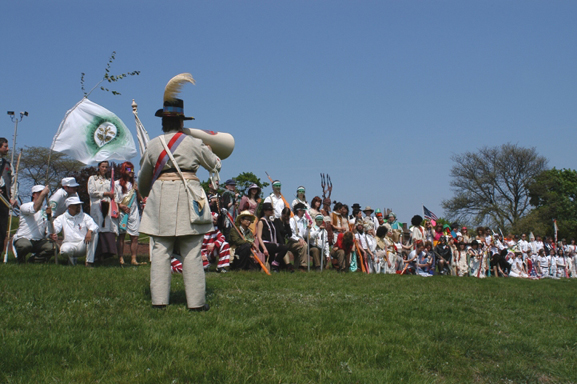
Allison Smith. Troops Drilling at Fort Jay, part of The Muster project. 2005. Photo: Amy Elliot

Allison Smith. Troops Drilling at Fort Jay, part of The Muster project. 2005. Photo: Amy Elliot

San Francisco–based artist Allison Smith’s work investigates the cultural phenomenon of historical reenactment, or “living history,” using it as a means of addressing the relationship between American history, social activism, and craft.

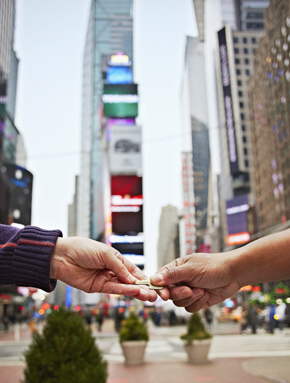
Paul Ramirez Jonas. Key to the City. 2010. Image courtesy of Paul Ramirez Jonas

Paul Ramirez Jonas. Key to the City. 2010. Image courtesy of Paul Ramirez Jonas

At MoMA, Allison is researching the history of the Department of Education, specifically exploring the work and programs developed by MoMA’s first director of education, Victor D’Amico. Allison is considering how MoMA’s rich history can speak to our current education practices, mining strategies and ideas from the past to inspire new experiences at the Museum today.

Brooklyn-based artist Paul Ramirez Jonas is interested in articulating shared stories and histories, working with and transforming different forms of public art and public symbols.

Paul has been looking at the visitor experience at MoMA, exploring public spaces designed for interaction including the bookstore and the Museum’s information desks.

He asks the question, how can we build on the visitor experience at MoMA.

New York–based collective The Office for Creative Research (O-C-R) includes artists and data experts Jer Thorp, Ben Rubin, and Mark Hansen, a multidisciplinary research group exploring new modes of engagement with data, through unique practices that borrow from science, technology, and the arts.

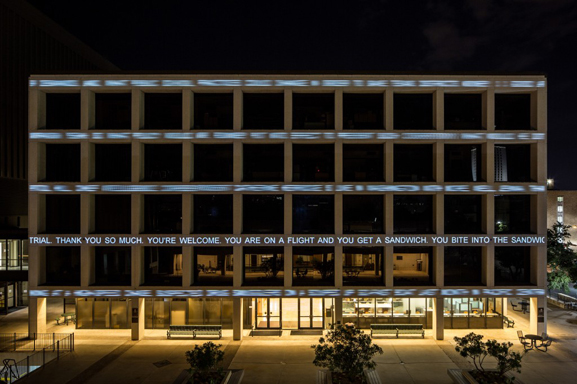
The Office of Creative Research. And That's The Way It Is. 2012. Image courtesy of the artists

The Office for Creative Research. And That’s The Way It Is. 2012. Image courtesy of the artists

O-C-R is looking at massive amounts of information from the Museum’s collection database. From image titles to notes on how to install a work, O-C-R is thinking about how this data can be explored and activated by Museum visitors to facilitate interaction, learning, and exchange.

What can you expect?

Throughout the winter and spring, Artists Experiment will present a range of programs and interactions developed with each of these artists. To kick things off, we invite you to join us for the January 29 launch event, Social Exchange: Artists’ Reception. This special event is a chance to meet the artists in person and get a little taste of what’s to come. The Office for Creative Research and Allison Smith are creating an interactive, performative work for the evening, and Chef Lynn Bound is preparing a special menu in collaboration with Paul Ramirez Jonas. We hope you’ll join us for this warm, winter celebration!

Look out for other upcoming Artists Experiment programs at MoMA.org/artistsexperiment.

November 25, 2013  |  Artists, Collection & Exhibitions
Behind the Screens:
Installing Isaac Julien’s Ten Thousand Waves
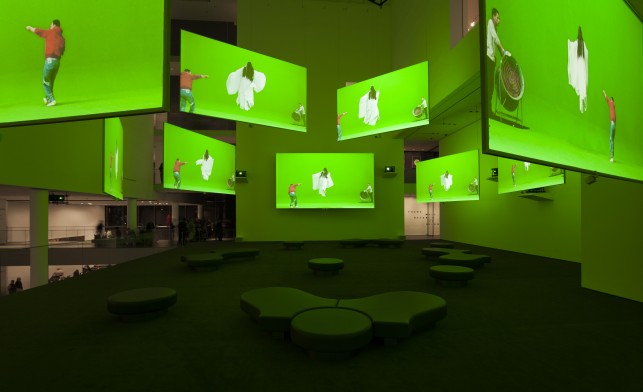
Installation view of Isaac Julien: Ten Thousand Waves at The Museum of Modern Art. Photo: Jonathan Muzikar

Installation view of Isaac Julien: Ten Thousand Waves at The Museum of Modern Art. Photo: Jonathan Muzikar

Isaac Julien (British, b. 1960) is one of the most innovative artists working at the intersection of media art and cinema today. With his vivid multi-screen works—fractured narratives that fuse breathtaking images with immersive sonic elements—Julien is internationally regarded as a key figure in the vitalization of the gallery space through new exhibition strategies of time-based art.

November 20, 2013  |  Artists, Collection & Exhibitions
Writing on Isa Genzken
Genzken_cover

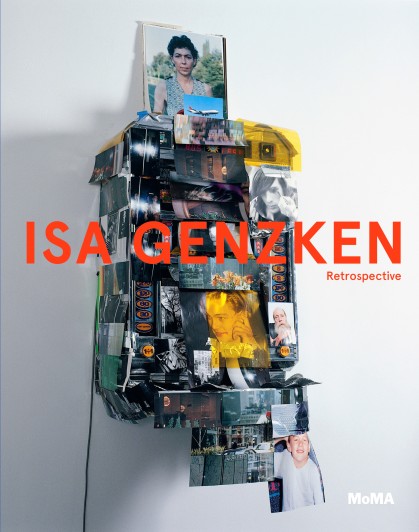
Cover of the publication Isa Genzken: Retrospective published by The Museum of Modern Art

Isa Genzken is arguably one of the most influential female artists of the past few decades, her impact visible in the work of young sculpture and assemblage artists worldwide. MoMA’s upcoming exhibition Isa Genzken: Retrospective is the first comprehensive survey of her career in the United States, and the largest exhibition of her work to date. The accompanying catalogue explores her unique and decidedly diverse career through illustrated-plate sections and essays spanning a more than 40-year period. Genzken’s artwork is markedly varied and the narrative of her career is unconventional. She’s worked in nearly every imaginable medium, including sculpture, photography, film, assemblage and collage. The catalogue’s essays offer new insights on her aesthetic outlook and approach.

Curator Sabine Breitwieser’s essay covers Genzken’s artistic output from 1970 to 1996, discussing her early geometric drawings and sculptures, and her presence in the art centers of West Germany as a student at the Düsseldorf Academy and in Cologne. In the 1990s, Genzken moved away from post-Minimalism and began to make her first collage works.

Isa Genzken in her studio in Düsseldorf, 1982. Image courtesy the artist and Galerie Buchholz, Cologne/Berlin

Isa Genzken in her studio in Düsseldorf, 1982. Image courtesy the artist and Galerie Buchholz, Cologne/Berlin

Laura Hoptman, curator in MoMA’s Department of Painting and Sculpture, explores this career break and later parts of Genzken’s career—from 1993 to the present—when her collage and sculptural assemblages and installations grew in scale and conceptual complexity.

bh 8

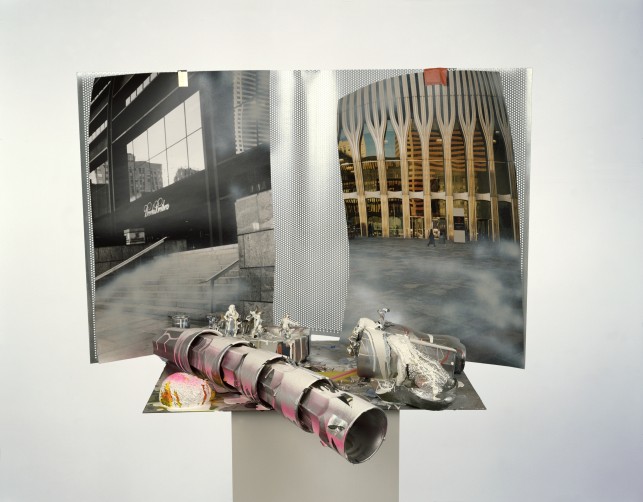
Isa Genzken. Empire/Vampire III, 13. 2004. Spray paint on metal and glass, chromogenic color prints, and plastic on wood pedestal, 65 3/4 x 23 5/8 x 18 1/8″ (167 x 60 x 46 cm). neugerriemschneider gallery, Berlin. © Isa Genzken

The book also includes focused thematic essays. Scholar Lisa Lee writes on Genzken’s relationship with architecture and public sculpture in “Isa Genzken: Model Citizen,” considering her experiments with scale, perception and even mutiny, with projects like Fuck the Bauhaus.  In “Isa Genzken: Himmel und Erde (Heaven and Earth),” Michael Darling argues for a thematic consistency in Genzken’s variegated oeuvre, positing that she “has married radical formal experimentation and variety to themes that are timeless, poignant and deeply humanistic, rooting her inquiries in the material facts of our world but offering pathways to topics, experiences, and concepts that, by definition, escape the grasp of easy resolution.” Jeffrey Grove’s essay, “Isa Genzken’s Homage to Herself” discusses motifs of autobiography and self-representation in her work, particularly in photography and film. An illustrated chronology by Stephanie Weber, Curatorial Assistant in the Department of Media & Performance Art at MoMA guides readers through the exciting trajectory of Genzken’s career, from birth to her first American retrospective at MoMA.

Isa Genzken: Retrospective is on view from November 23, 2013–March 10, 2014 in the The Joan and Preston Robert Tisch Exhibition Gallery on the Museum’s sixth floor. A preview of the catalogue can be downloaded here.

October 18, 2013  |  Artists, Learning and Engagement
Walk Like a Surrealist

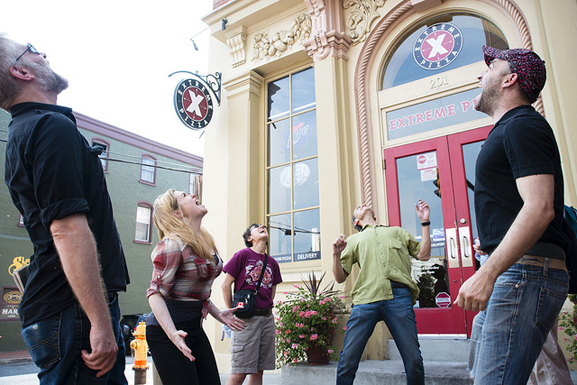
In regard to poetry, modernist poet Ezra Pound repeatedly urged his fellow practitioners to “Make It New.” Working in counterpoint to the tradition of the guided city tour, my participatory walks take their cue from poetry, where writer and reader collaborate in creating and gleaning new meanings for the world. Tuning in to the nuances of the everyday, we might make visual poems on the sidewalk with found objects, a duet with light, or monuments with our bodies in response to civic statues in public space.

“Pipe Dream” is a new walk debuting at MoMA on Saturday, November 16. It’ll take us down seldom-seen Museum hallways, through the Magritte exhibition, and outside into the sensory tangle of midtown Manhattan. Drawing from Surrealist techniques, we will create within, and rediscover, a neighborhood often cast off as one that only serves big business and rigorous consumers. But since the walk is essentially a set of prompts and reveals, I don’t want to give away too much! Come experience it for yourself.

You can also experience “Pipe Dream” as part of Into the Participatory Walk, a three-session workshop at MoMA that begins on Thursday, November 7. There, we’ll explore poetic decision making and figure out how to create a participatory walk together. I’ll be hosting a “dress rehearsal” of “Pipe Dream” when the Museum is closed as part of the workshop.

"Our Open Studios" by Todd Shalom

“Our Open Studios” by Todd Shalom. Photo courtesy of Elastic City

I’ve been leading participatory walks for 10 years, arriving to this form after studying poetry and sound. Over time, my poems increasingly strained against the confines of the page and became more like musical scores, so I had to create a new medium. I discovered the work of the Acoustic Ecology movement and their soundwalks, which facilitate active listening in the environment. Adopting some of their techniques and applying a lot of my own creation, I led my first sound-based walk in San Francisco in 2003.

In 2010 I founded Elastic City, a New York–based non-profit organization that commissions artists to lead participatory walks throughout the world. I quietly collaborate with the artists, many of whom work in visual media, and help them to adapt their talents to the walk form. I might assist the artist in solidifying a walk concept, planning a route, shaping the arc of the walk, or tweaking a particular moment.

"You Name It" by Todd Shalom

“You Name It” by Todd Shalom. Photo: Christian Kaye

Every artist, every medium, and every object or situation we encounter offers a multiplicity of contextualizing frames and potential lenses with which to look at them. My walks try to get us inside of as many frames and to use as many lenses as possible to get at a whole new reality, if only momentarily. We all have the ability to rearrange our relationships to the world and to one another. After leading “Fabstractions” (see the video above), I’ll just say that I now look at telephone booths very differently.

October 3, 2013  |  Artists, Collection & Exhibitions
Dorothea Rockburne: Drawing Which Makes Itself
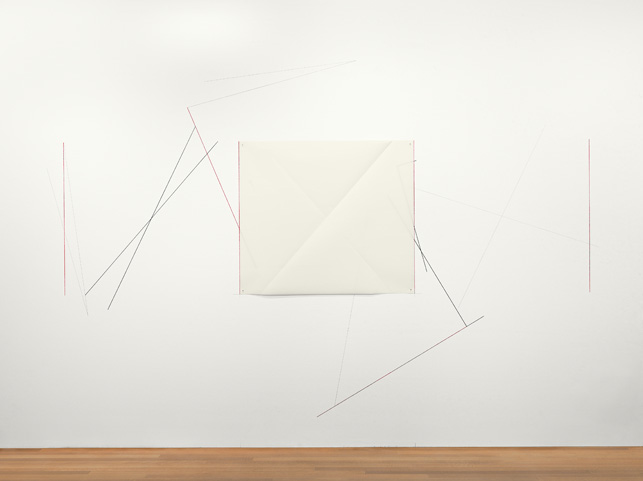
Dorothea Rockburne. Drawing Which Makes Itself: Neighbourhood. 1973. Duralar, pencil, colored pencil, and felt-tip pen on wall. The Museum of Modern Art, New York. Gift of J. Frederic Byers III, 1978. © 2013 Dorothea Rockburne / Artists Rights Society (ARS), New York

Dorothea Rockburne. Drawing Which Makes Itself: Neighbourhood. 1973. Duralar, pencil, colored pencil, and felt-tip pen on wall. The Museum of Modern Art, New York. Gift of J. Frederic Byers III, 1978. © 2013 Dorothea Rockburne/Artists Rights Society (ARS), New York

I’ve been intrigued by Dorothea Rockburne’s wall drawing Neighbourhood (1973) since I began working at MoMA. It was acquired by the Museum in 1978, just five years after it was first made, but has been on view infrequently since then, and I really wanted to see it in person.

An Interview with cyclo. (Ryoji Ikeda and Carsten Nicolai)
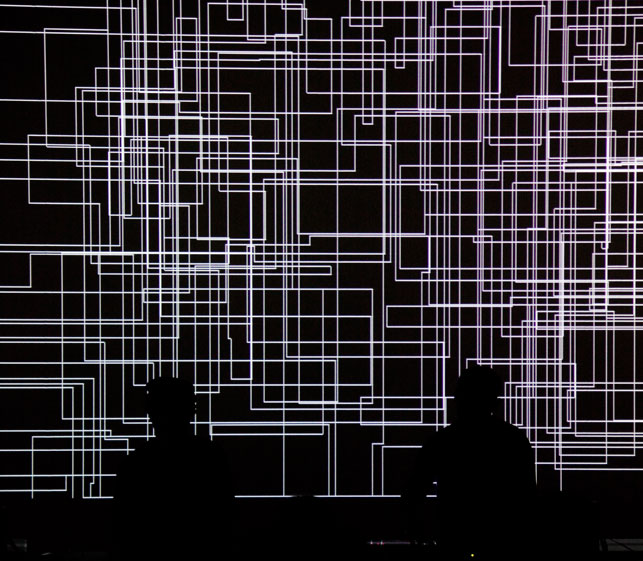
cyclo. (Ryoji Ikeda and Carsten Nicolai) in performance, 2011. Photo: YCAM Yamaguchi Center for Arts and Media

cyclo. (Ryoji Ikeda and Carsten Nicolai) in performance, 2011. Photo: YCAM Yamaguchi Center for Arts and Media

In conjunction with the Museum’s first major exhibition of sound art, Soundings: A Contemporary Score, MoMA’s PopRally committee is thrilled to present the first U.S. performance by cyclo. (Carsten Nicolai and Ryoji Ikeda), entitled cyclo.id., on October 6.