Not on view
Picasso cast six bronze copies of Glass of Absinthe from a wax original and decorated each of them uniquely. In this version he broke new ground by incorporating an existing object into his sculpture: a real absinthe spoon nestles between the modeled bronze sugar cube and glass. (Absinthe is prepared by pouring the brilliant green liquid through a sugar cube resting on a slotted spoon like the one seen here.) Picasso spoke of his desire to explore different modes of representation: "I was interested in the relation between the real spoon and the modeled glass. In the way they clashed with each other."
Focus: Picasso Sculpture, July 3–November 3, 2008.
Explore more
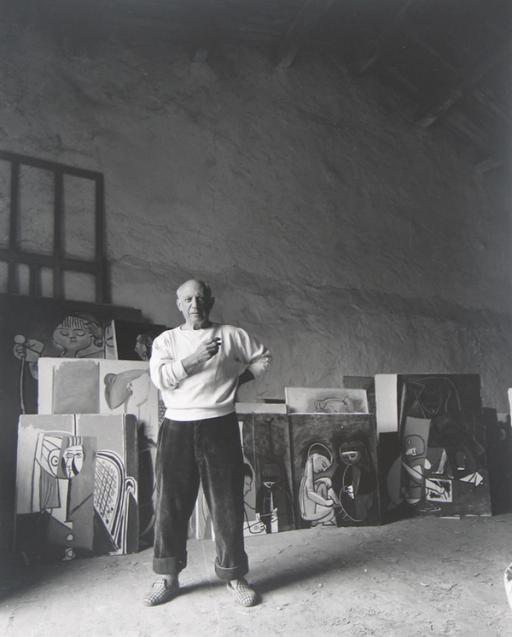
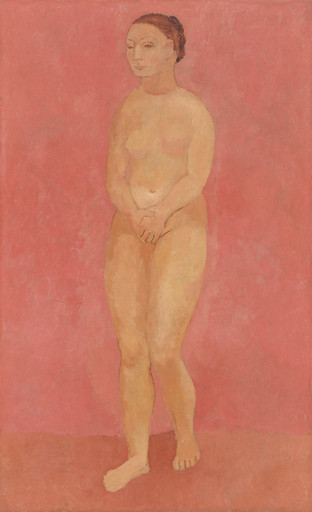
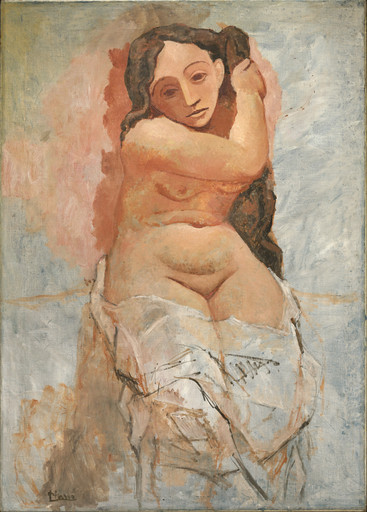
Pablo Picasso
Spanish, 1881–1973 1257 works onlineWith these words, Picasso shed light on two central principles of his artistic production over nearly 80 years: his openness to a diverse range of styles, subject matters, and mediums, and his resistance to the notion that change in art necessarily corresponds to improvement or progress.
Learn more →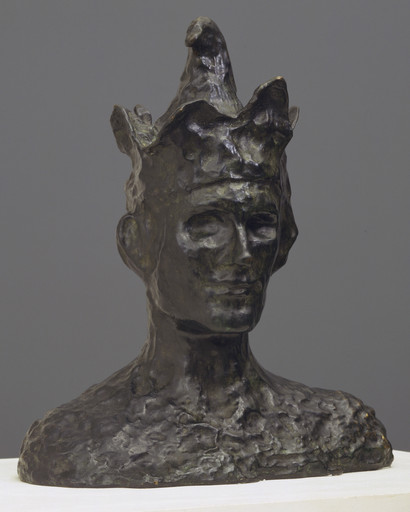
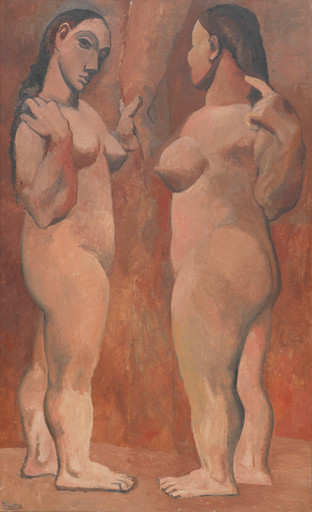
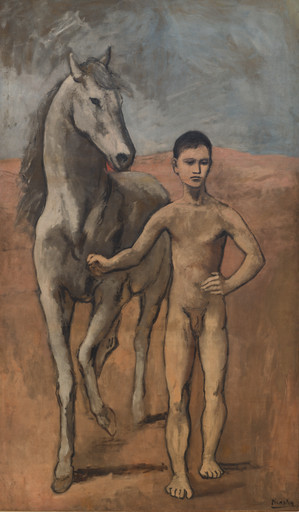
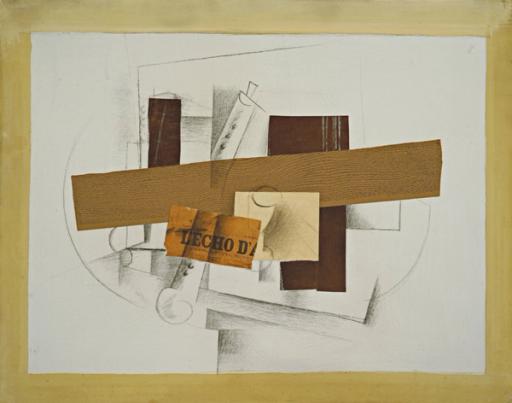
Cubism
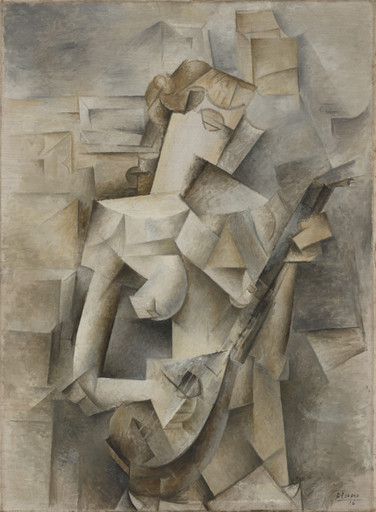
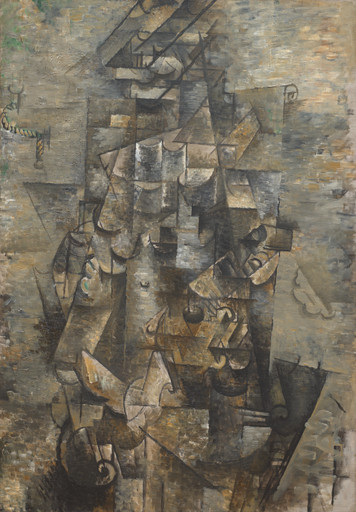
An artistic style invented in Paris during the first decade of the 20th century, Cubism was soon adopted by an international network of artists who sought to create a new art for a new century.
Learn more →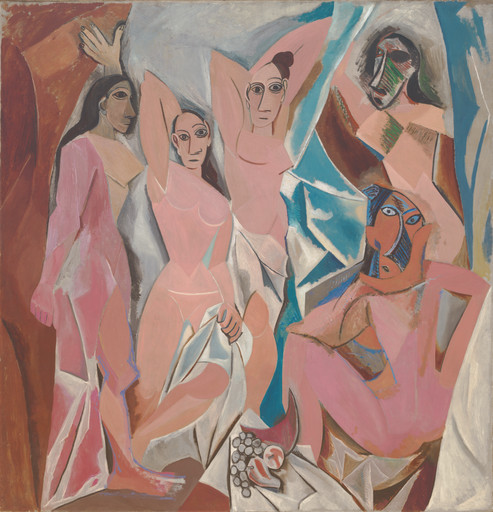



Audio
Audio from the playlist 1880–1950: Works from the Collection
From MoMA Design Store


Installation views
We have identified this work in the following photos from our exhibition history.
Provenance Research Project
This work is included in the Provenance Research Project, which investigates the ownership history of works in MoMA's collection.
1914 Galerie Kahnweiler, Paris (per inventory label)
1914 Sequestered by the French government as enemy property
1921 Hôtel Drouot, Paris (First Kahnweiler sale, 14 June 1914, lot 139, comprised of 5 painted bronze cast, each sold individually)
Curt Burgauer, Zurich (per exhibition at Kunsthaus Zürich: Ausstellung europäische Kunst 13. – 20. Jahrhundert aus Zürcher Sammlungen.”, 6 June through 13 August 1950)
Juliette Cramer, Paris
1956 Fine Arts Associates (Otto M. Gerson), New York (purchased from the above in July 1956, per The Otto and Ilse Gerson Papers, The Archives of American Art. AAA, microfilm reel 4052, frame 1363)
1956 The Museum of Modern Art, New York (purchased from the above with funds from Louise Reinhardt Smith on 7 November 1956).
Provenance research is a work in progress, and is frequently updated with new information. If you have any questions or information to provide about the listed works, please email [email protected] or write to:
Provenance Research Project
The Museum of Modern Art
11 West 53 Street
New York, NY 10019
Licensing
Artwork or archival images
If you would like to reproduce an image of a work of art in MoMA's collection, or an image of a MoMA publication or archival material (including installation views, checklists, and press releases), please contact Art Resource (publication in North America) or Scala Archives (publication in all other geographic locations).
Audio and film clips
MoMA licenses archival audio and select out of copyright film clips from our film collection. At this time, MoMA produced video cannot be licensed by MoMA/Scala. All requests to license archival audio or out of copyright film clips should be addressed to Scala Archives at [email protected]. Motion picture film stills cannot be licensed by MoMA/Scala. For access to motion picture film stills for research purposes, please contact the Film Study Center at [email protected]. For more information about film loans and our Circulating Film and Video Library, please visit Circulating Film and Video Library.
Text from a publication or the archives
If you would like to reproduce text from a MoMA publication, please email [email protected]. If you would like to publish text from MoMA's archival materials, please fill out this permission form and send to [email protected].
Feedback
This record is a work in progress. If you have additional information or spotted an error, please fill out this feedback form.