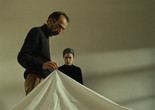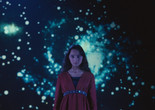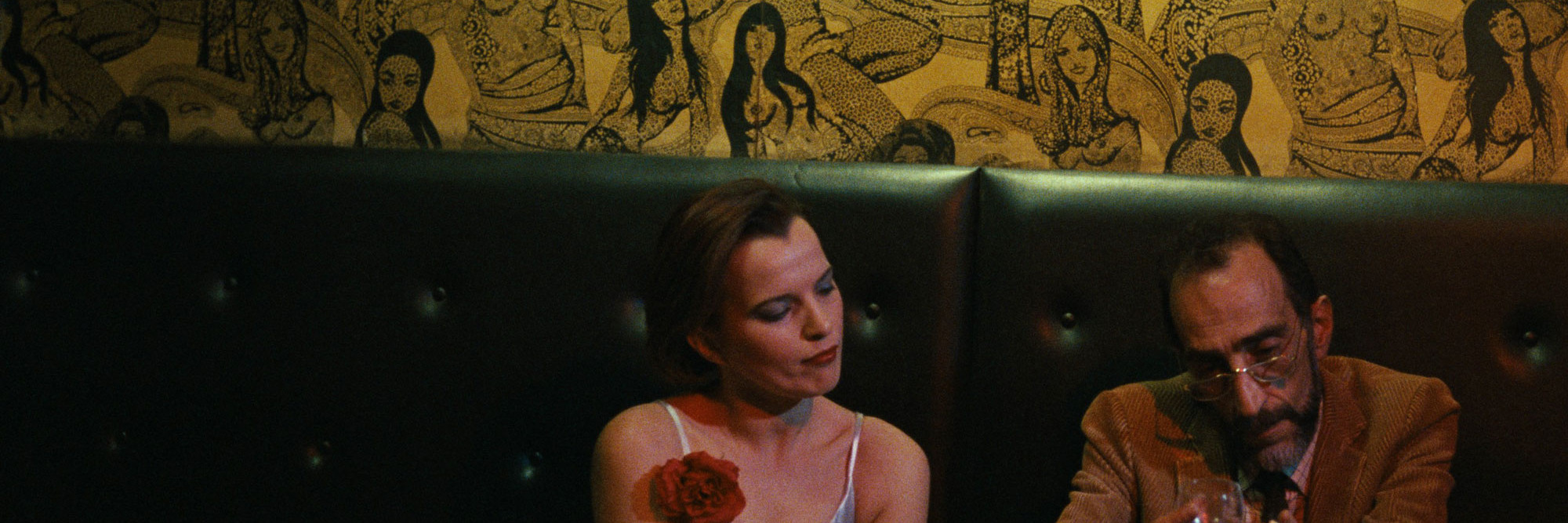
João César Monteiro (1939–2003) is often mentioned alongside Manoel de Oliveira as one of the most influential Portuguese directors of the 20th century. Yet while Oliveira’s fascination with religious and theatrical representations of life made him an obsessive formalist, Monteiro was inspired by the Marquis de Sade and symbolist and surrealist literary movements to bring an anarchistic, anticlerical spirit to his films.
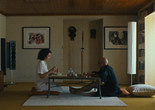
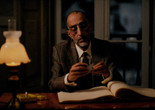
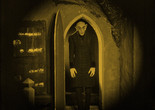
A true libertine, Monteiro subverted trends and definitions in a body of work that, in the vein of Erich von Stroheim, focuses on the perverted mysteries of pleasure, decay, and the poetic translation of the sublime into art—whether film, music, or literature—while striking out at a corrupt sociopolitical status quo he identified with fascism in its many guises. These tendencies are given form in his alter-ego, João de Deus (named after a Portuguese patron saint of the poor, the mentally ill, and sex workers)—played by Monteiro in the trilogy Recollections of the Yellow House (1989), God’s Comedy (1995), and God’s Wedding (1999)—and through his fascination with the figure of Nosferatu, who he brought to “life” onscreen amid Lisbon’s poetically decadent streets. In his earlier work, like Trails (1978) and Silvestre (1981), Monteiro revamped myths and folk tales to take aim at power structures in a despotic, vicious society. His biggest provocation, however, came with Snow White (2000), an adaptation of Robert Walser’s anti–fairy tale that is composed mainly of black film leader and voices, challenging the audience to fill the screen with phantom images and reconsider the scope of film language itself.
This complete retrospective of João César Monteiro’s work, now available in new restorations, also includes films by some of the director’s influences. The series precedes the publication of a new book featuring translations of Monteiro’s writings and interviews with collaborators.
Organized by Francisco Valente, Curatorial Assistant, Department of Film. Thanks to Edward McCarry of the Cinema Guild, Rui Machado, Tiago Baptista, Sara Moreira of Cinemateca Portuguesa - Museu do Cinema and Arquivo Nacional de Imagens em Movimento, Paulo Branco, and João Pedro Gil.
Film at MoMA is made possible by CHANEL.
Additional support is provided by the Annual Film Fund. Leadership support for the Annual Film Fund is provided by The Contemporary Arts Council of The Museum of Modern Art, Agnes Gund through The International Council of The Museum of Modern Art, the Association of Independent Commercial Producers (AICP), and The Young Patrons Council of The Museum of Modern Art.