MoMA
Posts tagged ‘film’
June 22, 2010  |  An Auteurist History of Film
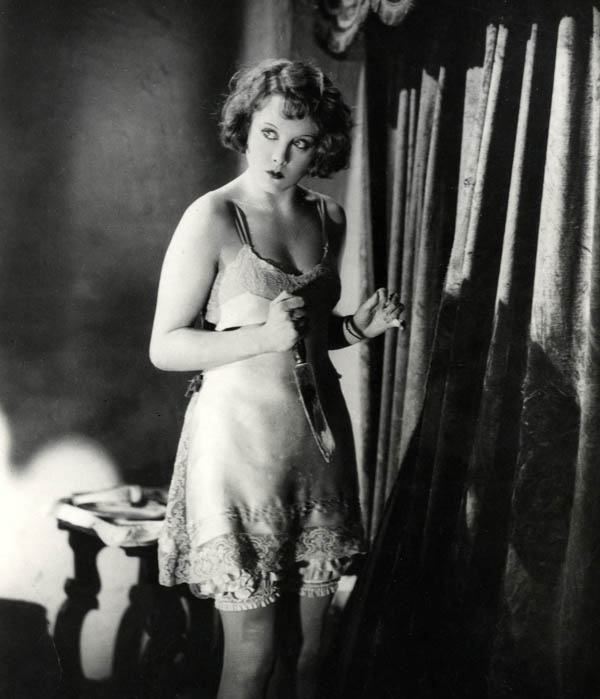
Alfred Hitchcock’s Blackmail
Blackmail. 1929. Great Britain. Directed by Alfred Hitchcock

Blackmail. 1929. Great Britain. Directed by Alfred Hitchcock

These notes accompany screenings of Alfred Hitchcock’s Blackmail, June 23, 24, and 25 in Theater 2.

Alfred Hitchcock (1899–1980) is the leading example of a commercially successful film director who never lost his taste for innovation and experimentation. He must be something of an anathema to those on the avant-garde fringes of film whose whole career may not attract the audiences that Psycho (1960) or The Birds (1963) could garner in a single day. Yet, his body of work remains extremely personal and unified in its vision of a precarious universe.

June 15, 2010  |  An Auteurist History of Film
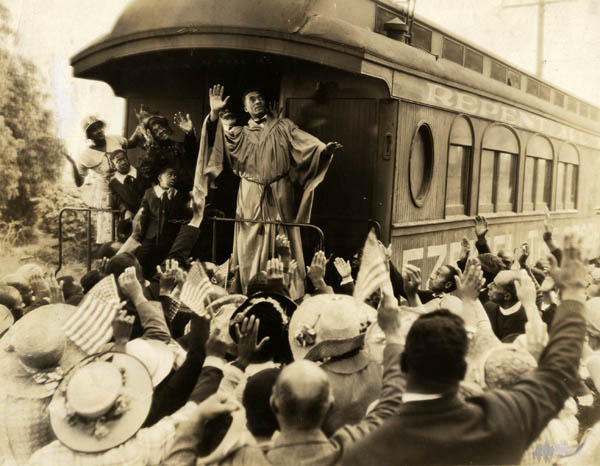
King Vidor’s Hallelujah
Hallelujah. 1929. USA. Directed by King Vidor

Hallelujah. 1929. USA. Directed by King Vidor

These notes accompany screenings of King Vidor’s Hallelujah, June 16, 17, and 18 in Theater 2.

1894 was a uniquely auspicious year for the movies. Not only is that when film history as we have come to know it began, but three of the medium’s greatest directors were born: Jean Renoir, John Ford, and Josef von Sternberg. It was also the year of King Vidor’s birth, and, while he may not have achieved quite the unity of vision of the other three, he came close.

June 8, 2010  |  An Auteurist History of Film
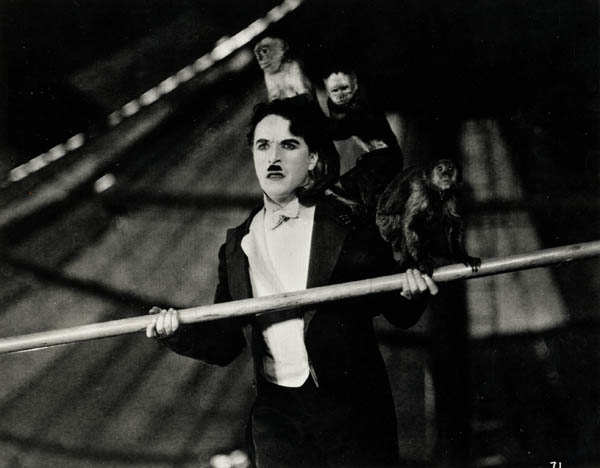
Charles Chaplin’s The Circus
The Circus. 1928. USA. Directed and written by Charles Chaplin

The Circus. 1928. USA. Directed and written by Charles Chaplin

These notes accompany screenings of Charles Chaplin’s The Circus, June 9, 10, and 11 in Theater 3.

With the possible exception of his own 1952 film Limelight, Charles Chaplin’s The Circus (1928) is the most personal and self-revelatory film ever made by a major director. Chaplin (1889–1977) made more than seventy shorts between 1914 and 1923, passing through several studios before the establishment of his own.

June 1, 2010  |  An Auteurist History of Film
Early Animation
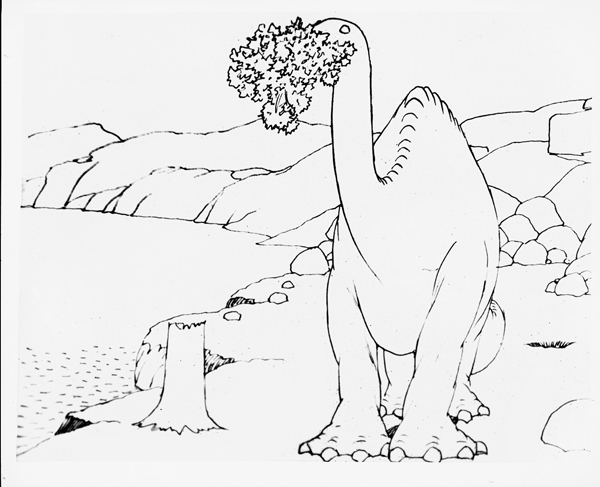
Gertie the Dinosaur. 1914. USA. Directed by Winsor McCay. Preserved with funding from Celeste Bartos

Gertie the Dinosaur. 1914. USA. Directed by Winsor McCay. Preserved with funding from Celeste Bartos

These notes accompany the Early Animation program, June 2, 3, and 4 in Theater 2.

The art of film animation developed out of a long tradition of newspaper and magazine cartoonists both in Europe and the United States. The Frenchman, Emile Cohl (1857–1938), and the American, Winsor McCay (1871–1934), were politically tinged newspapermen who took advantage of the newly-invented concept of stop-motion photography, shooting a slightly varied drawing on each successive film frame. Although their work appears primitive beside Pixar technology, there must have been a sense of wonder and awe in early audiences who saw drawn figures come to a kind of life on the screen.

May 25, 2010  |  An Auteurist History of Film
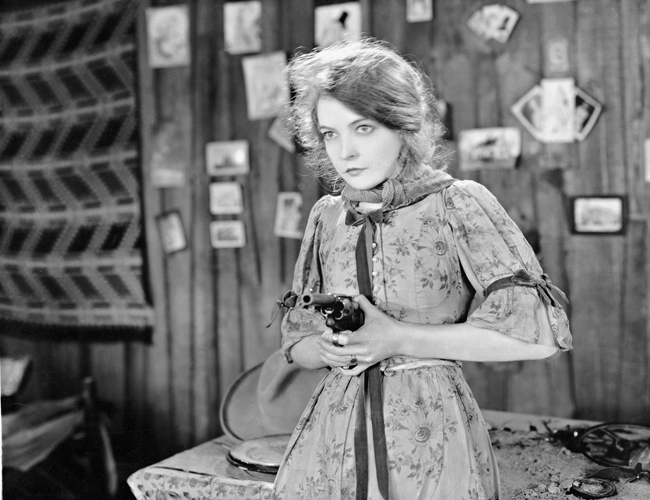
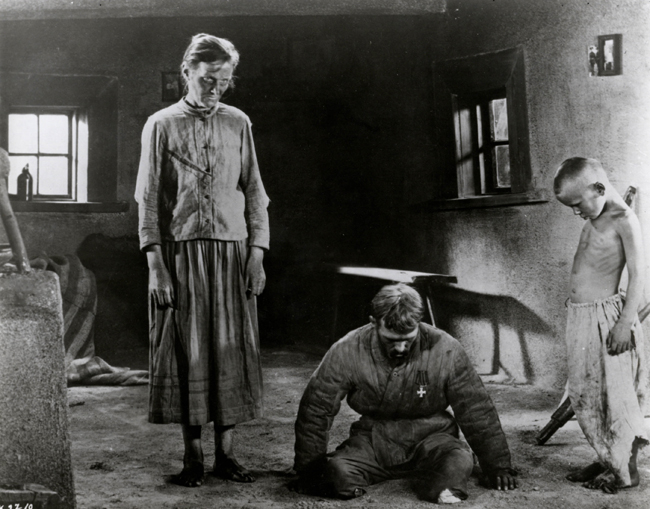
Victor Seastrom’s The Wind
The Wind. 1928. USA. Directed by Victor Seastrom. Acquired from MGM

The Wind. 1928. USA. Directed by Victor Seastrom. Acquired from MGM

These notes accompany the screening of The Wind, May 26, 27, and 28 in Theater 3.

As we draw toward the end of the silent period, I recognize that Victor Sjöström (1879–1960)—”Victor Seastrom” during his MGM years—has been somewhat neglected in this series. We did show his early Ingeborg Holm (1913), and several clips appeared in the documentary Swedish Cinema Classics, but that is insufficient for a full appreciation of his importance. His work between 1917 and his departure for Hollywood in 1923 (including Terje Vigen, The Outlaw and His Wife, The Phantom Chariot, and his numerous adaptations of Selma Lagerlof novels) place him in the first rank of silent-film directors, and he pioneered the pitfalls of directing himself as an actor before Chaplin, Stroheim, or Keaton. Several of his nine Hollywood films no longer survive, although the two Lillian Gish vehicles, The Scarlet Letter and The Wind, still remain and appear to be the best of the lot. He returned to Europe in 1928, directing only two talkies but continuing to act in Swedish films until his bravura performance for Ingmar Bergman in Wild Strawberries (1957) at the age of seventy-eight.

May 20, 2010  |  Events & Programs, Film
Getting Attention: A Young Filmmaker’s Beginnings at MoMA

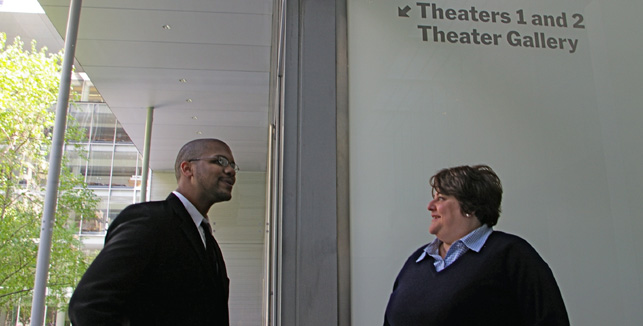
For the past ten years, high school students have been attending free Friday night film screenings at MoMA, spending some time after each film talking with curators, educators, and filmmakers. Recently we’ve experimented with different types of events for teens, such as artists’ talks, gallery activities, and art-making workshops, which means there’s something happening for young artists almost every Friday from October through May. Greeting visitors as they arrive for these events is an impeccably dressed young filmmaker named Michael Brawley, who has been an essential part of the program—first as an attendee, then as a volunteer—for years. We asked Michael his opinion about film, the Oscars, MoMA’s Teen Programs, and more.

Michael Brawley and Anne Morra at MoMA

May 18, 2010  |  An Auteurist History of Film
Alexander Dovzhenko’s Arsenal

Arsenal. 1929. USSR. Written, directed, and edited by Alexander Dovzhenko

Arsenal. 1929. USSR. Written, directed, and edited by Alexander Dovzhenko

These notes accompany the screening of </i>Arsenal, May 19, 20, and 21 in Theater 3.</p>

The triumvirate of great silent Soviet narrative directors is completed by Alexander Dovzhenko (1894–1956). Unlike the other two, Sergei Eisenstein and V. I. Pudovkin, Dovzhenko was Ukrainian and worked mostly in Odessa and Kiev, which allowed him a bit more freedom as he wasn’t constantly under Stalin’s nose in Moscow. Like his esteemed contemporaries, he left behind extensive writings on the cinema. His concern for peasants, a group to which his illiterate father belonged, led him away from urban settings and promoted a lyrical and poetic depiction of Nature. His great rural trilogy (Arsenal in 1929, Zemlya [Earth] in 1930, and Ivan in 1932) seems to move beyond the immediate political concerns of the Revolution into a personal and emotional realm; feeling triumphs over agitprop.

May 11, 2010  |  An Auteurist History of Film
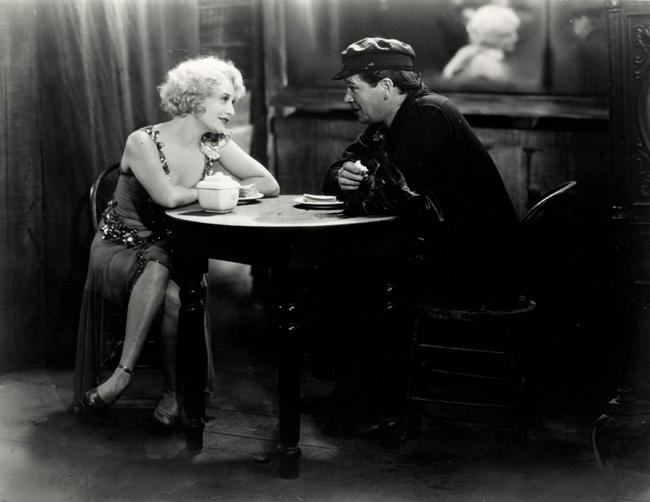
Josef von Sternberg’s The Docks of New York

The Docks of New York. 1929. USA. Directed by Josef von Sternberg

The Docks of New York. 1929. USA. Directed by Josef von Sternberg

These notes accompany the screening of </i>The Docks of New York, May 12, 13, and 14 in Theater 3.</p>

Josef von Sternberg (1894–1969) divided his childhood between his native Vienna and Queens, New York. Before going to Hollywood in the mid-1920s, he learned the rudiments of filmmaking at the studios in Fort Lee, New Jersey, and in the Army Signal Corps during the Great War. His first film, The Salvation Hunters (1925), was amazingly accomplished, especially considering its miniscule budget. It was, in essence, an independent film, an almost unique specimen in its time. Only the good fortune of capturing the eyes of Douglas Fairbanks and Charles Chaplin brought Sternberg out of obscurity and to the attention of the studios. Of his nine silent films, only four survive. These other works (Underworld, The Last Command, and The Docks of New York) are so good that one must conclude that Sternberg’s career, more than that of any other director, suffers from the blight on film history we have come think of as “lost-film syndrome.” In a pattern set by The Salvation Hunters, his films deal with complex and painful romantic relationships shot in a stylized manner. While Erich von Stroheim made a false claim to realism, Sternberg was often apologetic for having too closely approximated reality. By the end of his first decade as a director (far and away his most productive period), Sternberg could certainly be considered the cinema’s greatest Romantic artist, rivaled only later by Max Ophuls.


May 4, 2010  |  An Auteurist History of Film
G. W. Pabst’s Pandora’s Box

These notes accompany the screening of Pandora’s Box, May 5, 6, and 7 in Theater 3.

“What counts is the image. So I would still claim that the creator of the film is much more the director than the author of the scenario or the actors.” – G. W. Pabst

Georg Wilhelm Pabst (1885–1967) was the third member of the great Weimar directorial triumvirate, along with Fritz Lang and F. W. Murnau. In some ways he was the most elusive and mysterious of the three. Murnau was haunted by whatever demons went along with being homosexual in an uncongenial era. Pabst’s fellow Austrian, Lang, seemed to flirt with Fascism—his intellectual instincts were Teutonic, his wife was a Nazi, and he was offered control of the Reich’s film industry—before deciding to go west and ultimately winding up in Hollywood (where he became a practicing democrat, although reports of his tyrannical relations with coworkers probably would disqualify him from canonization). Pabst was a horse of a different color altogether, or, perhaps more correctly, several different colors. While Lang could only imagine New York for Metropolis, Pabst spent a few youthful years here. He came to film directing rather late, in 1923, but he had made several successful movies (Der Schatz, Die Freudlose Gasse, Geheimnisse Einer Seele, Die Liebe der Jeanne Ney) by the time of Die Buchse der Pandora (Pandora’s Box) in 1928.

April 27, 2010  |  An Auteurist History of Film
Vsevolod I. Pudovkin
Storm over Asia. 1928. USSR. Directed by V. I. Pudovkin

Storm over Asia. 1928. USSR. Directed by V. I. Pudovkin

These notes accompany the Vsevolod I. Pudovkin program, screening April 28, 29, and 30 in Theater 3.

Vsevolod Illarionovitch Pudovkin (1893–1953) was, like Sergei Eisenstein, a pupil of Lev Kuleshov (1899–1970), and all three of them were heavily influenced by the work of D. W. Griffith, particularly his mastery of editing. All three also wrote copiously on film theory, finding intellectual justification for the choices they made in creating their movies. Few American filmmakers made much effort to convey their thought processes, and most seemed happy to leave the impression that their work was largely intuitive. When Peter Bogdanovich asked John Ford how he did a particular shot, Ford replied soberly, “With a camera.”