
MoMA
Posts tagged ‘film’
August 31, 2010  |  An Auteurist History of Film
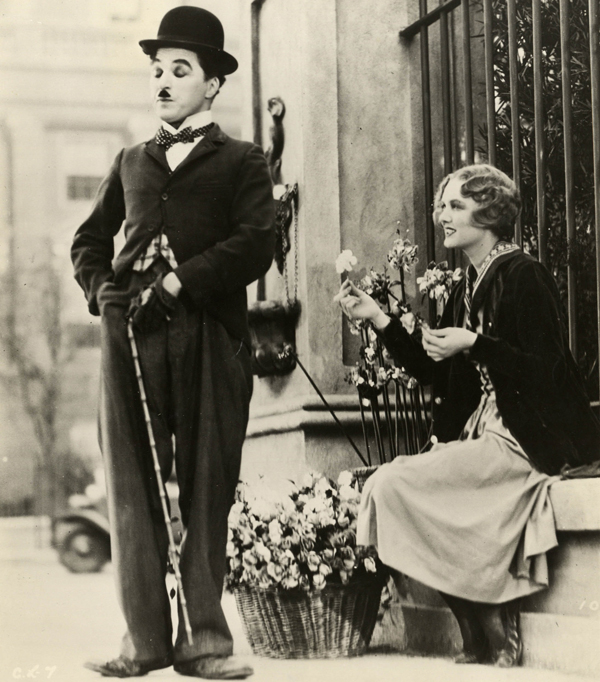
Charles Chaplin’s City Lights

City Lights. 1931. USA. Written, directed, and music by Charles Chaplin

City Lights. 1931. USA. Written, directed, and music by Charles Chaplin

These notes accompany screenings of Charles Chaplin’s </i>City Lights, September 1, 2, and 3 in Theater 3.</p>

City Lights is Charles Chaplin’s most perfectly accomplished and balanced work. It would certainly be on the short list of films with which I would care to be stranded on a desert island.

By 1931 the silent cinema was effectively dead. It took considerable courage to lavish two years of rather expensive production on a silent film (and even more courage with Modern Times five years later), but Chaplin felt he had very little choice. He correctly perceived that the Tramp would lose his poetry and grace if he were coerced into the leveling mundanity of human speech. He foresaw that sound would force him to sacrifice the “pace and tempo” he had so laboriously perfected.
August 24, 2010  |  An Auteurist History of Film
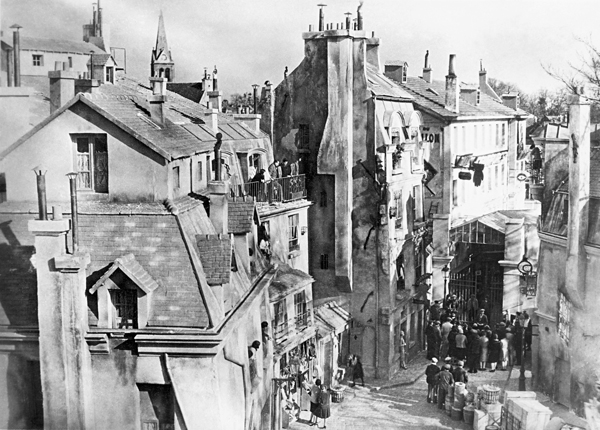
René Clair’s Under the Roofs of Paris

Under the Roofs of Paris. 1930. France. Directed by René Clair

Under the Roofs of Paris. 1930. France. Directed by René Clair

These notes accompany screenings of René Clair’s </i>Under the Roofs of Paris, August 25, 26, and 27 in Theater 3.</p>

René Clair (1898–1981), a disappointed poet, novelist, and actor, lived and worked on the fringes of the French Surrealist movement in the 1920s. (We included his Entr’acte (1924) in the French Avant-Garde program earlier in the series.) In total, he made eight silent films of varied lengths—most notably 1927’s Un Chapeau de Paille d’Italie (The Italian Straw Hat)—establishing a reputation for humor and fanciful imagination.

August 17, 2010  |  An Auteurist History of Film
Ernst Lubitsch’s The Love Parade

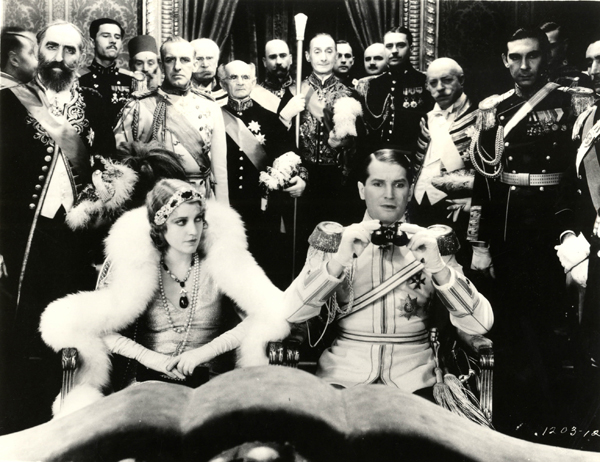
The Love Parade. 1929. USA. Directed by Ernst Lubitsch

Jeannette MacDonald and Maurice Chevalier in The Love Parade. 1929. USA. Directed by Ernst Lubitsch

These notes accompany screenings of Ernst Lubitsch’s </i>The Love Parade, August 18, 19, and 20 in Theater 3.</p>

Ernst Lubitsch (1892–1947) followed up The Marriage Circle (1924) with eight more silents (three of which are sadly lost). In 1929, that probably made him the odds-on favorite among all then-prominent directors to succeed as sound was coming in. With The Love Parade, Lubitsch did not disappoint.

August 10, 2010  |  An Auteurist History of Film
Raoul Walsh’s The Big Trail
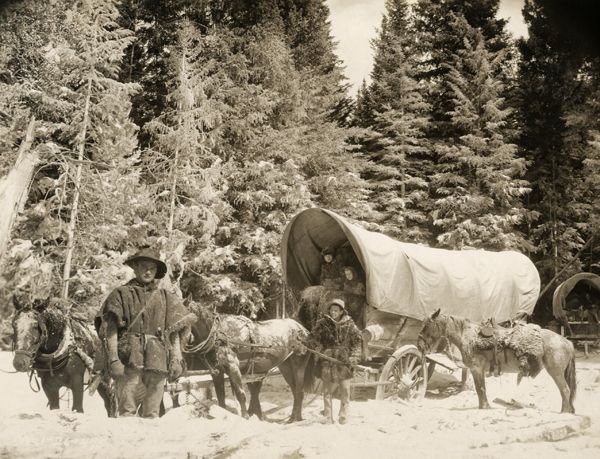
The Big Trail. 1930. USA. Directed by Raoul Walsh

The Big Trail. 1930. USA. Directed by Raoul Walsh

These notes accompany screenings of Raoul Walsh’s The Big Trail, August 11, 12, and 13 in Theater 1.

We last crossed paths with Raoul Walsh (1887–1980) when we looked at his early gangster film, Regeneration. Walsh, like Howard Hawks, was eclectic in his choice of genres and retained some of the same aura of robust masculinity that Hawks affected. With rare exceptions, however, Walsh’s films lacked the gravitas and profundity of great art. By saying this, I don’t want to appear dismissive.

August 3, 2010  |  An Auteurist History of Film
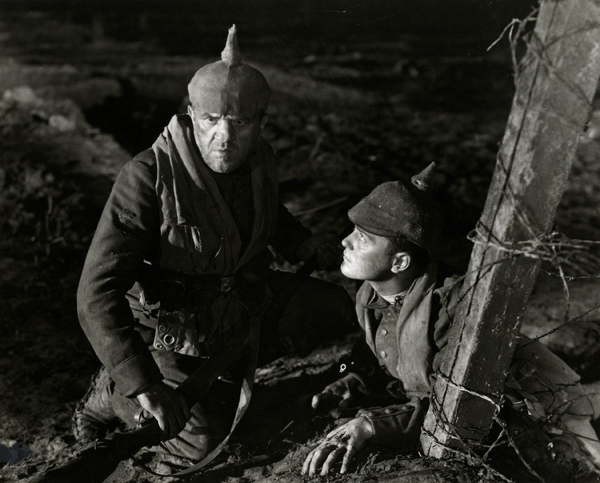
G. W. Pabst’s Westfront 1918
Westfront 1918. 1930. Germany. Directed by G. W. Pabst

Westfront 1918. 1930. Germany. Directed by G. W. Pabst

These notes accompany screenings of G. W. Pabst’s Westfront 1918, August 4, 5, and 6 in Theater 3.

When we last encountered G. W. Pabst (1885–1967), he had made the startling Die Buchse der Pandora (Pandora’s Box).

July 27, 2010  |  An Auteurist History of Film
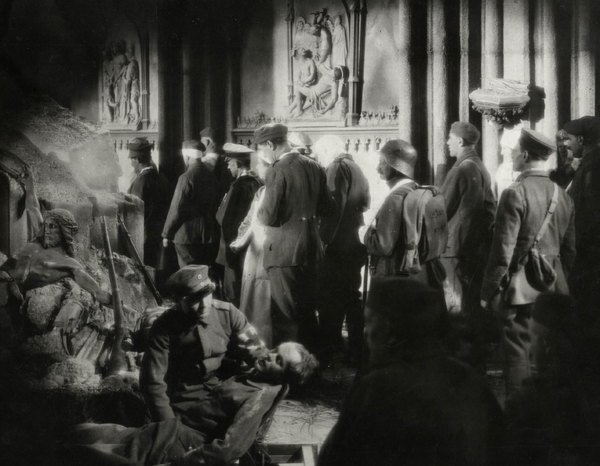
Lewis Milestone’s All Quiet on the Western Front

All Quiet on the Western Front. 1930. USA. Lewis Milestone

All Quiet on the Western Front. 1930. USA. Lewis Milestone

These notes accompany screenings of Lewis Milestone’s </i>All Quiet on the Western Front, July 28, 29, and 30 in Theater 1.</p>

Lewis Milestone (1895–1980) was born Lev Milstein near Odessa, Ukraine. He immigrated to America in 1913 and served in the photographic unit of the Army Signal Corps during World War I. He began working in Hollywood in 1919, and directed his first film in 1925. Even before his Oscar for All Quiet on the Western Front (1930), he had won a “Best Comedy Direction” statuette for Two Arabian Knights (1927), beating out Charles Chaplin’s The Circus.

July 20, 2010  |  An Auteurist History of Film
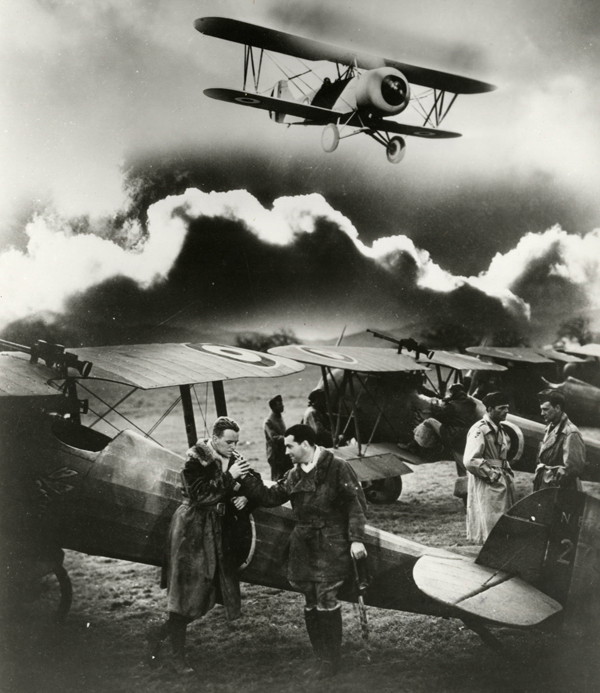
Howard Hawks’s The Dawn Patrol

The Dawn Patrol. 1930. USA. Directed by Howard Hawks

The Dawn Patrol. 1930. USA. Directed by Howard Hawks

These notes accompany screenings of Howard Hawks’s </i>The Dawn Patrol, July 21, 22, and 23 in Theater 1.</p>

Like his friendly rival John Ford, Howard Hawks (1896–1977) began work as a Hollywood property man (in Hawks’s case, while still attending school). He received a degree in mechanical engineering from Cornell, and his films reflect both the precision this implies and the erudition of a college boy. (Ford, by contrast, spent about two minutes in college.) After a stint in the Army Air Corps and a job designing airplanes, Hawks wound up directing his first film at the Fox studio—where Ford was also under contract—in 1926.

July 13, 2010  |  An Auteurist History of Film
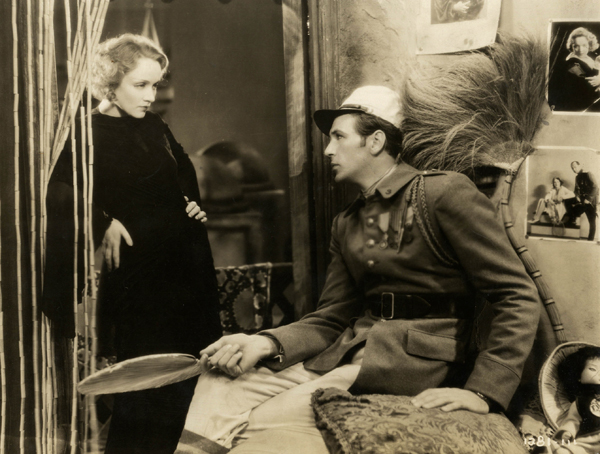
Josef von Sternberg’s Morocco

Morocco. 1930. USA. Directed by Josef von Sternberg

Morocco. 1930. USA. Directed by Josef von Sternberg

These notes accompany screenings of Josef von Sternberg’s </i>Morocco, July 14, 15, and 16 in Theater 2.</p>

On March 31, 1930, Marlene Dietrich appeared on the stage of Berlin’s Gloria Palast for the premiere of The Blue Angel before sailing that very night for America to work on Morocco. The director of both films, Josef von Sternberg (1894–1969), had long since departed, expecting never to see the actress again.

July 6, 2010  |  An Auteurist History of Film
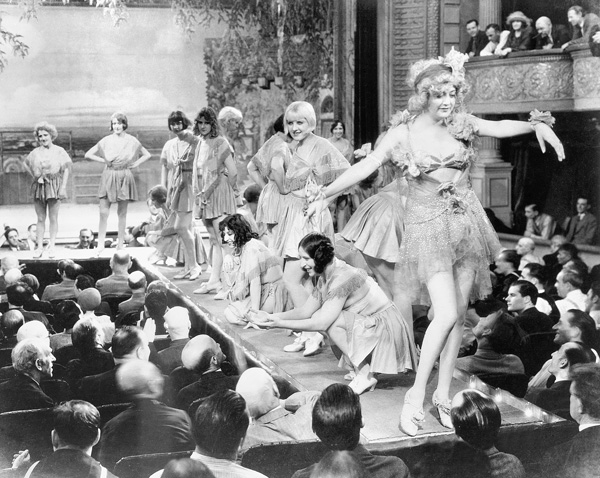
Rouben Mamoulian’s Applause
Applause. 1929. USA. Directed by Rouben Mamoulian

Applause. 1929. USA. Directed by Rouben Mamoulian

These notes accompany screenings of Rouben Mamoulian’s Applause, July 7, 8, and 9 in Theater 3.

Rouben Mamoulian’s (1898–1987) career as a film director showed potential for five years, before limping into a disappointing second act and then virtually disappearing. He was a promising newcomer like George Cukor—another of the many imports from the Broadway stage who turned to film around the advent of sound technology—but unlike Cukor, whose career lasted more than a half-century, Mamoulian never quite figured out how to survive and thrive within the Hollywood system. The great success of his stage production of Porgy in New York made him and everyone else think he was notably inventive, but his cinematic gifts proved limited and transitory.

June 29, 2010  |  An Auteurist History of Film
D. W. Griffith’s Abraham Lincoln

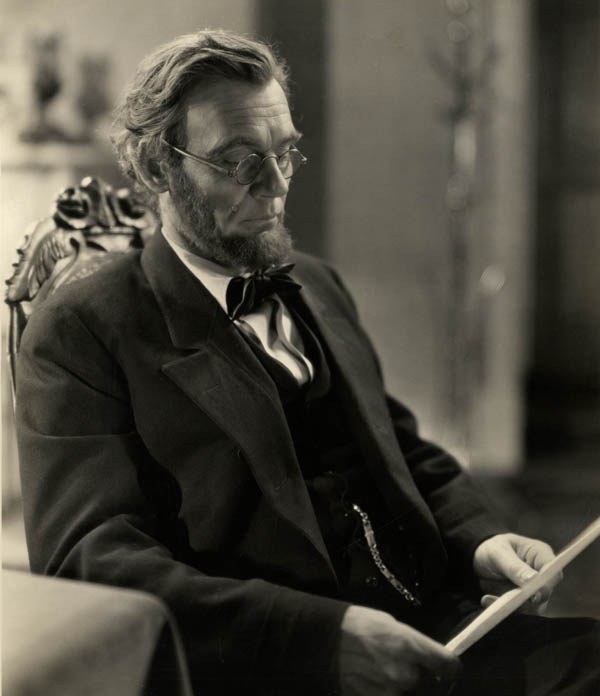
Abraham Lincoln. 1930. USA. Directed by D. W. Griffith

Walter Huston as our sixteenth President in Abraham Lincoln. 1930. USA. Directed by D. W. Griffith

These notes accompany screenings of D. W. Griffith’s </i>Abraham Lincoln, June 30 and July 1 and 2 in Theater 3.</p>

D. W. Griffith (1874–1948) came to the end of his professional road in 1931. It is now time both to bury and praise him.

He remained an enigma to the end. His final feature, The Struggle (1931), was a passionate plea against alcohol made by a committed, unredeemable, and self-destructive drunk, and if Abraham Lincoln (1930) was intended as some sort of apologia for The Birth of a Nation</a> (1915), the director seems to have missed the point of the outrage he inspired.