
MoMA
Posts tagged ‘film’
October 26, 2010  |  An Auteurist History of Film
The Films of Robert Flaherty and John Grierson

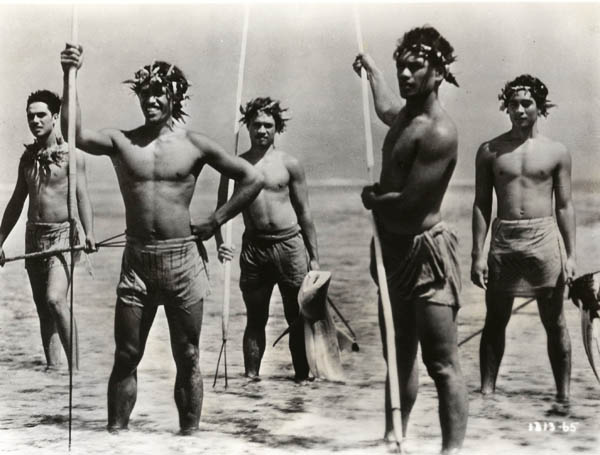
Man of Aran. 1934. Great Britain. Directed by Robert Flaherty

Man of Aran. 1934. Great Britain. Directed by Robert Flaherty

These notes accompany the Robert Flaherty and John Grierson Program on October 27, 28, and 29 in Theater 3.

Robert Flaherty (1884–1951) is credited with being the father of the documentary. There had, of course, been “actuality” films from the very beginning of cinema; the Lumiere brothers sent film crews around the world to bring the wonders of the planet to audiences long before jets made it possible for large numbers of people to travel to exotic or remote locales.

October 20, 2010  |  Collection & Exhibitions, Counter Space
Mystery Solved: Counter Space Film Stills Identified!

Many thanks to the Counter Space fans who contributed over the past few weeks to our Mystery Film Still Contest. We were thrilled by the speed and enthusiasm of your responses! Now we are happy to announce—and sincerely congratulate—the winner, Richard Finegan of Framingham, MA, who identified ALL of the film stills.

October 19, 2010  |  An Auteurist History of Film
The Films of Jean Vigo

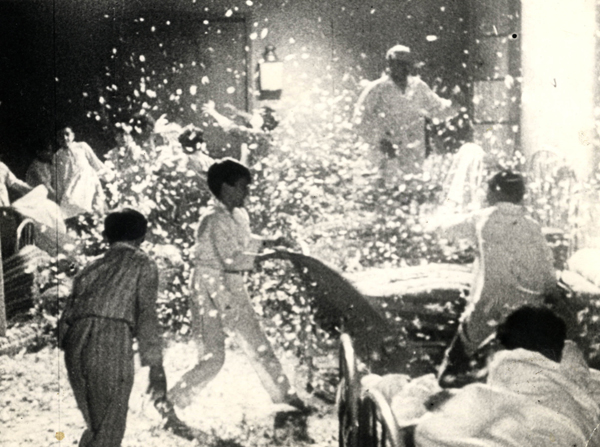
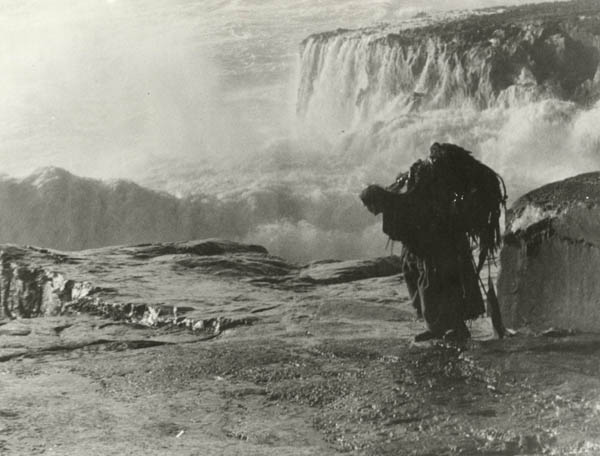
Zero for Conduct. 1933. France. Directed, produced, written, and edited by Jean Vigo

Zero for Conduct. 1933. France. Directed, produced, written, and edited by Jean Vigo

These notes accompany the Jean Vigo Program on October 20, 21, and 22 in Theater 3.

October 5, 1934, the day Jean Vigo succumbed to tuberculosis and leukemia at twenty-nine years and six-months of age, may have been the most tragic day in film history (perhaps rivaled only by March 11, 1931, the day F. W. Murnau died in an auto accident). Vigo was the son of a fugitive anarchist and the father of one child, three short films, and one feature.

October 12, 2010  |  An Auteurist History of Film
Cooper and Schoedsack’s King Kong

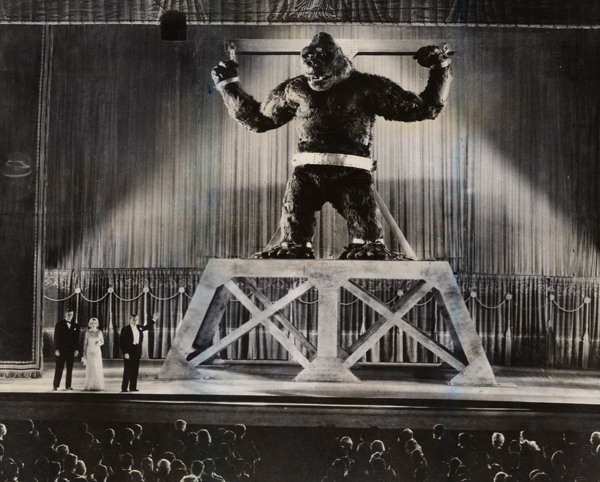
King Kong. 1933. USA. Directed by Merian C. Cooper, Ernest B. Schoedsack

King Kong. 1933. USA. Directed by Merian C. Cooper, Ernest B. Schoedsack

These notes accompany the screenings of Merian C. Cooper and Ernest B. Schoedsack’s </i>King Kong, October 13, 14, and 15 in Theater 3.</p>

I was reticent about including Merian C. Cooper and Ernest B. Schoedsack’s King Kong in this series. True, we’ve already shown the filmmakers’ classic documentary, Grass (1925), but, in the eight intervening years, the filmmakers seem (at least superficially) to have moved in a very different direction.

October 6, 2010  |  Collection & Exhibitions, Counter Space
Mystery Film Still Contest!

Mystery Film Still No. 1

We are very lucky to have the resources and colleagues we do here at MoMA, but sometimes we need extra help. For example, our much-loved exhibition title, Counter Space—to give credit where credit is due—was provided by Architecture & Design superfan Andrew Ashwood. Now we need YOUR help with another kitchen-y project…and why not add some fun by making it a contest?

October 5, 2010  |  An Auteurist History of Film
A Leo McCarey Program

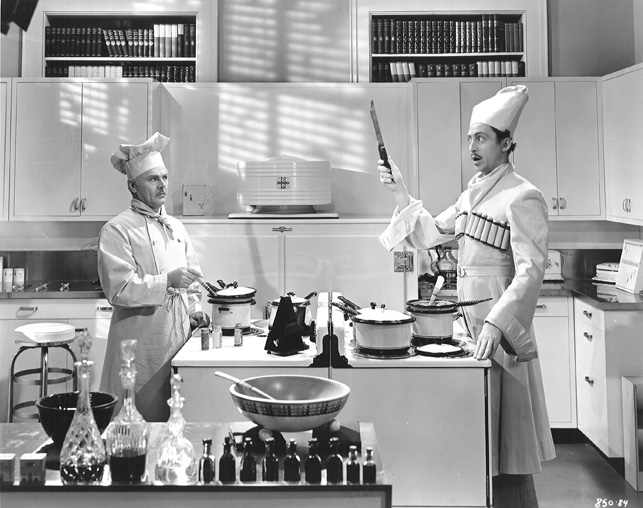
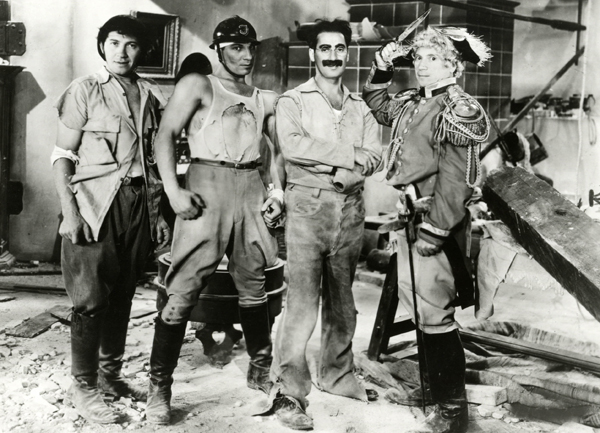
Duck Soup. 1933. USA. Directed by Leo McCarey

Duck Soup. 1933. USA. Directed by Leo McCarey

These notes accompany the Leo McCarey screening program, October 6, 7, and 8 in Theater 3.

Leo McCarey (1898–1969) has long been one of the most unheralded major directors in film history. (I made my own small effort to resurrect his status in a 1973 Film Comment article.) At that time, I reminded readers of a quote from critic (and later screenwriter) Frank Nugent from 1939: “McCarey directs so well it is almost antisocial of him not to direct more often.” Unfortunately, McCarey remains all too obscure to this day.

September 28, 2010  |  An Auteurist History of Film
Ernst Lubitsch’s Trouble in Paradise

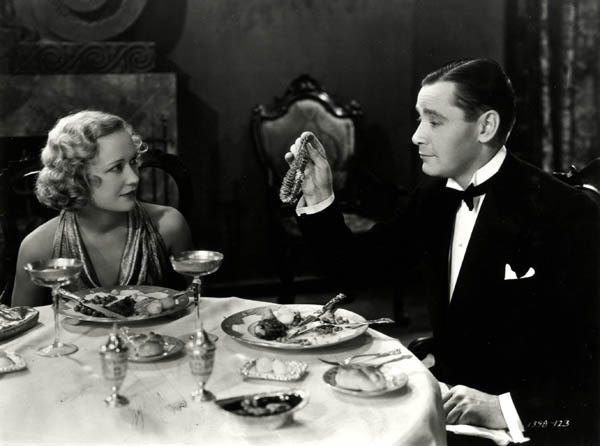
Trouble in Paradise. 1932. USA. Directed by Ernst Lubitsch

Trouble in Paradise. 1932. USA. Directed by Ernst Lubitsch

These notes accompany screenings of Ernst Lubitsch’s </i>Trouble in Paradise, September 29, 30, and October 1 in Theater 3.</p>

Ernst Lubitsch (1892–1947) somehow remained true to his own idiosyncratic brand of filmmaking, even though he had what amounted to about a half-dozen separate (but overlapping) careers. Throughout his thirty-some years behind the camera, he developed an increasing sense of sophistication and an assurance that marked him as one of the great directors.

September 21, 2010  |  An Auteurist History of Film
Howard Hawks’s Scarface: The Shame of a Nation

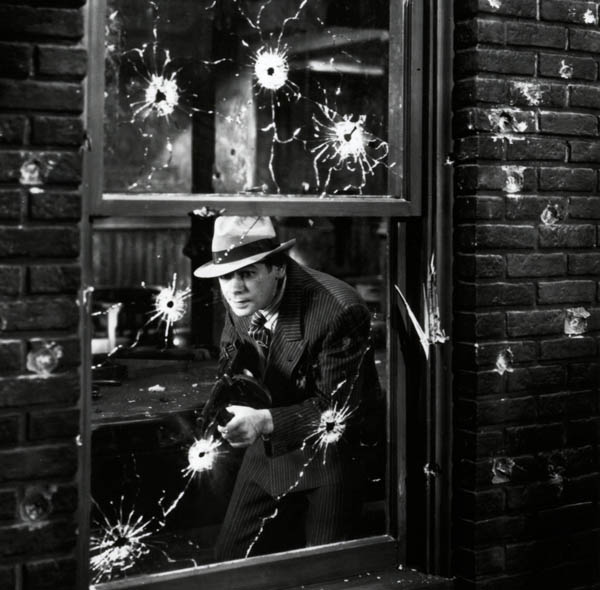
Scarface: The Shame of a Nation. 1932. USA. Directed by Howard Hawks

Scarface: The Shame of a Nation. 1932. USA. Directed by Howard Hawks

These notes accompany screenings of Howard Hawks’s </i>Scarface: The Shame of a Nation, September 22, 23, and 24 in Theater 3.</p>

Howard Hawks (1896–1977), in his forty-four year career, was arguably the most consistently successful of all directors in satisfying the commercial demands of the Hollywood studio system while simultaneously maintaining a high level of personal expression in his films. One might say he was the “auteur’s auteur.” It helped a great deal that he was proficient in so many different genres.

September 14, 2010  |  An Auteurist History of Film
A Jean Renoir Birthday Celebration

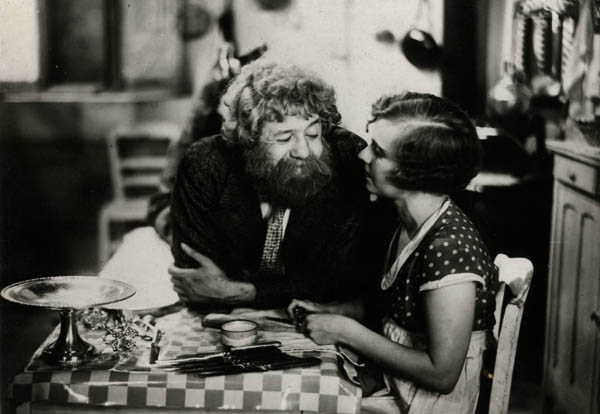
Boudu Saved from Drowning. 1932. France. Directed by Jean Renoir

Boudu Saved from Drowning. 1932. France. Directed by Jean Renoir

These notes accompany the </i>Jean Renoir Birthday Celebration screenings on September 14, 15, and 16 in Theater 3.</p>

Jean Renoir (1894–1979) would have been 116 years old tomorrow (September 15). One is hard pressed to name a twentieth-century artist in any medium whose work reflects a richer diversity of feelings and ideas. Renoir’s broad and serious concern with the social state of mankind is combined with a warmly romantic sense of humor, and the whole is given expression through an almost effortless command of the complex tools of his métier. He was a self-proclaimed realist, an improviser, and the infinitely loving apostle of egalitarian humanism.

September 7, 2010  |  An Auteurist History of Film
F. W. Murnau’s Tabu

Tabu. 1931. USA. Directed by F. W. Murnau

Tabu. 1931. USA. Directed by F. W. Murnau

These notes accompany screenings of F. W. Murnau’s </i>Tabu, September 8, 9, and 10 in Theater 3.</p>

F. W. Murnau (1888–1931) made six or seven great or near-great films in his all-too-brief career. All save his last film were tightly controlled, studio-stylized works that (although they were beautiful and often moving) were thoroughly planned artifice. One might even use the contemporary expression “tight-assed” in describing them. His final film, Tabu (1931), however, seems almost the complete antithesis. Tabu is one of cinema’s simplest, most lyrical and masterful expressions of a despairing romanticism succumbing to the realities of a world from which none of us can escape.