
MoMA
Posts tagged ‘Architecture’
Introducing the Young Architects Program International
Holding Pattern by interboro Partners

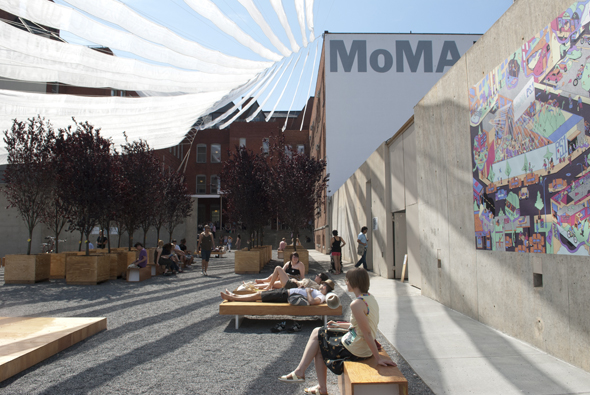
Installation view of Holding Pattern by interboro Partners, winner of the 2011 Young Architects Program, 2011. Digital rendering courtesy of Interboro Partners

Each year, MoMA renews its commitment to experimental architecture and architectural display with a full-scale installation of a project chosen from a competition among virtually untried architects. In the galleries of the Museum, architecture collection masterworks and temporary exhibitions of computer- and hand-drawn architectural renderings, models, photographs, and films are regularly shown. But each year the outdoor spaces of MoMA PS1 provide a unique temporary outdoor gallery where emerging talents can turn projects and drawings into spaces and palpable experiences.

Foreclosed: Team Work

The five teams have been working over the past week to incorporate feedback from their public Open Studios presentations at MoMA PS1 on June 18. Starting this week, you will be hearing from each of the teams every week until the next Open Studios on September 17, 2011, at MoMA PS1.

Foreclosed: Rewriting the Script

Foreclosed: Rehousing the American Dream is a collaboration between MoMA and Columbia University’s Temple Hoyne Buell Center for the Study of American Architecture. Jointly conceived and curated by Barry Bergdoll, MoMA’s Chief Curator of Architecture and Design, and Reinhold Martin, Director, the Buell Center, the workshop and exhibition will examine new architectural possibilities for American cities and suburbs in the context of the recent foreclosure crisis.

Foreclosed: Rehousing the American Dream

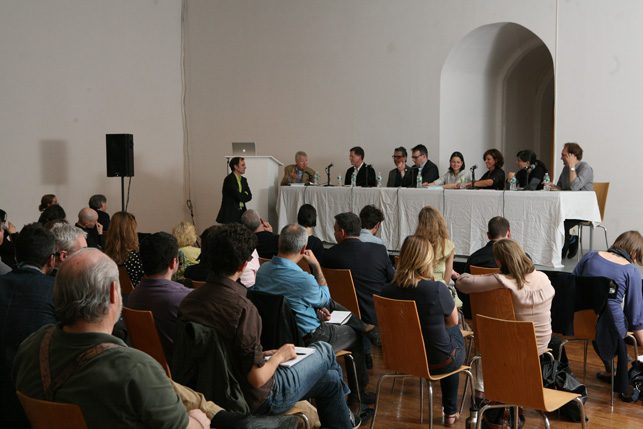
Foreclosed orientation panel discussion at MoMA PS1, with team leaders, moderated by Harry Cobb, May 7, 2011. Photo: Brett W. Messenger. © 2011 The Museum of Modern Art

You can’t drive very far in most American cities before you see the effects of the foreclosure crisis. Recent foreclosure statistics reflect a landscape of individual stories of crisis. Collectively, these narratives have influence that extends far beyond those most affected.

March 2, 2011  |  Counter Space, Events & Programs
Home Is Where the Art Is

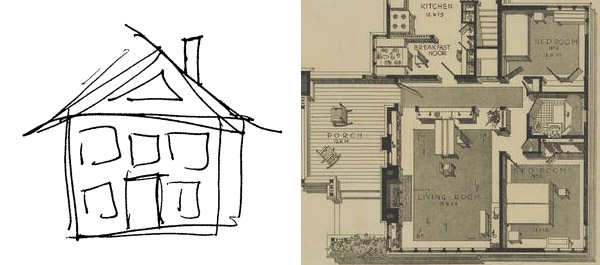
From left: My drawing from class. Frank Lloyd Wright. American System-Built Houses for The Richards Company, project, Milwaukee, Wisconsin, Plan of model C3. c. 1915–17. Lithograph. Gift of David Rockefeller, Jr. Fund, Ira Howard Levy Fund, and Jeffrey P. Klein Purchase Fund. © 2011 Frank Lloyd Wright Foundation/Artists Rights Society (ARS), New York


“You have one minute. Grab a piece of scrap paper and draw a house.” And with that simple direction, Professor Jennifer Gray began MoMA’s continuing education class, Dwell: Histories of Modern Housing.

I frantically drew, erased, and redrew my house, wondering what the other students were conjuring up and scribbling down. I was curious if the drawings would be as different as the classmates, who ranged from a Czech woman to a Brooklyn architect to a retired empty-nester to me, an art director at an advertising agency. They weren’t. And that was exactly the point of this seemingly rudimentary exercise.

November 24, 2010  |  Events & Programs
Educator Journal: In the Making—Social Architecture

For this series of posts, I’ve asked the teaching artists from this season’s In the Making Art Classes to reflect on what they’ve been doing over the past couple of weeks with their teenaged students. Each In the Making class meets once a week—Tuesday or Thursday nights—and focuses on introducing the participants to the materials, techniques, artistic theories, and exhibitions currently on view in MoMA’s galleries. It’s a great way for teens to find a community of positive, creative peers outside of a high school setting, and all classes are offered completely free of charge to the participating students. For this entry, teaching artist Grace Hwang explores her process of introducing students to the themes and philosophies behind our Small Scale, Big Change: New Architectures of Social Engagement exhibition.

November 1, 2010  |  Rising Currents
Rising Currents: Looking Back and Next Steps

The Rising Currents exhibition at MoMA closed on October 11, and as we have worked on the de-installation of the show in the intervening weeks, I have had a chance to reflect on the exhibition and the project as a whole. As I’ve noted here previously, the workshop and exhibition were precedent-setting in many ways—for myself as a curator, for MoMA as an institution, and, in some ways, for the New York architecture and landscape design community.

October 26, 2010  |  Collection & Exhibitions
Autonomy as Engagement

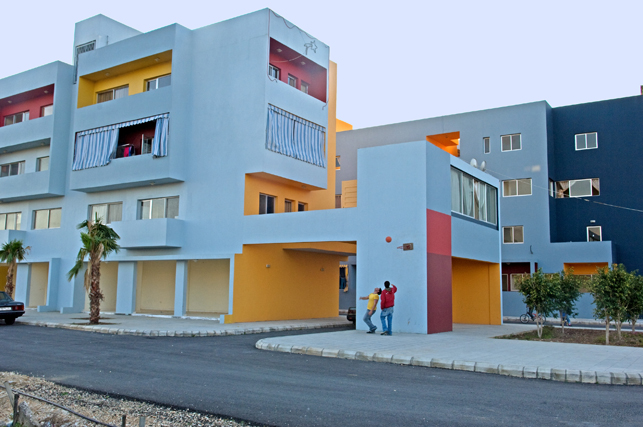
Hashim Sarkis ALUD. Housing for the Fishermen of Tyre. Tyre, Lebanon. 1998–2008. Image by Joumana Jamhouri

MoMA’s exhibition Small Scale, Big Change exposes the fallacy of opposing architecture’s autonomy to its social engagement.

Over the past twelve years, our office has been working with non-governmental organizations (NGOs) in rural Lebanon, designing projects related to social and economic development. After the 1975-1990 wars, many relief-based NGOs have shifted their attention to development.

October 7, 2010  |  Collection & Exhibitions
Rural Studio and the $20K House

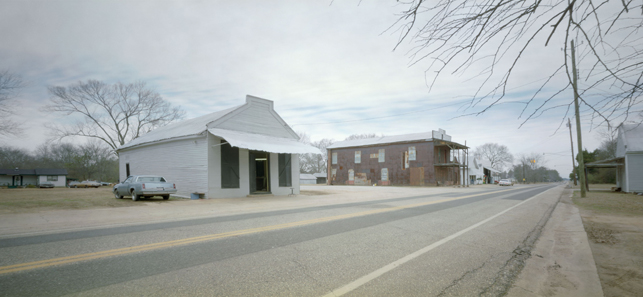
Main Street, Newbern, Alabama. Image: Timothy Hursley

The Rural Studio, currently one of eleven teams highlighted in MoMA’s exhibition Small Scale, Big Change: New Architectures of Social Engagement, is an undergraduate program of the School of Architecture at Auburn University. Based in Western Alabama’s Hale County, in a region known as the Black Belt, the Studio focuses on educating students while assisting an underserved population.

October 5, 2010  |  Collection & Exhibitions
Introducing Small Scale, Big Change

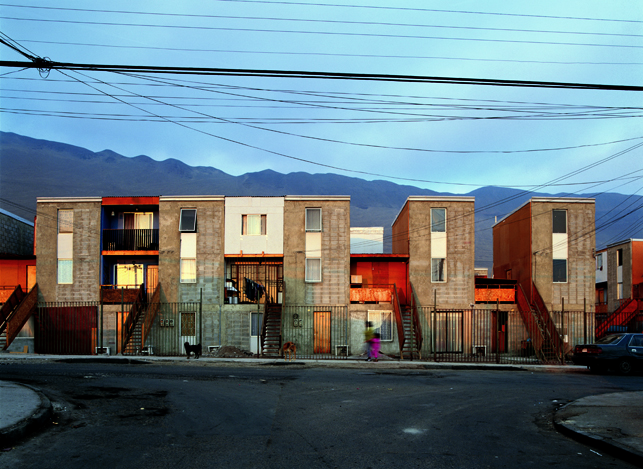
Elemental. Quinta Monroy Housing Project. Iquique, Chile. 2003–05. Image: Cristobal Palma

When I proposed the Small Scale, Big Change: New Architectures of Social Engagement exhibition in the fall of 2008, the housing crisis in the U.S. had just reached its peak. This crisis started from speculation on housing and developed into the biggest economic crisis in the U.S. in a long time, spreading out to many other countries and forcing millions into unemployment, a large number into poverty, and many even into homelessness.