
MoMA
Posts in ‘Film’
March 17, 2010  |  Film
Calling All Amateur Shutterbugs…

…your Bill Cunningham–inspired photo could win you a series pass to New Directors/New Films!
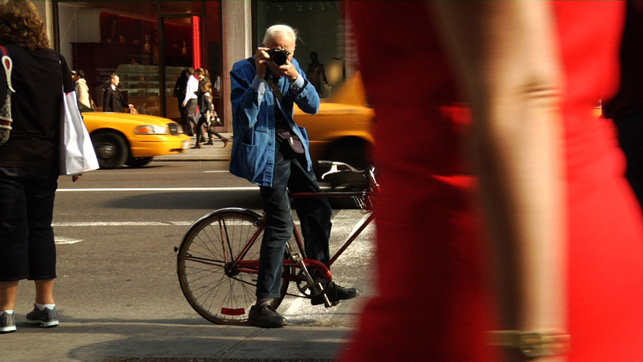
Bill Cunningham New York. 2010. USA. Directed by Richard Press. Image courtesy The New York Times and First Thought Films

Legendary New York Times photographer Bill Cunningham—now entering his ninth decade and still riding his Schwinn around Manhattan, snapping pictures of the people and events that captivate our city—stands out in a city of dedicated originals. He’s also the subject of the opening night film of New Directors/New Films 2010, jointly presented by the Film Society of Lincoln Center and MoMA. Now MoMA and FLSC want to give one lucky reader a chance to discover fresh work by emerging filmmakers with a series pass to the festival!

Here’s how it works: You take a picture of your fellow New Yorkers, inspired by Cunningham’s off-the-cuff, street-level style. (Think colorful, spontaneous—cell phone pics welcome!) We’ll pick one at random, and award the lucky photographer a series pass*, plus two tickets to see Bill Cunningham, New York at FLSC on Thursday, March 25.

March 10, 2010  |  Collection & Exhibitions, Film
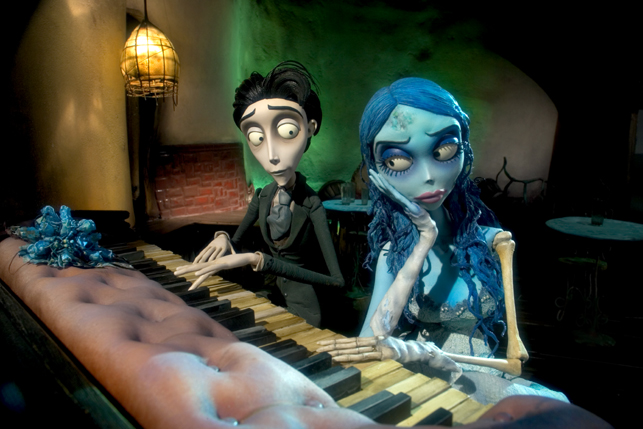
Arthur Freed, Vincente Minnelli…Tim Burton?

Corpse Bride. 2005. USA/Great Britain. Directed by Tim Burton and Mike Johnson. Photo courtesy of Warner Bros. Pictures

This year’s Academy Awards telecast paid tribute to horror films—a genre cited by the presenters as often neglected by the Academy—with a clip reel that featured select masterworks of cinema by directors such as Alfred Hitchcock, Stanley Kubrick, and Roman Polanski. As I watched the montage, I caught glimpses from Beetlejuice (1988), Edward Scissorhands (1990), and Sleepy Hollow (1999). Although I found their inclusion to be a bit incongruous among films like The Exorcist, Carrie, Friday the 13th, Nightmare on Elm Street, Scream, The Ring, and The Blair Witch Project, it nevertheless reaffirmed the popular perception of Tim Burton as a dark, gothic, and macabre filmmaker. Certainly, with Tim’s affinity for skeletons, graveyards, severed heads, and iron maidens—some of the recurrent motifs in his work—the classification of his films into the horror genre would surprise few. However, I propose another genre to be considered when examining Tim’s oeuvre: the musical film.

March 5, 2010  |  Film, Viewpoints
Cubicle Critic: Oscar-Nominated Documentary Shorts

The prized Academy Award® statuette. Image courtesy Oscar.com

“The Oscars are my Super Bowl”—it’s something of a cliché in our media-obsessed world, especially among twenty-something women such as myself, but there you have it anyway. I’m not a football fan, and to me March madness refers to the stir-craziness that inevitably accompanies the last weeks before spring. But a celebration of the silver screen, of stars established and emerging, of glamorous dresses and fashion flops—that I can get behind.

So it’s with particular relish that I see the annual screening of Academy Award–nominated short documentaries at MoMA each year. Apart from being an invaluable research tool for my local, all-in-good-fun Oscar Pool, seeing the nominees in some of the smaller categories is a great way to add some interest to the ever-lengthening Oscars telecast (not to mention the serious cinematic cred it garners you among your friends).

March 3, 2010  |  Collection & Exhibitions, Film
Searching for Tim Burton

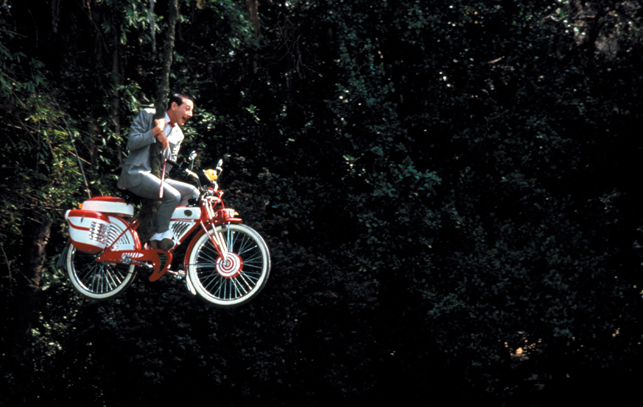
Pee-wee’s Big Adventure. 1985. USA. Directed by Tim Burton. Photo courtesy Warner Bros/Photofest. © 2010 Warner Bros.

The search for Tim Burton took us to four Hollywood studio archives, five independent production company collections, and four private lenders, exposing us to an interesting variety of archival situations. Studio archives are traditionally housed on the lots where their films and television programs are shot, or, if their collections are large enough and the demand great enough, in off-lot research centers and warehouses. When we visited Twentieth Century Fox and the Disney Corporate archives, we got to stroll the studio grounds, and we were hoping for a glimpse of a production in progress through the open door of a soundstage—readers who can recall Paul Reubens on a bicycle being chased around the Warner Bros lot at the end of Pee-wee’s Big Adventure (1985) will have a picture of the craziness we were expecting. But as it turned out, the lots were as quiet as an empty office park on summer weekends. Disney’s Animation Research Library is a sleek facility away from the studio, and the Warner Bros storage site is located in an industrial area. At each we were assigned teams of archive specialists who showed us carefully preserved art and film props. Half of the Los Angeles area sites we visited were in Tim’s hometown of Burbank, CA, which he used as a muse for such early films as Edward Scissorhands (1990) and The Nightmare Before Christmas (1993), so we made a particular point of soaking up the atmosphere of that city.

February 22, 2010  |  Film
Documentary Fortnight: MoMA’s International Festival of Nonfiction Film, Week 2

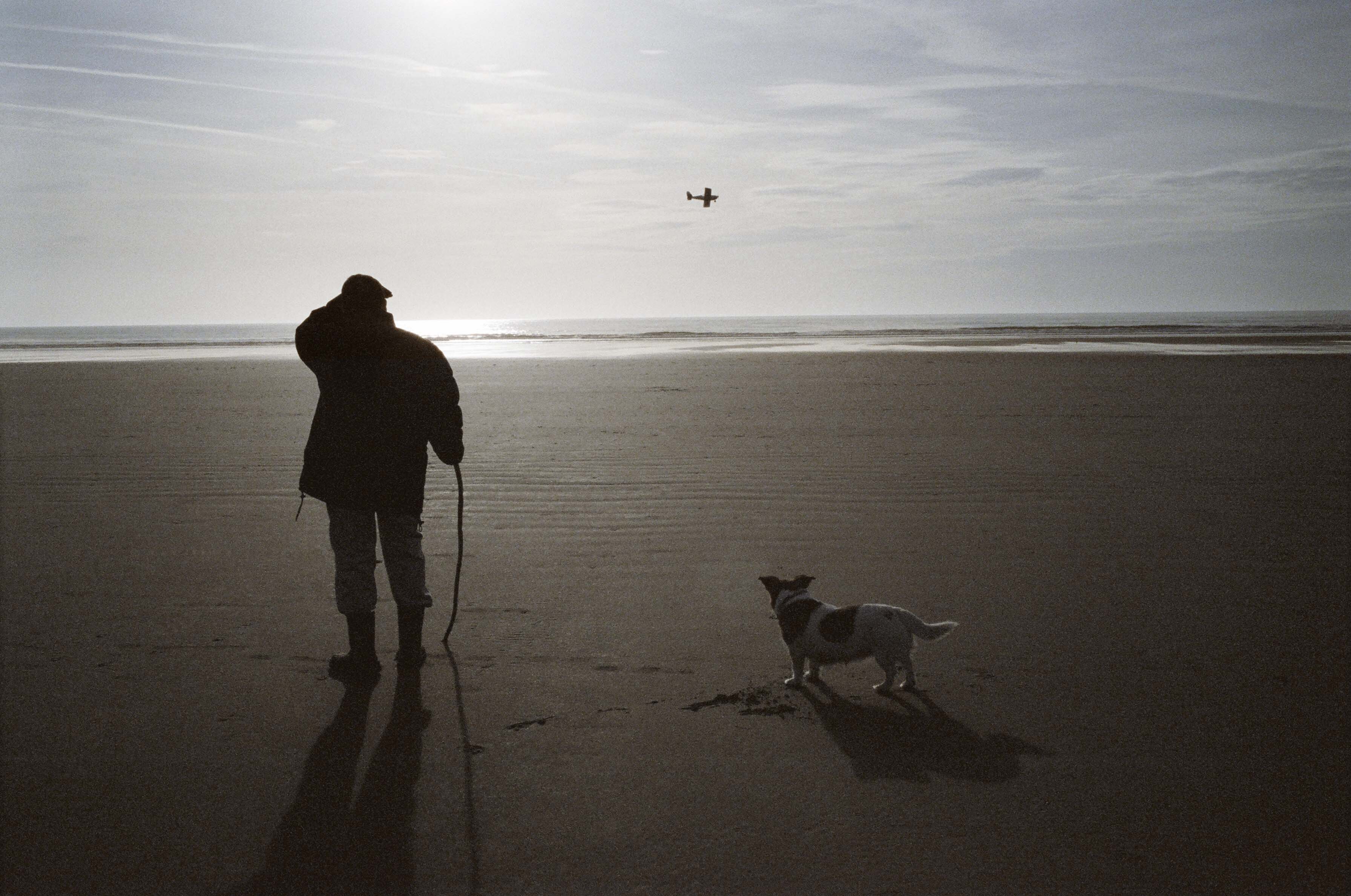
Sleep Furiously. 2008. Great Britain. Directed by Gideon Koppel

The second week of Documentary Fortnight begins this Wednesday, February 24, and runs through March 3. The selections now turn to look at communities around the world, including a special thematic focus on Iran and Afghanistan. First up is Gideon Koppel’s Sleep Furiously. The film depicts Treufurig, a hill farming community in Wales where, many years ago, Koppel’s parents found a home as refugees. The daily life, landscape, and mannerisms of the people and place are captured with attention to small details such as conversational patter, eccentric hobbies, and music by Aphex Twin.

February 17, 2010  |  Film
Documentary Fortnight: MoMA’s International Festival of Nonfiction Film

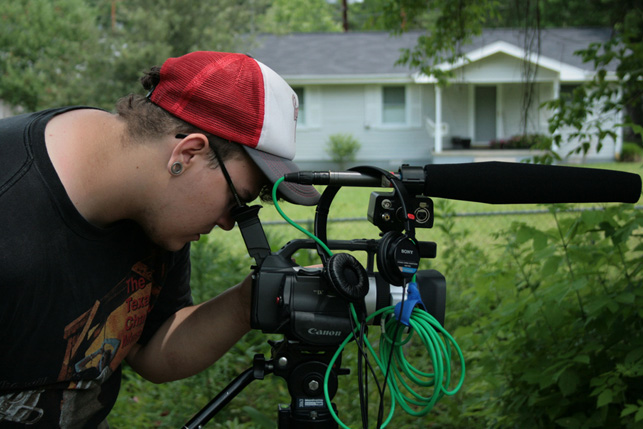
Appalshop's Appalachian Media Institute youth intern

Starting tonight and running through March 3, this year’s Documentary Fortnight continues in its mission to reveal a wide range of approaches in nonfiction filmmaking while highlighting the art of documentary storytelling. The series reflects on the creative act of documentary filmmaking and celebrates the ingenuity, dedication, and persistence of documentary filmmakers. It is our hope that you can attend any one or more of the screenings and come away entertained, enlightened, and enthralled with the new directions in nonfiction film. Most of the documentaries are U.S. or New York premieres and are presented by the directors and/or participants, offering filmgoers an intimate look at the risks filmmakers take in getting these stories told. Perhaps you’ll even be inspired to make your own documentary film!

To help you make your choices, this year’s Documentary Fortnight festival includes several thematic programs as well as an international selection of films.

February 10, 2010  |  Collection & Exhibitions, Film
The Last of Its Kind

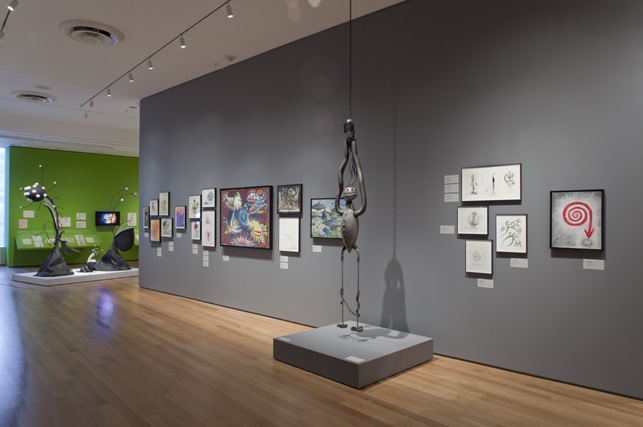
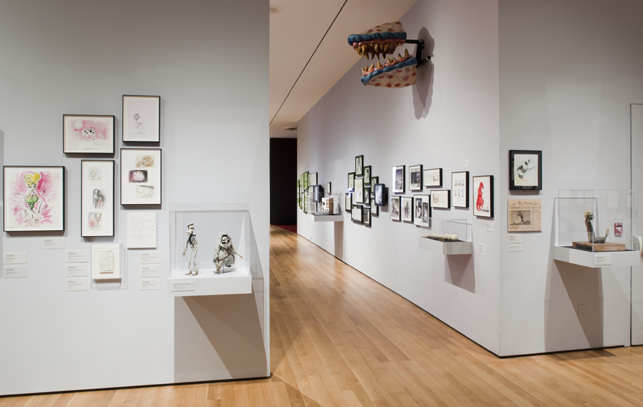
Installation view of Tim Burton at MoMA

As we approach the midpoint of the five-month Tim Burton exhibition (November 22, 2009–April 26, 2010), I am reflecting on what may be our visitors’ first impressions of the show. Hopefully those who came to MoMA familiar with Tim’s films—whether they know him as the director responsible for cult favorite Edward Scissorhands (1990), the imaginative and innovative creator of The Nightmare Before Christmas (1993), the mischievous mind behind the irreverent Mars Attacks! (1996), or the filmmaker who brought the tale of tonsorial terror that is Sweeney Todd (2007) to the big screen—were pleasantly surprised to find another Tim Burton on display alongside the anticipated props and storyboards. Approximately 70 percent of the works in the exhibition had never been published or shown in public, and it is these works—projects both personal and professional, realized on paper and canvas, or via installations and sculptures—that give visitors a view of Tim as illustrator, cartoonist, photographer, and writer of verse, among other creative roles. These diverse works are united by their intimate, subjective nature; each conveys Tim’s distinctive way of viewing his world and the characters who populate it. The revelation of the private art of Tim Burton to MoMA’s visitors may be similar to my own personal revelation during our first meeting with Tim at his studio in London almost two years ago….

January 27, 2010  |  Collection & Exhibitions, Film
Lights, Camera, Exhibition: Making Tim Burton

Installation view including Sandworm Jaws prop from the feature film Beetlejuice (1988)

I like to compare the process of organizing a large-scale museum exhibition like Tim Burton to the process of producing a film. (What can I say, I’m a film person!) You start with an idea, and then research the subject as if you were writing a script—in the case of a gallery show, this means determining what art, objects, media, and documentation are available, and how they can most effectively be used to tell a “story.” Ideally, you want your interpretation of the materials to seem fresh and relevant to a contemporary audience. Typically you negotiate for the loan of materials to your show from various archives around the world—sort of like signing “stars” to a film—and then work with teams of exhibition designers, graphic artists, lighting technicians, A/V folks, carpenters, and so forth to bring your show to life in a gallery, just as the director and producers collaborate with a production department on the lot of a film studio during the making of a movie.

January 13, 2010  |  Collection & Exhibitions, Film
The Colorful Tim Burton
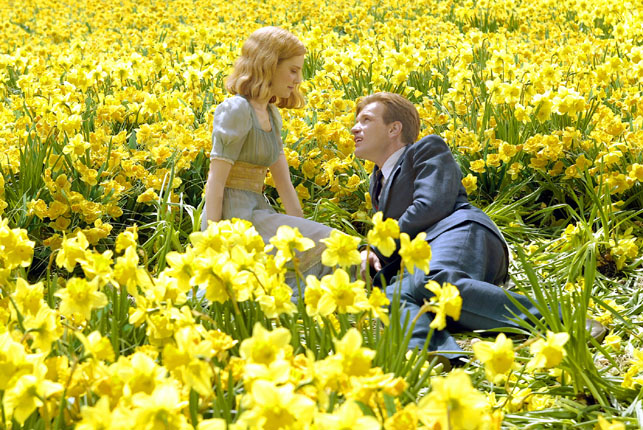
Sandra (Alison Lohman) and Edward (Ewan McGregor) are young and in love in Columbia Pictures’ fantasy-rich family drama Big Fish, directed by Tim BuSandra (Alison Lohman) and Edward (Ewan McGregor) are young and in love in the fantasy-rich family drama Big Fish. Directed by Tim Burton. Columbia Pictures. Photo credit: Zade Rosenthalrton. Photo credit: Zade Rosenthal

Big Fish. 2003. USA. Directed by Tim Burton. Columbia Pictures. Photo credit: Zade Rosenthal

One of the perks of having an exhibition on view is the excuse to go into the Museum’s galleries every day (one of my curatorial responsibilities is to regularly check on my exhibitions). After poring over the 700+ works in the Tim Burton gallery exhibition, I often make it a point to visit other shows (to bring my mind out of the Burton zone, as I call it), whether to take in my favorite painting (Piet Mondrian’s Broadway Boogie Woogie, by the way) or to check out a new special exhibition.

December 24, 2009  |  Film
The Ingmar Bergman Film Collection at MoMA
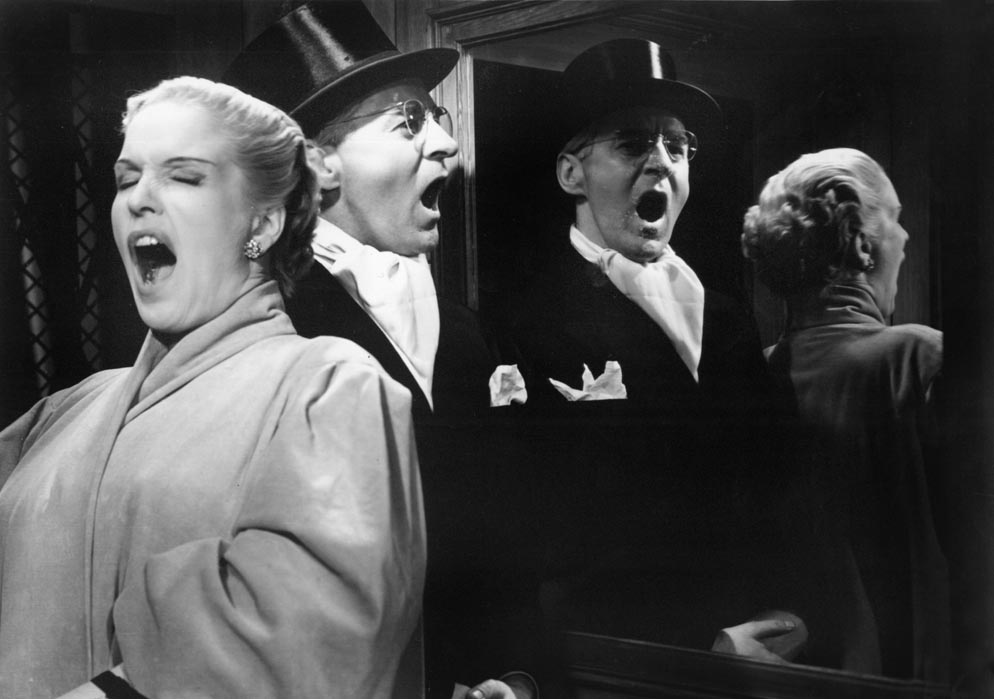
Kvinnors väntan (Secrets of Women). 1952. Sweden. Written and directed by Ingmar Bergman. Shown from left: Eva Dahlbeck, Gunnar Björnstrand . © Janus Films. Photo courtesy Janus Films/Photofest

Kvinnors väntan (Secrets of Women). 1952. Sweden. Written and directed by Ingmar Bergman. Shown from left: Eva Dahlbeck, Gunnar Björnstrand. Gift Janus Films. © Janus Films. Photo courtesy Janus Films/Photofest

The Museum of Modern Art began collecting the films of Swedish filmmaker Ingmar Bergman (1918–2007) in the late 1960s, shortly after the introduction of his ubiquitous art house films in the American theatrical market by the pioneering distributor Janus Films. Through a forty-year collaboration with Janus Films, MoMA has actively acquired Bergman’s films and created preservation materials on such titles as Kvinnors väntan (Secrets of Women) (1952) and Jungfrukällan (The Virgin Spring) (1959). A recent analysis of MoMA’s Bergman holdings totals more than 350 pieces of film materials, representing thirty titles from across the relevant filmography.