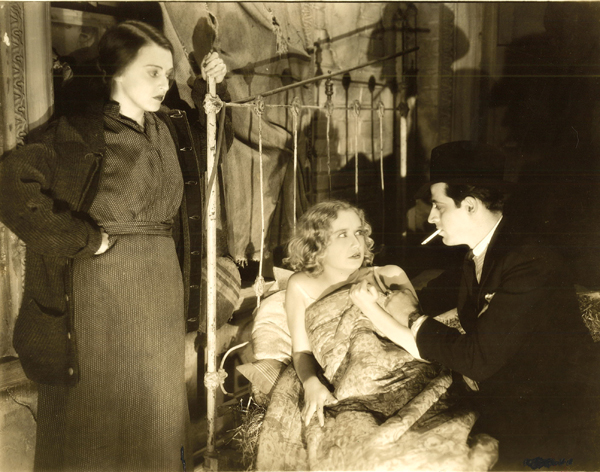
The Story of Temple Drake. 1933. USA. Directed by Stephen Roberts


The Story of Temple Drake. 1933. USA. Directed by Stephen Roberts

For the past ten years, high school students have been attending free Friday night film screenings at MoMA, spending some time after each film talking with curators, educators, and filmmakers. Recently we’ve experimented with different types of events for teens, such as artists’ talks, gallery activities, and art-making workshops, which means there’s something happening for young artists almost every Friday from October through May. Greeting visitors as they arrive for these events is an impeccably dressed young filmmaker named Michael Brawley, who has been an essential part of the program—first as an attendee, then as a volunteer—for years. We asked Michael his opinion about film, the Oscars, MoMA’s Teen Programs, and more.
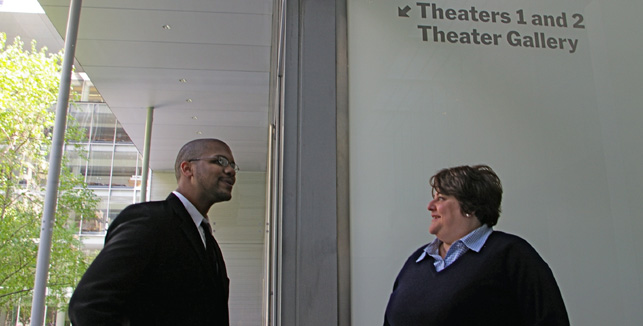
Michael Brawley and Anne Morra at MoMA
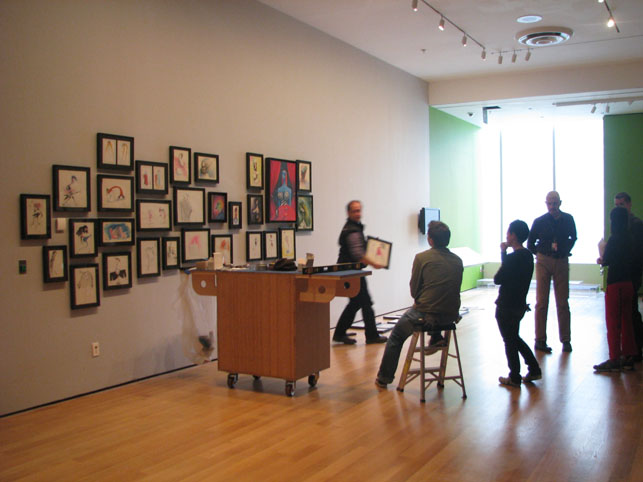
Curator Ron Magliozzi and the exhibitions team install Tim Burton
The installation of the Tim Burton show took thirteen days, beginning on October 28, 2009, and ending (save some inevitable last-minute tweaking) on Friday, November 13. As the first institution given the opportunity to exhibit Burton’s unseen work, the urge to present a comprehensive selection was hard to resist. With 716 pieces of framed art, objects, and media to put in place, the pressure was on—especially since we knew that a series of special openings had been scheduled before the general public arrived: Tim’s private opening on November 16 for his friends and collaborators, a Department of Film benefit honoring Tim on November 17, and the opening reception on November 18. The realization that we would soon be hosting Johnny Depp, Danny Elfman, Helena Bonham Carter, Catherine O’Hara, Bo Welch, Glenn Shadix, Diane Wiest, Colleen Atwood, Danny DeVito, Jeffrey Jones, Crispin Glover, and others—not to mention Tim himself—added to the sense of excitement shared by everyone on the MoMA installation team.
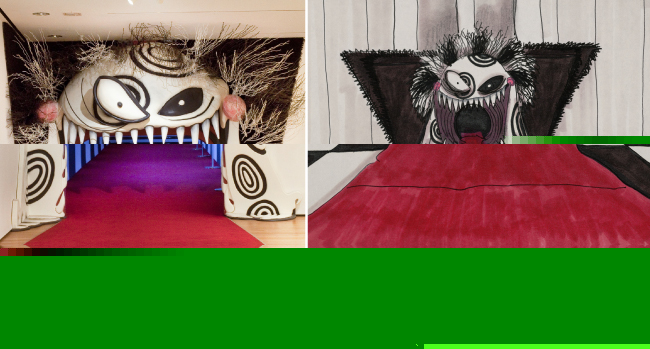
Three-dimensional rendering of the entrance to Tim Burton (left) by TwoSeven, Inc., based on an untitled drawing (right) by Tim Burton for the unrealized project Trick or Treat (1980)
Tim Burton was one of the most challenging exhibitions our graphic design department has had the pleasure of fully developing. It explores a wide spectrum of Tim Burton’s creative work, including drawings, paintings, photographs, moving images, concept art, storyboards, puppets, maquettes, costumes, and cinematic ephemera. For the exhibition graphic design, our goal was to take all these diverse visual references and distill them into a simple graphic treatment that celebrated Burton’s work.
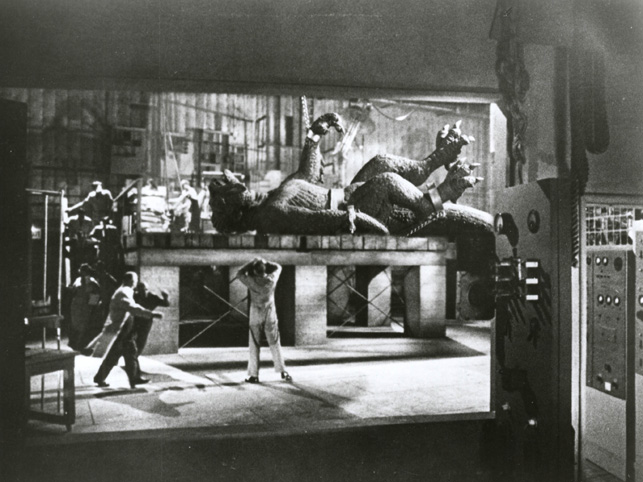
20 Million Miles to Earth. 1957. USA. Directed by Nathan Juran. Film Stills Archive, The Museum of Modern Art, New York
It was love at first sight for Tim Burton and stop-motion animation. At an early age, Burton was drawn to films such as Nathan Juran’s 20 Million Miles to Earth (1957) and Don Chaffey’s Jason and the Argonauts (1963), which featured innovative animation by special effects master Ray Harryhausen. Burton responded to the sense of wonder the technique conjured in its audiences and was inspired to create his own stop-motion animated films, such as a 1971 super-8mm short featuring cavemen and dinosaur figures (on view in the MoMA gallery exhibition) that invokes When Dinosaurs Ruled the Earth (1970, directed by Val Guest, and animated by Jim Danforth).
Though I’m still a believer, I’m a bit too old to send a want list to Santa each year. But if I did, at the top of that list would be a Joseph Cornell box. Any box would do. Even one of the later collages from the 1960s would be just fine by me. But since Santa bestows linens and cooking utensils upon me these days, I keep my nose pressed against the glass on the Cornell boxes on exhibition at MoMA. (No, not really!)
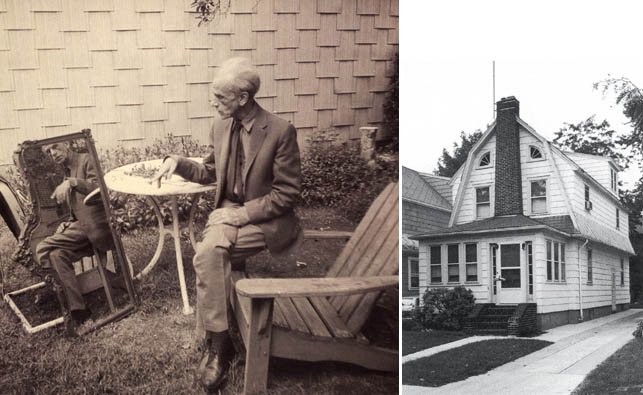
Left: Joseph Cornell in his backyard in Flushing, New York, 1969. Right: Joseph Cornell’s home at 3708 Utopia Parkway, 1976
So imagine my excitement in 1995 when The Joseph and Robert Cornell Memorial Foundation donated a comprehensive gift of film materials made and collected by Joseph Cornell to MoMA’s Department of Film. In this collection are films made by Société Lumière, Georges Méliès, and Pathé Frères. These early film pioneers imbued their inventive cinematic efforts with magic, whimsy, fairies, and other-worldly adventures. Cornell—a sometimes mysterious figure in the New York art world who is best known for his collages, box constructions, and experimental films—was drawn to the escape that these enchanting moments of cinematic exploration afforded him while he remained firmly rooted to the middle-class landscape of Utopia Parkway in Flushing, Queens. If film-going was a treasured diversion for Cornell—who was also a frequent visitor to the Museum’s Library, Archives, and galleries and who engaged in lively, revealing, and surprisingly humorous correspondence with Museum personnel—then just imagine his delight in corresponding with Iris Barry, the first curator of the MoMA Film Library and one of the most influential personalities in the world of film as art.
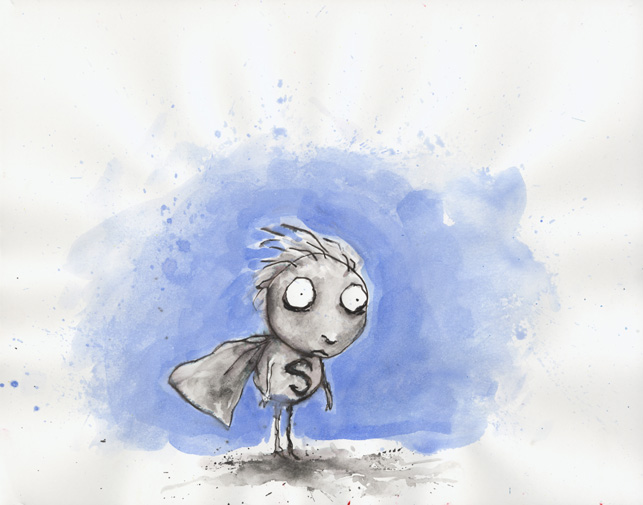
Tim Burton. Untitled (The Melancholy Death of Oyster Boy and Other Stories). 1998. Pen and ink and watercolor on paper, overall: 11 x 14" (27.9 x 35.6 cm). Private collection. © 2009 Tim Burton
We found Tim Burton in London. Just as was the case with the Museum’s Pixar exhibition in 2005, we discovered that he, too, held a body of work that had never before been seen by the public. In Tim’s case, there was childhood ephemera, high school papers, cartoons, early 8mm and 16mm amateur films, sketchbooks, drawings, verse, art for a number of unrealized film and book projects, work related to well-known feature films, and material cut from his 1997 book The Melancholy Death of Oyster Boy. Keeping things new and fresh would not be a major concern, and we recognized that we would be relying less on studio archives than we had originally expected. The obvious issues were what to select from a personal archive that contained close to 10,000 elements, and how to make sense of it all.
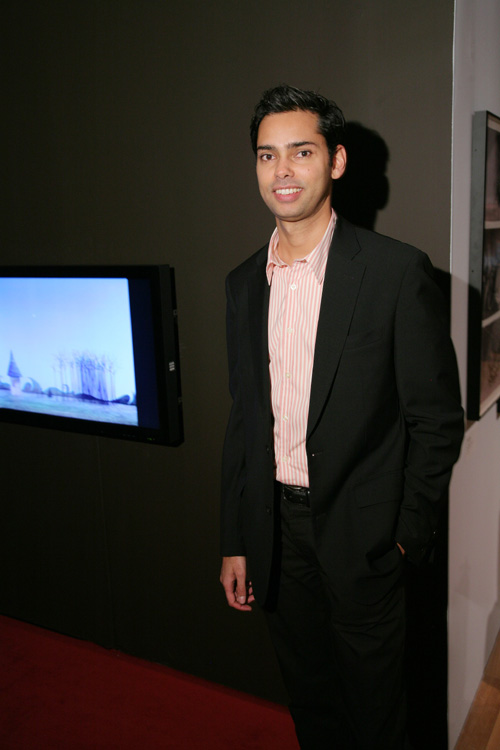
Chief Curator of Film Rajendra Roy
Last week we asked you to submit your burning questions about the New Directors/New Films Festival or about MoMA’s film program in general. In addition to quite a few inquiries about how to get your film into MoMA’s collection (don’t worry I answered one of those), your curiosity covered quite a range of subjects, so I’ve done my best to answer five of your questions—as well as one irresistible bonus question—as selected by the MoMA blog editors. Thank you all for your interest!
1. What criteria do you employ in choosing films for the festival? Political, artistic, plot, cultural, etc.? [from Jules Margalit]
The essential, and perhaps only, unifying criterion for a film in New Directors/New Films is that it be innovative. This of course can manifest in many ways; often it is structurally, but my no means universally so. Our opening film, Bill Cunningham New York, is a traditional portrait doc. It is the subject himself that is sui generis. Director Richard Press has the presence of mind to allow his film to exist as an open road for Cunningham to navigate (on his Schwinn). Alexei Popogrebsky’s How I Ended This Summer, for example, is formally as well as narratively innovative, immersing us in a landscape that is brand new.
We asked you to take inspiration from Bill Cunningham’s off-the-cuff, street-level style, and post pictures of your fellow New Yorkers on our New Directors/New Films Facebook page. What resulted was a colorful patchwork of images—some funny, some quirky, some beautiful and poignant—as varied as New York City itself. Thank you all for your submissions!
A winner was chosen randomly, and the lucky photographer won a series pass, plus two tickets to see Bill Cunningham, New York at the Film Society of Lincoln Center on Thursday, March 25. Congrats to our winner, Andrew Piccone!

And here are a few selected entries:
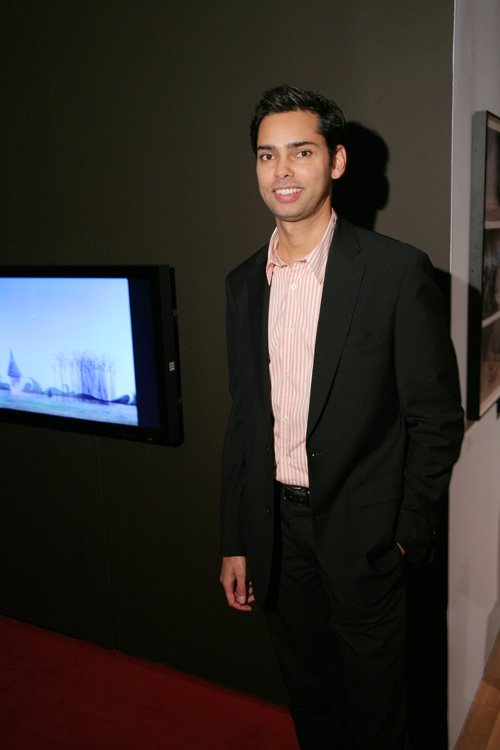
Rajendra Roy. Photo: Scott Rudd
With preparations underway for New Directors/New Films—now less than a week away, the festival has been generating buzz since the lineup was announced earlier this month—and a nice write-up in yesterday’s New York Times piece about young curators making waves in New York City, Rajendra Roy, MoMA’s Chief Curator of Film, is having quite a week. That’s why we’re thrilled he’s agreed to answer some of our readers’ questions in what we hope will be an ongoing feature of our blog. Our curators are a varied and fascinating bunch, and from the looks of our comments, Facebook page, and Twitter feed, so are our online fans. Why not bring the two together and spark a conversation?
So, think about what you’ve always wanted to know about the New Directors/New Films festival or about MoMA’s film program, and submit your questions via comments to this blog post. We’ll select the five most intriguing questions, and Raj will answer them here next Friday, so stay tuned!
If you are interested in reproducing images from The Museum of Modern Art web site, please visit the Image Permissions page (www.moma.org/permissions). For additional information about using content from MoMA.org, please visit About this Site (www.moma.org/site).
© Copyright 2016 The Museum of Modern Art