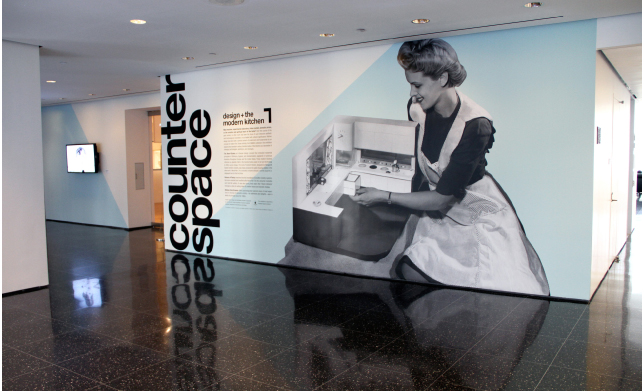
I find that the process of many design jobs is a journey between two extremes, both of which are usually to be avoided, but if you strike the right balance, you end up in some interesting places. Finding the graphic identity for the exhibition Counter Space: Design and the Modern Kitchen</a> was a classic example.
Posts in ‘Collection & Exhibitions’
Learning Online: MoMA’s Courses Go Digital

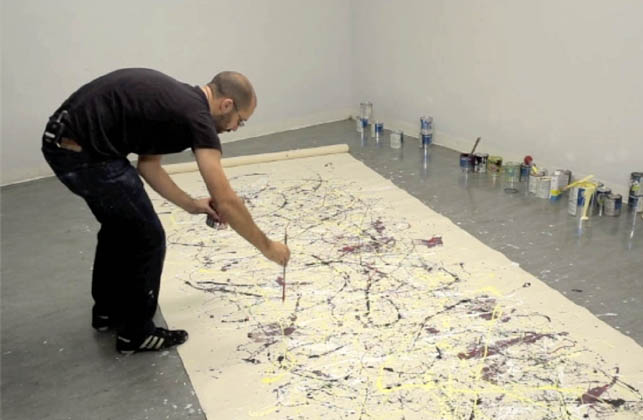
Independent Conservator and Instructor Corey D’Augustine demonstrates Jackson Pollock’s painting techniques in the online course Materials and Techniques of Postwar Abstract Painting.
MoMA’s Education Department prides itself on crafting personal experiences with works of art for our visitors. In exploring new ways to enhance these experiences, we were surprised to find that video has a remarkable ability to help us focus our gaze in a way that is often very difficult to do in the galleries. It might seem like a strange concept—that looking at a work of art on your computer screen would help you to look and think about art more deeply—but this is precisely what we discovered as we developed two online courses over the last year.
Kitchens of the Future

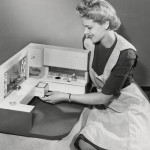
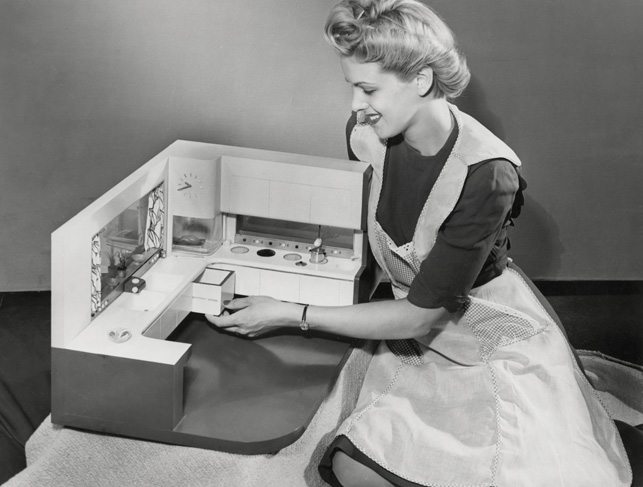
Barnes & Reinecke (Chicago, established 1934). Publicity photo for Future Kitchen scale model. c. 1946. Silver gelatin print. The Museum of Modern Art. Architecture and Design Study Collection. Photo: Charles McKinney, Chicago
If you have been to visit Counter Space here at the Museum, then you have already met this woman. We do not know her name—though we’d welcome any information out there!—but her image, blown up from floor to ceiling, provided a perfect photo-mural for our title wall.
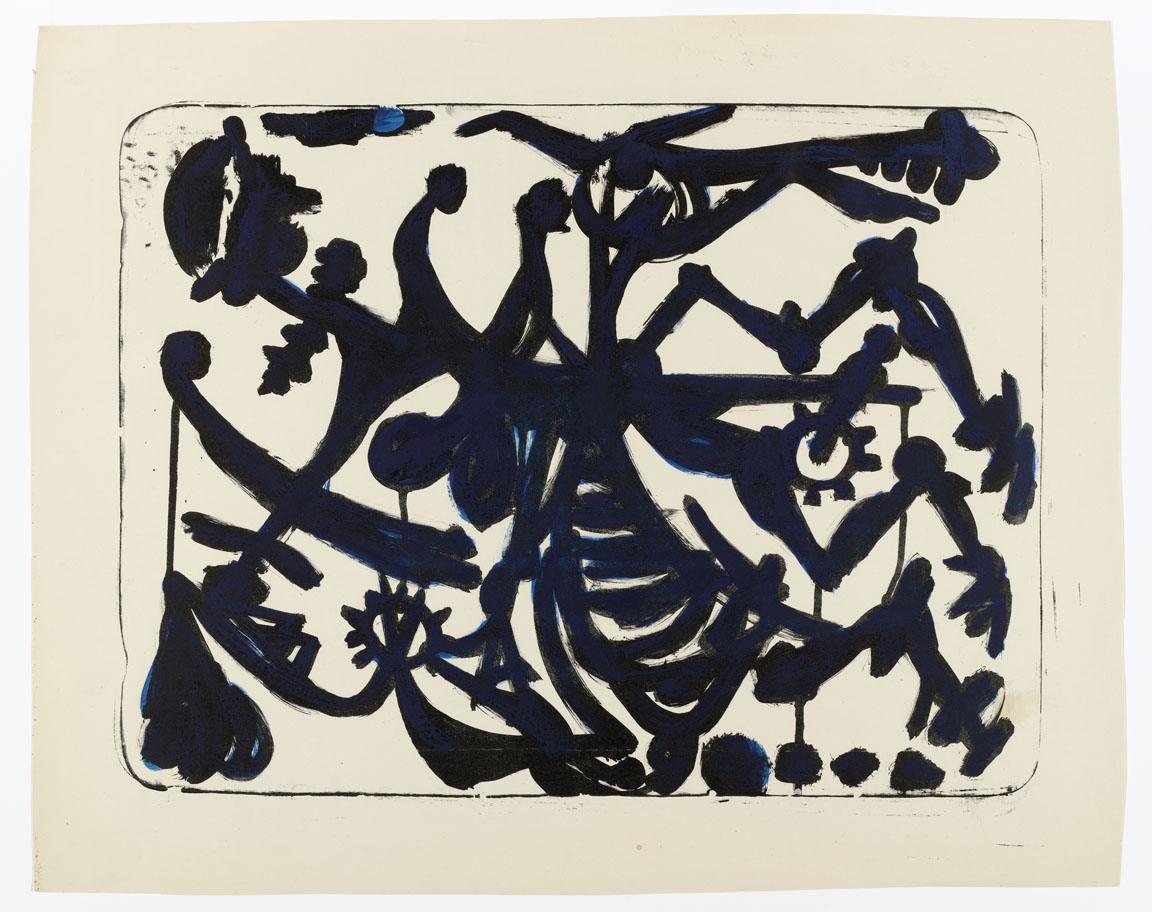
David Smith’s Don Quixote

David Smith. Don Quixote, state I. 1952. Lithograph. Publisher: the artist, New York. Printer: Michael Ponce de Léon and Margaret Lowengrund, New York. Edition: 14. The Museum of Modern Art. Stephen F. Dull Fund, 2010
I’ve written before about some of the various ways that works are acquired for MoMA’s collection, a primary one being in preparation for upcoming exhibitions. Abstract Expressionist New York, opening here next month, provided one such opportunity.
You’ll Always Find Me in the Kitchen at Parties
Working on the Counter Space exhibition, particularly in relation to the third section, Kitchen Sink Dramas, reminded me of an obscure British pop song of thirty years ago.
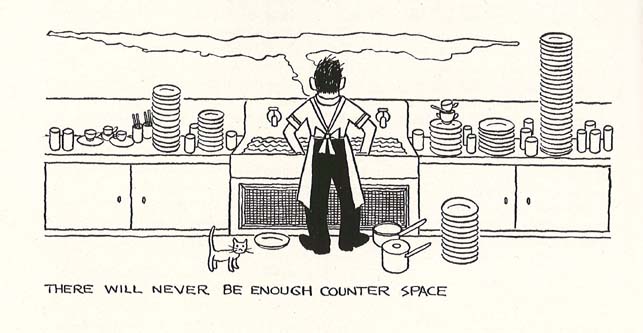
There Will Never Be Enough Counter Space…

Hello, Juliet and Aidan here. We’ll be posting here regularly to share behind-the-scenes stories and to expand on themes and objects explored in the Counter Space exhibition, as well as to feature some bits that did not make the final cut.
MoMA and the World: The International Program

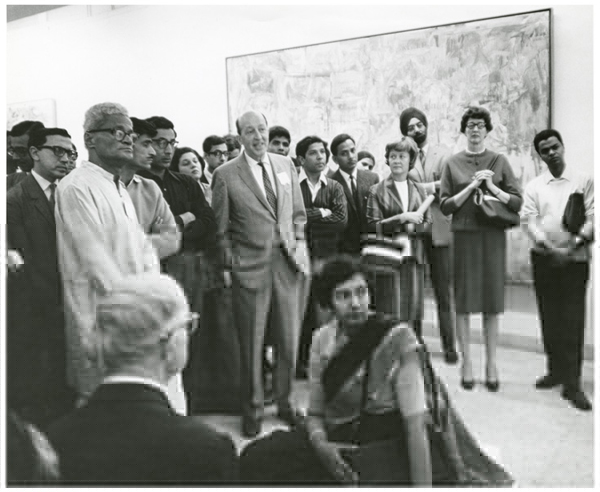
Clement Greenberg speaking in New Delhi in 1967 at a presentation of the MoMA exhibition Two Decades of American Painting
In 1952, The Museum of Modern Art established the International Program of Circulating Exhibitions, which was supported by a grant from the Rockefeller Brothers Fund, with the aim of sending exhibitions to museums around the world. The following year, the International Council was organized to provide long-term financial support to the program.
Amy Horschak: In light of MoMA’s upcoming installation Abstract Expressionist New York and the exhibition of many of the “AbEx” artists abroad by the International Program (IP) in the 1950s, can you comment on the often-made claims that the IP was, at that time, part of a CIA project?
Bruce Nauman’s Days: Perspectives from the Curator and Visitors

Bruce Nauman. Days (installation view). 2009. One audio source consisting of seven stereo audio files, fourteen speakers, two amplifiers, and additional equipment. Dimensions variable. Audio (fourteen channels). Continuous play. The Museum of Modern Art, New York (Committee on Painting and Sculpture Funds, Gift of The Mimi and Peter Haas Fund, Agnes Gund, The Hess Foundation, Michael Ovitz, Jerry I. Speyer, Marie-Josée and Henry R. Kravis Foundation, Donald B. Marron, and The Jill and Peter Kraus Contemporary Acquisition Fund) and Emanuel Hoffmann Foundation, Basel, Switzerland.
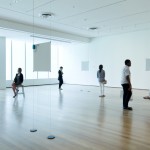
Bruce Nauman’s exhibition Days, which currently occupies MoMA’s third-floor special exhibition gallery, provokes a reaction, if nothing else. One need wait only a moment in the sun-dappled corridor outside the entrance to witness a gallimaufry of expressions—grins, scowls, exclamations, sighs, guffaws—on the faces of people as they exit.

MA at MoMA
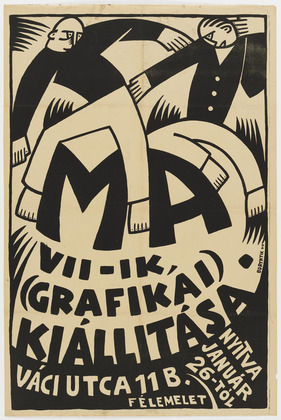
While we always believe in the works we propose for addition to the MoMA collection, some works stand apart in extraordinarily strong ways. They speak to us because of their great historical significance, aesthetic power or, in my case with the above poster, because of true love.
Unpacking Fluxus: The Joke’s On Us

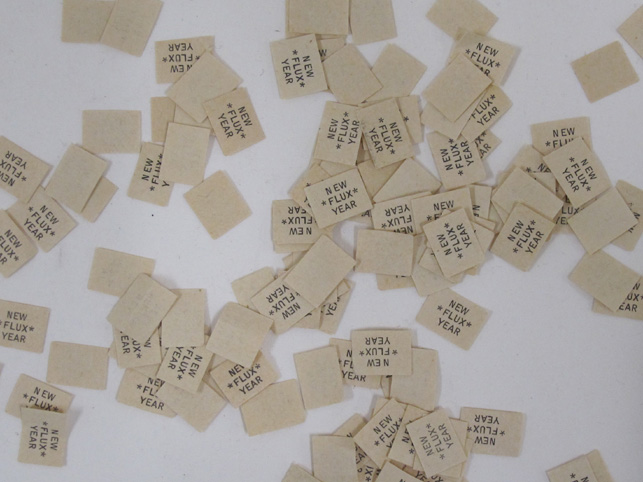
Confetti from George Maciunas’s New Flux Year. c. 1967. The Museum of Modern Art. The Gilbert and Lila Silverman Fluxus Collection Gift, 2008
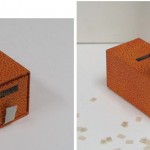
Upon opening an orange faux-reptile-skin box marked only with the typed words “top” and “pull,” we received quite a surprise: out jumped a coiled toy snake and a shower of confetti printed with the words “New Flux Year.” Rattled, we soon found that the joke was on us, as we were left returning every last scrap of paper, along with the spring-loaded snake, back into the box before shutting it carefully.
If you are interested in reproducing images from The Museum of Modern Art web site, please visit the Image Permissions page (www.moma.org/permissions). For additional information about using content from MoMA.org, please visit About this Site (www.moma.org/site).
© Copyright 2016 The Museum of Modern Art