In this video interview, Veronica Roberts, Curatorial Assistant in the Department of Painting and Sculpture, discusses her exhibition Lee Bontecou: All Freedom in Every Sense, one of the exhibitions celebrating the landmark publication of Modern Women: Women Artists at The Museum of Modern Art.


Posts in ‘Collection & Exhibitions’

August 5, 2010
|
Artists,
Collection & Exhibitions
The Drawn World of Martín Ramírez
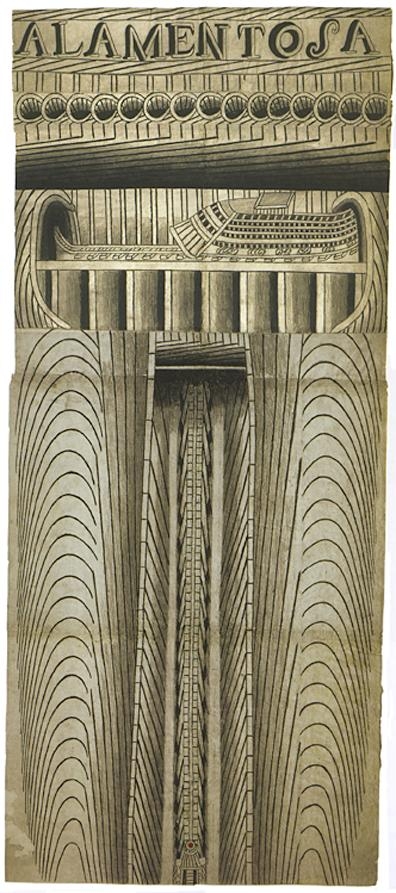
Martin Ramirez. Untitled (Alamentosa). c. 1953. Pencil and watercolor on paper. The Museum of Modern Art. Latin American and Caribbean Fund and Committee on Drawings Funds. © Estate of Martín Ramírez. Photo courtesy Ricco/Maresca Gallery, New York, NY.
I first encountered the work of Martín Ramírez in the winter of 2007, when our neighbors at the American Folk Art Museum mounted a major retrospective of his drawings and collages. Making my way through the exhibition, I was struck by the vibrant landscapes and recurring iconography that appeared to reflect both twentieth-century modernization and the folk traditions of the artist’s native Mexican homeland: images of Madonnas; horseback riders, or jinete; and, as seen in this untitled work, a recent MoMA acquisition and the first work by Ramírez to enter the collection, trains entering and exiting tunnels.
July 29, 2010
|
Collection & Exhibitions
Recent Acquisition: Bernd and Hilla Becher’s Winding Towers
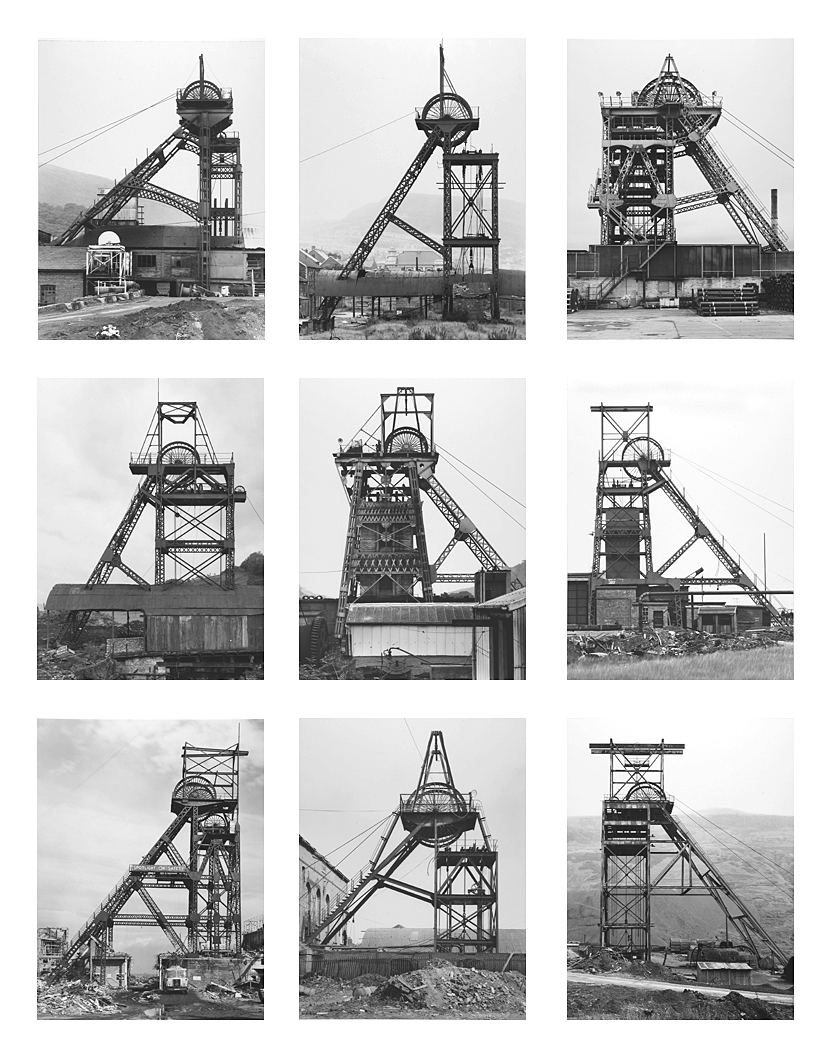
Bernd and Hilla Becher. Winding Towers. 1966-97. Nine gelatin silver prints, overall. The Museum of Modern Art. Acquired in honor of Marie-Josée Kravis through the generosity of Robert B. Menschel. © 2010 Hilla Becher
The addition of a major work to the collection is always an exciting event at MoMA. Bernd and Hilla Becher’s nine-part photographic work Winding Towers (1966–97) is one such highlight among recent acquisitions in the Department of Photography.
July 14, 2010
|
Artists,
Collection & Exhibitions
From a Whisper to a Scream: Following Yoko Ono’s Instructions
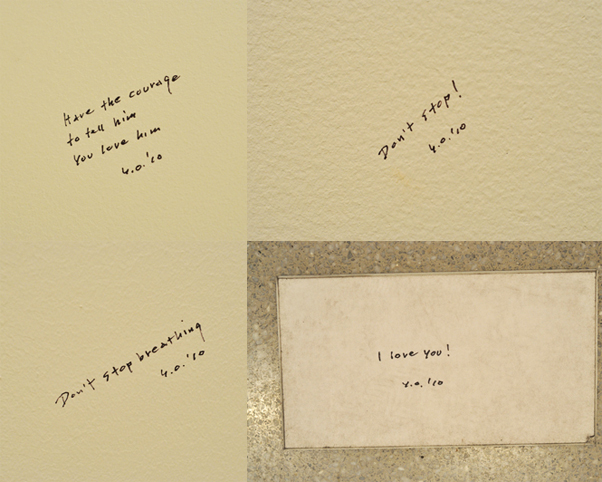
Yoko Ono. Selections from Whisper Piece (four shown of sixteen total; installation view at The Museum of Modern Art). 2010. Pen on wall, dimensions variable. Collection of the artist. Photo: Jason Persse
I first heard about Yoko Ono’s so-called “instruction pieces” as a high school student, when a friend told me the (possibly apocryphal, certainly embellished) story of Ono’s first meeting with John Lennon. History according to the poorly fact-checked lunchtime ramblings of rock ‘n’ roll–obsessed seventeen-year-olds: During a visit to London’s Indica Gallery in 1966, Lennon encountered Ono’s Ceiling Painting. Climbing to the top of a tall, white ladder, he used a magnifying glass dangling from a thread to read a message printed in tiny letters on the ceiling: “YES.” Profoundly moved by the work’s unalloyed positivity, he demanded to meet the artist right away.
June 23, 2010
|
Collection & Exhibitions
Repose and Revelry: Pole Dance at MoMA PS1
–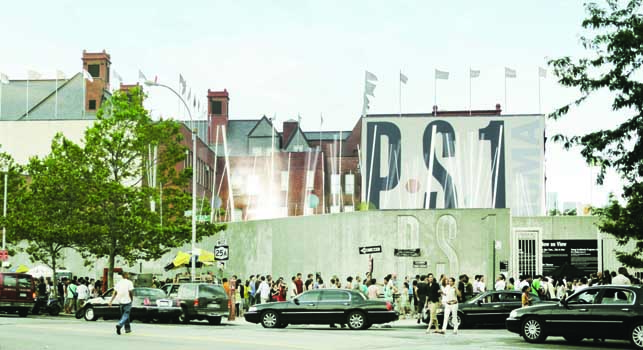
Rendering of Pole Dance at MoMA PS1. Designed by Solid Objectives–Idenburg Liu (SO–IL). Photo courtesy SO–IL
Every summer weekend, thousands of people pour into MoMA PS1’s courtyard to enjoy the best in art, architecture, and music during the weekly Warm Up parties. As the winner of this year’s Young Architects Program competition, which provides the setting for Warm Up, we took the opportunity to further contemporary explorations of architecture’s potential to create sensory-charged environments, rather than finite forms.

June 23, 2010
|
Artists,
Collection & Exhibitions
A Closer Look at Robert Ryman’s Classico 5

Robert Ryman. Classico 5. 1968
My colleagues in the Department of Drawings and I are often asked about our criteria for defining what a drawing is. The short answer is that a drawing is typically defined as any unique (non-print) work of art with a paper material support. Taking this question one step further, I often think: Why did the artist use paper and not, for instance, a canvas? In what ways do the materials used by an artist lend themselves to the work, and how do they play out in the composition itself?
June 17, 2010
|
Artists,
Collection & Exhibitions
The Imaginative Universe of Lee Bontecou’s Sculpture
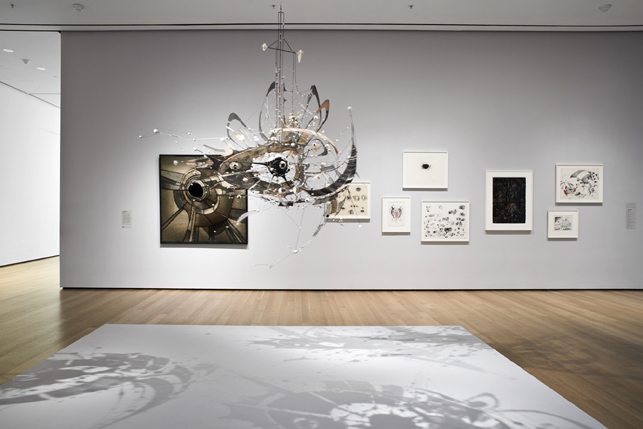
Installation view of the exhibition Lee Bontecou: All Freedom in Every Sense, on view at The Museum of Modern Art through August 30, 2010. Photo: Thomas Griesel.
Slowly whirling in space at the center of Lee Bontecou: All Freedom In Every Space, now on view on the fourth floor of the Museum, is a suspended sculpture that the artist created over an eighteen-year period from 1980 to 1998. In this remarkable galaxy of forms, the catalyst for the current exhibition, many of Bontecou’s greatest interests converge—in particular, her longstanding fascinations with outer space, flight, and the natural world.
June 14, 2010
|
Artists,
Behind the Scenes,
Collection & Exhibitions,
Fluxus
Unpacking Fluxus
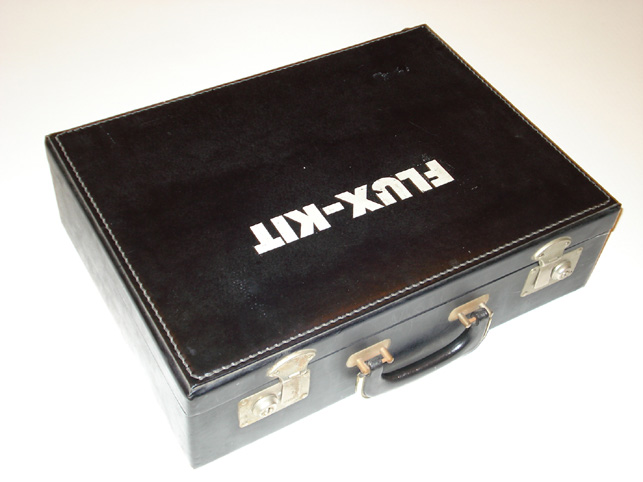
Various artists. Fluxkit. c. 1965. Vinyl-covered attaché case with screenprint, containing objects in various media. The Museum of Modern Art. The Gilbert and Lila Silverman Fluxus Collection Gift, 2008
“Thus there is in the life of a collector a dialectical tension between the poles of disorder and order,” philosopher and critic Walter Benjamin observed in his 1931 lecture Unpacking My Library. In the museum’s tidy spaces, where a predominant curatorial objective is to make sense out of the jumbled reality of things, this opposition between organization and chaos captures the imagination. As my colleagues and I begin to work with the Gilbert and Lila Silverman Fluxus Collection Gift recently acquired by the MoMA—highlights of which are currently on view in the Fluxus Preview exhibition on the fourth floor—Benjamin’s proposal repeatedly comes to mind.
June 11, 2010
|
Artists,
Collection & Exhibitions,
Tech
Analyzing Abramović
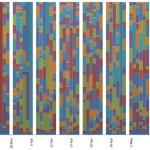
As is the case with most Web designers, producers, and graphic designers, I have an unhealthy attraction to infographics, whether it be the work of the Almighty Edward Tufte, the non-stop hit factory of The New York Times (here’s my all-time favorite), or the rich annual reports of Nicholas Feltron.
June 10, 2010
|
Collection & Exhibitions
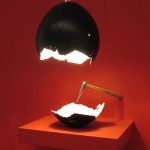
Taking a Hammer to Modern Design: Jordi Canudas’s Less Lamp
I love Jordi Canudas‘s Less Lamp, seen in the video above—a super playful and no-nonsense approach to the business of bringing light into a space. Assuming that the primary purpose of a light fixture is simply that of casting light, you can’t get more explicit than a bulb, a hanging cord, and a shade to cut the glare and to reflect and amplify the light.
If you are interested in reproducing images from The Museum of Modern Art web site, please visit the Image Permissions page (www.moma.org/permissions). For additional information about using content from MoMA.org, please visit About this Site (www.moma.org/site).
© Copyright 2016 The Museum of Modern Art
Welcome to MoMA.org. To take full advantage of all the site’s features, including the option to save works in the collection, please upgrade your browser to Firefox,
Google Chrome, Safari, or Internet Explorer 9.
See our help page for more information.
To take full advantage of all of the features on MoMA.org, please upgrade your browser to Firefox, Google Chrome,
Safari, or Internet Explorer 9.