
MoMA
Posts in ‘Collection & Exhibitions’
Spotlight: Cameron Platter in Impressions from South Africa, 1965 to Now

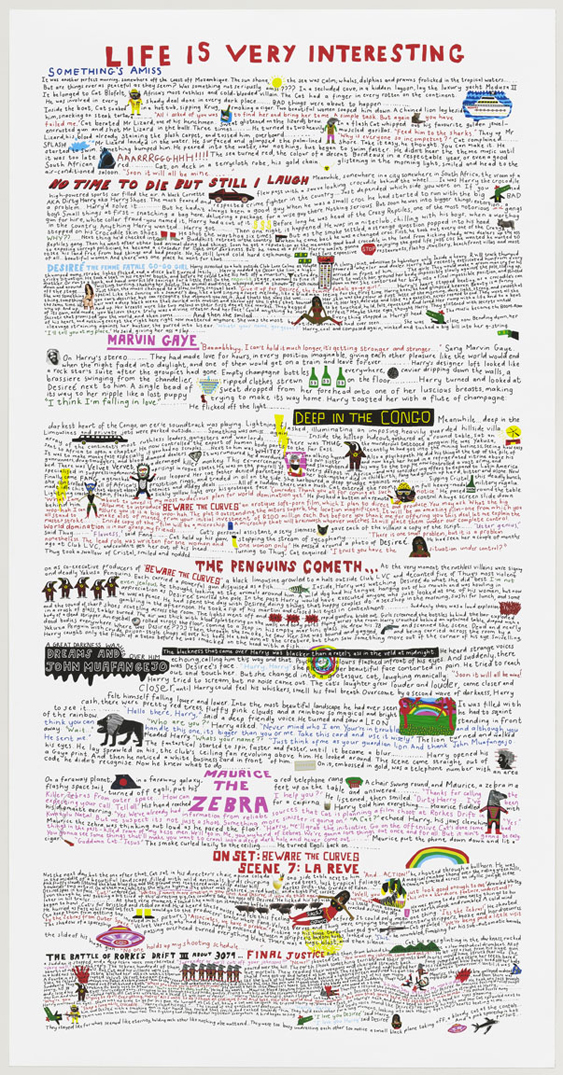
Cameron Platter. Life Is Very Interesting. 2007. Digital print. Publisher: the artist, Shaka's Rock, KwaZulu-Natal. Printer: Orms ProPhoto Lab, Cape Town. Edition: 5. The Museum of Modern Art. General Print Fund

It’s not common to hear an artist being described as “the delinquent love child of Quentin Tarantino and Dr. Seuss.” So when I read that about artist Cameron Platter, my interest was immediately piqued—specifically in relation to two recently acquired works by the artist, currently on view in Impressions from South Africa, 1965 to Now in the Prints and Illustrated Books Galleries.
The Gadgetry of the Commons

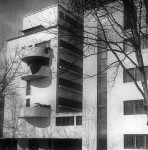
Grete Schütte-Lihotzky’s 1926–27 Frankfurt Kitchen incorporated socialist ideology into its efficient design. But it assumed a private kitchen. During a brief period shortly afterwards, idealistic Soviet architects took the idea one step further, experimenting with communal kitchens.

April 13, 2011  |  Artists, Collection & Exhibitions
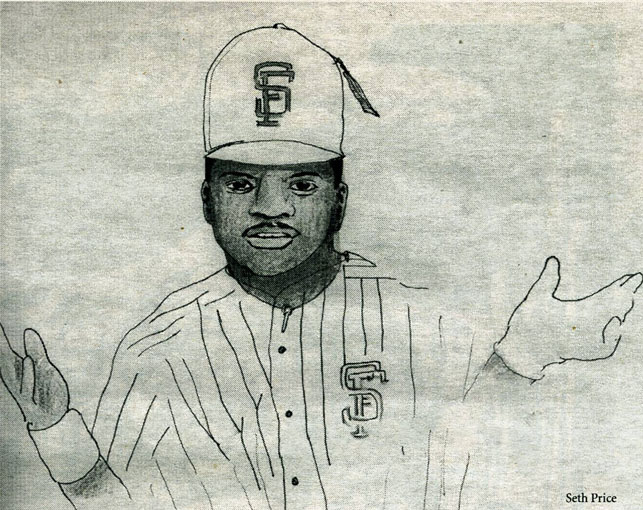
Seth Price’s Riff on New Jack Swing

Seth Price. 2002. From Sound Collector Audio Review magazine, issue #3

If Robert Smithson saw the world as a museum, artists of Seth Price’s generation see the “www” as theirs. For them, the gallery can be anything: they project a film and play music in a gallery, so the question of where in that jumble of everything they want to make their work is a difficult one. The Web is both a cabinet of curiosities and a studio where viewers are invited in to see their latest endeavors.

Living Art: MoMA Teens Collaborate with Artist Paula Hayes

Paula Hayes and the Art and Science teens working on our living sculptures

What does it mean to own an artwork that will never look the same from one month to the next? And how does an ever-changing, living sculpture tweak our preconceptions of what it means to conserve an artwork for posterity?

Contemporary Artists on Abstract Expressionist New York

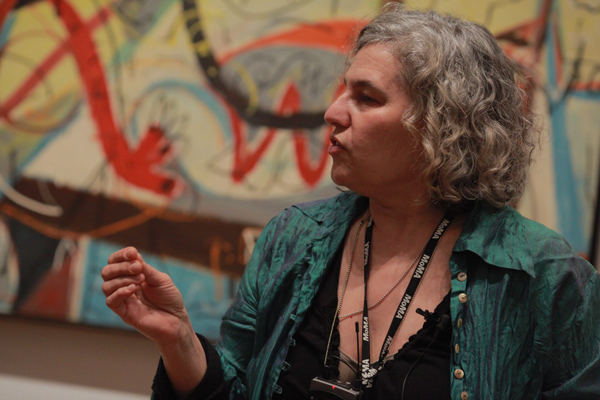
Artist Amy Sillman as she begins her talk in the Abstract Expressionist New York exhibition.

When we visit MoMA we expect to see works of art made by artists, but seldom do we hear firsthand from the artists themselves about the works on display—while we stand directly in front of them! The recently concluded series Abstract Expressionist New York: Artist-Led Gallery Talks offered MoMA visitors this unique opportunity.

In the Artist’s Space: Helen Mirren on Vasily Kandinsky

While Dame Helen Mirren was in New York to film her movie Arthur—a remake of the 1981 Dudley Moore classic—she graciously agreed to do a video interview at The Museum of Modern Art. Truth be told, I’m a huge fan of the dame. In addition to being a fantastic actor, she’s beautiful, smart, and completely unpretentious. She’s an art lover, and she is especially enamored of the pioneering abstract paintings of Vasily Kandinsky, whose work is represented in MoMA’s collection and whose “Four Seasons” were very fortuitously on view on the day of her visit (and they still are).

April 6, 2011  |  Collection & Exhibitions
At the Crossroads of Art and Sound in the 1980s

TELLUSTools. 2001. Double-LP. Inside cover Art by Christian Marclay

TELLUSTools. 2001. Double-LP. Composition: 12 1/4 x 24 5/8\

Long before the days of turntables and synthesizers, the composer John Cage revolutionized the way art saw music and music saw art with pieces like the infamous “4:33,” in which he took the stage, sat at the piano, prepared to play, and then sat in silence for four minutes and 33 seconds before exiting the stage. The legacy of Cage’s work is alive in many of the pieces on view in Looking at Music 3.0</a>, particularly in the work of Brian Eno, David Byrne, Christian Marclay, and John Zorn. Like Cage, these artists were invested in experimental composition and built their careers at the nexus between fine art, music, and performance.

March 31, 2011  |  Collection & Exhibitions, Design
The Mind Expander/Flyhead Helmet: A Mind-Blowing Perception Transformer

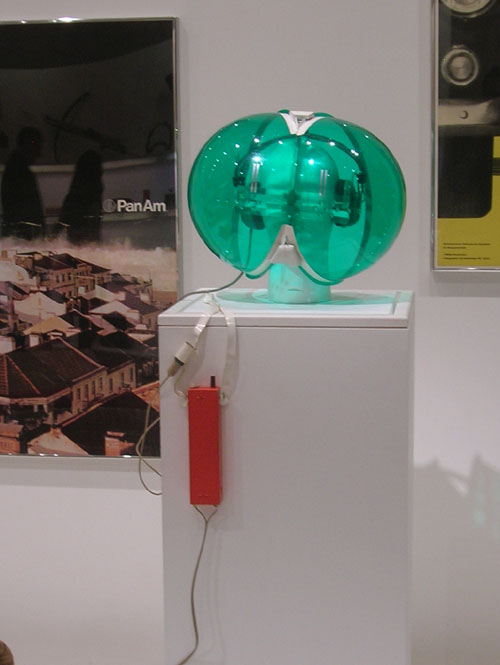
Zamp Kelp, Ortner, Pinter, Haus-Rucker-Co. Mind Expander/Flyhead Helmet, from the Environment Transformer project. 1968. On view in the exhibition Shaping Modernity: Design 1880–1980

What is it about the Haus-Rucker-Co. Mind Expander/Flyhead Helmet that so pleases everyone, I wonder? People love it. They just do. It is nice looking, with its translucent green double bubble mask, prismatic eyepieces, and groovy power pack, but the cool factor explodes once you realize what it is and what it’s meant to do.

March 30, 2011  |  Collection & Exhibitions, Fluxus
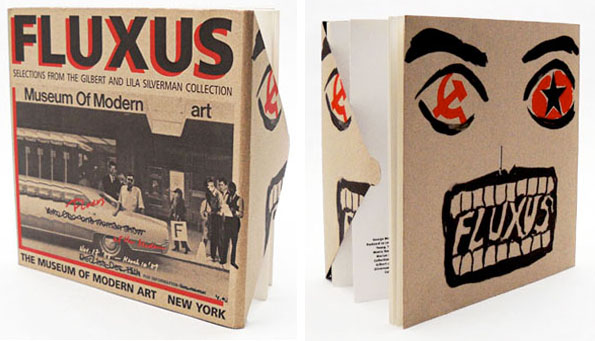
Off the Shelf: Vintage Fluxus

This is the first post in the new series Off the Shelf, which explores unique MoMA publications from the Museum Archives.

From left: Front Cover: Yoko Ono. Montage incorporating photographic images of Rolf Jährling, Iain Macmillan, Nancy Mee, and Nori Sato. 1988. © 1988 by Yoko Ono. Back Cover: Milan Knizak. Drawing for catalogue cover. 1988. © 1988 by Milan Knizak.

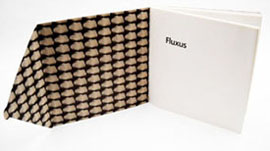
Endpapers: Ben Vautier. Assholes Wallpaper. c. 1974.

During our intern walkthrough of the exhibition Staging Action: Performance in Photography since 1960, we learned about Yoko Ono and George Maciunas‘s Fluxus Wallpaper</a>, which is displayed along the third-floor hallway at the entrance to Staging Action and Pictures by Women: A History of Modern Photography.

Nightclubbing

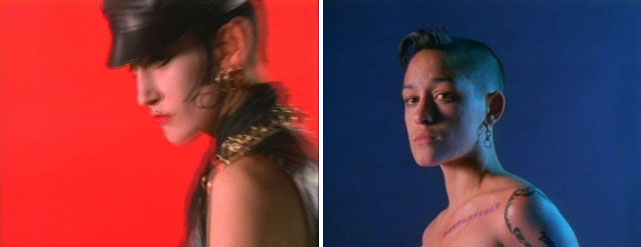
Nation. 1992. USA. Directed by Tom Kalin. On left: Trash; on right: Julie Tolentino

I never visited the Warehouse, the Chicago club where legendary Frankie Knuckles was DJ (and where the moniker “House Music” was born), but I was lucky enough to dance all night at the Power Plant, the club he opened there in the early 1980s. Later, during a visit to NYC in the summer of 1983 (before I moved here in 1987), my friends took me out for a delirious pilgrimage to hear the mighty sounds of Larry Levan at Paradise Garage. This former garage at 84 King Street was a place of few words. Dance was the message.