MoMA
Posts in ‘Events & Programs’
Lessons from the Bauhaus
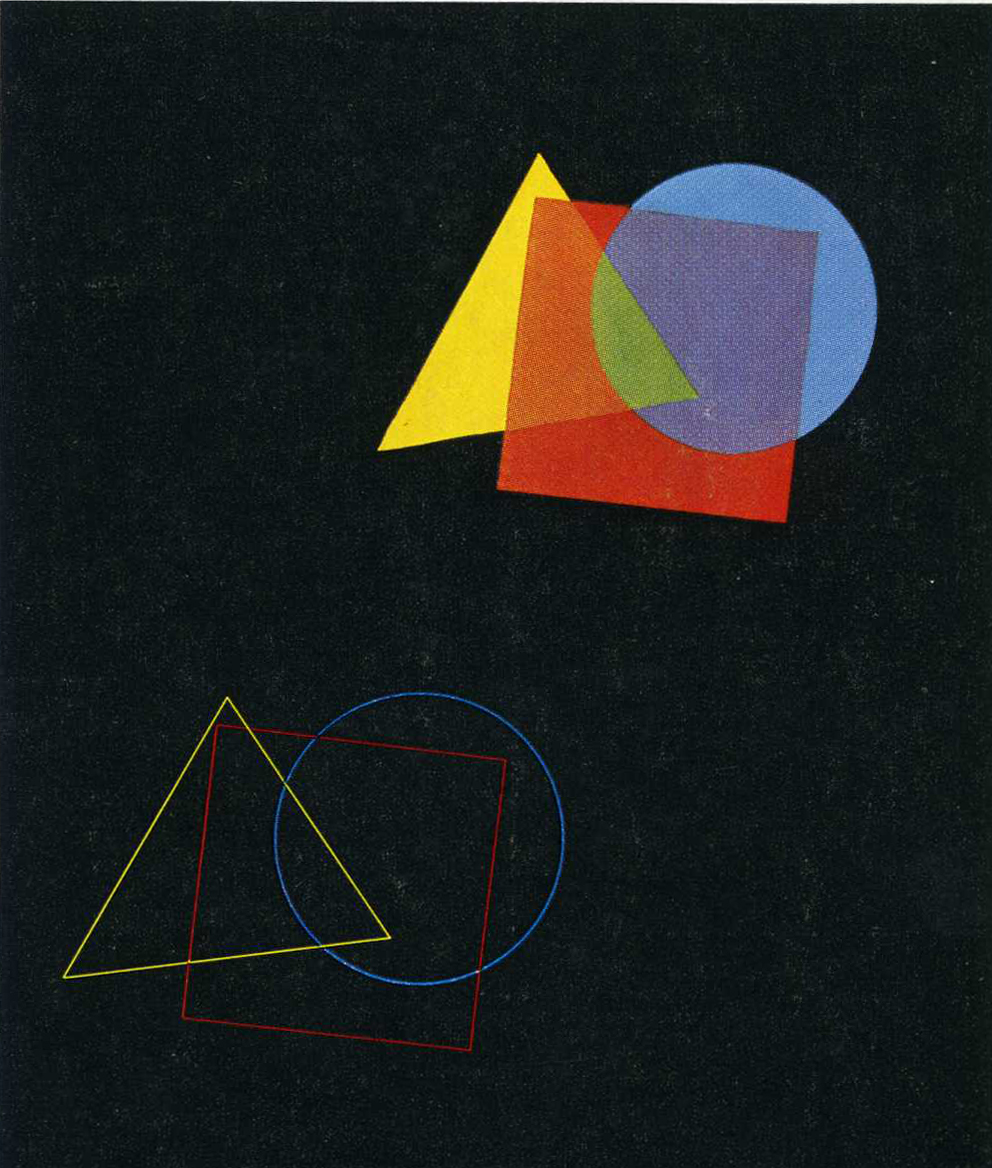
Eugen Batz.  Exercise for color-theory course taught by Vasily Kandinsky.  1929-30. Tempera over pencil on black paper. Bauhaus-Archiv Berlin

Eugen Batz. Exercise for color-theory course taught by Vasily Kandinsky. 1929–30. Tempera over pencil on black paper. Bauhaus-Archiv Berlin

The exhibition Bauhaus 1919–1933: Workshops for Modernity finally comes to an end next week. As a final event of the various public programs we have offered in conjunction with the exhibition, we will present a symposium this Friday, January 22, entitled Before and After 1933: The International Legacy of the Bauhaus. The event will bring together a vast array of international scholars to talk about the remarkable diaspora of Bauhaus intellectuals that, following the school’s closing in 1933, spread throughout various parts of Europe, the Americas, and even Africa, contributing to the establishment of a modern design style and branching out into various pedagogical models and practices that to this day lie at the core of the curricula of art and design schools worldwide.

Here at MoMA—both among staff members and those who came to the related public programs and workshops—we are also left with plenty of food for thought regarding the enduring legacy of that famous school.

January 18, 2010  |  Events & Programs
Behind the Frame: Picasso, Barack, and Me

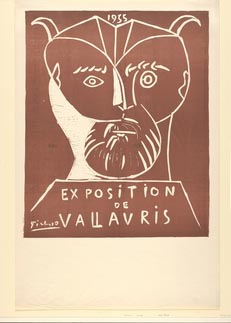
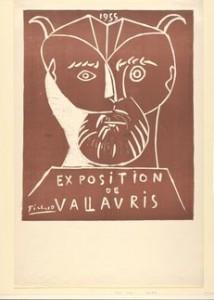
Pablo Picasso. Vallauris Exposition 1955 (1955 Exposition de Vallauris). 1955. Linoleum cut, 26 x 21 1/8" (66 x 53.7 cm), sheet: 35 1/4 x 23 3/8" (89.5 x 59.4 cm). Printer: Arnéra. Publisher: Arnéra. The Metropolitan Museum of Art, New York. The Mr. and Mrs. Charles Kramer Collection, Gift of Mr. and Mrs. Charles Kramer. © 2010 Estate of Pablo Picasso / Artists Rights Society (ARS), New York

A few months back I was perusing The New York Times when I was stopped in my tracks by a picture of Barack Obama in his office at the University of Chicago. Being a former Second City citizen, I immediately felt a sense of kinship of place, but I was even more astonished to see hanging in his office the exact same Picasso print—a black and white devil-like image, a poster for 1955 Exposition de Vallauris—that  hangs on the wall of my living room. I always look around people’s homes and offices for signs of who they are and what choices they make, but when I saw that Picasso work, I knew that Barack and I clearly had affinities! Not everyone makes the same choices or likes the same things—but we chose the same image to look at day in and day out. What did that say about us?

I had bought that print, probably not a “real” print, when I was seventeen years old. Pablo Picasso was perhaps my first real love. Growing up in Niagara Falls, Canada, where there is a wax museum literally on every corner (no wonder I ended up in this line of work!), I first met Picasso at the public library. The art section of the Dewey Decimal system was like my private zip code. I remember finding book about Picasso and Gertrude Stein and falling into a deep, deep swoon. I imagined myself living the salon life, with every conversation, morsel of food, or flirtation the catalyst for a painting or poem. My paintings, made late in the night, the only time an artist can work (teen or not), were inflected with Picasso’s lines, colors, and passions. Picasso sustained me through my teenage years. However, as I was indoctrinated into the art world of the mid-1970s during art school, I quickly came to realize that not only was my Picasso-influenced work not cool, but that he didn’t wear very well. I secretly pined in front of Guernica for my lost love during the obligatory visit to MoMA with my fellow students and professors.


January 6, 2010  |  Events & Programs
A Public Programs Year in Review
Prominent artists and scholars enjoy a reception on a Colombian party bus following the 2009 contemporary art forum Transpedagogy: Contemporary Art and the Vehicles of Education.

Prominent artists and scholars enjoy a reception on a Colombian party bus following the 2009 contemporary art forum Transpedagogy: Contemporary Art and the Vehicles of Education.

A museum’s public programming schedule is perhaps its most fleeting offering. Almost as soon as you hear about it, it’s already gone. Lectures, symposia, and panel discussions come and go with marathon-like speed. In the Adult and Academic Programs area of the Education Department, we are often thinking six months ahead, which also means that current programs exist psychologically for us in the past, while past programs are deep in the background of ancient history. But it is important to always remember the remarkable individuals that came throughout the year to enliven the Museum with their perspectives and debates, sometimes making history.

Museum Kids: Keeping It Real
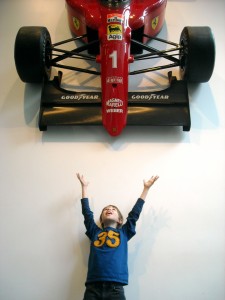
Ethan is delighted by the Formula 1 Racing Car hanging in the Education and Research building lobby.

Ethan is delighted by the Formula 1 Racing Car hanging in the Education and Research building lobby.

Just after I’d accepted my job at MoMA, I brought my six-year-old son along with me to visit. He entered the Marron Atrium and, with a sweeping, 360-degree review and an air of finality, announced, “I like your new museum, mom.” Good thing it passed muster.

I often wonder what it is to grow up in a museum. From the time he was two, Ethan had a steady diet of contemporary art. Bridges made of Meccano sets; entire cities built of pots and pans; rooms glowing with neon tubes; walls covered with “parades” of people made from ripped black construction paper; cars and trailers jack-knifed, emerging out of a museum plaza; metal squares on the floor, perfect for playing hopscotch—to Ethan, art always seems full of possibilities.

His own “work” attests to that, as we find colored-tape installations proliferating throughout our apartment—often accompanied by an objet trouvé repurposed in interesting ways, or a small love note to mom and dad.

Ethan, now nine, accompanied me to the office last week.

December 21, 2009  |  Events & Programs
At Play, Seriously, in the Museum
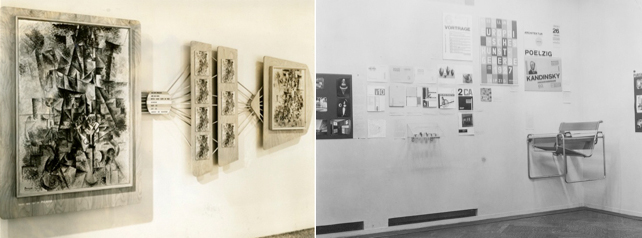
Alfred H.Barr Jr.'s experimental interpretative installations for Picasso: Forty Years of His Art, 1940 and Cubism and Abstract Art, 1936 at MoMA.

Alfred H.Barr Jr.'s experimental interpretative installations for Picasso: Forty Years of His Art (1940) and Cubism and Abstract Art (1936) at MoMA

My last blog post pondered whether a museum could be a place to foster your own creativity rather than simply appreciating that of the “masters.”

In her book Museum Legs: Fatigue and Hope in the Face of Art, Amy Whitaker makes the case that “teaching people to make art can also be politically disruptive because it teaches people to have their own opinion, giving them a say.”

Marcel Duchamp was definitive on the point of viewers having a say: ”All in all, the creative act is not performed by the artist alone; the spectator brings the work in contact with the external world by deciphering and interpreting its inner qualifications and thus adds his contribution to the creative act.”

Duchamp’s view defies traditional assumptions about art and viewers, often considered the art museum “dance”—the museum leads, the viewer follows.

Often people think they need extensive amounts of information from experts to fully appreciate art, but all that’s really needed is the confidence and opportunity to share your thoughts and opinions, and perhaps a bit of context as a framework—a kind of a personal trainer to help guide the way, but not do the “creative work” of interpretation.

Ellen Lupton Inspires a New Kind of Visual Literacy

After nearly a month of visiting the Bauhaus 1919–1933: Workshops for Modernity exhibition, many of us throughout the Museum took away at least one powerful message: don’t be afraid to cross disciplines. The fearlessness, enthusiasm, and collaboration of the students and masters is apparent in the show’s work.

So, upon learning that design education legend and DIY hero Ellen Lupton would be running several workshops in the Bauhaus Lab series, our Graphic Design department decided not to make a poster for her visit, but rather to shoot and edit a video. Of course, stepping out of your area of expertise requires collaboration, so we teamed up with two of the Museum’s video experts: Beth Harris, Director of Digital Learning, and David Hart, Associate Media Producer. It was a humbling and exciting experience.

A Bauhausian Ballet at MoMA
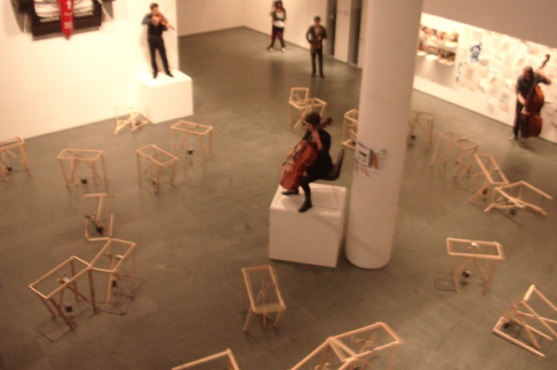
Machine Project's Walking Tables and Wrestling Foals

Machine Project's Walking Tables and Wrestling Foals

In planning the programs for MoMA’s Bauhaus Lab, we wanted to give the public the opportunity not only to experience original Bauhaus curricula, but also to meet contemporary artists with multidisciplinary practices in an experimental spirit similar to the Bauhaus. The L.A.-based collective Machine Project most definitely falls into this category. (Machine’s approach to pedagogy as performance was previously presented this year at MoMA during the symposium Transpedagogy: Contemporary Art and the Vehicles of Education.)

December 7, 2009  |  Events & Programs
Making Art at MoMA
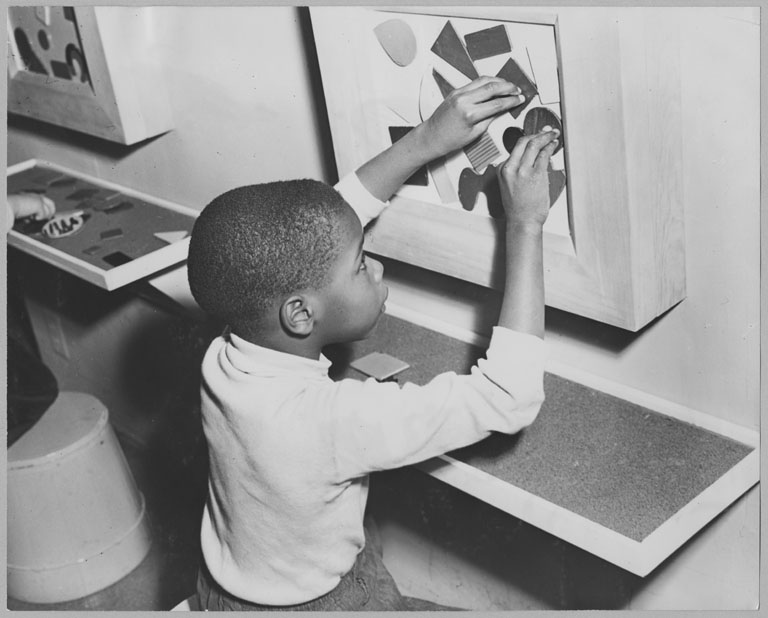
A young partcipant in MoMA's <i>Children’s Holiday Carnival of Modern Art,</i> December 5, 1950–January 7, 1951. Photographic Archive. The Museum of Modern Art Archives, New York

A young participant in an educational program at MoMA, 1951

Is a museum solely a place to revere the creative work of artists included in exhibitions, or can it be a nexus for exploring and fostering personal creativity by participating in art making? This is a question I ponder often, and a salient question in light of MoMA’s early history.

When I began as deputy director for education at MoMA three years ago, I was amazed by the number of people who would regale me with stories about their early experiences making art at MoMA. The stories were filled with passion and detail that spoke of a deep and abiding sense of kinship with MoMA as a place of personal learning and inspiration.

November 25, 2009  |  Collection & Exhibitions, Events & Programs
Bauhaus Lab: The Secret Ingredient?
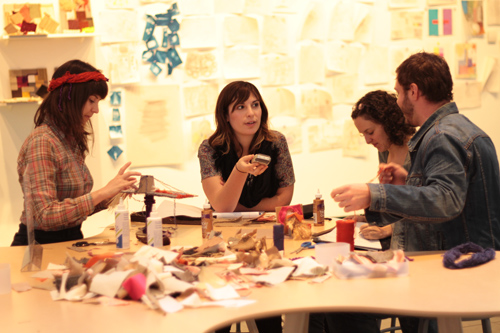
Bauhaus Lab: Johannes Itten and Paul Klee Curricula Workshops, The Lewis B. and Dorothy Cullman Education and Research Building

Bauhaus Lab: Johannes Itten and Paul Klee Curricula Workshops, The Lewis B. and Dorothy Cullman Education and Research Building

In MoMA’s Cullman Education and Research Building, you’ll find visitors sitting at clover-like Bauhaus tables (based on the original workshop photographs) working on drawing exercises devised by Bauhaus masters Johannes Itten and Paul Klee. Interestingly, Klee and Itten themselves were actually not so happy sharing a table—the dinner table, that is.

Bauhaus Lounge: When the Couch Matches the Art
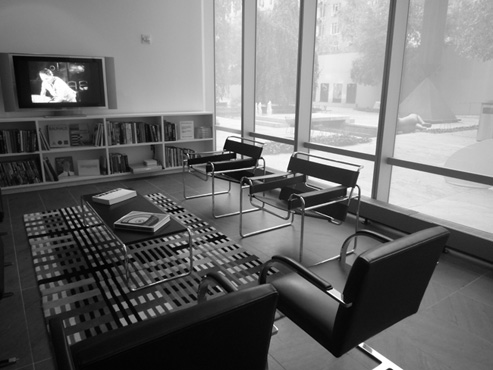
Bauhaus Lounge, The Lewis B. and Dorothy Cullman Education and Research Center

Bauhaus Lounge, The Lewis B. and Dorothy Cullman Education and Research Center

Matching the artwork with the living room couch is one of the perennial concerns of any collector. But when it comes to the Bauhaus, which was as much about designing couches as it was about artworks, finding the right furniture piece shouldn’t be a problem. Or so it seemed to us at the Education Department. During the exhibition Bauhaus 1919–1933: Workshops for Modernity, we imagined turning the reading room space in MoMA’s Cullman building into a Bauhaus Lounge, equipped with Bauhaus furniture for visitors to relax on while they watch a video of a reconstruction of Oskar Schlemmer’s Triadic Ballet or browse through Bauhaus literature. We thought we had enough original Bauhaus-designed chairs lying around MoMA’s buildings that it couldn’t be too hard to put such a lounge together. We do have a Wassily chair (no one remembers where it came from) that sits in the Education offices; we also snatched away a few other chairs from a conference room and two Mies van der Rohe Barcelona chairs from outside of Glenn Lowry’s office waiting area (his office wants them back after the show).