MoMA
Posts in ‘An Auteurist History of Film’
April 16, 2013  |  An Auteurist History of Film
Otto Preminger’s Exodus
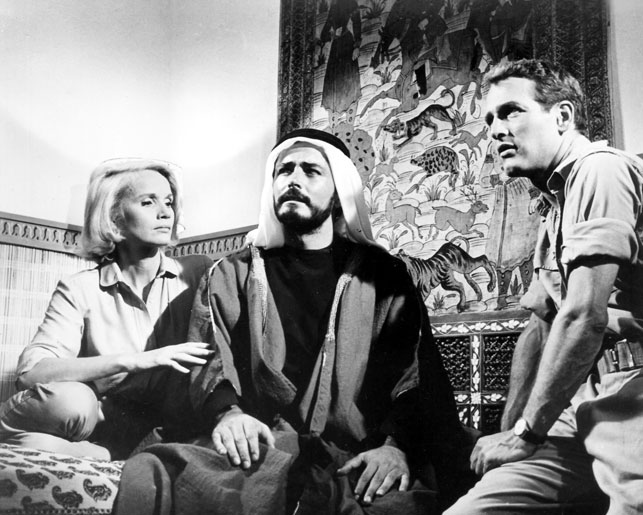
Paul Newman, Eva Marie Saint, and John Derek in Exodus. 1960. USA. Directed by Otto Preminger

Paul Newman, Eva Marie Saint, and John Derek in Exodus. 1960. USA. Directed by Otto Preminger

These notes accompany screenings of Otto Preminger’s </em>Exodus</a> on April 17, 18, and 19.</p>

Otto Preminger (1905–1986), like Josef von Sternberg, Erich von Stroheim, Billy Wilder, Fred Zinnemann, and Edgar G. Ulmer, was a Viennese Jew.

April 9, 2013  |  An Auteurist History of Film
Jules Dassin’s Never on Sunday
Melina Mercouri Never on Sunday. 1960. Greece. Jules Dassin

Melina Mercouri in Never on Sunday. 1960. Greece. Directed by Jules Dassin

These notes accompany screenings of Jules Dassin’s </em>Never on Sunday</a> on April 10, 11, and 12 in Theater 3.</p>

Jules Dassin (1911–2008) had a circuitous journey from the Bronx to Broadway, then to Hollywood (starting as an apprentice to Alfred Hitchcock) in his twenties, and then being exiled from both America and Greece, accused of wanting to overthrow their governments. He had already made seven films before he scored a big success in 1947 with the prison film Brute Force, starring Burt Lancaster. (It is noteworthy, I think, that Lancaster was so central to the early careers of such hard-bitten directors as Dassin, Robert Aldrich, and John Frankenheimer.) Following on the heels of Henry Hathaway’s 1945 anti-Nazi thriller The House on 92nd Street with The Naked City in 1948, Dassin re-established a genre dating back to D. W. Griffith’s The Musketeers of Pig Alley in 1912: the crime film shot on the mean streets of New York—in this case using over 100 different shooting locations. Dassin thus paved the way for directors like Don Siegel (Coogan’s Bluff), Martin Scorsese (Mean Streets), and Sidney Lumet (Prince of the City), not to mention countless television series like Cagney and Lacy. As critic Rob Edelman has pointed out, Dassin’s style at this time had roots in Italian Neorealism. Sadly, just as Dassin had brought the Mediterranean to America, he would soon be forced by politics to travel in the opposite direction.

Dassin’s life would make a fascinating movie. While an aspiring actor in the Yiddish theater, Dassin briefly belonged to the Communist Party, resigning in 1939 following the Nazi-Soviet pact. This came to light in 1948, during the House Committee on Un-American Activities witch-hunt. Like Joseph Losey and Robert Aldrich, Dassin was forced to go to Europe, but he never fully regained the standing they did after things blew over. His 1955 French film, Rififi, provided a kind of role model for heist movies, as The Naked City had done for New York film noir. With Melina Mercouri, whom he married in 1966, he made Never on Sunday, Phaedra, the award-winning Topkapi, and three lesser films. The Fascist coup in Greece in 1967 caused the couple to move to New York, but they eventually moved back to Athens, where Mercouri became an M.P. and Minister of Culture.

How authentic a vision of modern Greece is Never on Sunday? Could a Jewish boy who grew up in the Bronx do it justice? Perhaps one should look no further than the acclaimed Zorba the Greek, made four years later by the most famous of Greek-born directors, Michael Cacoyannis, and adapted from the classic novel by Nicholas Kazantzakis. Zorba was, after all, played by the Mexican American Anthony Quinn, whose career included virtually every ethnicity on the planet—though rarely Mexican American. You couldn’t get more authentically Greek than Mercouri, and it’s obvious that Dassin loves her and has come to love the laissez-faire attitude toward Greek culture embodied by her prostitute character. Movies have often been burdened with austere visions of the ancient world. The Rome of M-G-M, however, has given way to Fellini Satyricon and to television series like I Claudius and Rome which, while showing the otherness of the past, still show links to our contemporary decadence. Greece is still envisioned by some as old guys in sheets wandering around the Acropolis spouting wisdom before somebody pours hemlock in their ear, but my guess is that, for a reasonable price, they might shut up and allow Mercouri’s Ilya to do her stuff.

Jules Dassin’s career took some odd turns for a political guy who started out as one of the fathers of film noir. One would have guessed it unlikely that he would make a sexy comedy with an Oscar-winning song. As Andrew Sarris put it, Dassin’s career “verges on the grotesque.”


April 2, 2013  |  An Auteurist History of Film
John Frankenheimer’s The Young Stranger
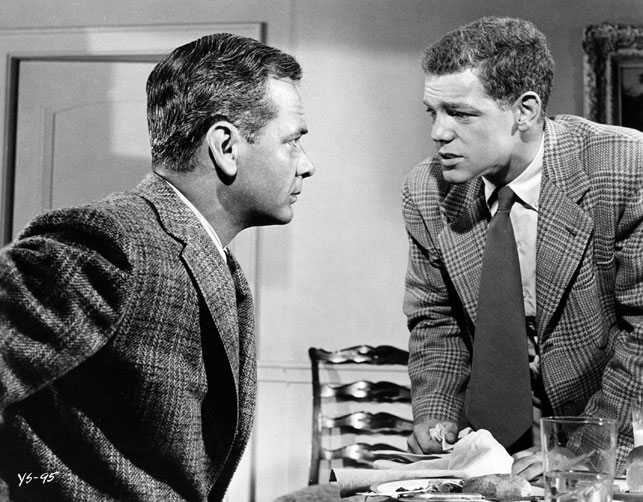
The Young Stranger. 1957. USA. Directed by John Frankenheimer

The Young Stranger. 1957. USA. Directed by John Frankenheimer

These notes accompany screenings of John Frankenheimer’s </em>The Young Stranger</a> on April 3, 4, and 5 in Theater 3.</p>

John Frankenheimer’s The Young Stranger was very much a product of the 1950s.

March 26, 2013  |  An Auteurist History of Film
Jean Genet’s A Song of Love and Jean Cocteau’s Testament of Orpheus
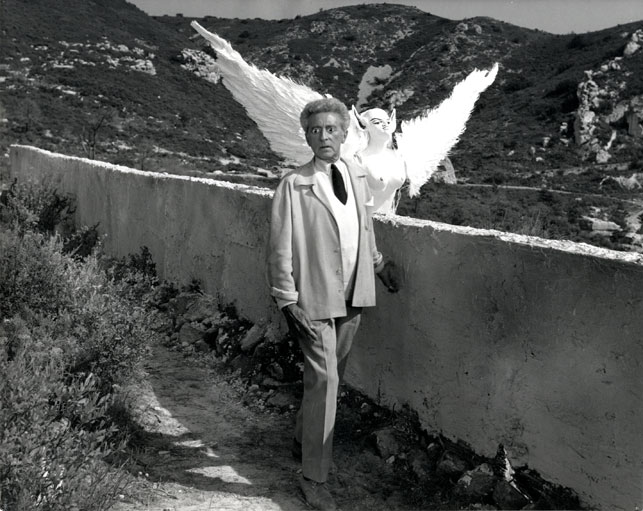
Testament of Orpheus. 1960. France. Directed by Jean Cocteau

Testament of Orpheus. 1960. France. Directed by Jean Cocteau

These notes accompany screenings of Jean Genet’s A Song of Love and Claude Chabrol’s Testament of Orpheus on March 27, 28, and 29 in Theater 2.

Jean Genet’s (1910–1986) association with the cinema was peripheral.

March 19, 2013  |  An Auteurist History of Film
Joseph L. Mankiewicz’s Suddenly, Last Summer
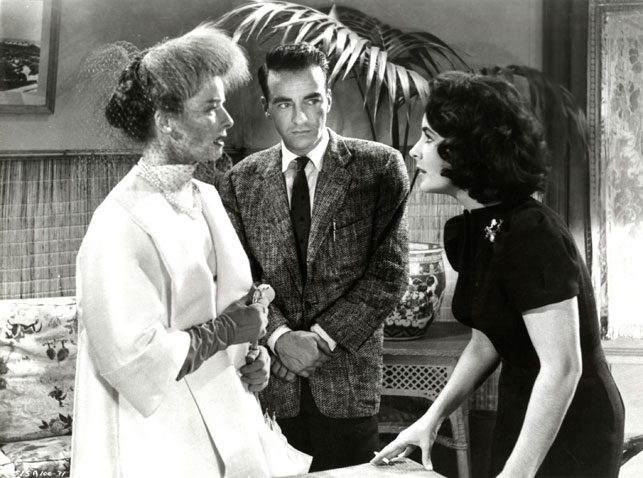
Katharine Hepburn, Montgomery Clift, and Elizabeth Taylor in Suddenly, Last Summer. 1959. USA. Directed by Joseph L. Mankiewicz

Katharine Hepburn, Montgomery Clift, and Elizabeth Taylor in Suddenly, Last Summer. 1959. USA. Directed by Joseph L. Mankiewicz

These notes accompany screenings of Joseph L. Mankiewicz’s </em>Suddenly, Last Summer</a> on March 20, 21, and 22 in Theater 3.</p>

I’ve included Suddenly, Last Summer not so much for its intrinsic virtues (of which it certainly has some) but more as a case study in how complicated auteurism can become

March 12, 2013  |  An Auteurist History of Film
Andrzej Wajda’s Ashes and Diamonds
March 5, 2013  |  An Auteurist History of Film
George Cukor’s The Actress
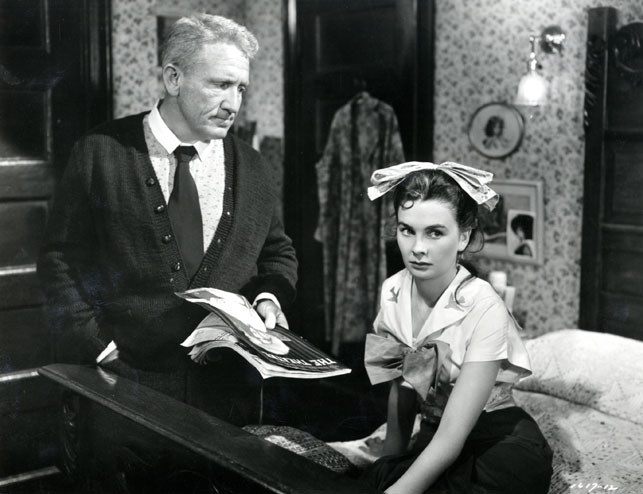
Spencer Tracy and Jean Simmons in The Actress. 1953. USA. Directed by George Cukor

Spencer Tracy and Jean Simmons in The Actress. 1953. USA. Directed by George Cukor

These notes accompany screenings of George Cukor’s </em>The Actress</a> on March 6, 7, and 8 in Theater 3.</p>

George Cukor (1899–1983), a graduate of DeWitt Clinton High School, was barely out of his teens when he began working on Broadway.

February 26, 2013  |  An Auteurist History of Film
Experimental French Documentaries, 1947–58

These notes accompany screenings of Experimental French Documentaries on February 27 and 28, and March 1 in Theater 3.

As indicated on MoMA’s film calendar, the films in this program represent a kind of hybrid nature, suspended somewhere between experimental/poetic and documentary.

February 19, 2013  |  An Auteurist History of Film
Stanley Kramer’s The Defiant Ones
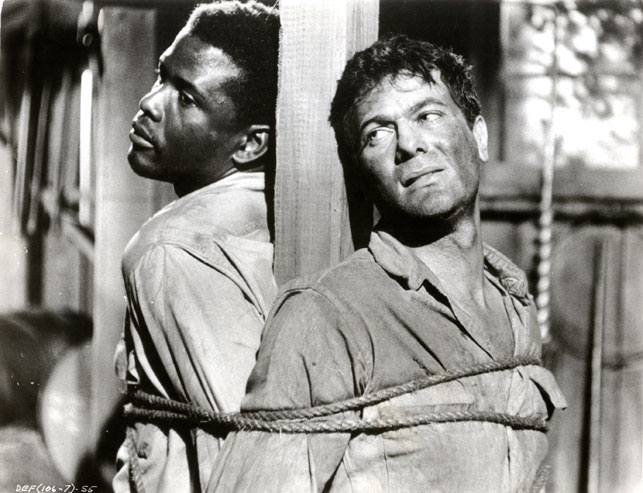
Tony Curtis Sidney Poitier The Defiant Ones. 1958. Directed by Stanley Kramer

Tony Curtis and Sidney Poitier in The Defiant Ones. 1958. USA. Directed by Stanley Kramer

These notes accompany screenings of Stanley Kramer’s </em>The Defiant Ones</a> on February 20, 21, and 22 in Theater 3.</p>

I don’t think Stanley Kramer (1913–2001) would be too indignant about being labeled more a producer than a director.

February 12, 2013  |  An Auteurist History of Film
Louis Malle’s The Lovers