
MoMA
Posts by Charles Silver
December 7, 2010  |  An Auteurist History of Film
Marcel Pagnol’s Cesar

These notes accompany screenings of Marcel Pagnol’s Cesar on December 8, 9, and 10 in Theater 3.

Although Marcel Pagnol (1895–1974) directed 18 films, his identity as a cinema auteur is a little hard to pin down. Some of his best work was done in filmed adaptations of his stage plays, several of which were directed by others. He had a hand in writing all of the movies he directed, but he also wrote screenplays for others. To top it off, he was also a producer with his own studio.


November 30, 2010  |  An Auteurist History of Film
Charles Chaplin’s Modern Times
Charles Chaplin's Modern Times

Modern Times. 1936. USA. Produced, written, directed, edited, and scored by Charles Chaplin

These notes accompany screenings of Charles Chaplin’s </i>Modern Times on November 30 and December 1 and 2 in Theater 3.</p>

If City Lights represents Charles Chaplin (1889–1977) at his romantic zenith, Modern Times most admirably displays his prescient satirical gifts. The relationship he began in the early 1930s with Paulette Goddard, which culminated in a secret marriage in China, began to relieve his obsessive loneliness and self-absorption. This, together with extensive travels through Europe and Asia, caused him to turn outward and consider problems beyond the personal.

November 23, 2010  |  An Auteurist History of Film
William Cameron Menzies’s Things to Come
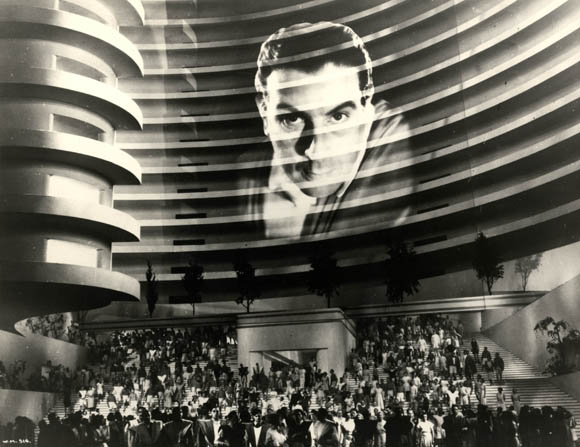
Things to Come

Things to Come. 1936. Great Britain. Directed by William Cameron Menzies

These notes accompany screenings of William Cameron Menzies’s </i>Things to Come on November 24 and 26 in Theater 3.</p>

I can’t deny that there may be a slight “guilty pleasures” element in my choice of Things to Come as part of this series. William Cameron Menzies (1896–1957), however, was a towering figure in the history of film, if not as a director, then as an art director. I would argue that he crossed the line into auteurism, even while working for major directors like Walsh, Dwan, Lubitsch, Borzage, Griffith, Hawks, and Hitchcock.

November 16, 2010  |  An Auteurist History of Film
Josef von Sternberg’s The Devil Is a Woman

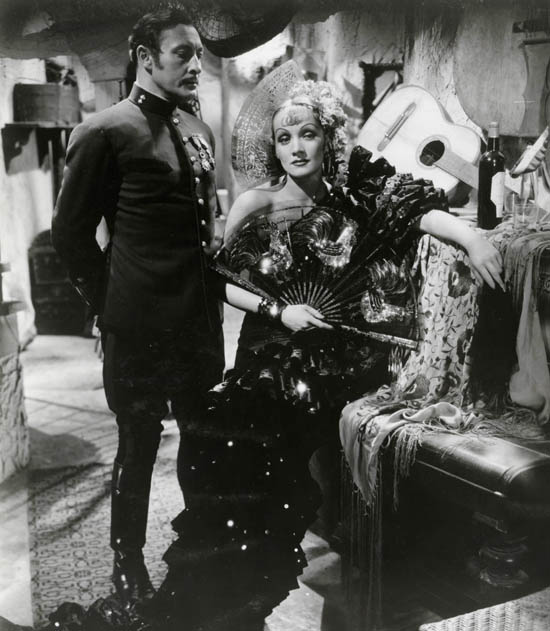
The Devil Is a Woman. 1935. USA. Directed by Josef von Sternberg

The Devil Is a Woman. 1935. USA. Directed by Josef von Sternberg

These notes accompany screenings of Josef von Sternberg’s </i>The Devil Is a Woman on November 17, 18, and 19 in Theater 3.</p>

Josef von Sternberg (1894–1969) has already been represented in this series by The Docks of New York (1928) and Morocco (1930). After The Blue Angel and Morocco,</i> Sternberg went on to make five more semi-autobiographical films with his star and lover, Marlene Dietrich. In my judgment, the best of these were Shanghai Express, The Scarlet Empress, and the confessional The Devil Is a Woman. The films starring his “discovery,” Dietrich, are the centerpiece of the director’s career and represent perhaps the highest point achieved in cinema’s early sound era.

November 9, 2010  |  An Auteurist History of Film
King Vidor and Pare Lorentz Confront the Great Depression

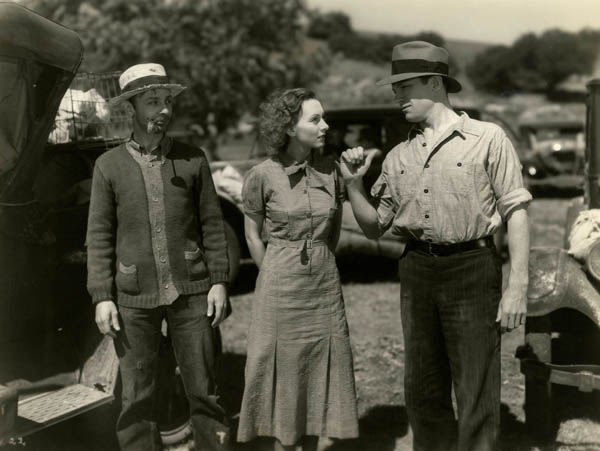
Our Daily Bread. 1934. USA. Directed by King Vidor

Our Daily Bread. 1934. USA. Directed by King Vidor

These notes accompany the Great Depression program on November 10, 11, and 12 in Theater 3.

What goes around comes around. I first wrote about King Vidor’s Our Daily Bread in October 1972 (as part MoMA’s massive Vidor retrospective), exactly 38 years after film’s release. Now, another 38 years later, another economic crisis is upon us, and I essentially agree with my earlier assessment of the film. It is still naïve, simplistic, and awkward, but it remains extremely lovely in its innocence.

November 2, 2010  |  An Auteurist History of Film
The Films of Alessandro Blasetti

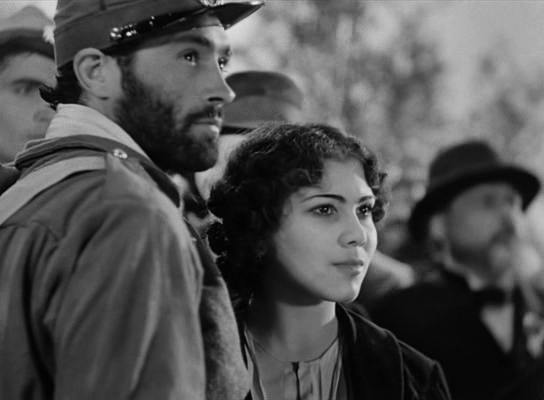
1860 (I Mille di Garibaldi). 1933. Italy. Directed by Alessandro Blasetti

1860 (I Mille di Garibaldi). 1933. Italy. Directed by Alessandro Blasetti

These notes accompany the Alessandro Blasetti program on November 3, 5, and 5 in Theater 3.

Alessandro Blasetti (1900–1987), a law school graduate and failed movie extra, started out as a film critic and participant in what might be viewed as a forerunner of the French Nouvelle Vague (New Wave) of the 1950s and 1960s: the Augustus cooperative. Blasetti and his circle were rebelling against an Italian cinema dominated by costume epics and melodramas, the kinds of films that had made Rome one of the premiere movie capitals of the world before World War I.

October 26, 2010  |  An Auteurist History of Film
The Films of Robert Flaherty and John Grierson

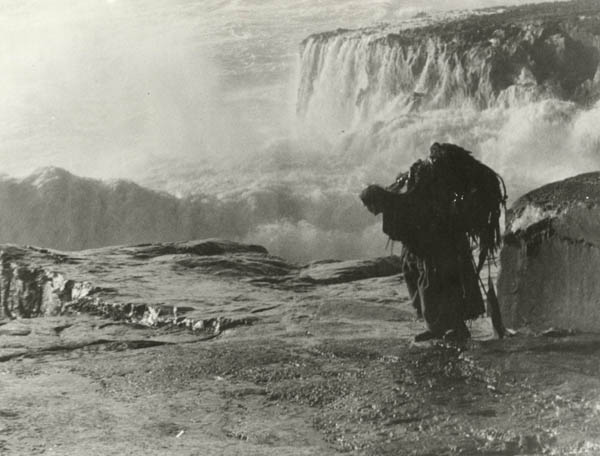
Man of Aran. 1934. Great Britain. Directed by Robert Flaherty

Man of Aran. 1934. Great Britain. Directed by Robert Flaherty

These notes accompany the Robert Flaherty and John Grierson Program on October 27, 28, and 29 in Theater 3.

Robert Flaherty (1884–1951) is credited with being the father of the documentary. There had, of course, been “actuality” films from the very beginning of cinema; the Lumiere brothers sent film crews around the world to bring the wonders of the planet to audiences long before jets made it possible for large numbers of people to travel to exotic or remote locales.

October 19, 2010  |  An Auteurist History of Film
The Films of Jean Vigo

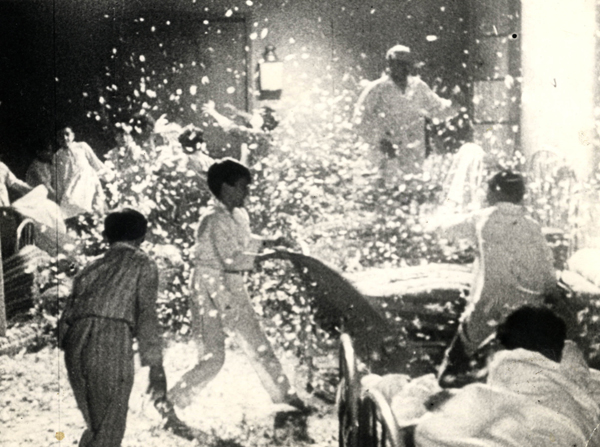
Zero for Conduct. 1933. France. Directed, produced, written, and edited by Jean Vigo

Zero for Conduct. 1933. France. Directed, produced, written, and edited by Jean Vigo

These notes accompany the Jean Vigo Program on October 20, 21, and 22 in Theater 3.

October 5, 1934, the day Jean Vigo succumbed to tuberculosis and leukemia at twenty-nine years and six-months of age, may have been the most tragic day in film history (perhaps rivaled only by March 11, 1931, the day F. W. Murnau died in an auto accident). Vigo was the son of a fugitive anarchist and the father of one child, three short films, and one feature.

October 12, 2010  |  An Auteurist History of Film
Cooper and Schoedsack’s King Kong

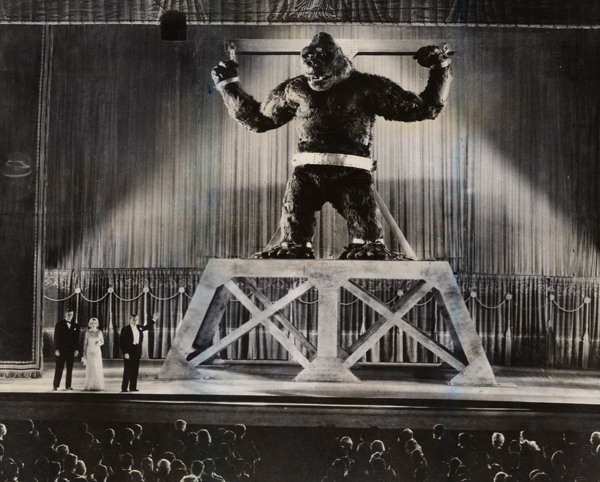
King Kong. 1933. USA. Directed by Merian C. Cooper, Ernest B. Schoedsack

King Kong. 1933. USA. Directed by Merian C. Cooper, Ernest B. Schoedsack

These notes accompany the screenings of Merian C. Cooper and Ernest B. Schoedsack’s </i>King Kong, October 13, 14, and 15 in Theater 3.</p>

I was reticent about including Merian C. Cooper and Ernest B. Schoedsack’s King Kong in this series. True, we’ve already shown the filmmakers’ classic documentary, Grass (1925), but, in the eight intervening years, the filmmakers seem (at least superficially) to have moved in a very different direction.

October 5, 2010  |  An Auteurist History of Film
A Leo McCarey Program

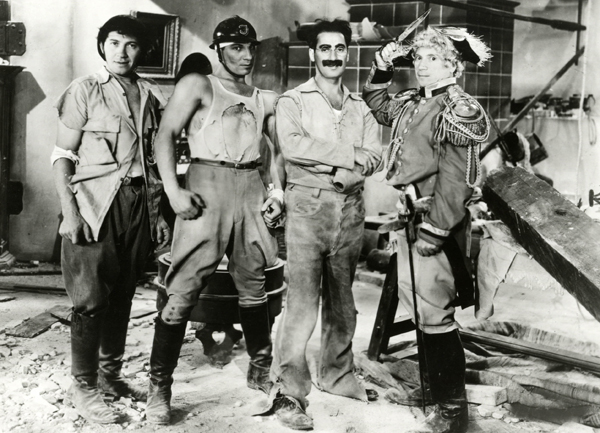
Duck Soup. 1933. USA. Directed by Leo McCarey

Duck Soup. 1933. USA. Directed by Leo McCarey

These notes accompany the Leo McCarey screening program, October 6, 7, and 8 in Theater 3.

Leo McCarey (1898–1969) has long been one of the most unheralded major directors in film history. (I made my own small effort to resurrect his status in a 1973 Film Comment article.) At that time, I reminded readers of a quote from critic (and later screenwriter) Frank Nugent from 1939: “McCarey directs so well it is almost antisocial of him not to direct more often.” Unfortunately, McCarey remains all too obscure to this day.