

MoMA
Posts by Charles Silver
September 28, 2010  |  An Auteurist History of Film
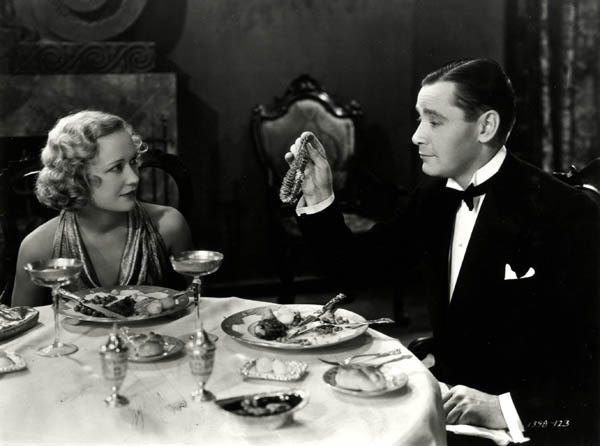
Ernst Lubitsch’s Trouble in Paradise

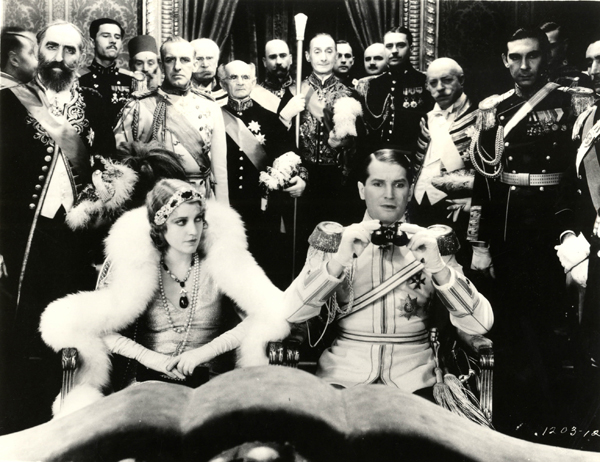
Trouble in Paradise. 1932. USA. Directed by Ernst Lubitsch

Trouble in Paradise. 1932. USA. Directed by Ernst Lubitsch

These notes accompany screenings of Ernst Lubitsch’s </i>Trouble in Paradise, September 29, 30, and October 1 in Theater 3.</p>

Ernst Lubitsch (1892–1947) somehow remained true to his own idiosyncratic brand of filmmaking, even though he had what amounted to about a half-dozen separate (but overlapping) careers. Throughout his thirty-some years behind the camera, he developed an increasing sense of sophistication and an assurance that marked him as one of the great directors.
September 21, 2010  |  An Auteurist History of Film
Howard Hawks’s Scarface: The Shame of a Nation

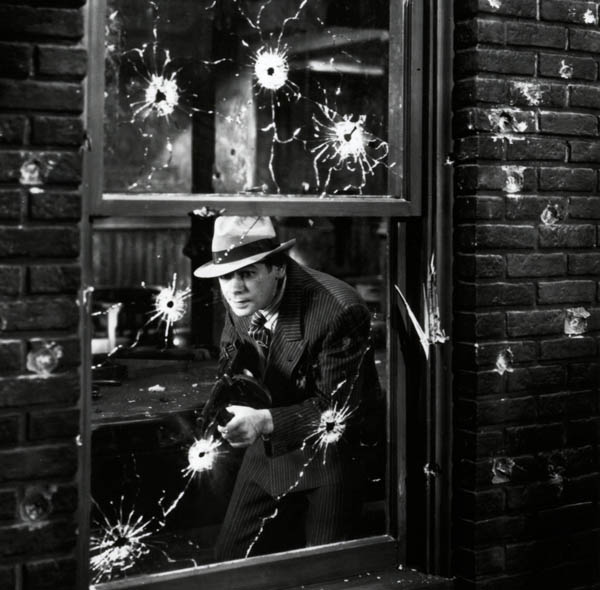
Scarface: The Shame of a Nation. 1932. USA. Directed by Howard Hawks

Scarface: The Shame of a Nation. 1932. USA. Directed by Howard Hawks

These notes accompany screenings of Howard Hawks’s </i>Scarface: The Shame of a Nation, September 22, 23, and 24 in Theater 3.</p>

Howard Hawks (1896–1977), in his forty-four year career, was arguably the most consistently successful of all directors in satisfying the commercial demands of the Hollywood studio system while simultaneously maintaining a high level of personal expression in his films. One might say he was the “auteur’s auteur.” It helped a great deal that he was proficient in so many different genres.

September 14, 2010  |  An Auteurist History of Film
A Jean Renoir Birthday Celebration

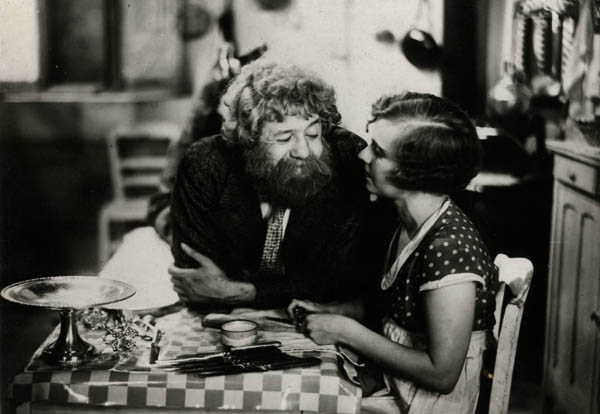
Boudu Saved from Drowning. 1932. France. Directed by Jean Renoir

Boudu Saved from Drowning. 1932. France. Directed by Jean Renoir

These notes accompany the </i>Jean Renoir Birthday Celebration screenings on September 14, 15, and 16 in Theater 3.</p>

Jean Renoir (1894–1979) would have been 116 years old tomorrow (September 15). One is hard pressed to name a twentieth-century artist in any medium whose work reflects a richer diversity of feelings and ideas. Renoir’s broad and serious concern with the social state of mankind is combined with a warmly romantic sense of humor, and the whole is given expression through an almost effortless command of the complex tools of his métier. He was a self-proclaimed realist, an improviser, and the infinitely loving apostle of egalitarian humanism.

September 7, 2010  |  An Auteurist History of Film
F. W. Murnau’s Tabu

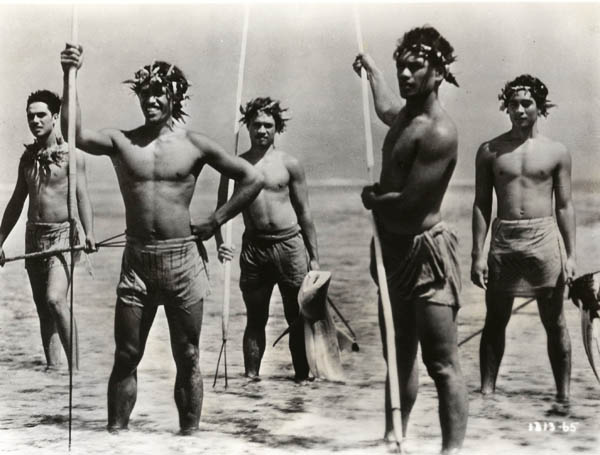
Tabu. 1931. USA. Directed by F. W. Murnau

Tabu. 1931. USA. Directed by F. W. Murnau

These notes accompany screenings of F. W. Murnau’s </i>Tabu, September 8, 9, and 10 in Theater 3.</p>

F. W. Murnau (1888–1931) made six or seven great or near-great films in his all-too-brief career. All save his last film were tightly controlled, studio-stylized works that (although they were beautiful and often moving) were thoroughly planned artifice. One might even use the contemporary expression “tight-assed” in describing them. His final film, Tabu (1931), however, seems almost the complete antithesis. Tabu is one of cinema’s simplest, most lyrical and masterful expressions of a despairing romanticism succumbing to the realities of a world from which none of us can escape.

August 31, 2010  |  An Auteurist History of Film
Charles Chaplin’s City Lights

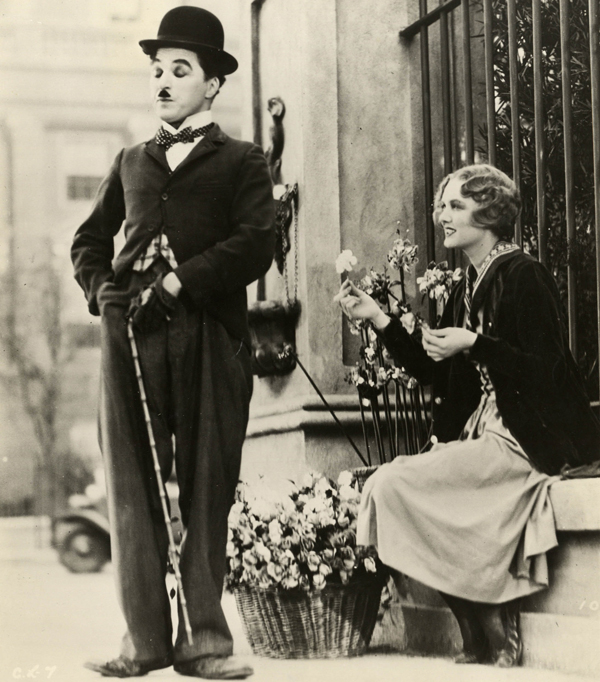
City Lights. 1931. USA. Written, directed, and music by Charles Chaplin

City Lights. 1931. USA. Written, directed, and music by Charles Chaplin

These notes accompany screenings of Charles Chaplin’s </i>City Lights, September 1, 2, and 3 in Theater 3.</p>

City Lights is Charles Chaplin’s most perfectly accomplished and balanced work. It would certainly be on the short list of films with which I would care to be stranded on a desert island.

By 1931 the silent cinema was effectively dead. It took considerable courage to lavish two years of rather expensive production on a silent film (and even more courage with Modern Times five years later), but Chaplin felt he had very little choice. He correctly perceived that the Tramp would lose his poetry and grace if he were coerced into the leveling mundanity of human speech. He foresaw that sound would force him to sacrifice the “pace and tempo” he had so laboriously perfected.

August 24, 2010  |  An Auteurist History of Film
René Clair’s Under the Roofs of Paris

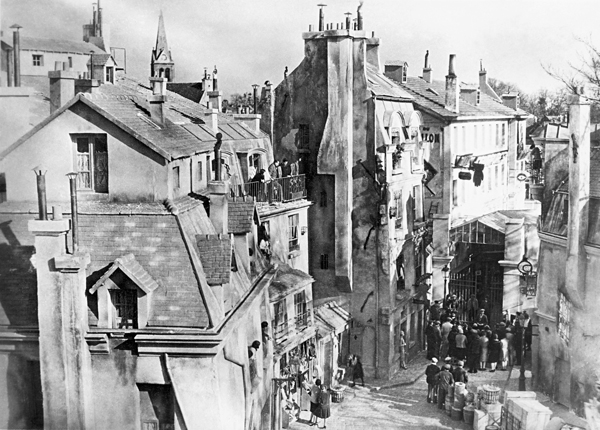
Under the Roofs of Paris. 1930. France. Directed by René Clair

Under the Roofs of Paris. 1930. France. Directed by René Clair

These notes accompany screenings of René Clair’s </i>Under the Roofs of Paris, August 25, 26, and 27 in Theater 3.</p>

René Clair (1898–1981), a disappointed poet, novelist, and actor, lived and worked on the fringes of the French Surrealist movement in the 1920s. (We included his Entr’acte (1924) in the French Avant-Garde program earlier in the series.) In total, he made eight silent films of varied lengths—most notably 1927’s Un Chapeau de Paille d’Italie (The Italian Straw Hat)—establishing a reputation for humor and fanciful imagination.

August 17, 2010  |  An Auteurist History of Film
Ernst Lubitsch’s The Love Parade

The Love Parade. 1929. USA. Directed by Ernst Lubitsch

Jeannette MacDonald and Maurice Chevalier in The Love Parade. 1929. USA. Directed by Ernst Lubitsch

These notes accompany screenings of Ernst Lubitsch’s </i>The Love Parade, August 18, 19, and 20 in Theater 3.</p>

Ernst Lubitsch (1892–1947) followed up The Marriage Circle (1924) with eight more silents (three of which are sadly lost). In 1929, that probably made him the odds-on favorite among all then-prominent directors to succeed as sound was coming in. With The Love Parade, Lubitsch did not disappoint.

August 10, 2010  |  An Auteurist History of Film
Raoul Walsh’s The Big Trail
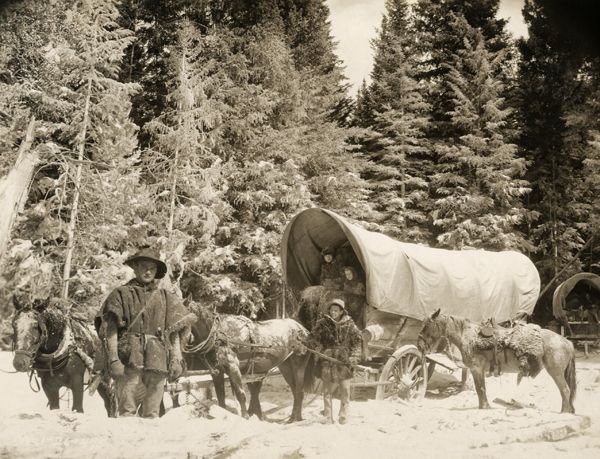
The Big Trail. 1930. USA. Directed by Raoul Walsh

The Big Trail. 1930. USA. Directed by Raoul Walsh

These notes accompany screenings of Raoul Walsh’s The Big Trail, August 11, 12, and 13 in Theater 1.

We last crossed paths with Raoul Walsh (1887–1980) when we looked at his early gangster film, Regeneration. Walsh, like Howard Hawks, was eclectic in his choice of genres and retained some of the same aura of robust masculinity that Hawks affected. With rare exceptions, however, Walsh’s films lacked the gravitas and profundity of great art. By saying this, I don’t want to appear dismissive.

August 3, 2010  |  An Auteurist History of Film
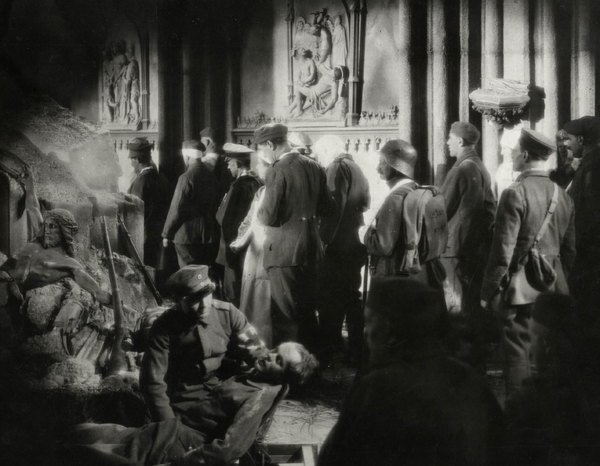
G. W. Pabst’s Westfront 1918
Westfront 1918. 1930. Germany. Directed by G. W. Pabst

Westfront 1918. 1930. Germany. Directed by G. W. Pabst

These notes accompany screenings of G. W. Pabst’s Westfront 1918, August 4, 5, and 6 in Theater 3.

When we last encountered G. W. Pabst (1885–1967), he had made the startling Die Buchse der Pandora (Pandora’s Box).

July 27, 2010  |  An Auteurist History of Film
Lewis Milestone’s All Quiet on the Western Front

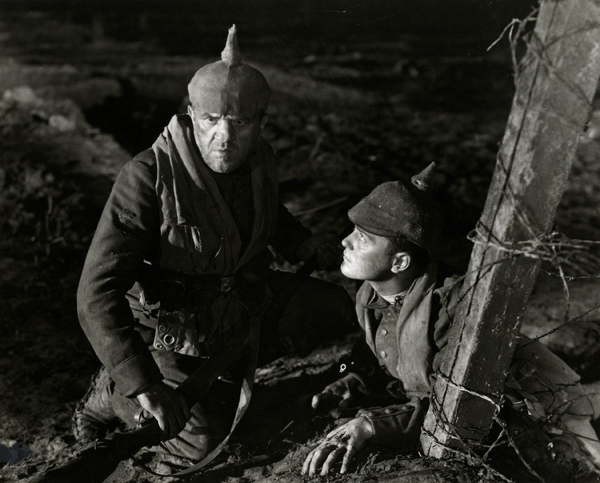
All Quiet on the Western Front. 1930. USA. Lewis Milestone

All Quiet on the Western Front. 1930. USA. Lewis Milestone

These notes accompany screenings of Lewis Milestone’s </i>All Quiet on the Western Front, July 28, 29, and 30 in Theater 1.</p>

Lewis Milestone (1895–1980) was born Lev Milstein near Odessa, Ukraine. He immigrated to America in 1913 and served in the photographic unit of the Army Signal Corps during World War I. He began working in Hollywood in 1919, and directed his first film in 1925. Even before his Oscar for All Quiet on the Western Front (1930), he had won a “Best Comedy Direction” statuette for Two Arabian Knights (1927), beating out Charles Chaplin’s The Circus.