Max Ernst
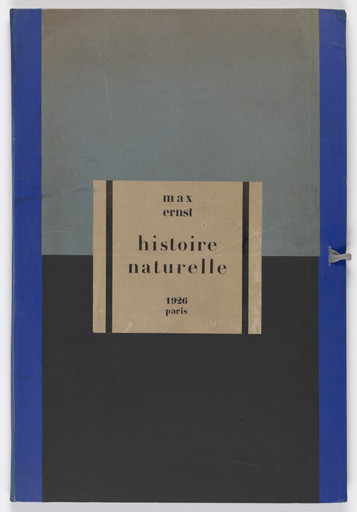
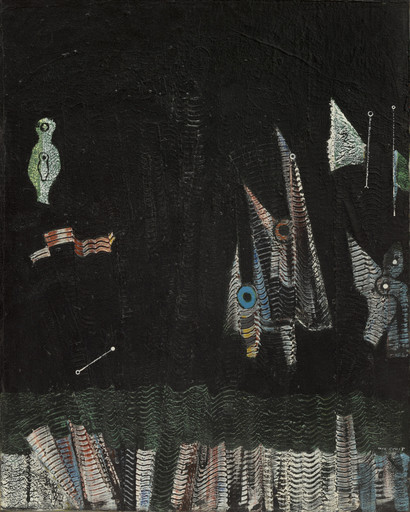
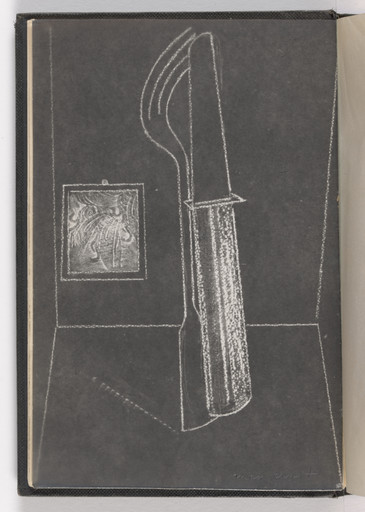
Shaving the Walls (Rasant les murs) from Natural History (Histoire naturelle)
c. 1925, published 1926
Not on view
Ernst created these images by placing paper atop various materials—wood floorboards, lengths of twine, leaves, wire mesh, crumpled paper, crusts of bread—and rubbing the surface with a pencil or crayon. Inspired by the resulting textures, he added details to transform them into fantastical landscapes, objects, and creatures. Ernst called his process frottage (French for “rubbing”) and claimed it as a form of Surrealist automatism, whereby an artist attempts to let the unconscious guide his hand in the creation of an image.
2017.
Explore more
Max Ernst
French and American, born Germany. 1891–1976 243 works onlineA key member of first Dada and then Surrealism in Europe in the 1910s and 1920s, Max Ernst used a variety of mediums—painting, collage, printmaking, sculpture, and various unconventional drawing methods—to give visual form to both personal memory and collective myth.
Learn more →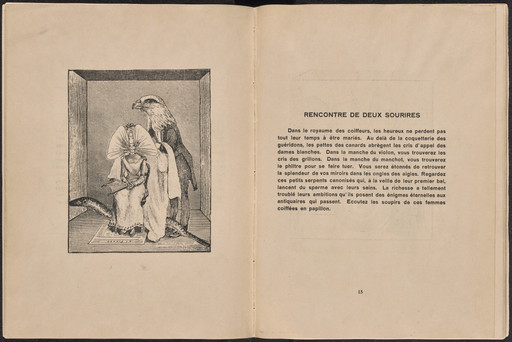

From MoMA Design Store


Licensing
Artwork or archival images
If you would like to reproduce an image of a work of art in MoMA's collection, or an image of a MoMA publication or archival material (including installation views, checklists, and press releases), please contact Art Resource (publication in North America) or Scala Archives (publication in all other geographic locations).
Audio and film clips
MoMA licenses archival audio and select out of copyright film clips from our film collection. At this time, MoMA produced video cannot be licensed by MoMA/Scala. All requests to license archival audio or out of copyright film clips should be addressed to Scala Archives at [email protected]. Motion picture film stills cannot be licensed by MoMA/Scala. For access to motion picture film stills for research purposes, please contact the Film Study Center at [email protected]. For more information about film loans and our Circulating Film and Video Library, please visit Circulating Film and Video Library.
Text from a publication or the archives
If you would like to reproduce text from a MoMA publication, please email [email protected]. If you would like to publish text from MoMA's archival materials, please fill out this permission form and send to [email protected].
Feedback
This record is a work in progress. If you have additional information or spotted an error, please fill out this feedback form.