The setting of The Storm is the Norwegian seaside village of Åsgårdstrand, where Munch often spent his summers. The main figure and the group behind her cover their ears to keep out the sound of the storm’s howling winds. This painting was made the same year Munch originated the motif of The Scream. Here the depiction is more naturalistic, and the characters are female rather than male, but the compositions both reflect Munch’s preoccupation with the concept of a solitary individual set apart from a community of others
Edvard Munch: The Scream, October 24, 2012–April 29, 2013.
Publication excerpt from The Museum of Modern Art, MoMA Highlights , New York: The Museum of Modern Art, revised 2004, originally published 1999, p. 44.
Munch painted The Storm in Åsgårdstrand, a small Norwegian seaside resort where he often stayed. There had indeed been a violent storm there that summer, but the painting does not appear to show it, or even its physical aftermath; the storm here is an inner one, a psychic distress. Standing near the water, in an eerie blue half–light, half–dark Scandinavian summer night, a young woman clasps her hands to her head. Other women, standing apart from her, make the same anguished gesture—to what end we are not sure. The circle in which they stand, and the protagonist's white dress, give to the scene the feeling of some ancient pagan ritual, even while the solid house in the background, its lit windows shining in the dark, suggests some more regular life from which these women are excluded—or perhaps that they find intolerable.
Munch's art suggests a transformation of personal memories and emotions into a realm of dream, myth, and enigma. His exposure to French Symbolist poetry during a stay in Paris had convinced him of the necessity for a more subjective art; there was no need, he said, for more paintings of "people who read and women who knit." Associated with the international development of Symbolism in the 1890s, he is also recognized as a precursor of Expressionism.
The Storm. 1893
The Museum of Modern Art, MoMA Highlights, New York: The Museum of Modern Art, revised 2004, originally published 1999, p. 44.
Explore more
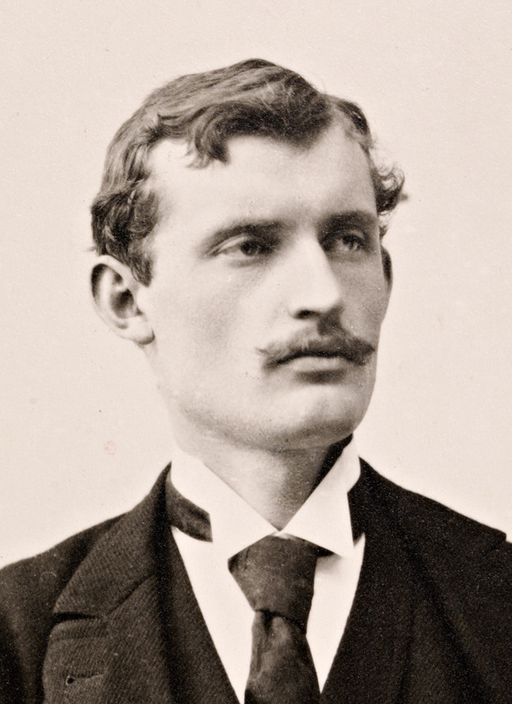
Edvard Munch
Norwegian, 1863–1944 73 works onlineFor Edvard Munch, 1893 was a year of screams. In the fall, the Norwegian artist produced two versions of The Scream , his now iconic image of personal and universal anguish. ” he later wrote.
Learn more →
Audio
Audio from the playlist Edvard Munch: The Scream
From MoMA Design Store


Installation views
We have identified this work in the following photos from our exhibition history.
Provenance Research Project
This work is included in the Provenance Research Project, which investigates the ownership history of works in MoMA's collection.
1893 - 1895, Edvard Munch, Oslo, Norway.
1895 - 1914, Frederik Arentz, Oslo, Norway, acquired from the artist.
1914 - ?, Erik Arentz and Egil and Magnella Fischer, Copenhagen, Denmark, inherited from Frederik Arentz (father).
Conrad Pineus (1872-1945), Gothenburg, Sweden.
By 1927 - 1970, Charlotte and Christian Mustad (1878-1970), Oslo, Norway.
1970, Estate of Christian Mustad.
Before 1974, Harry and Patricia Irgens Larsen, New York.
1974, The Museum of Modern Art, New York, acquired as gift and purchased from Mr. and Mrs. H. Irgens Larsen.
Provenance research is a work in progress, and is frequently updated with new information. If you have any questions or information to provide about the listed works, please email [email protected] or write to:
Provenance Research Project
The Museum of Modern Art
11 West 53 Street
New York, NY 10019
Licensing
Artwork or archival images
If you would like to reproduce an image of a work of art in MoMA's collection, or an image of a MoMA publication or archival material (including installation views, checklists, and press releases), please contact Art Resource (publication in North America) or Scala Archives (publication in all other geographic locations).
Audio and film clips
MoMA licenses archival audio and select out of copyright film clips from our film collection. At this time, MoMA produced video cannot be licensed by MoMA/Scala. All requests to license archival audio or out of copyright film clips should be addressed to Scala Archives at [email protected]. Motion picture film stills cannot be licensed by MoMA/Scala. For access to motion picture film stills for research purposes, please contact the Film Study Center at [email protected]. For more information about film loans and our Circulating Film and Video Library, please visit Circulating Film and Video Library.
Text from a publication or the archives
If you would like to reproduce text from a MoMA publication, please email [email protected]. If you would like to publish text from MoMA's archival materials, please fill out this permission form and send to [email protected].
Feedback
This record is a work in progress. If you have additional information or spotted an error, please fill out this feedback form.