Oil on canvas with collage of printed paper, postage stamp, and thermometer
Not on view
This unconventional military portrait is made up of a variety of elements—from collaged letters and numbers and everyday objects (a thermometer and postage stamp) to painted body parts (an ear and mustache) and geometric planes of color. The "reservist" refers to an army-trained officer under the age of forty-three, who, like the artist, was liable to be called up in the event of war. A dominant blue square floats in place of the face one might expect. For Malevich, the form of the square embodied physical and spiritual qualities: "The square is not a subconscious form. It is the creation of intuitive reason. It is the face of the new art."
2025
Explore more



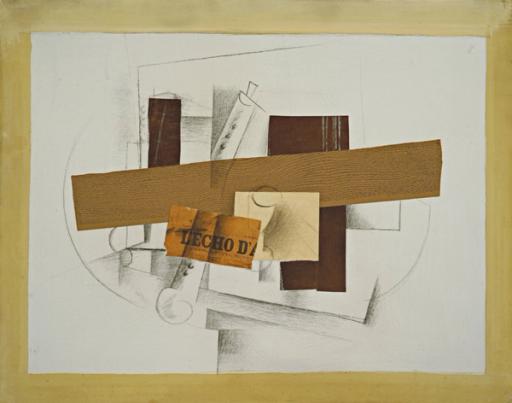
Cubism
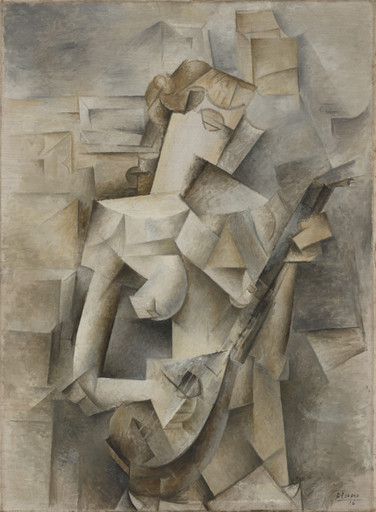
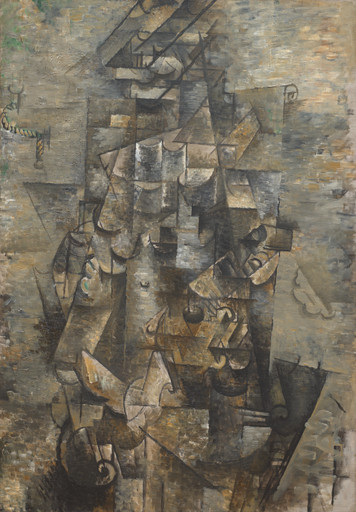
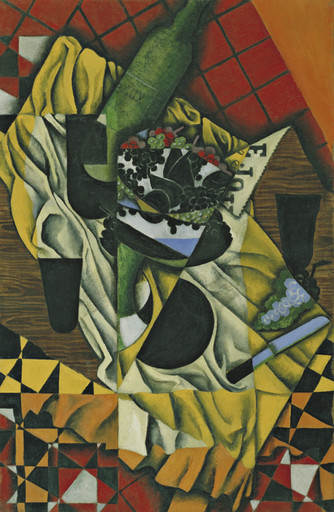
An artistic style invented in Paris during the first decade of the 20th century, Cubism was soon adopted by an international network of artists who sought to create a new art for a new century.
Learn more →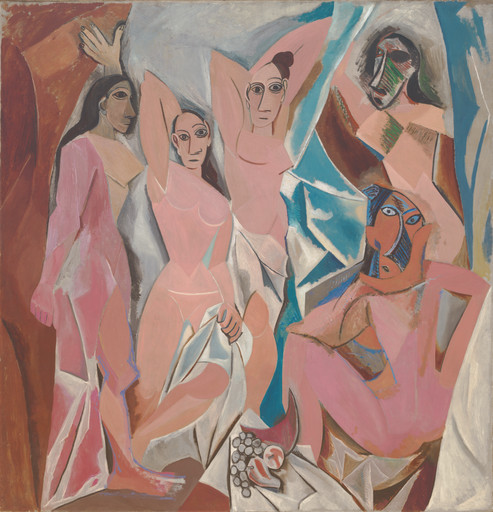


Audio
Audio from the playlist 1880–1950: Works from the Collection
From MoMA Design Store


Installation views
We have identified this work in the following photos from our exhibition history.
Provenance Research Project
This work is included in the Provenance Research Project, which investigates the ownership history of works in MoMA's collection.
The artist, Moscow and Petrograd/Leningrad. 1914 - 1927
Hugo Haering, Berlin, 1927 - 1930. Malevich took approximately seventy works, including this one, from Leningrad to Berlin in 1927, where the work was displayed at Große Berliner Austellung. Malevich left these paintings and drawings in the care of a Berlin Architect named Hugo Haering when he returned to Leningrad later in 1927. In 1930, Haering transferred the collection to the care of Alexander Dorner, director of the Provinzialmuseum in Hannover. Malevich never returned to Germany to collect the works, and died in Leningrad in 1935 without leaving instructions directing the disposition of his art.
Provinzialmuseum (later Landesmuseum), Hannover, 1930 - 1935. Dorner exhibited the pictures until the Nazis came to power in 1933, and then placed them in storage to save them from possible destruction. In 1935, Alfred Barr, acting on behalf of The Museum of Modern Art, bought two paintings and two drawings from Dorner, and borrowed other works.
The Museum of Modern Art, New York, 1935 - present. The works remained on extended loan to The Museum of Modern Art until 1963, when they were acquired into the collection. The acquisition was confirmed in 1999 by agreement with Malevich's heirs and made possible with funds from the Mrs. John Hay Whitney Bequest (by exchange).
Provenance research is a work in progress, and is frequently updated with new information. If you have any questions or information to provide about the listed works, please email [email protected] or write to:
Provenance Research Project
The Museum of Modern Art
11 West 53 Street
New York, NY 10019
Licensing
Artwork or archival images
If you would like to reproduce an image of a work of art in MoMA's collection, or an image of a MoMA publication or archival material (including installation views, checklists, and press releases), please contact Art Resource (publication in North America) or Scala Archives (publication in all other geographic locations).
Audio and film clips
MoMA licenses archival audio and select out of copyright film clips from our film collection. At this time, MoMA produced video cannot be licensed by MoMA/Scala. All requests to license archival audio or out of copyright film clips should be addressed to Scala Archives at [email protected]. Motion picture film stills cannot be licensed by MoMA/Scala. For access to motion picture film stills for research purposes, please contact the Film Study Center at [email protected]. For more information about film loans and our Circulating Film and Video Library, please visit Circulating Film and Video Library.
Text from a publication or the archives
If you would like to reproduce text from a MoMA publication, please email [email protected]. If you would like to publish text from MoMA's archival materials, please fill out this permission form and send to [email protected].
Feedback
This record is a work in progress. If you have additional information or spotted an error, please fill out this feedback form.