Oil on canvas
Madame Kupka Among the Verticals marks František Kupka’s transition from figuration to abstraction in 1910-11. To make it, the artist returned to an earlier portrait of Eugénie Straub Broad, his wife, then added vibrantly colored, tightly packed vertical lines that surround and partially cover her face. Kupka began the portrait of Broad several years earlier, when his drawings and paintings were grounded in realistic depictions of the human figure. By 1910, however, he was creating increasingly abstract works inspired by his engagement with new ideas in science, technology, music, and art, including Cubism. This shift is evident in the distinct paint layers—figurative below and non-figurative above—in Madame Kupka Among the Verticals. The completed painting proved so important to Kupka that he kept it in his studio until 1956, the year before his death.
2026
Gallery label from Inventing Abstraction, 1910–1925 , December 23, 2012–April 15, 2013.
A vibrantly colored, tightly packed procession of uneven verticals nearly envelops a face painted in markedly nonnaturalistic shades of green and purple. Kupka would later say that to make this painting he had reworked an unfinished portrait of his wife, laying in strokes of color around her face until it was all but obscured by their boldly flat pattern—a method suggesting a literal assault on figuration.
Inventing Abstraction, 1910–1925, December 23, 2012–April 15, 2013.
Explore more
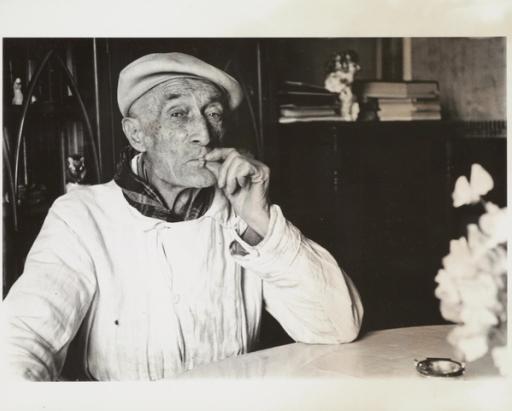
František Kupka
Czech, 1871–1957 51 works onlineShortly before he died in 1957, František Kupka sold Mme Kupka among Verticals , a work he had stored in his studio for nearly 45 years after its completion in 1910–11, to The Museum of Modern Art.
Learn more →
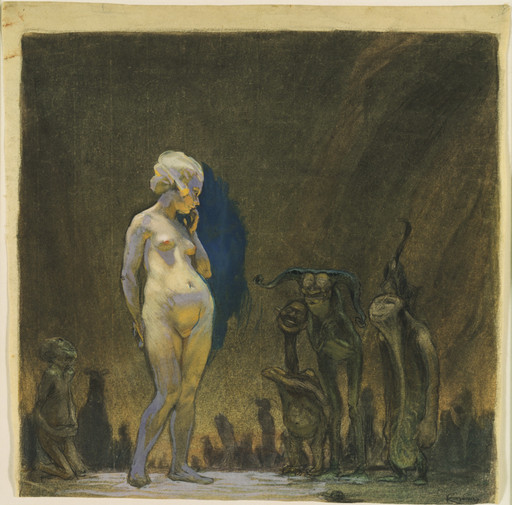
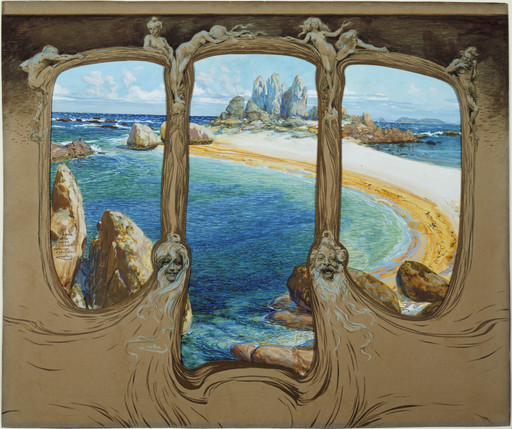
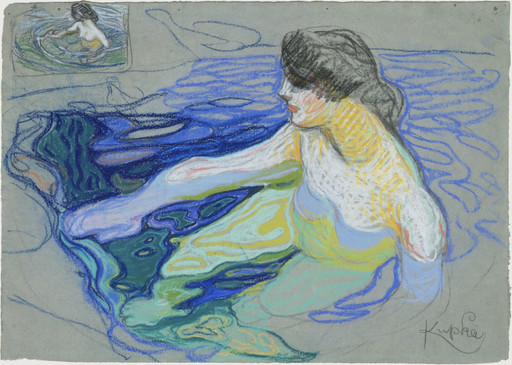

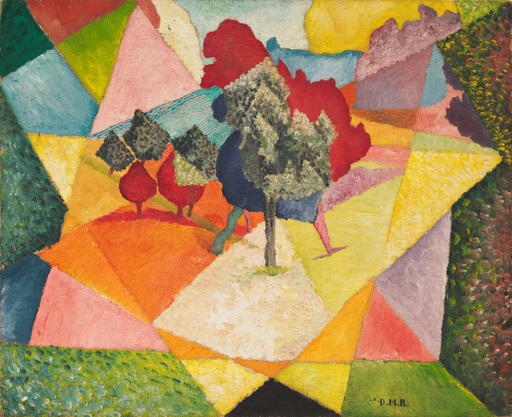
Orphism
A Cubist -influenced style of painting developed around 1912 by Robert and Sonia Delaunay and František Kupka , who turned to abstraction as a way to explore pure color and the effects of light.
Learn more →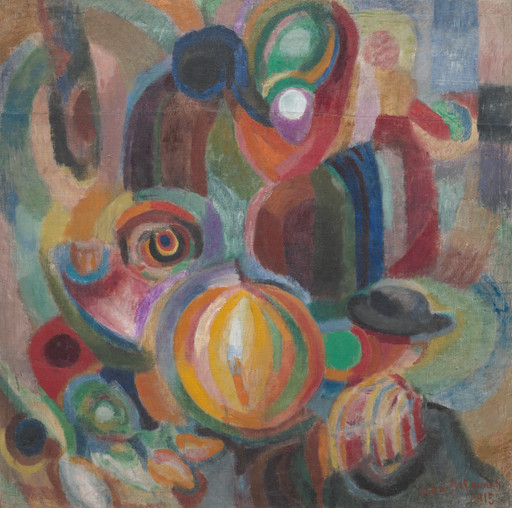

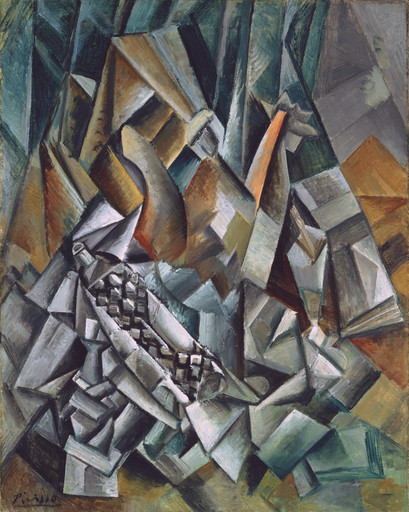
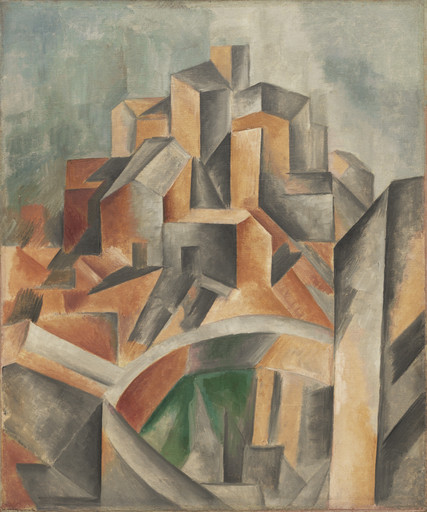
A Cubist Salon
Gallery 503What does Cubism look like? For the international network of artists who first engaged with this movement, it was a work in progress.
Learn more →



From MoMA Design Store


Installation views
We have identified this work in the following photos from our exhibition history.
Provenance Research Project
This work is included in the Provenance Research Project, which investigates the ownership history of works in MoMA's collection.
1910 - 1956, František Kupka, Puteaux, France.
1956, The Museum of Modern Art, New York, purchased from the artist.
Provenance research is a work in progress, and is frequently updated with new information. If you have any questions or information to provide about the listed works, please email [email protected] or write to:
Provenance Research Project
The Museum of Modern Art
11 West 53 Street
New York, NY 10019
Licensing
Artwork or archival images
If you would like to reproduce an image of a work of art in MoMA's collection, or an image of a MoMA publication or archival material (including installation views, checklists, and press releases), please contact Art Resource (publication in North America) or Scala Archives (publication in all other geographic locations).
Audio and film clips
MoMA licenses archival audio and select out of copyright film clips from our film collection. At this time, MoMA produced video cannot be licensed by MoMA/Scala. All requests to license archival audio or out of copyright film clips should be addressed to Scala Archives at [email protected]. Motion picture film stills cannot be licensed by MoMA/Scala. For access to motion picture film stills for research purposes, please contact the Film Study Center at [email protected]. For more information about film loans and our Circulating Film and Video Library, please visit Circulating Film and Video Library.
Text from a publication or the archives
If you would like to reproduce text from a MoMA publication, please email [email protected]. If you would like to publish text from MoMA's archival materials, please fill out this permission form and send to [email protected].
Feedback
This record is a work in progress. If you have additional information or spotted an error, please fill out this feedback form.