Oil on canvas
Joan Miró said that The Birth of the World depicts “a sort of genesis”—the amorphous beginnings of life. To make this work, Miró poured, brushed, and flung paint on an unevenly primed canvas so that the paint soaked in some areas and rested on top in others. Atop this relatively uncontrolled application of paint, he added lines and shapes he had previously planned in studies. The bird or kite, shooting star, balloon, and figure with white head may all seem somehow familiar, yet their association is illogical.
Describing his method, Miró said, “Rather than setting out to paint something I began painting and as I paint the picture begins to assert itself, or suggest itself under my brush.… The first stage is free, unconscious. But, he continued, “The second stage is carefully calculated.” The Birth of the World reflects this blend of spontaneity and deliberation.
Publication excerpt from MoMA Highlights: 375 Works from The Museum of Modern Art, New York (New York: The Museum of Modern Art, 2019)
Miró painted this towering canvas in summer or fall of 1925 at his family’s farm in Montroig, a small village nestled between the mountains and coast of his native Catalonia. He was buoyed by the success of his recent exhibition in Paris, where he had been feted by many of the young poets and painters associated with the Surrealist movement. Their signatures emblazoned his exhibition’s invitation, claiming Miró as one of their own. The question after he returned to Spain was what he would do next. The Birth of the World is one of his answers.
With this work, Miró went, to quote a favorite Surrealist dictum, “beyond painting,” with “painting” understood to be his own past work and Western artistic tradition. He jettisoned the rules of perspective that painters had used since the Renaissance to construct illusionistic pictorial space, and instead he covered the ground of his vast canvas with an astonishing variety of abstract painterly incidents: spatters, smears, stains, drips, cascades, bursts, smudges, explosions, spurts, and diaphanous washes vie for attention with a series of minimal motifs that are as much drawn as painted. The result was a new and radically unconstrained form of painting that Miró would later describe as “a sort of genesis,” and that his Surrealist poet friends titled The Birth of the World.
MoMA Highlights: 375 Works from The Museum of Modern Art, New York (New York: The Museum of Modern Art, 2019)
Kids label from 2025
Can you find a kite, a shooting star, and a balloon?
What other shapes do you see? Joan Miró poured, brushed, and flung paint to make this work, leaving some of these marks up to chance. On top of the uneven layer of paint, he added lines and shapes. Notice how the paint seems to soak into the canvas in some places and rest on the surface in others.
2025
Explore more
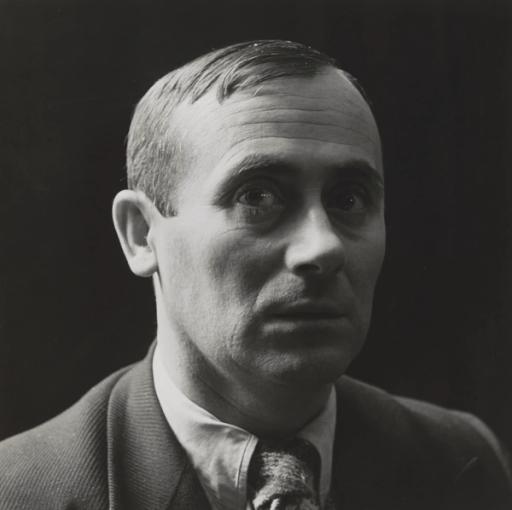
Joan Miró
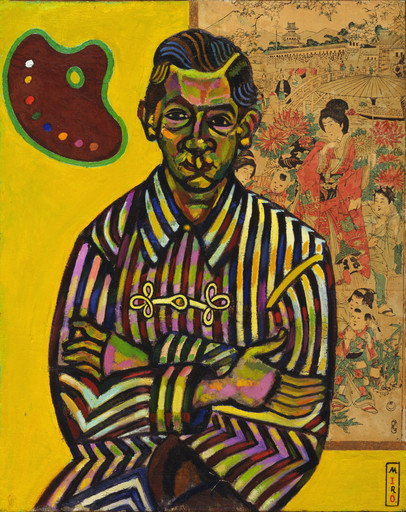
Spanish, 1893–1983 487 works onlineJoan Miró’s painting The Hunter (Catalan Landscape) brings together the real and the imaginary, abstraction and figuration, and image and text in a way that would characterize much of his work to come.
Learn more →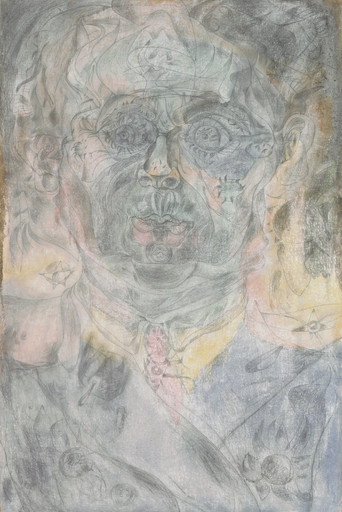
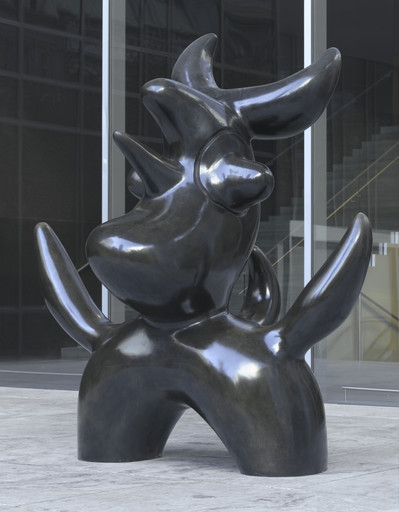
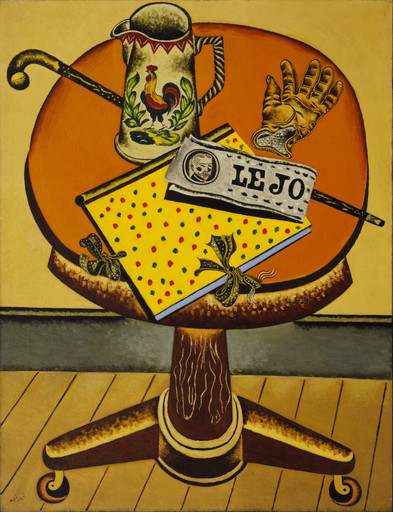
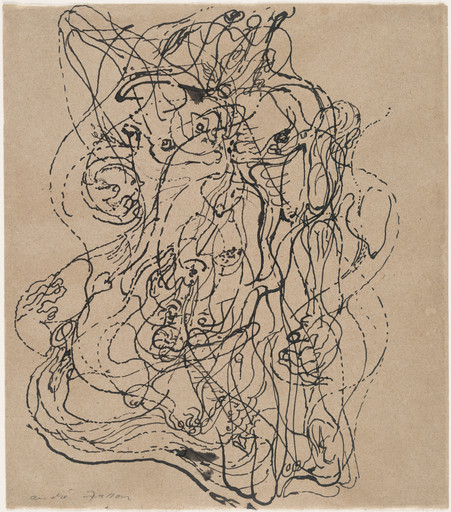
Automatism
Strategies of writing or creating art that aimed to access the unconscious mind. The Surrealists, in particular, experimented with automatist techniques of writing, drawing, and painting.
Learn more →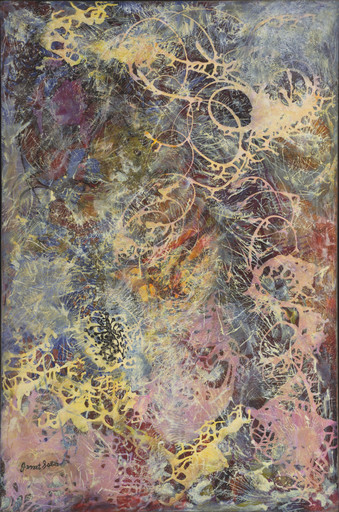

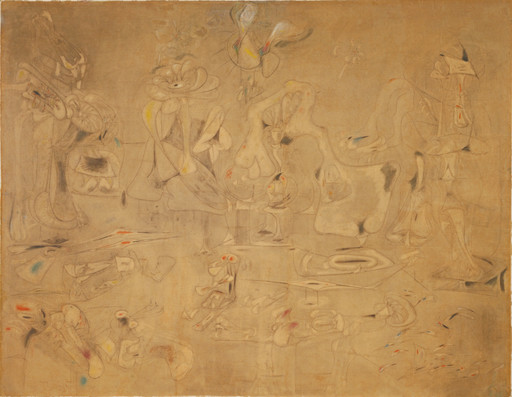
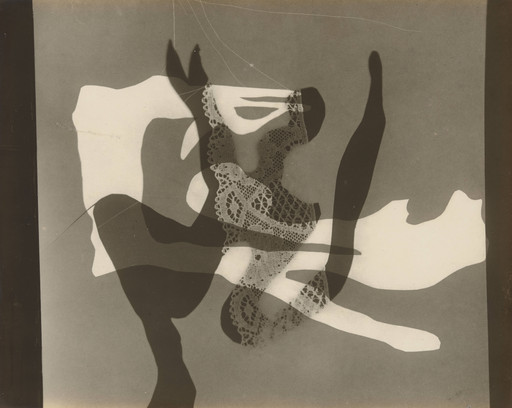
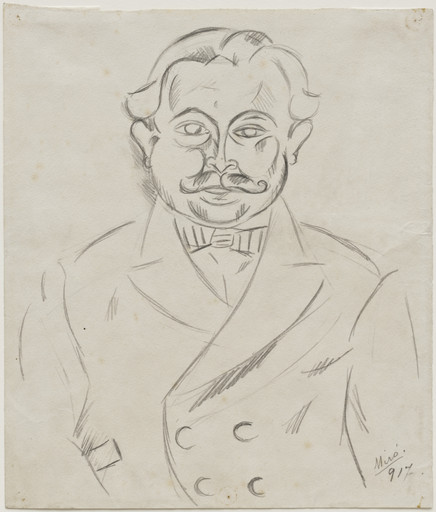
A Surreal Lens
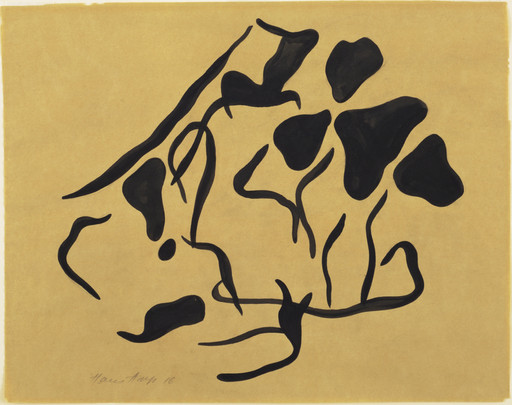
Gallery 517In 1924, André Breton published his Manifesto of Surrealism, which, guided by Sigmund Freud’s psychoanalytic theories, declared a radical break from the rationalism of modern society in favor of imagination, erotic desire, and unconscious thought.
Learn more →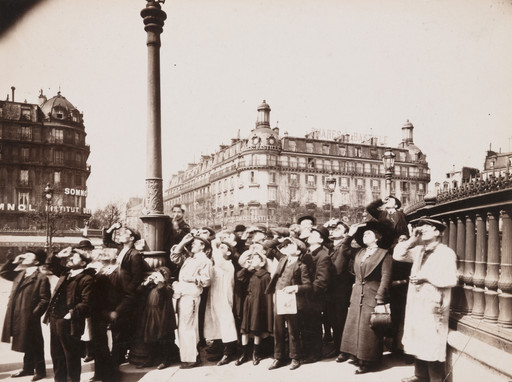

Audio
Audio from the playlist Collection 1880s–1940s
From MoMA Design Store


Installation views
We have identified this work in the following photos from our exhibition history.
Provenance Research Project
This work is included in the Provenance Research Project, which investigates the ownership history of works in MoMA's collection.
The artist
René Gaffé (1887-1968), Brussels and Cagnes-sur-Mer. Acquired from the artist c. 1926 - 1968
Jane Gaffé (Jane Labie, Mrs René Gaffé), Cagnes-sur-Mer. Inherited from her husband, November 1968 - 1972
The Museum of Modern Art, New York. Purchased from Mrs. René Gaffé, Cagnes-sur-Mer, October 1972
Provenance research is a work in progress, and is frequently updated with new information. If you have any questions or information to provide about the listed works, please email [email protected] or write to:
Provenance Research Project
The Museum of Modern Art
11 West 53 Street
New York, NY 10019
Licensing
Artwork or archival images
If you would like to reproduce an image of a work of art in MoMA's collection, or an image of a MoMA publication or archival material (including installation views, checklists, and press releases), please contact Art Resource (publication in North America) or Scala Archives (publication in all other geographic locations).
Audio and film clips
MoMA licenses archival audio and select out of copyright film clips from our film collection. At this time, MoMA produced video cannot be licensed by MoMA/Scala. All requests to license archival audio or out of copyright film clips should be addressed to Scala Archives at [email protected]. Motion picture film stills cannot be licensed by MoMA/Scala. For access to motion picture film stills for research purposes, please contact the Film Study Center at [email protected]. For more information about film loans and our Circulating Film and Video Library, please visit Circulating Film and Video Library.
Text from a publication or the archives
If you would like to reproduce text from a MoMA publication, please email [email protected]. If you would like to publish text from MoMA's archival materials, please fill out this permission form and send to [email protected].
Feedback
This record is a work in progress. If you have additional information or spotted an error, please fill out this feedback form.