Oil on canvas
In March 1909, Matisse received a commission from the Russian businessman and collector Sergei Shchukin for two large decorative panels, Dance and Music (now in the Hermitage Museum, St. Petersburg). He made this painting quickly as a compositional study for Dance, which was intended to hang on the landing of a staircase in Shchukin’s home. When it was painted, its simplification of the human body and radical elimination of perspective were attacked as inept or willfully crude, but Matisse felt that it evoked “life and rhythm.”
2019
Publication excerpt from MoMA Highlights: 375 Works from The Museum of Modern Art, New York (New York: The Museum of Modern Art, 2019)
Matisse created Dance (I) as a study for a painting commissioned by the Russian businessman and arts patron Sergei Shchukin. The final work and its pendant painting, Music (both completed in 1910), are housed in the collection of the Hermitage Museum in St. Petersburg. Dance (I) marks a moment in Matisse’s career when he embraced a reductive approach to painting, seeking the expressive potentials of fundamental elements: line, color, and form.
This daring approach was influenced by the increasing sophistication of photographic technology. In 1909 the artist observed, “The painter no longer has to preoccupy himself with details. The photograph is there to render the multitude of details a hundred times better and more quickly. Plastic form will present emotion as directly as possible and by the simplest means.” Across this monumental canvas Matisse used only four naturalistic colors: blue for the sky, green for the ground, and black and pale pink in rendering the five figures. Although he made adjustments to the composition, Matisse’s final lines convey a remarkable fluidity and sense of dynamic movement in their economical application—in the sweeping curve along the front side of the left figure, for example, and along the outstretched arms of the dancers as they come together in an unhampered expression of joy.
MoMA Highlights: 375 Works from The Museum of Modern Art, New York (New York: The Museum of Modern Art, 2019)
Kids label from 2025
Everybody dance now!
Notice how each of these figures in Dance (I) seems alive with movement. Find the figure reaching for the hand of her fellow dancer. It’s almost like they’re dancing too fast for her to catch up!
Pose like one of the dancers. What movement will you make next?
2025
Explore more
Henri Matisse
French, 1869–1954 429 works onlineThroughout his decades-long career as a painter, sculptor, draftsman, and printmaker, Henri Matisse continuously searched, in his own words, “for the same things, which I have perhaps realized by different means.
Learn more →
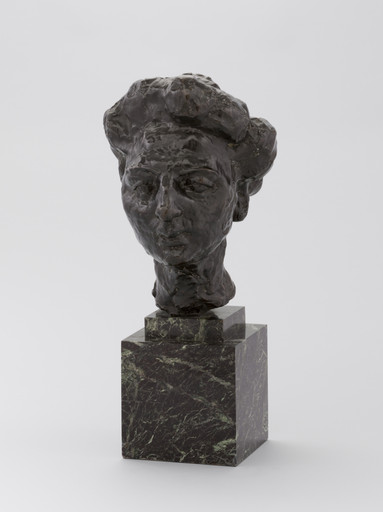
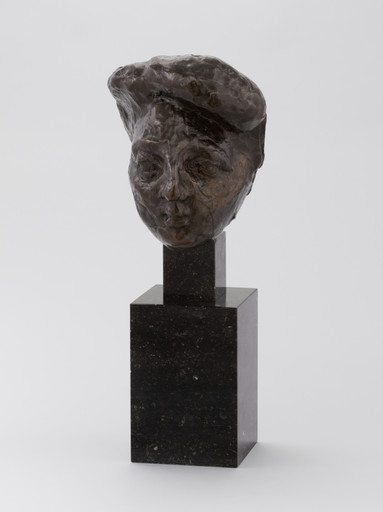

Henri Matisse
Gallery 506Henri Matisse’s audacious experimentation with form and color was inseparable from his dedication to an art of harmonious expression, an ambition lost on most of his contemporary viewers.
Learn more →
Audio
Audio from the playlist Collection 1880s–1940s
Audio from the playlist Verbal Descriptions
From MoMA Design Store


Installation views
We have identified this work in the following photos from our exhibition history.
Provenance Research Project
This work is included in the Provenance Research Project, which investigates the ownership history of works in MoMA's collection.
1909 – probably October 1936, Henri Matisse, Paris
October 1936 – February 1939, Pierre Matisse Gallery (stock no. C834, P.M. no. 131), New York, acquired on consignment from Henri Matisse
February 1939 – 1963, Walter P. Chrysler, Jr., New York, purchased from Henri Matisse through Pierre Matisse Gallery
1963, Nelson A. Rockefeller, New York, purchased from Walter P. Chrysler, Jr. through Sidney Janis Gallery
1963, The Museum of Modern Art, New York, acquired as a gift from Nelson A. Rockefeller in honor of Alfred H. Barr, Jr.
Provenance research is a work in progress, and is frequently updated with new information. If you have any questions or information to provide about the listed works, please email [email protected] or write to:
Provenance Research Project
The Museum of Modern Art
11 West 53 Street
New York, NY 10019
Licensing
Artwork or archival images
If you would like to reproduce an image of a work of art in MoMA's collection, or an image of a MoMA publication or archival material (including installation views, checklists, and press releases), please contact Art Resource (publication in North America) or Scala Archives (publication in all other geographic locations).
Audio and film clips
MoMA licenses archival audio and select out of copyright film clips from our film collection. At this time, MoMA produced video cannot be licensed by MoMA/Scala. All requests to license archival audio or out of copyright film clips should be addressed to Scala Archives at [email protected]. Motion picture film stills cannot be licensed by MoMA/Scala. For access to motion picture film stills for research purposes, please contact the Film Study Center at [email protected]. For more information about film loans and our Circulating Film and Video Library, please visit Circulating Film and Video Library.
Text from a publication or the archives
If you would like to reproduce text from a MoMA publication, please email [email protected]. If you would like to publish text from MoMA's archival materials, please fill out this permission form and send to [email protected].
Feedback
This record is a work in progress. If you have additional information or spotted an error, please fill out this feedback form.