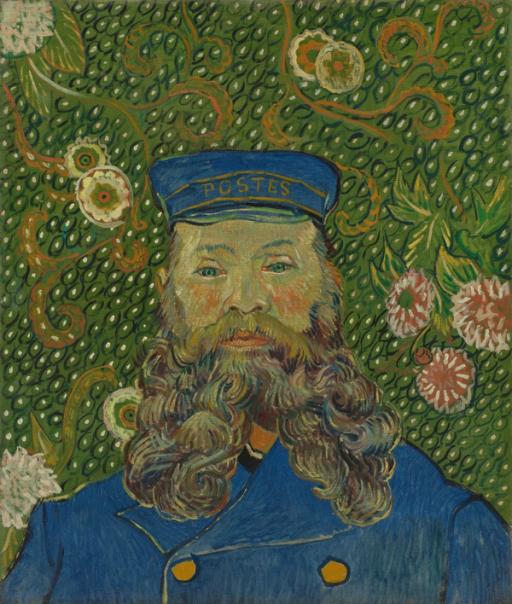
Joseph Roulin, a postal employee, was a friend of Van Gogh’s when the artist lived in Arles, a town in the South of France, in 1888–89. Van Gogh depicted Roulin in the uniform he always wore proudly, setting him against an imaginative backdrop of swirling flowers. The artist’s use of bold colors and flat patterns would have resonated with Austrian artists who were part of the Vienna Secession movement that formed a decade later.
2024
Gallery label from 2012.
This portrait of Joseph Roulin is one of six van Gogh painted of his close friend, a postal employee in the southern French town of Arles, a fifteen-hour train ride from Paris. Van Gogh had moved to Arles in 1888, hoping to create an artists cooperative there. The plan never came to fruition, and the artist became lonely and isolated. He found comfort and companionship with the Roulin family, and they are the subjects of many of his paintings. In this portrait, Roulin is depicted in the uniform he always wore proudly, set against an imaginative backdrop of swirling flowers. In a letter to his brother Theo, the artist wrote that, of all genres, "the modern portrait" excited him the most: "I want to paint men and women with that something of the eternal which the halo used to symbolize, and which we try to convey by the actual radiance and vibration of our coloring."
2012.
Explore more
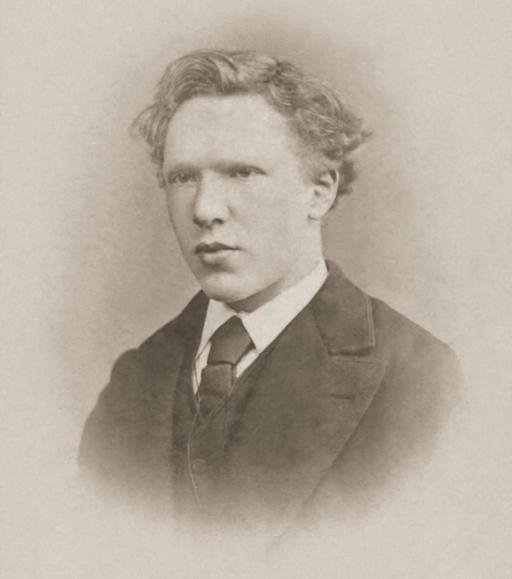
Vincent van Gogh
Dutch, 1853–1890 6 works onlineWhat makes a portrait modern? And what makes a modern portrait continue to appear modern, even decades after it was created? For Vincent van Gogh (1853–1890), the answer was clear: color.
Learn more →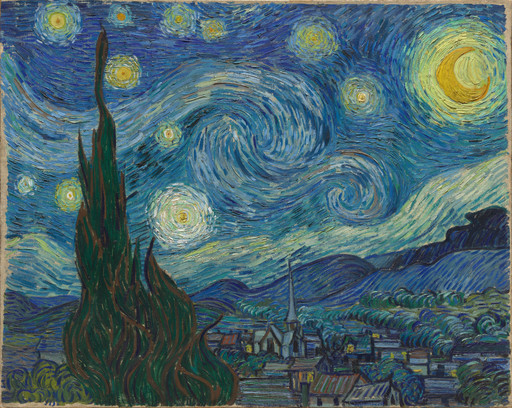
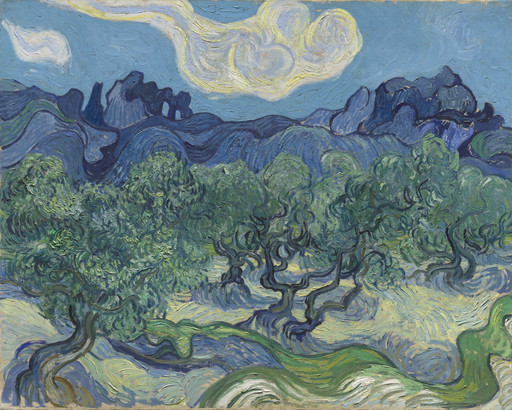


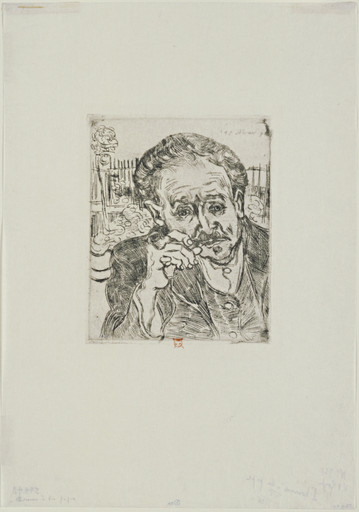
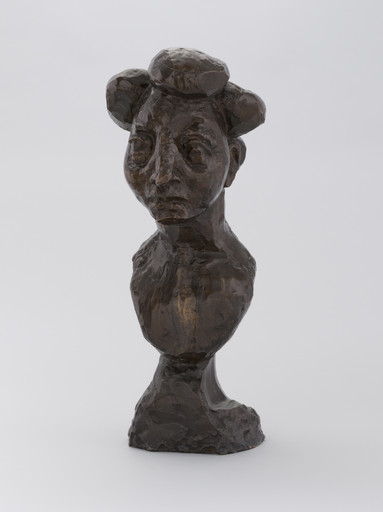
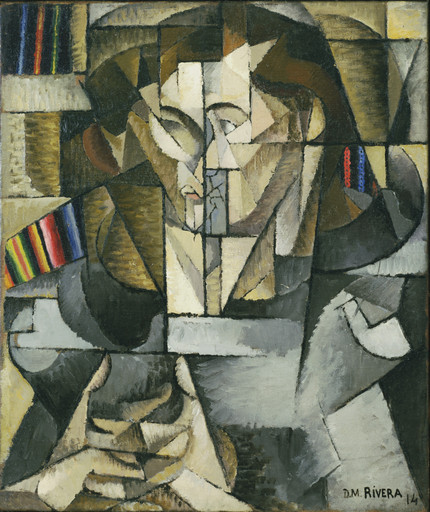
Portrait
A representation of a particular individual, usually intended to capture their likeness or personality.
Learn more →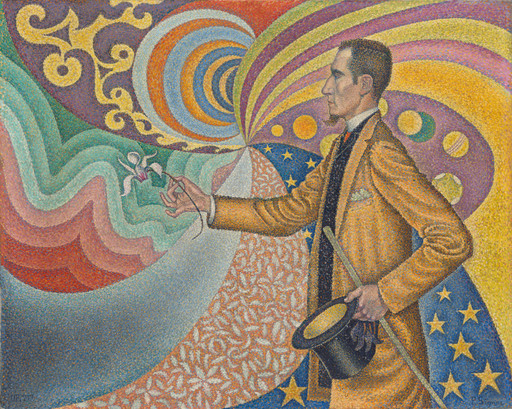
Audio
Audio from the playlist Kids
Audio from the playlist Beyond the Uniform
Audio from the playlist 1880–1950: Works from the Collection
From MoMA Design Store


Installation views
We have identified this work in the following photos from our exhibition history.
Provenance Research Project
This work is included in the Provenance Research Project, which investigates the ownership history of works in MoMA's collection.
1889, Vincent van Gogh, Arles, France.
April 1889 - January 1891, Theo van Gogh (1857-1891), Paris, acquired from his brother Vincent van Gogh.
January 1891 - December 1923, Johanna (Jo) van Gogh-Bonger, Amsterdam, in trust for her son, Vincent Willem van Gogh, Amsterdam, inherited from Theo van Gogh.
December 1923/January 9, 1924 - February 1924, Tate Gallery (National Gallery, Modern Foreign Section), purchased through Jo van Gogh-Bonger and Leicester Galleries, London.
February 1924 - February 21, 1924, Jo van Gogh-Bonger, Amsterdam, reacquired by exchange from Tate Gallery.
February 21, 1924 - March 30, 1926, Galerie Thannhauser (Siegfried Rosengart), Lucerne, purchased through Jo van Gogh-Bonger and Leicester Galleries, London.
March 30, 1926 - 1946, Bernhard Mayer, Zürich/Ascona and New York, purchased from Galerie Thannhauser.
1946, Heirs of Bernhard Mayer
1989, The Museum of Modern Art, New York, acquired from the above through Thomas Ammann Fine Art, Zürich.
For further reading: Die Sammlung Bernhard Mayer. Exhibition at Kunsthaus Zurich 1998 (exhibition catalogue).
Provenance research is a work in progress, and is frequently updated with new information. If you have any questions or information to provide about the listed works, please email [email protected] or write to:
Provenance Research Project
The Museum of Modern Art
11 West 53 Street
New York, NY 10019
Licensing
Artwork or archival images
If you would like to reproduce an image of a work of art in MoMA's collection, or an image of a MoMA publication or archival material (including installation views, checklists, and press releases), please contact Art Resource (publication in North America) or Scala Archives (publication in all other geographic locations).
Audio and film clips
MoMA licenses archival audio and select out of copyright film clips from our film collection. At this time, MoMA produced video cannot be licensed by MoMA/Scala. All requests to license archival audio or out of copyright film clips should be addressed to Scala Archives at [email protected]. Motion picture film stills cannot be licensed by MoMA/Scala. For access to motion picture film stills for research purposes, please contact the Film Study Center at [email protected]. For more information about film loans and our Circulating Film and Video Library, please visit Circulating Film and Video Library.
Text from a publication or the archives
If you would like to reproduce text from a MoMA publication, please email [email protected]. If you would like to publish text from MoMA's archival materials, please fill out this permission form and send to [email protected].
Feedback
This record is a work in progress. If you have additional information or spotted an error, please fill out this feedback form.