Oil on canvas
Not on view
Describing Gourds in 1945, Matisse recalled that he had created "a composition of objects that do not touch—but nonetheless participate in the same intimacy." Its surface reveals that he achieved this effect after repeatedly adjusting and transposing forms. The austerity and monumentality of the canvas are complementary to The Moroccans, also of 1916. These qualities may have helped Matisse develop the luminous aspects of the larger canvas. In Gourds, he explained, he began "to use pure black as a color of light and not as a color of darkness."
Matisse: Radical Invention, 1913-1917, July 18–October 11, 2010.
Explore more
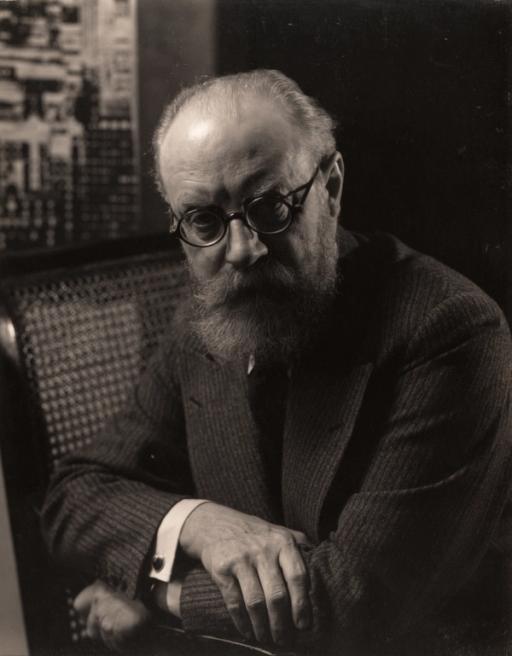
Henri Matisse
French, 1869–1954 429 works onlineThroughout his decades-long career as a painter, sculptor, draftsman, and printmaker, Henri Matisse continuously searched, in his own words, “for the same things, which I have perhaps realized by different means.
Learn more →
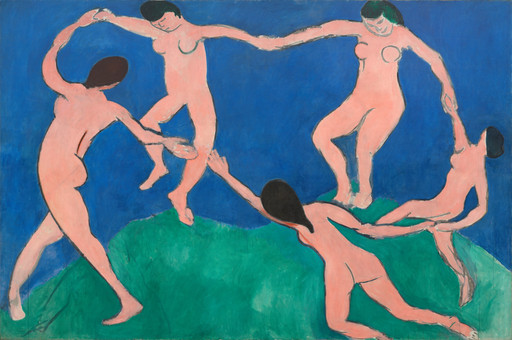
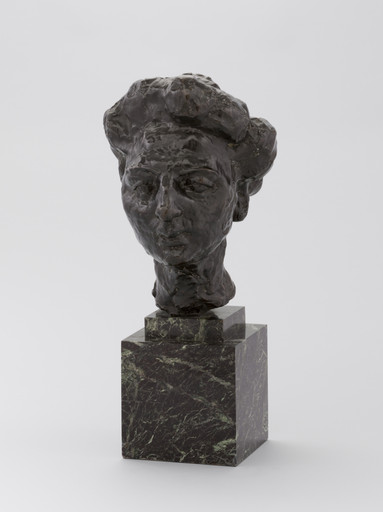
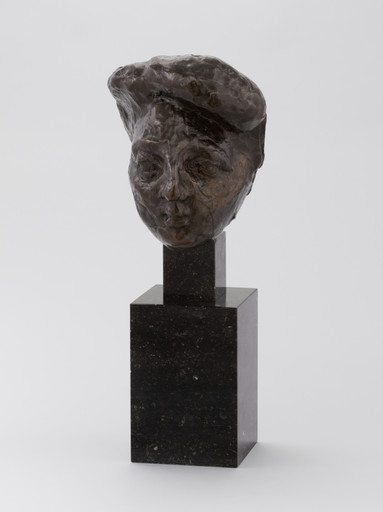

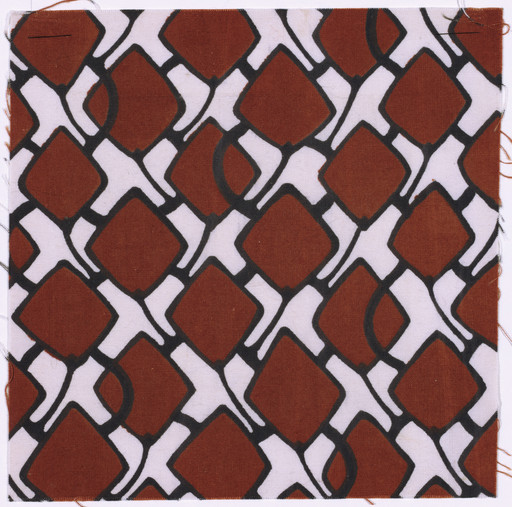
From MoMA Design Store


Installation views
We have identified this work in the following photos from our exhibition history.
Provenance Research Project
This work is included in the Provenance Research Project, which investigates the ownership history of works in MoMA's collection.
1916 – February 22, 1917, Henri Matisse, Paris
February 22, 1917 – March 17, 1917, Galerie Bernheim-Jeune, Paris, purchased from the artist
March 17, 1917 – ?, Léonce Rosenberg, Paris, purchased from Bernheim-Jeune
1926 – 1931, Paul Guillaume, Paris
By 1931 – 1935, Léonide Massine, New York
1935, Abby Aldrich Rockefeller, New York, purchased from Léonide Massine through Marie Harriman Gallery, New York
1935 – 1947, The Museum of Modern Art, New York, acquired as a gift from Abby Aldrich Rockefeller
1947 – 1952, Metropolitan Museum of Art, New York, acquired from The Museum of Modern Art
1952, The Museum of Modern Art, New York, repurchased from the Metropolitan Museum
Provenance research is a work in progress, and is frequently updated with new information. If you have any questions or information to provide about the listed works, please email [email protected] or write to:
Provenance Research Project
The Museum of Modern Art
11 West 53 Street
New York, NY 10019
Licensing
Artwork or archival images
If you would like to reproduce an image of a work of art in MoMA's collection, or an image of a MoMA publication or archival material (including installation views, checklists, and press releases), please contact Art Resource (publication in North America) or Scala Archives (publication in all other geographic locations).
Audio and film clips
MoMA licenses archival audio and select out of copyright film clips from our film collection. At this time, MoMA produced video cannot be licensed by MoMA/Scala. All requests to license archival audio or out of copyright film clips should be addressed to Scala Archives at [email protected]. Motion picture film stills cannot be licensed by MoMA/Scala. For access to motion picture film stills for research purposes, please contact the Film Study Center at [email protected]. For more information about film loans and our Circulating Film and Video Library, please visit Circulating Film and Video Library.
Text from a publication or the archives
If you would like to reproduce text from a MoMA publication, please email [email protected]. If you would like to publish text from MoMA's archival materials, please fill out this permission form and send to [email protected].
Feedback
This record is a work in progress. If you have additional information or spotted an error, please fill out this feedback form.