Franz Kline began his career as a figurative painter, but in the late 1940s, he used a projector to enlarge his drawing of a black rocking chair onto the wall. Intrigued by the way the image appeared abstract when it was enlarged, he decided to dedicate himself to creating large-scale, black-on-white abstract works. “I paint the white as well as the black,” he once said, “and the white is just as important.”
The dynamic curves and slashes of Chief may seem spontaneous, but this painting, like many of his so-called action paintings, was likely carefully reproduced from a preliminary study. The painting’s title refers to the name of a train that passed through his childhood hometown in Pennsylvania. Many of Kline’s works, though non-representational, seem to suggest through their titles and through the stark, pulsing compositions the bridges, railroad tracks, and machinery of America. Kline’s material of choice—inexpensive, low-viscosity house paints—also points to the artist’s interest in industry and consumerism.
Publication excerpt from The Museum of Modern Art, MoMA Highlights , New York: The Museum of Modern Art, revised 2004, originally published 1999, p. 205.
True to an alternate name for Abstract Expressionism, "action painting," Kline's pictures often suggest broad, confident, quickly executed gestures reflecting the artist's spontaneous impulses. Yet Kline seldom worked that way. In the late 1940s, chancing to project some of his many drawings on the wall, he found that their lines, when magnified, gained abstraction and sweeping force. This discovery inspired all of his subsequent painting; in fact many canvases reproduce a drawing on a much larger scale, fusing the improvised and the deliberate, the miniature and the monumental.
"Chief" was the name of a locomotive Kline remembered from his childhood, when he had loved the railway. Many viewers see machinery in Kline's images, and there are lines in Chief that imply speed and power as they rush off the edge of the canvas, swelling tautly as they go. But Kline claimed to paint "not what I see but the feelings aroused in me by that looking," and Chief is abstract, an uneven framework of horizontals and verticals broken by loops and curves. The cipherlike quality of Kline's con-figurations, and his use of black and white, have provoked comparisons with Japanese calligraphy, but Kline did not see himself as painting black signs on a white ground; "I paint the white as well as the black," he said, "and the white is just as important."
The Museum of Modern Art, MoMA Highlights, New York: The Museum of Modern Art, revised 2004, originally published 1999, p. 205.
Explore more
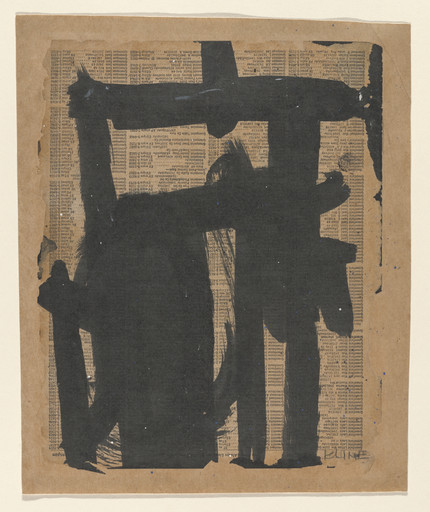
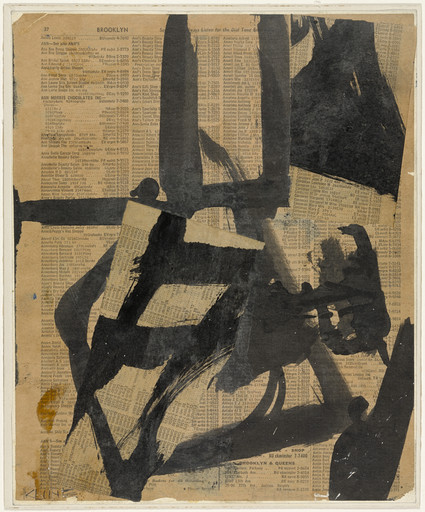
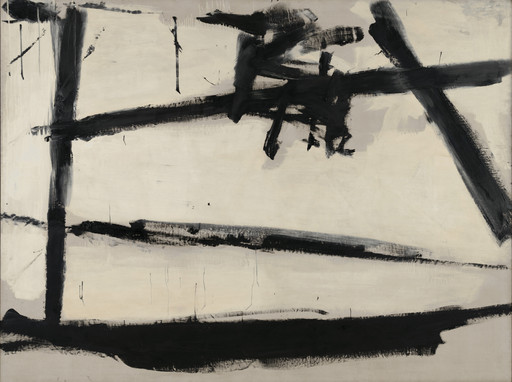
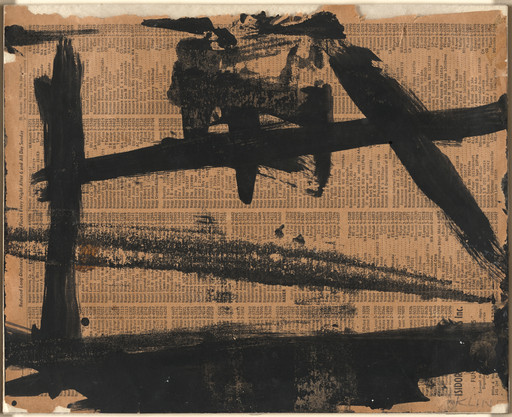

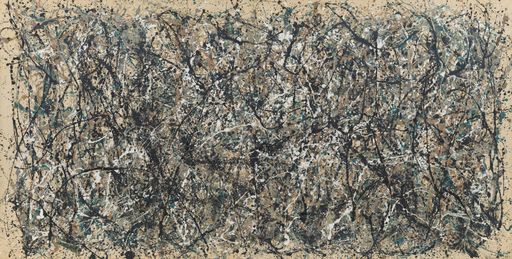
Abstract Expressionism
The dominant artistic movement in the 1940s and 1950s, Abstract Expressionism was the first to place New York City at the forefront of international modern art.
Learn more →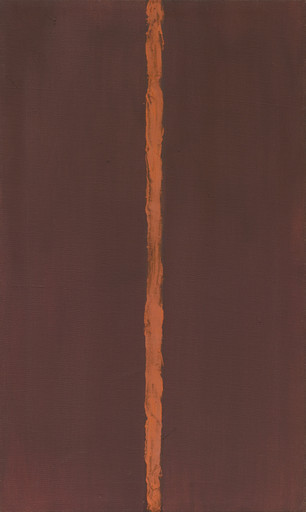
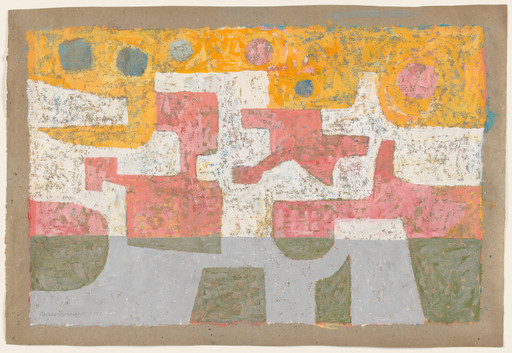
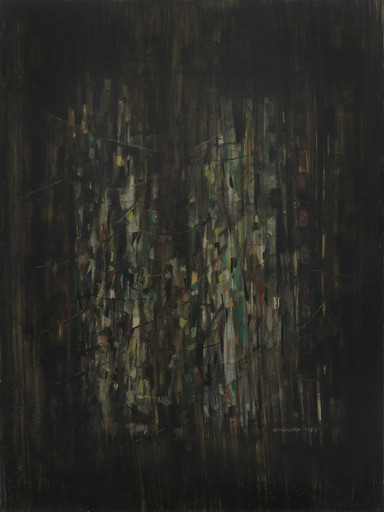
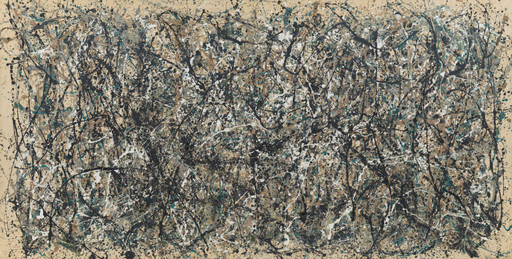
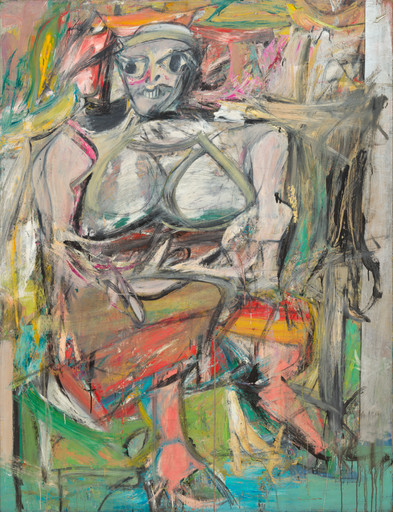
Action painting
Art critic Harold Rosenberg coined the term “action painting” in 1952 to describe the work of artists who painted using bold gestures that engaged more of the body than traditional easel painting.
Learn more →



From MoMA Design Store


Installation views
We have identified this work in the following photos from our exhibition history.
Licensing
Artwork or archival images
If you would like to reproduce an image of a work of art in MoMA's collection, or an image of a MoMA publication or archival material (including installation views, checklists, and press releases), please contact Art Resource (publication in North America) or Scala Archives (publication in all other geographic locations).
Audio and film clips
MoMA licenses archival audio and select out of copyright film clips from our film collection. At this time, MoMA produced video cannot be licensed by MoMA/Scala. All requests to license archival audio or out of copyright film clips should be addressed to Scala Archives at [email protected]. Motion picture film stills cannot be licensed by MoMA/Scala. For access to motion picture film stills for research purposes, please contact the Film Study Center at [email protected]. For more information about film loans and our Circulating Film and Video Library, please visit Circulating Film and Video Library.
Text from a publication or the archives
If you would like to reproduce text from a MoMA publication, please email [email protected]. If you would like to publish text from MoMA's archival materials, please fill out this permission form and send to [email protected].
Feedback
This record is a work in progress. If you have additional information or spotted an error, please fill out this feedback form.