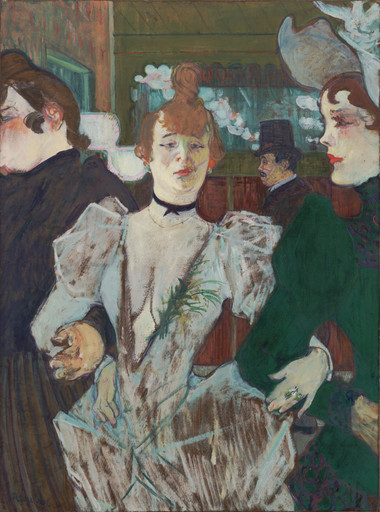
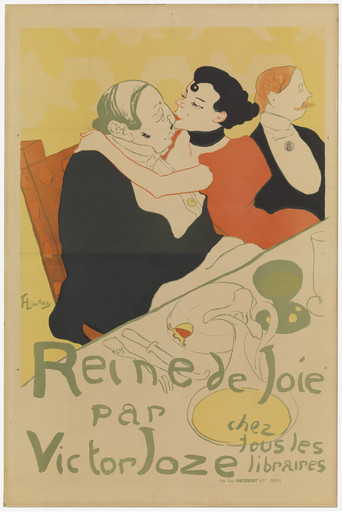
Though poor health and hard living led to his untimely death at 36, Henri de Toulouse-Lautrec became the de facto chronicler of Parisian nightlife during a career that lasted just over a decade. He was a fixture at the cabarets, dance halls, and theaters of Montmartre, a working-class neighborhood home to many artists. In paintings, drawings, prints, and, especially, posters, he captured the atmosphere and denizens of this nighttime world, and promoted its entertainers as celebrities.
Toulouse-Lautrec eventually established himself as the premier poster artist of Paris. So when Édouard Fournier re-opened his Divan Japonais cabaret after a refurbishment, he commissioned the artist to help him spread the word. Toulouse-Lautrec made Divan Japonais, a poster that opens onto the cabaret’s lively interior. Into this space he set three figures, each one a good friend of his and a prominent, widely recognized member of the Parisian performance and literary scene. At the center of the composition sits the slender Jane Avril, a famous cancan dancer. To her right, his yellow beard mingling with his ruffled cravat, is art critic and literary journal founder Édouard Dujardin. In the far background, the singer Yvette Guilbert performs on stage. Though Toulouse-Lautrec cropped her head out of the frame, viewers would immediately recognize the long, black gloves as her signature accessory.
Publication excerpt from The Museum of Modern Art, MoMA Highlights , New York: The Museum of Modern Art, revised 2004, originally published 1999, p. 41.
The Divan Japonais, a cabaret in Montmartre, an artists' quarter in Paris, was newly redecorated in 1893 with fashionable Japanese motifs and lanterns. Its owner, Édouard Fournier, commissioned this poster—depicting singers, dancers, and patrons—from Toulouse-Lautrec to attract customers to the opening of his nightclub. In the immediate foreground, Toulouse-Lautrec depicts two of his good friends in the audience: on the right, Édouard Dujardin, an art critic and founder of the literary journal Revue wagnérienne, and, at the center, the famous cancan dancer Jane Avril, whose elegant black silhouette dominates the scene. In the background, another well-known entertainer of the period, the singer Yvette Guilbert, performs on stage. Although her head is abruptly cropped in this composition—reflecting the influence of photography and Japanese prints—Guilbert was immediately known to contemporary patrons by the dramatic gesture of her signature long black gloves.
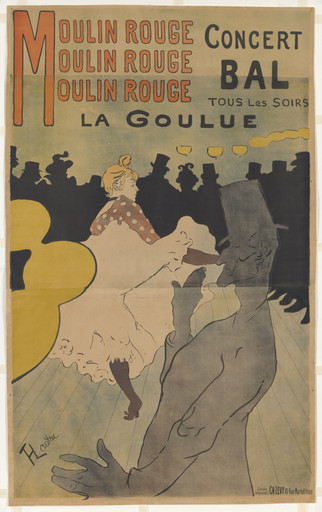
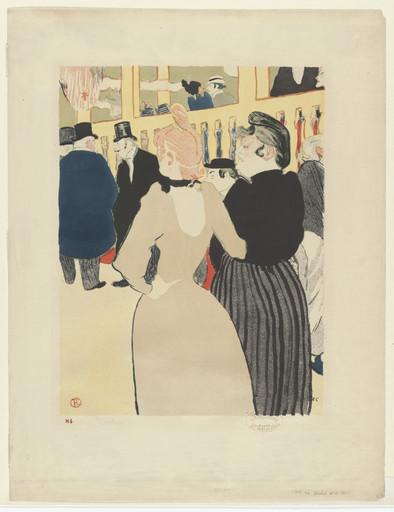
Lithographed posters proliferated during the 1890s due to technical advances in color printing and the relaxation of laws restricting the placement of posters. Dance halls, café-concerts, and festive street life invigorated nighttime activities. Toulouse-Lautrec's brilliant posters, made as advertisements, captured the vibrant appeal of the prosperous Belle Époque.
The Museum of Modern Art, MoMA Highlights, New York: The Museum of Modern Art, revised 2004, originally published 1999, p. 41.
Explore more
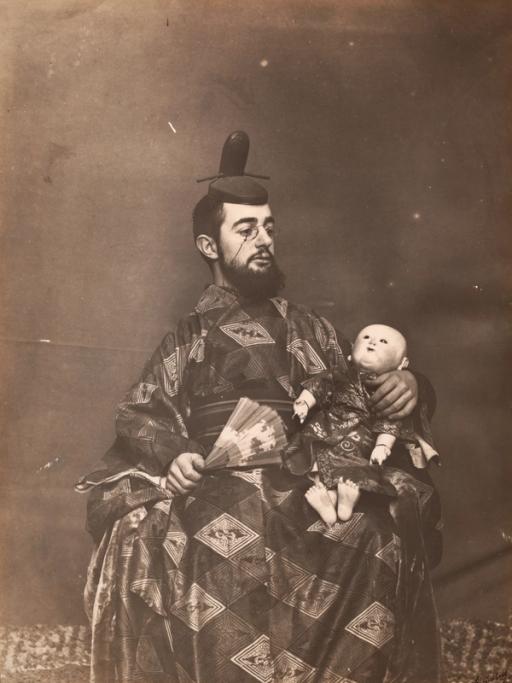
Henri de Toulouse-Lautrec
French, 1864–1901 165 works onlineDuring his brief artistic career, Henri de Toulouse-Lautrec captured the lively and often sordid atmosphere of Montmartre’s late-19th-century dance halls, cabarets, and theaters.
Learn more →
Popular culture
Cultural activities, ideas, or products that reflect or target the tastes of a broad swath of a society. Popular culture commonly includes—and is transmitted by— television, music, and film, books, periodicals, and but can even be movement or images circulated through one of those platforms or social media (like a dance on TikTok or a meme on Instagram).
Learn more →

From MoMA Design Store


Installation views
We have identified this work in the following photos from our exhibition history.
Licensing
Artwork or archival images
If you would like to reproduce an image of a work of art in MoMA's collection, or an image of a MoMA publication or archival material (including installation views, checklists, and press releases), please contact Art Resource (publication in North America) or Scala Archives (publication in all other geographic locations).
Audio and film clips
MoMA licenses archival audio and select out of copyright film clips from our film collection. At this time, MoMA produced video cannot be licensed by MoMA/Scala. All requests to license archival audio or out of copyright film clips should be addressed to Scala Archives at [email protected]. Motion picture film stills cannot be licensed by MoMA/Scala. For access to motion picture film stills for research purposes, please contact the Film Study Center at [email protected]. For more information about film loans and our Circulating Film and Video Library, please visit Circulating Film and Video Library.
Text from a publication or the archives
If you would like to reproduce text from a MoMA publication, please email [email protected]. If you would like to publish text from MoMA's archival materials, please fill out this permission form and send to [email protected].
Feedback
This record is a work in progress. If you have additional information or spotted an error, please fill out this feedback form.