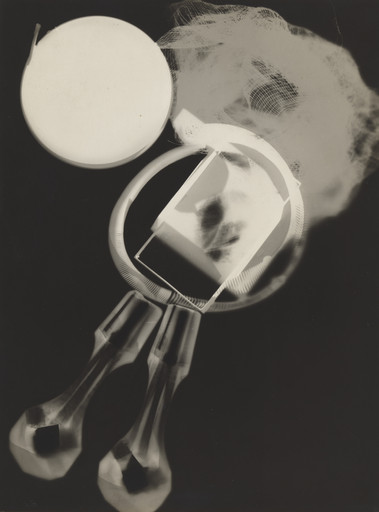
A photogram is a picture made on photographic paper without the aid of a camera. To create this one, Man Ray exposed the paper to light at least three times. Each time, a different set of objects acted as a stencil: a pair of hands, a pair of heads kissing, and two darkroom trays, which seem almost to kiss each other with their corner spouts. With each exposure, the paper darkened where it was not masked.
“It is impossible to say which planes of the picture are to be interpreted as existing closer or deeper in space. The picture is a visual invention: an image without a real-life model to which we can compare it,” curator John Szarkowski noted. A Surrealist might have said, instead, that it discloses a reality all the more precious because it is otherwise invisible.
Man Ray claimed to have invented the photogram—which he called a “rayograph”—not long after he emigrated from New York to Paris in 1921. Although, in fact, the practice had existed since the earliest days of photography, he was justified in the artistic sense, for in his hands the photogram was not a mechanical copy but an unpredictable pictorial adventure.
MoMA Highlights: 375 Works from The Museum of Modern Art, New York (New York: The Museum of Modern Art, 2019)
Kids label from 2024
Did you know you can make a photograph without using a camera? Man Ray made this picture by placing objects on light-sensitive paper, then shining a bright light over them. The shadows cast by each object are white and light gray. The artist called these images “rayographs,” naming them after himself. What objects can you recognize here?
2024
Explore more
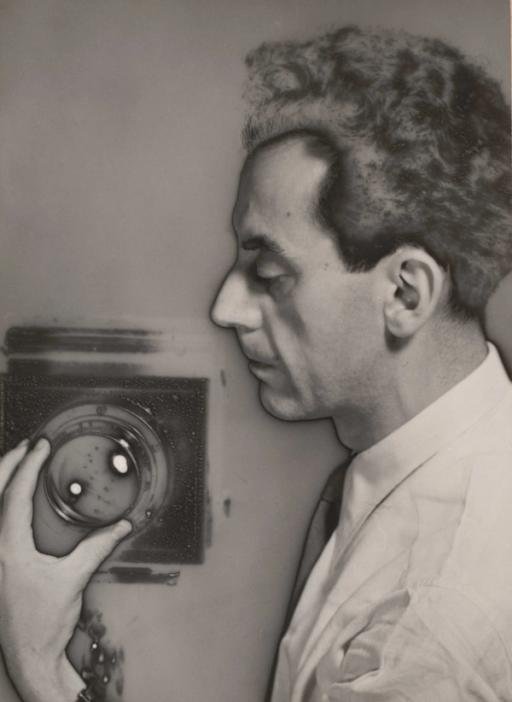
Man Ray (Emmanuel Radnitzky)
American, 1890–1976 195 works onlineSo enthused Man Ray (born Emmanuel Radnitzky) in 1922, shortly after his first experiments with camera-less photography. He remains well known for these images, commonly called photograms but which he dubbed “rayographs” in a punning combination of his own name and the word “photograph.
Learn more →

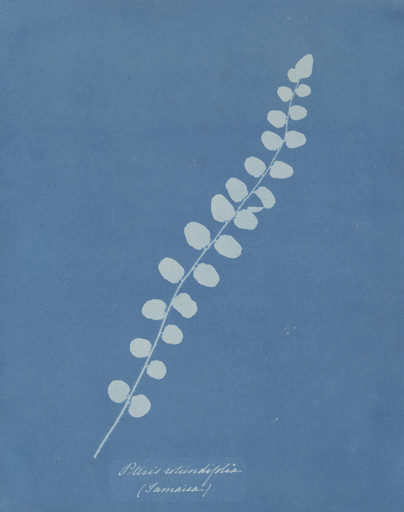
Cameraless photography
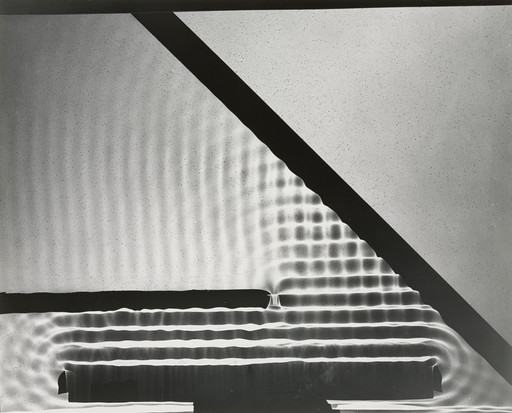
Cameraless photographs are created by manipulating light, radiation, and/or chemicals to leave an impression on photo-sensitive paper. Examples include techniques such as cyanotypes (commonly known as blueprints), radiographs (commonly known as X-rays), chemigrams, and photograms.
Learn more →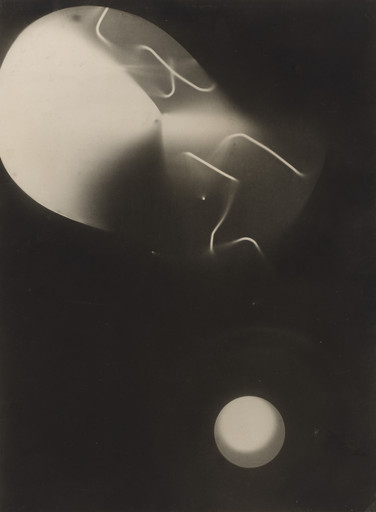
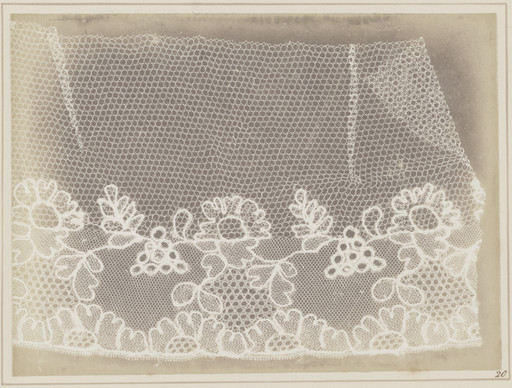
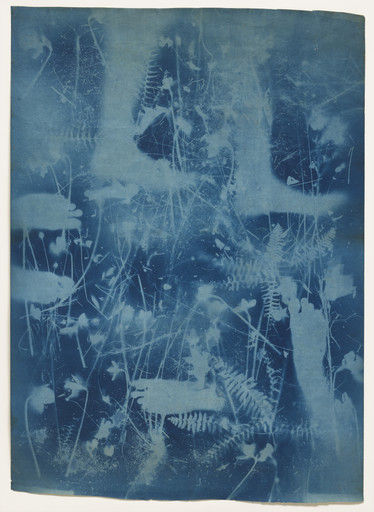
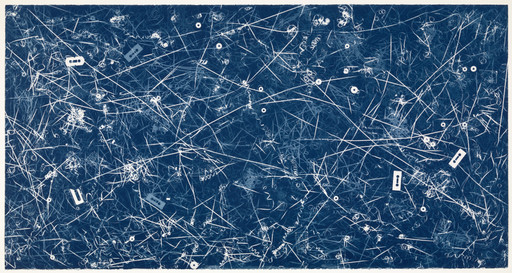
Photogram
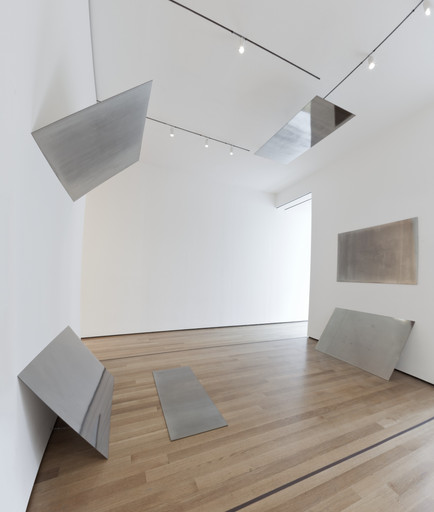
One of the earliest forms of photography, a photogram is a photograph produced without a camera, typically by placing an object directly onto a light-sensitive surface and exposing it to light.
Learn more →
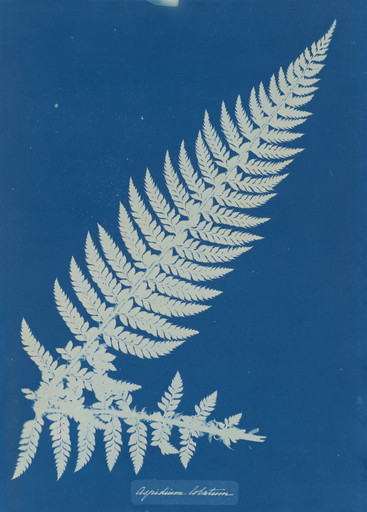
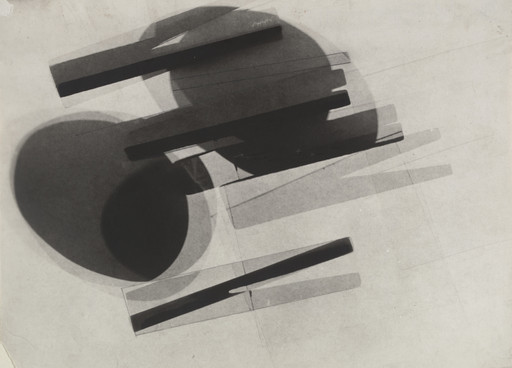
Rayograph
A term invented by Man Ray, in which he merged his name with the word “photograph” to describe his particular approach to the technique of making photograms.
Learn more →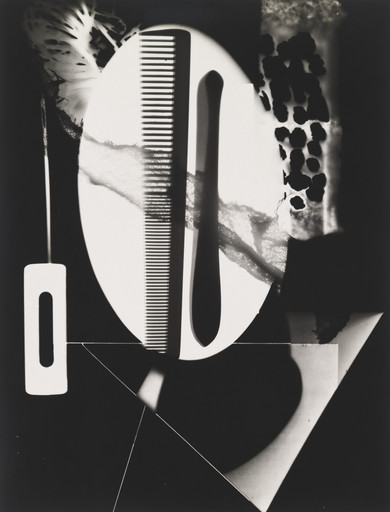

From MoMA Design Store


Installation views
We have identified this work in the following photos from our exhibition history.
Licensing
Artwork or archival images
If you would like to reproduce an image of a work of art in MoMA's collection, or an image of a MoMA publication or archival material (including installation views, checklists, and press releases), please contact Art Resource (publication in North America) or Scala Archives (publication in all other geographic locations).
Audio and film clips
MoMA licenses archival audio and select out of copyright film clips from our film collection. At this time, MoMA produced video cannot be licensed by MoMA/Scala. All requests to license archival audio or out of copyright film clips should be addressed to Scala Archives at [email protected]. Motion picture film stills cannot be licensed by MoMA/Scala. For access to motion picture film stills for research purposes, please contact the Film Study Center at [email protected]. For more information about film loans and our Circulating Film and Video Library, please visit Circulating Film and Video Library.
Text from a publication or the archives
If you would like to reproduce text from a MoMA publication, please email [email protected]. If you would like to publish text from MoMA's archival materials, please fill out this permission form and send to [email protected].
Feedback
This record is a work in progress. If you have additional information or spotted an error, please fill out this feedback form.