Henri Matisse
The Knife Thrower (Le Lanceur de couteaux) (plate XV, pages 106 and 107) from Jazz
1943–47, published 1947
Pochoir from an illustrated book with twenty pochoirs
Not on view
The energetic, vivid fuchsia form shown here at the left represents a knife thrower, while the static, pale blue form with upraised arms at the right suggests his female partner in the popular circus act. Shapes resembling leaves float across the composition, providing a dreamlike atmosphere for this aesthetic vision. "These images, with their lively and violent tones, derive from crystallizations of memories of circuses, folktales, and voyages." So wrote Matisse in the poetic text accompanying his compositions for Jazz, his extraordinary artist's book. The Knife Thrower is one of twenty images in this volume, which are interleaved with pages on which his own handwritten words are printed.
Late in his career, after being bedridden following surgery in 1941, Matisse turned to making collages from painted papers. Using scissors, he cut curved shapes, which he then arranged in animated compositions. The adventurous publisher Tériade encouraged Matisse to create a book from these dazzling creations. The artist chose the printing technique of pochoir, which is notable for its ability to achieve saturated areas of flat brilliant colors by a process of applying gouache inks through stencils.
The Knife Thrower from Jazz by Henri Matisse. 1943-47
The Museum of Modern Art, MoMA Highlights, New York: The Museum of Modern Art, revised 2004, originally published 1999, p. 210.
Explore more
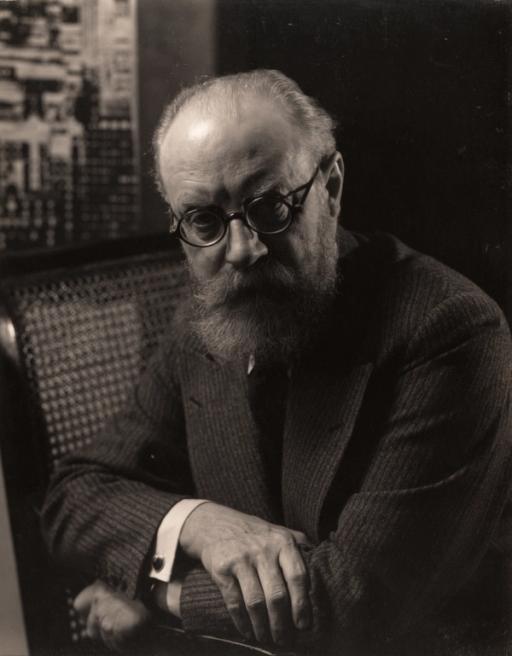
Henri Matisse
French, 1869–1954 429 works onlineThroughout his decades-long career as a painter, sculptor, draftsman, and printmaker, Henri Matisse continuously searched, in his own words, “for the same things, which I have perhaps realized by different means.
Learn more →


From MoMA Design Store


Licensing
Artwork or archival images
If you would like to reproduce an image of a work of art in MoMA's collection, or an image of a MoMA publication or archival material (including installation views, checklists, and press releases), please contact Art Resource (publication in North America) or Scala Archives (publication in all other geographic locations).
Audio and film clips
MoMA licenses archival audio and select out of copyright film clips from our film collection. At this time, MoMA produced video cannot be licensed by MoMA/Scala. All requests to license archival audio or out of copyright film clips should be addressed to Scala Archives at [email protected]. Motion picture film stills cannot be licensed by MoMA/Scala. For access to motion picture film stills for research purposes, please contact the Film Study Center at [email protected]. For more information about film loans and our Circulating Film and Video Library, please visit Circulating Film and Video Library.
Text from a publication or the archives
If you would like to reproduce text from a MoMA publication, please email [email protected]. If you would like to publish text from MoMA's archival materials, please fill out this permission form and send to [email protected].
Feedback
This record is a work in progress. If you have additional information or spotted an error, please fill out this feedback form.