One Laptop per Child, Nicholas Negroponte, Rebecca Allen, Mary Lou Jepsen, Mark Foster, Michail Bletsas, V. Michael Bove, Yves Béhar, Bret Recor, fuseproject, Jacques Gagné, Gecko Design, Colin Bulthaup, Squid Labs, John Hutchinson, Freeplay Energy Plc., Quanta
XO Laptop from the One Laptop per Child (OLPC) project
2005
PC/ABS plastic, rubber, and other materials
Not on view
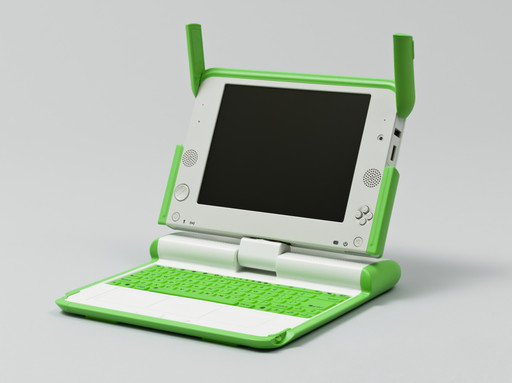
The XO is the first generation of an inexpensive computer conceived by One Laptop per Child, a nonprofit program begun at the MIT Media Lab, and it is designed to be distributed by governments and nongovernmental organizations to schools all over the globe. XO is made to be the size of a textbook and lighter than a lunchbox. Many of its features serve at least two purposes: the Wi-Fi antennas double as covers for the USB ports, for instance, while the handle serves also as an attachment point for a strap and the protective bumper also seals to protect from dust. The screen has both a full-color mode and a reflective high-resolution mode that makes it readable in bright sunlight, and a wide track pad doubles as a drawing and writing tablet. If electricity is not available, the computer can be recharged by a pull cord that works like a yo-yo.
Born out of Necessity, March 2, 2012–January 28, 2013.
Gallery label from Design and the Elastic Mind , February 24–May 12, 2008.
Front Design has developed a unique method of materializing freehand sketches. Strokes made in the air are recorded with motion-capture video technology and then digitized into a three-dimensional computer model. The digital files are then sent to a rapid manufacturing machine that uses computer-controlled lasers to fabricate the objects in plastic, resulting in furniture that is a clear translation of drawing into object.
Design and the Elastic Mind, February 24–May 12, 2008.
Explore more
Interface
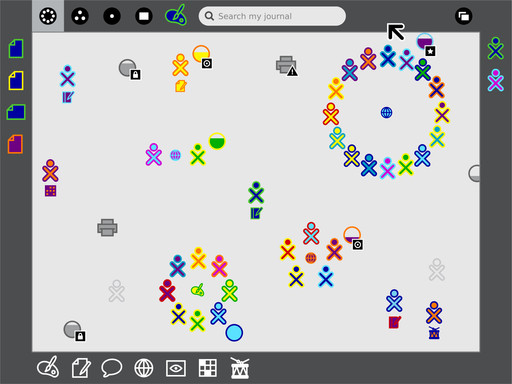
An object, like a phone, or a virtual program, like an app, that facilitates the communication between a person and a machine.
Learn more →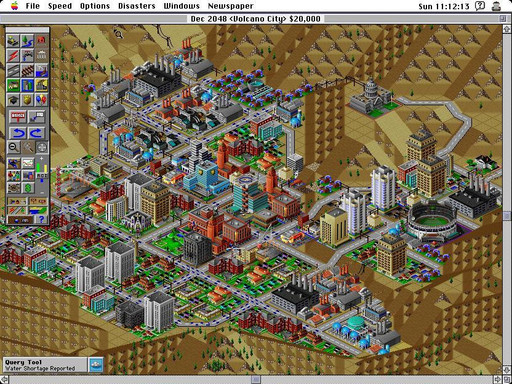



From MoMA Design Store


Installation views
We have identified this work in the following photos from our exhibition history.
Licensing
Artwork or archival images
If you would like to reproduce an image of a work of art in MoMA's collection, or an image of a MoMA publication or archival material (including installation views, checklists, and press releases), please contact Art Resource (publication in North America) or Scala Archives (publication in all other geographic locations).
Audio and film clips
MoMA licenses archival audio and select out of copyright film clips from our film collection. At this time, MoMA produced video cannot be licensed by MoMA/Scala. All requests to license archival audio or out of copyright film clips should be addressed to Scala Archives at [email protected]. Motion picture film stills cannot be licensed by MoMA/Scala. For access to motion picture film stills for research purposes, please contact the Film Study Center at [email protected]. For more information about film loans and our Circulating Film and Video Library, please visit Circulating Film and Video Library.
Text from a publication or the archives
If you would like to reproduce text from a MoMA publication, please email [email protected]. If you would like to publish text from MoMA's archival materials, please fill out this permission form and send to [email protected].
Feedback
This record is a work in progress. If you have additional information or spotted an error, please fill out this feedback form.