Not on view
In the final decades of his life, Matisse invented a new form of art, the cut-out. Working with scissors and sheets of gouache-painted paper, he cut various shapes—from the organic to the geometric—and arranged them into lively compositions. Cut-outs formed the prototypes for the printed images in the illustrated book Jazz, which Matisse insisted remain absolutely faithful to the original colors. In response, the publisher turned to pochoir, a stencil printing technique in which the same gouaches could be used. Matisse created two versions of the prints: one for a portfolio and the second for the illustrated book, whose plates were interspersed with a text by Matisse, written in his looping calligraphy.
"Colllection 1940s—1970s", 2019
Explore more
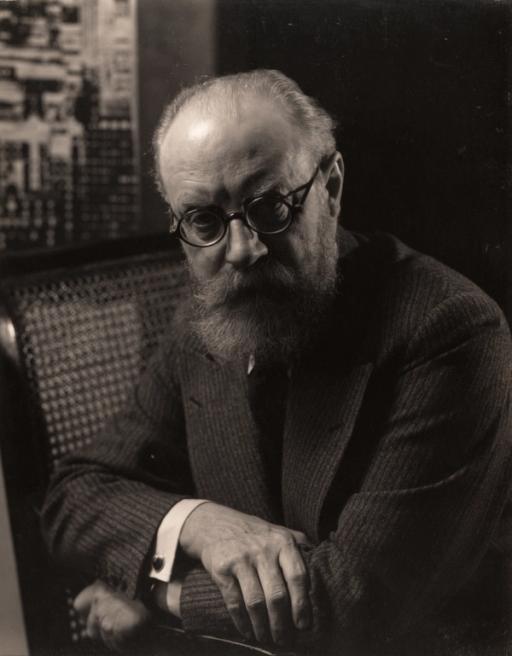
Henri Matisse
French, 1869–1954 429 works onlineThroughout his decades-long career as a painter, sculptor, draftsman, and printmaker, Henri Matisse continuously searched, in his own words, “for the same things, which I have perhaps realized by different means.
Learn more →
From MoMA Design Store


Installation views
We have identified this work in the following photos from our exhibition history.
Licensing
Artwork or archival images
If you would like to reproduce an image of a work of art in MoMA's collection, or an image of a MoMA publication or archival material (including installation views, checklists, and press releases), please contact Art Resource (publication in North America) or Scala Archives (publication in all other geographic locations).
Audio and film clips
MoMA licenses archival audio and select out of copyright film clips from our film collection. At this time, MoMA produced video cannot be licensed by MoMA/Scala. All requests to license archival audio or out of copyright film clips should be addressed to Scala Archives at [email protected]. Motion picture film stills cannot be licensed by MoMA/Scala. For access to motion picture film stills for research purposes, please contact the Film Study Center at [email protected]. For more information about film loans and our Circulating Film and Video Library, please visit Circulating Film and Video Library.
Text from a publication or the archives
If you would like to reproduce text from a MoMA publication, please email [email protected]. If you would like to publish text from MoMA's archival materials, please fill out this permission form and send to [email protected].
Feedback
This record is a work in progress. If you have additional information or spotted an error, please fill out this feedback form.