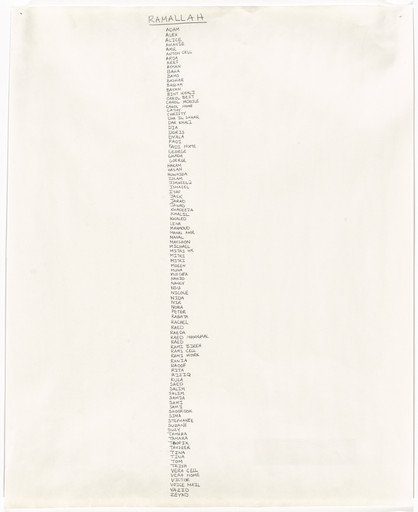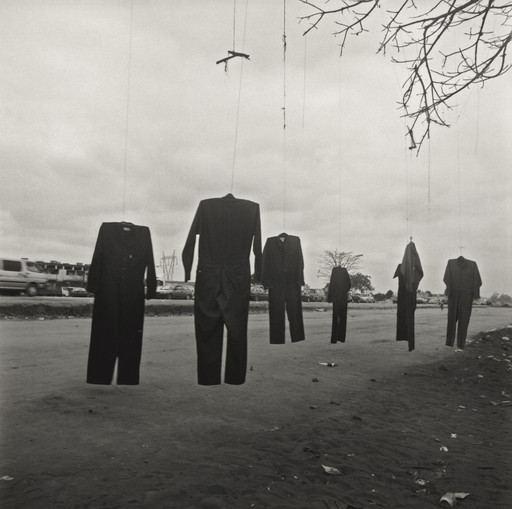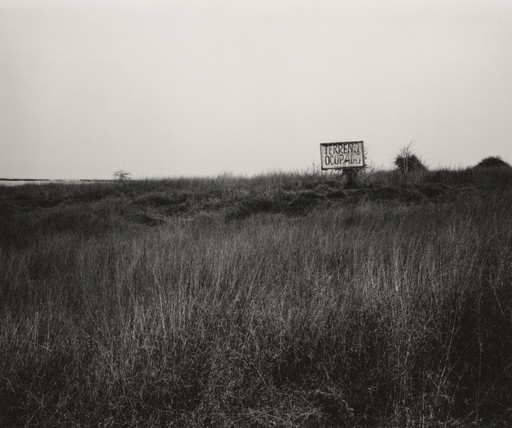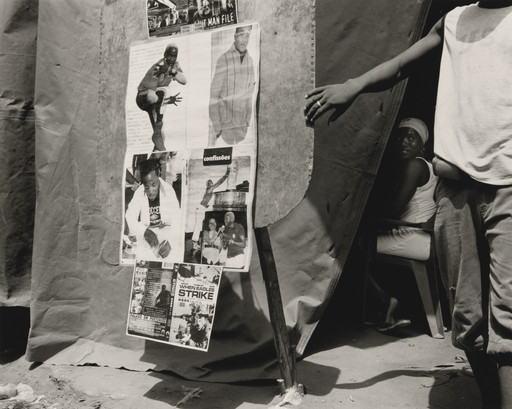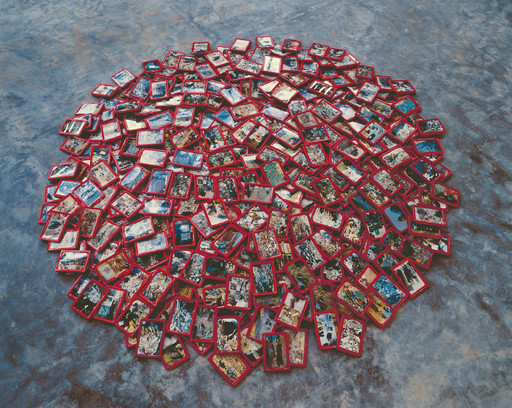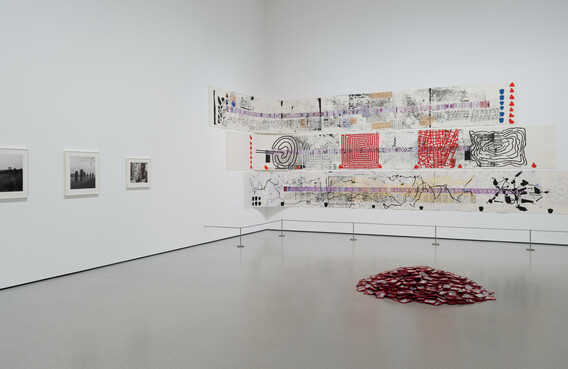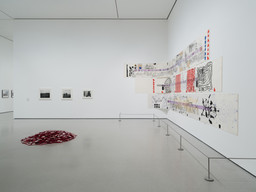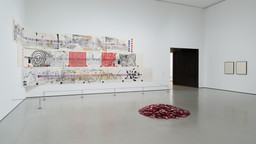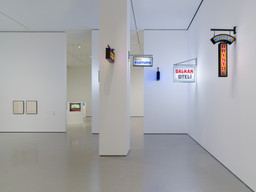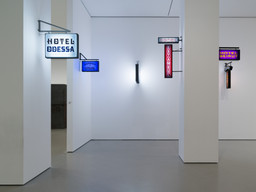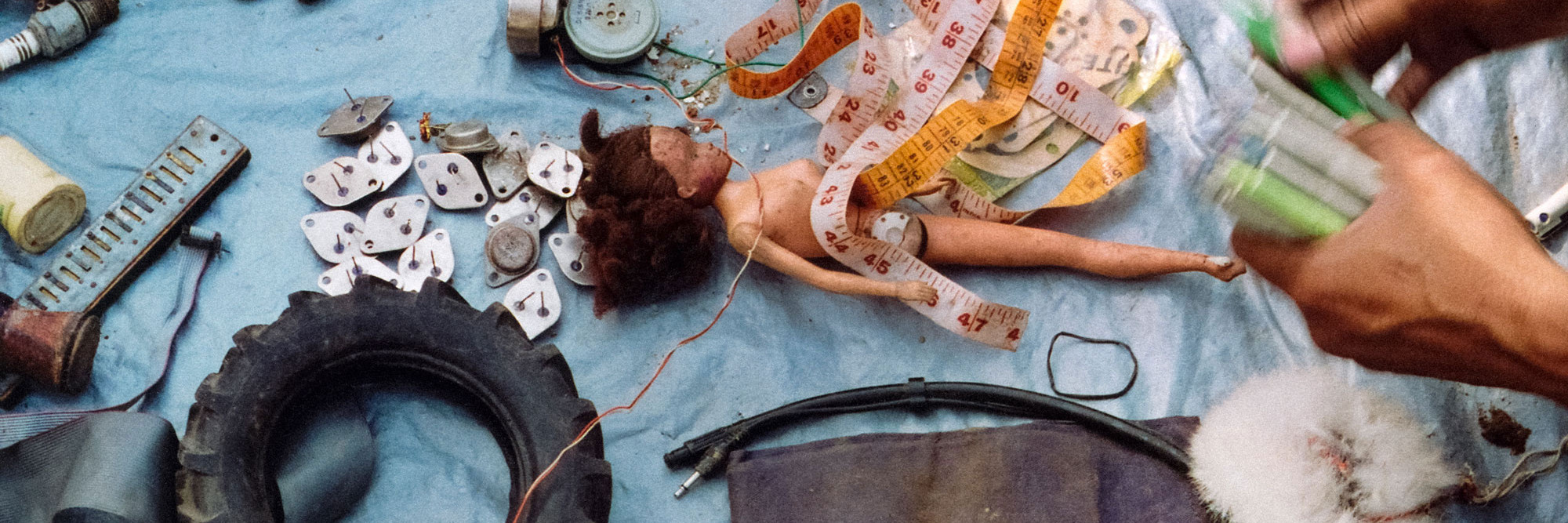
The close of the 20th century ushered in an era of unprecedented global connectivity. Following the end of the Cold War, former Soviet Bloc countries began to participate in international markets, while free trade agreements accelerated the circulation of goods, capital, and people around the world. The artists in this gallery responded to globalization’s impact on individuals and places outside centers of power in North America and Europe. Some of their artworks spoke to deepening inequalities, others emerged from urban settings in flux, and still others demonstrated how identities were being redefined by increased mobility.
“Things are wandering, their meanings change,” critic Sabine Vogel wrote in response to the work of Hüseyin Bahri Alptekin, whose light boxes are installed here. Alptekin and the other artists on view looked to wandering things—whether market wares, means of border crossing, or the place names on hotel signs—to register the effects of the new global order of the 1990s and 2000s.
Organized by Samuel Allen, Curatorial Assistant, Robert B. Menschel Department of Photography, with Abby Hermosilla, Curatorial Assistant, Department of Curatorial Affairs.