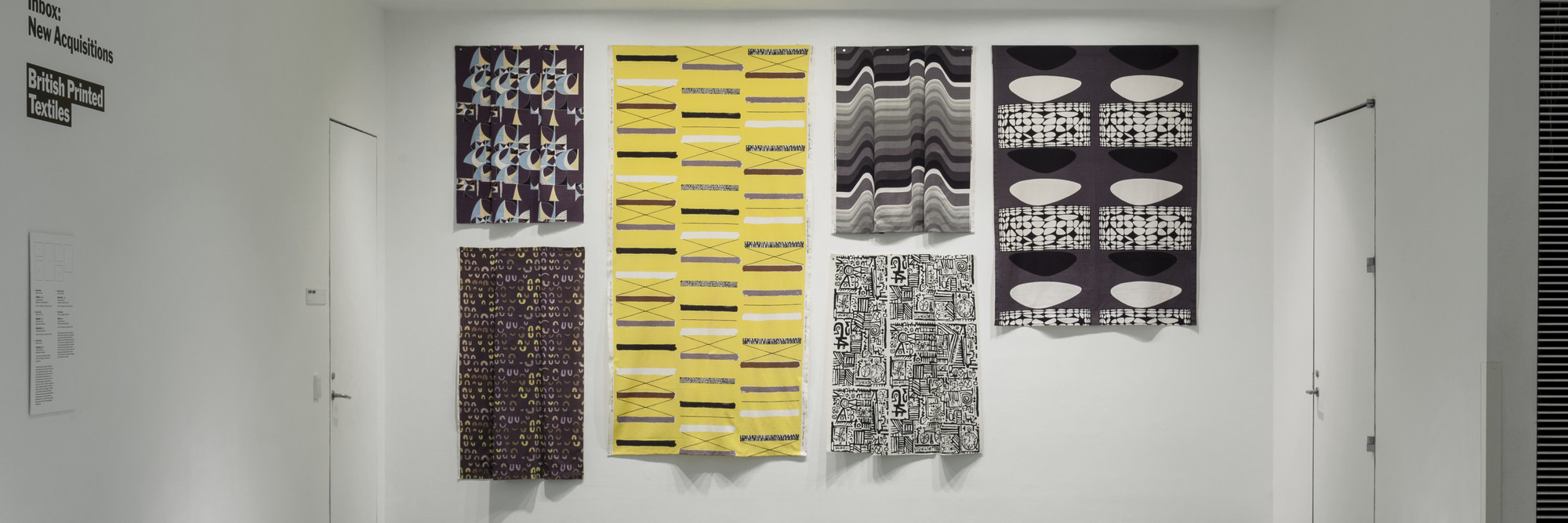
Postwar Britain saw an explosion in designs for printed textiles, spurred by the end of restrictions on dyes and fabrics, advancements in industrial-scale printing techniques, and the introduction of industrially viable synthetic materials such as rayon. Because it was more open to women, the field of textile design had historically been a point of entry for them to the design world, granting access to training and employment. Lucienne Day created hundreds of popular designs in a range of color combinations she selected herself. Marian Mahler’s mastery of tightly composed patterns made her designs ideal for a variety of applications. Barbara Brown’s Op Art–inspired Frequency design adds the illusion of depth to this strikingly graphic furnishing fabric.
Textile design was an accessible, commercially viable medium that attracted not just designers but also architects and artists. Figures like Victor Vasarely and Eduardo Paolozzi are perhaps better known for their work in painting and sculpture, but both produced designs for fabrics that were widely available through mass manufacture. Vehicles for bold color, texture, and abstract shapes, textile designs brought a modernist look into domestic and corporate interiors when applied to furnishings, window treatments, and clothing.