Oil on canvas, three panels
In the final decades of his life, Monet embarked on a series of monumental compositions depicting the lush lily ponds in his gardens in Giverny, in northwestern France. At the end of the nineteenth century, the painter had envisioned a circular installation of vast paintings—he called them grandes décorations —that would envelop the viewer in an expanse of water, flora, and sky. This vision materialized in the form of some forty large-scale panels, Water Lilies among them, that Monet produced and continuously reworked from 1914 until his death in 1926.
At this triptych’s center, lilies bloom in a luminous pool of green and blue that is frothed with lavender-tinged reflections of clouds. Thick strokes in darker shades seep into the left panel, while on the right, sky and water are gently swallowed by an expanse of reddish-green vegetation. The dense composition hovers at the threshold of abstraction, its lack of horizon creating an effect of total immersion. After Monet’s death, twenty-two panels were installed on curved walls in the Musée de l’Orangerie in Paris: a gift from the artist to the nation of France. The remaining canvases stayed in his studios until the late 1940s, when collectors and MoMA curators began to take an interest in them.
MoMA Highlights: 375 Works from The Museum of Modern Art, New York (New York: The Museum of Modern Art, 2019)
Explore more
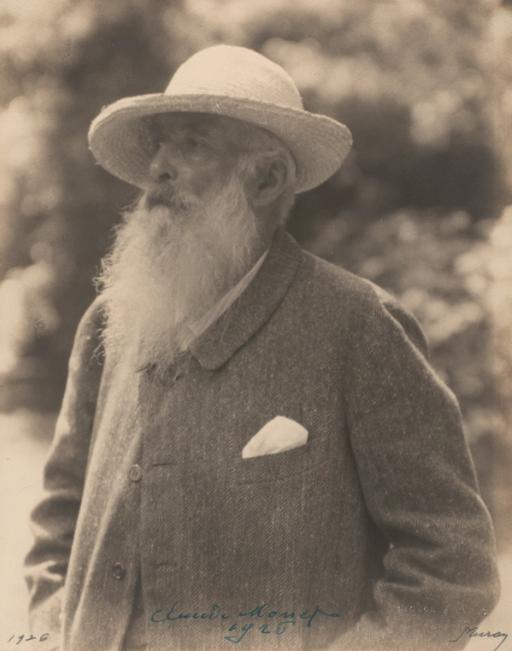
Claude Monet
French, 1840–1926 4 works onlineIn 1914, Claude Monet began again. The French artist, whose brightly colored and sketchily rendered landscapes galvanized the Impressionists in the 1870s, had painted infrequently since the death of his wife, Alice Hoschedé Monet, in 1911.
Learn more →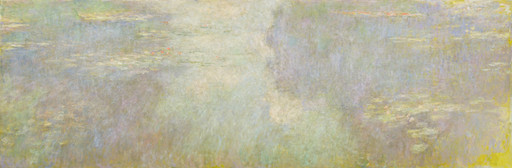
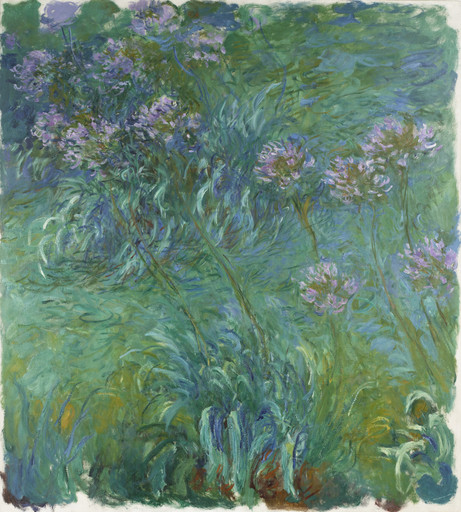
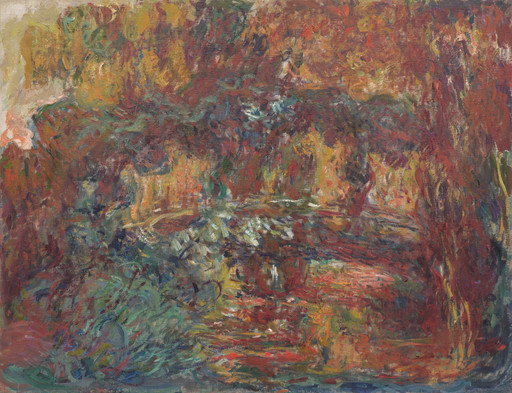
Impasto
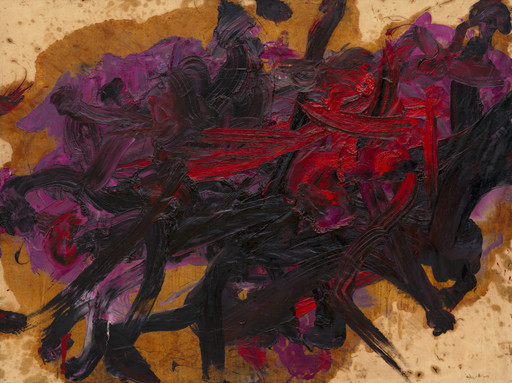
An Italian word for “mixture,” used to describe a painting technique wherein paint is thickly laid on a surface, so that brushstrokes or palette knife marks are visible.
Learn more →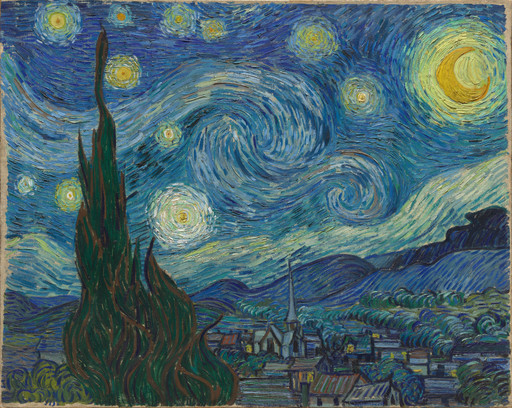
Triptych
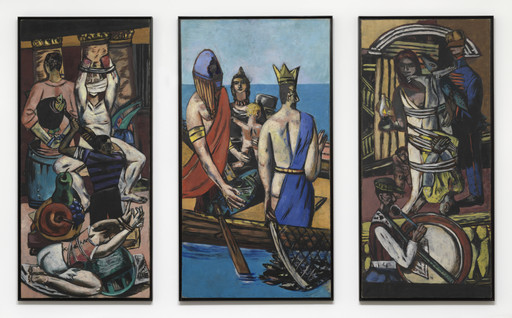
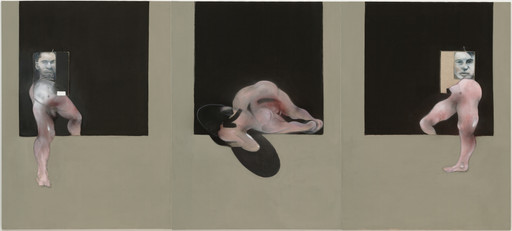
A work of art consisting of three sections or panels, usually hinged together.
Learn more →

Claude Monet’s Water Lilies
Gallery 515In 1915 Claude Monet built a large studio near his house in Giverny, a town northwest of Paris, for the creation of what he would call his grandes décorations.
Learn more →

Audio
Audio from the playlist Collection 1880s–1940s
Audio from the playlist Kids
Audio from the playlist Verbal Descriptions
Articles and videos
From MoMA Design Store


Installation views
We have identified this work in the following photos from our exhibition history.
Provenance Research Project
This work is included in the Provenance Research Project, which investigates the ownership history of works in MoMA's collection.
The artist, Giverny; by inheritance to his son Michel Monet (1878-1966), Giverny, 1926 [1]; sold to Katia Granoff, Paris, 1956 [2]; acquired by The Museum of Modern Art, New York (Mrs. Simon Guggenheim Fund), 1959.
[1] Per catalogue raisonné Wildenstein (no.s 1972-1973-1974).
[2] Ibid.
Provenance research is a work in progress, and is frequently updated with new information. If you have any questions or information to provide about the listed works, please email [email protected] or write to:
Provenance Research Project
The Museum of Modern Art
11 West 53 Street
New York, NY 10019
Licensing
Artwork or archival images
If you would like to reproduce an image of a work of art in MoMA's collection, or an image of a MoMA publication or archival material (including installation views, checklists, and press releases), please contact Art Resource (publication in North America) or Scala Archives (publication in all other geographic locations).
Audio and film clips
MoMA licenses archival audio and select out of copyright film clips from our film collection. At this time, MoMA produced video cannot be licensed by MoMA/Scala. All requests to license archival audio or out of copyright film clips should be addressed to Scala Archives at [email protected]. Motion picture film stills cannot be licensed by MoMA/Scala. For access to motion picture film stills for research purposes, please contact the Film Study Center at [email protected]. For more information about film loans and our Circulating Film and Video Library, please visit Circulating Film and Video Library.
Text from a publication or the archives
If you would like to reproduce text from a MoMA publication, please email [email protected]. If you would like to publish text from MoMA's archival materials, please fill out this permission form and send to [email protected].
Feedback
This record is a work in progress. If you have additional information or spotted an error, please fill out this feedback form.